The crucial next steps for Aston Martin's Valkyrie
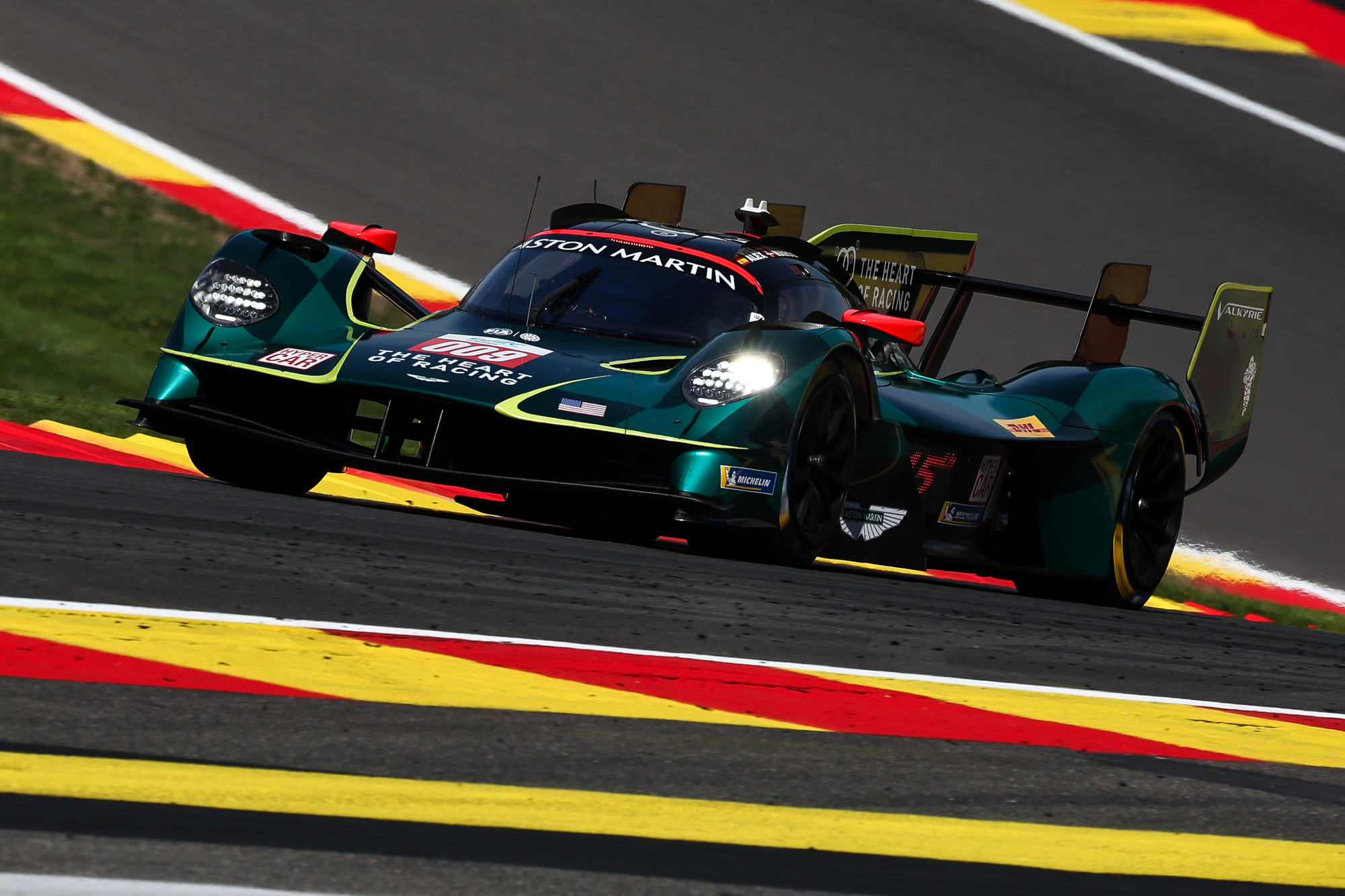
Aston Martin’s Valkyrie Hypercar programme has reached the most delicate phase of any top-level endurance project: where the major problems are largely solved, but the remaining performance lies hidden in the fine margins.
The progress made through 2025 has been significant and offers genuine encouragement. At the end of its first season, Aston Martin Head of Endurance Motorsport Adam Carter reflected on what has been achieved so far and what still lies ahead.
What did the Valkyrie achieve in 2025?
The headline result remains the superb second place at Petit Le Mans, the IMSA season finale. In the World Endurance Championship, the car also recorded a fifth place at Fuji and a seventh at Bahrain, although the latter came with a sense of frustration.
“At times we had some really strong pace and we were flying,” explained Harry Tincknell.
“Unfortunately the second Virtual Safety Car came out just a lap after we’d pitted and that put us a lap down, which really hurt our race.”
At Sakhir, the Valkyrie also led a WEC race for the first time, staying at the front for 12 laps. Alex Riberas set the third-fastest race lap there too, 0.628s off the benchmark.
“In Qatar [at the start of the season] we were a couple of seconds off the pace and people were writing us off,” said Aston Martin THOR team principal Ian James.
“So to come to a place here where we’re genuinely competing for pole position and the podium shows what a good job everyone’s done.”
Putting the 2025 season into context
Aston Martin finished last in the WEC manufacturers’ standings with 24 points. But that statistic needs context. It was the only newcomer in the Hypercar class, and the Balance of Performance framework is particularly unforgiving for new entries.
Because the Valkyrie lacked historical data, its early-season BoP was based on the best-performing cars from the previous three races. As a result, it was not until Sao Paulo in July that the car finally received a BoP derived entirely from its own performance.
“The programme goes from nothing, to building a team, to building a car, then testing, while at the same time preparing everything needed to go racing, box equipment, race equipment, freight, spares,” Carter explained.
“So as an organisation you’ve only got limited bandwidth, and it’s spread across all those areas. Then you start to get into a groove that opens up bandwidth to work elsewhere.
"Everything begins to come together, and because you’re no longer just surviving day to day while trying to grow the programme, you can focus more on developing car performance.”
Viewed through that lens, the overall picture from a first season at this level is clearly positive, especially given, as Carter often points out, that Aston Martin is competing against “manufacturers, teams and drivers that have been at the pinnacle of the sport for, in some cases, decades”.
“We brought a good group of people together, built a good car and put the right test programme in place,” Carter added. “The competitiveness of the car has increased over the last events, so we’re pleased with the output.”
Working on the weaknesses
Only one Valkyrie reached the finish of the Qatar 1812km, but both cars saw the chequered flag at the Le Mans 24 Hours, albeit several laps down on the winning Ferrari 499P. For a first attempt, that remains an encouraging benchmark.
“Reliability has been a very strong point, because it gives us the opportunity to go and develop things,” Carter admitted. “If you’re putting all your energy into nursing the car, you can’t concentrate.
"In terms of where the development gains are coming from, our mid-corner speed and medium-to-low speed performance are better now than they were.”
That assessment is shared by the drivers. The progress already made is substantial, but it is the road still ahead that will ultimately define how competitive the Valkyrie can become.
“The weaker point is degradation,” Carter acknowledged. “It’s not bad, but to be right up there with the leading teams, we’ve got some work to do.
"It's a balance between single-lap performance and the consequences for race pace. We’ve seen improvements this year, but whatever happens, tyre degradation is absolutely something we need to work on next year.”
Continuity over change in 2026
“We’ve come a long way with the team we’ve got, so there’s no reason to just change things,” Carter explained.
Next season, Aston Martin THOR will again field two Valkyries in the WEC and one in IMSA. In the United States, full-season drivers Roman De Angelis and Ross Gunn will be joined at the Daytona 24 Hours by Alex Riberas and Marco Sorensen.
Riberas and Sorensen will once again share the #009 in WEC, joined by De Angelis at the Qatar 1812km, the Spa 6 Hours, the Le Mans 24 Hours and the Bahrain 8 Hours. Gunn will play a similar supporting role the #007, alongside Harry Tincknell and Tom Gamble, who are entered for all eight rounds.
“The drivers as a group delivered over and above what we asked from them,” said Ian James.
“That included a lot of work at the very beginning that required them to dig deep. But it also means we’ve built a hugely valuable hub of understanding and knowledge about Valkyrie that will be valuable as we move into season two.”
No major hardware upgrades are planned, as the team believes there is still significant performance to unlock within the existing package, particularly on the software side.
What to expect next
By the end of 2025, the Valkyrie was the lightest and most powerful car on the grid thanks to the BoP.
“The way the championship is structured means some aspects are in our favour at the moment, and we know we need to keep pushing all the time,” said a deliberately cautious Carter. “I’m very pleased with where we are right now. But today doesn’t guarantee tomorrow.”
That caution is well founded. If the BoP no longer compensates performance gaps - as may well be the case - the Valkyrie will no longer enjoy the sizeable advantages it had late in the season.
At Bahrain, for example, it was 34kg lighter than the Ferrari 499P while also producing 37kW more power. Competing consistently with the class benchmarks will therefore demand further gains.
Peugeot faces a similar situation, although the 9X8 is now at the end of its development curve. The Valkyrie, by contrast, still has considerable headroom, including in energy management and PPU (power processing unit).
“We’re starting to see everything come together with the programme,” Carter underlined. “So we just need to keep building on that.”
The British team may also benefit from Michelin’s new Hypercar tyre range.
“We don’t know who’s going to benefit from it or not,” Carter said. “So it’s difficult to say whether directionally it will be better.”
Aston Martin’s Valkyrie no longer needs to prove that it belongs in Hypercar.
The harder task now is turning its promise into repeatable performance. Reducing degradation and sustaining pace over full stints will define how far this project can realistically go.
Regular podiums would already mark meaningful progress. Fighting consistently for victories would place it in a very different category altogether.