Mark Hughes: Ferrari is resisting the Hamilton-led change it needs
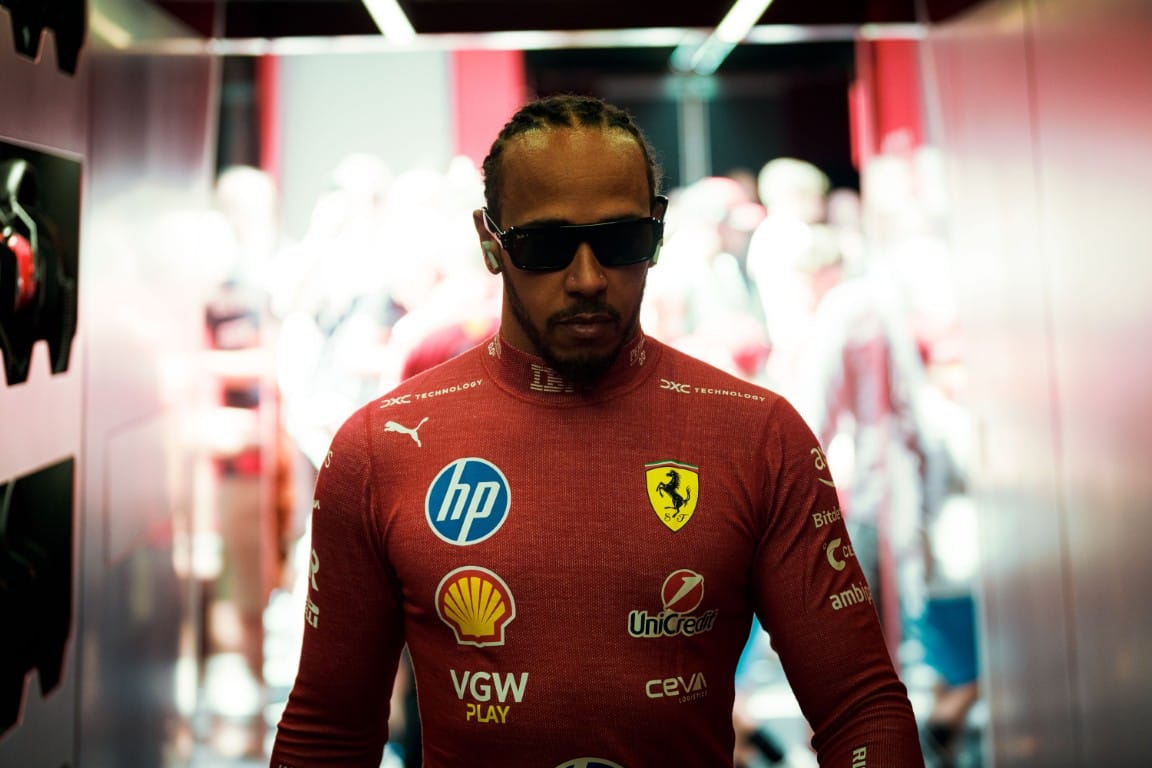
If Lewis Hamilton had been able to join Ferrari with, say, Adrian Newey (in the Rory Byrne role), Andrea Stella (in the Ross Brawn role) and Christian Horner (as Jean Todt), and as a four-headed force they had been able to demand just a budget and a totally hands-off approach from corporate management, then Hamilton may - just may - have had a chance of achieving what Michael Schumacher did at Ferrari in Formula 1. Or at least set that process in motion (for he was 40 years old when he first raced for Maranello, 13 years older than when Schumacher joined the team for 1996).
But that fantasy - or something similar - is the only realistic way Ferrari will achieve the sort of repeated, long-term success it did in the Schumacher era.
Fernando Alonso went there without the protection of the senior people around him to make the changes required. Sebastian Vettel followed, any potential power taken from him before he'd even arrived by the replacement of the man who'd hired him.
Hamilton has fallen foul of reruns of what they endured there, but with two added horrible complications: 1) His own personal performance is in question, even in his own mind; 2) The incumbent driver there, Charles Leclerc, is an all-time great without ever having had the car to prove it.
Leclerc is the product of Ferrari's own junior driver programme, in much the same way as Felipe Massa some years earlier. As drivers owing their careers to Ferrari, they are/were very much employees. Ferrari has never - ever - achieved long-term success with employee drivers. Their only periods of sustained title-winning form came in the Schumacher and Niki Lauda eras.
Yes, there was a run-on of momentum which enabled Jody Scheckter to win a title early post-Lauda, just as there was a Kimi Raikkonen title the first year post-Schumacher. But essentially, the potential of Ferrari is only ever fully accessed when a brilliant, strong-headed, dominant character is both the lead driver and the inspiration for the team. Whatever they demand happens. In super-quick time.
That's how it was with Schumacher and Lauda before him. In the 1960s another brilliant driver with a strong personality, John Surtees, had understood the sort of changes required at Maranello and had gone about getting them made. "But in doing that I fell foul of certain people," as he recalled when I interviewed him in 1998, "which led to me leaving in protest. Which in hindsight was a mistake.
"But in an Italian team - and I found this in motorcycles as well as cars - you need to be sure of yourself and behave as if you are sure of yourself and then prove it by performance. Otherwise you're finished."
Hamilton - just like Alonso and Vettel - went into Ferrari without any of the supporting structure around him which empowered Schumacher. He, just like them, saw the limitations upon Ferrari's fantastic potential and tried to change them. Just as with Alonso and Vettel he was met with resistance and antipathy.
But unlike them, his personal performance created enough questions for the credibility of his internal criticisms to be lost. Any shortfall in his performances was furthermore cruelly exposed by Leclerc, a much tougher team-mate than Eddie Irvine, Rubens Barrichello, Massa or late-era Raikkonen.
Ferrari does not want to be told what its limitations are, doesn't want to hear about the cooperative, non-blame culture required to inspire a team of ultra-competitive gifted people to be pointed in the same direction so that every stroke is a power stroke. History tell us that when the team is run by over-respectful employees rather than brilliant hired guns, it loses that direction.
Yes, that is all simplifying things somewhat and there are complicating details. Hamilton's struggles with the particular traits of the 2025 Ferrari, for example. But it remains essentially true.
Other complicating details include whether Hamilton is the sort of personality who could take hold of a team and dominate it - in the way of Surtees, Lauda or Schumacher - as opposed to being just a brilliant performer, given what he needs to perform. As was the case at Mercedes and, to a lesser extent, McLaren. But he has at least attempted to be that lightning rod.
When former Ferrari team principal Maurizio Arrivabene - the man who embodied the undermining of Vettel's attempts at changing things - said recently, "If a driver starts playing engineer, that's it. Then it's really over. Drivers spend two or three days in the simulator and get a general impression, but the devil is in the detail," he revealed the misunderstanding of the scale the right driver's influence can have, the way it can energise the whole place. That energy, used appropriately by an emotionally intelligent group of people around that driver, can be transformative. John Elkann's recent comment about how Hamilton and Leclerc should talk less and focus upon driving sadly reveals that nothing is about to change.
If it did, could Hamilton still deliver the sort of performances which made him the most successful driver of all time? That's a different question.
The really sad thing is, Ferrari in its current mentality is not about to provide him with the hardware he'd need to prove it to himself and the rest of the world. Inspiring as his dream is of coming back, Muhammad Ali-style, from being written off, that dream requires a whole team of people to buy into it for it to even begin to be possible, to even get to the point where Hamilton could try to achieve it. Meanwhile, the clock ticks its cruel tock.