These rising stars should make MotoGP midfielders anxious
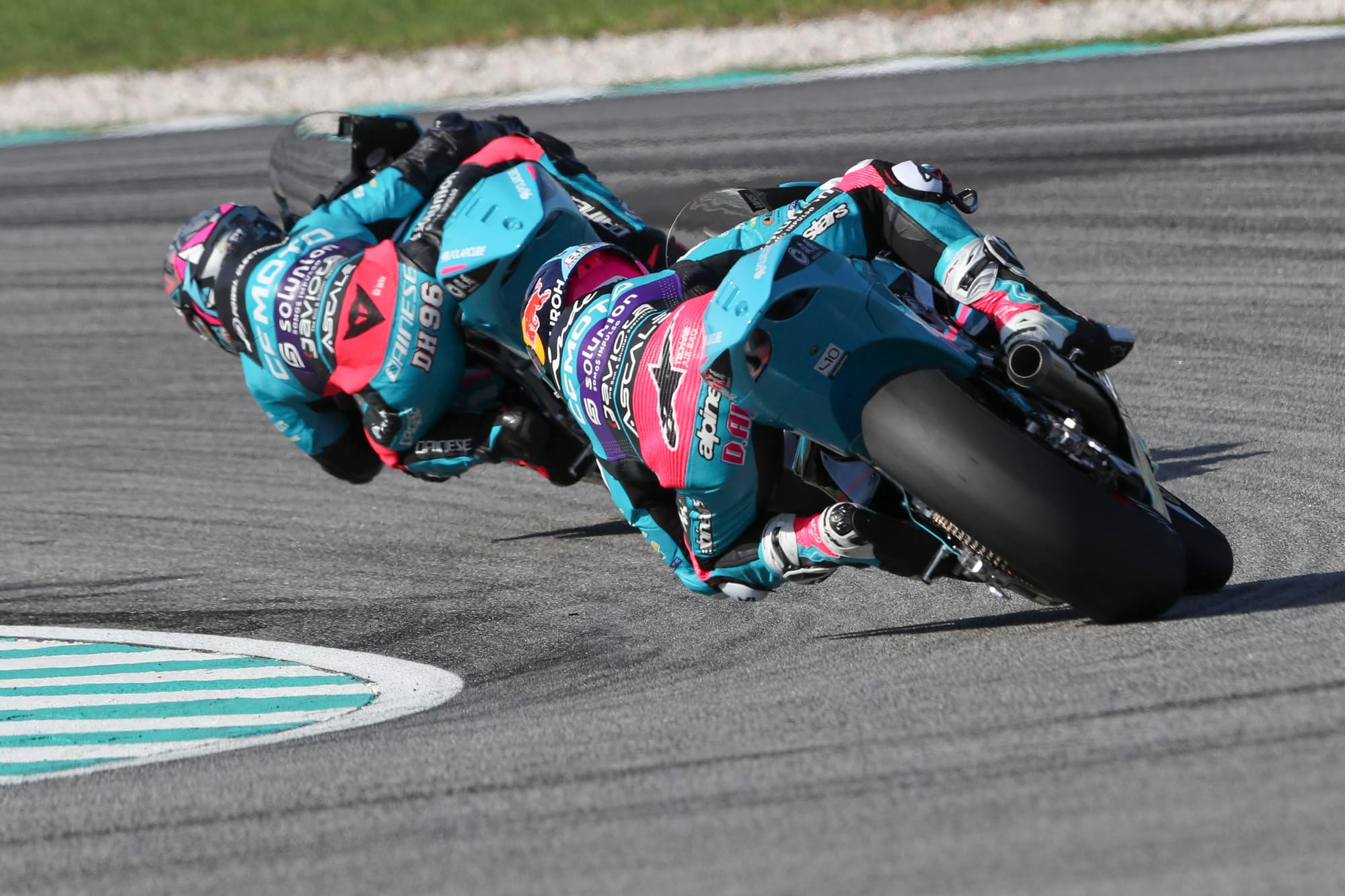
The current MotoGP grid feels inherently youthful, with two budding superstars in Fermin Aldeguer and Pedro Acosta born in 2005 and 2004 respectively, an oldest rider in Johann Zarco who is only 35, and a most experienced and successful rider in Marc Marquez who is only 32.
It makes sense for the modern premier class to skew younger. The injury wear and tear through a season is higher than it's ever been - even the best riders sticking around for double-digit seasons feels a long shot from the outset. And 'early' graduations from Moto2 feel increasingly common.
Yet in truth the MotoGP 2026 line-up is not actually unusually young. In fact, MotoGP was younger a decade ago - and two decades ago.
2026
Average age: 28.1 years
Riders above 30: 7 of 22
2016
Average age: 26.9 years
Riders above 30: 4 of 21
2006
Average age: 27.0 years
Riders above 30: 6 of 19
All numbers taken at January 1 of respective year
That by itself doesn't mean a change is coming. But after just a single rookie stepped up from Moto2 for 2026 (and also in 2024 and in 2023), it feels like a 'youth wave' is on the horizon, especially because of what we've seen in the intermediate class last year.
When it comes to the Moto2-to-MotoGP pipeline, Moto2 debutants in particular are an important category to watch. An instant top-10 placement in this category, which is absolutely brutal and unforgiving for riders learning the ropes (usually after years and years on lightweight Moto3-spec machines in the world championship or Red Bull Rookies Cup/Junior GP before it), is an immediate signpost of future MotoGP viability.
Six rookies contested Moto2 full-time last year, and two of them placed in the top 10: Aspar duo Daniel Holgado (aged 20) and David Alonso (19). They won races; their former Moto3 rivals Ivan Ortola (21) and Collin Veijer (20) joined them on the podium.
Alonso, Holgado, Veijer and Ortola had ranked 1-2-3-4 in Moto3 the previous year. That season they won a combined 18 of the 20 races (most of that was Alonso, who was generational), recorded 39 of 60 podium finishes, bagged 15 of 20 poles, led 270 of 355 laps.
That's not extraordinary - but the fact they all thoroughly outshone their fellow Moto2 rookies in Adrian Huertas (World Supersport and Supersport 300 champion) and Yuki Kunii (Asian Superbike champion and Suzuka 8 Hours eye-catcher) is further testament to the talent level.
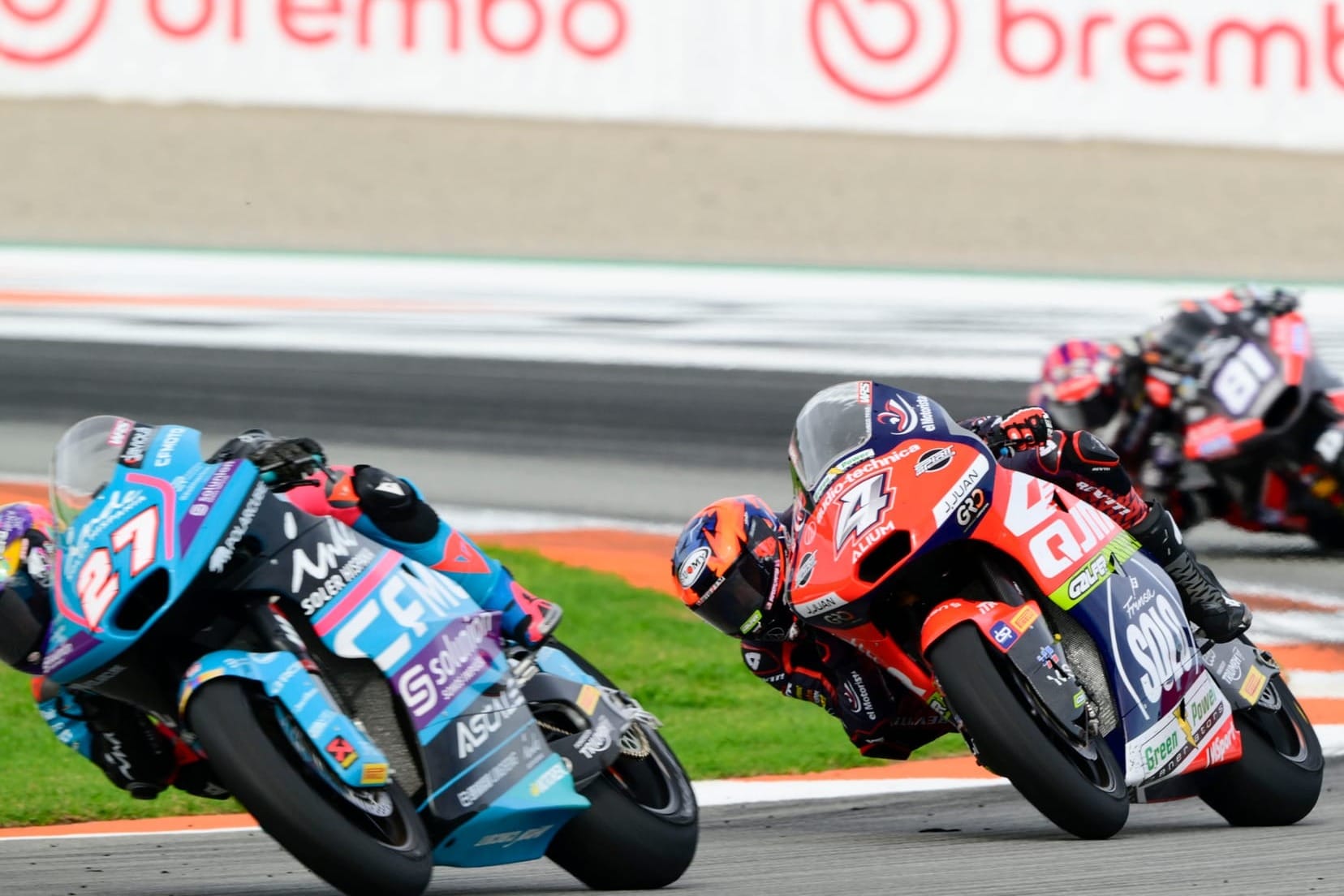
"We showed that last year [2024] the level [in Moto3] was really high - because we arrived in Moto2, it's not usual at all that four rookies make the podium. The level is incredible," said Ortola (#4, above).
To quantify their early intermediate-class impact, let's take a handy metric: average race position lap-by-lap, which basically tells you 'if I look at the live timing during the race, where am I likely to see this rider' - and see how Moto2's 2025 crop compared to all of their fellow intermediate-class rookies since Moto2 replaced 250cc in 2010.
The criteria is that riders qualify if they completed more than 75% of the relevant season and hadn't made 10 or more Moto2/250cc starts in prior years. Fitting the bill are 117 riders, and in gathering the data I've 'grandfathered in' another rider, Alonso Lopez, who falls one start short of the 75% mark but was so good it would've been dishonest to omit him.
Moto2 rookies by average race position
1 Raul Fernandez, 2021 - 2.49
2 Alonso Lopez, 2022 - 4.69
3 Maverick Vinales, 2014 - 4.87
4 Marc Marquez, 2011 - 4.98
5 Alex Rins, 2015 - 5.77
6 Joan Mir, 2018 - 6.92
7 Andrea Iannone, 2010 - 6.99
8 Dani Holgado, 2025 - 7.34
9 Pecco Bagnaia, 2017 - 7.79
10 Pedro Acosta, 2022 - 7.86
...
18 David Alonso, 2025 - 11.03
26 Ivan Ortola, 2025 - 12.00
40 Collin Veijer, 2025 - 13.82
58 Adrian Huertas, 2025 - 16.30
93 Yuki Kunii, 2025 - 22.79
Now, firstly, the 2025 Moto2 grid aside: yes, that Raul Fernandez number is a genuine absurdity (the Ajo team was very strong that year), and yes, that top 10 is filled entirely with MotoGP studs apart from the aforementioned Lopez (who may have missed his premier-class boat).
The field has shrunk: 41 riders started the first-ever Moto2 race in 2010, only 27 lined up for the most recent - so take the pure numbers with a grain of salt, but a lot of these guys are in a promising range on this table.
Holgado, a revelation in 2025, is in elite company. Alonso (18th) is one spot behind Bradley Smith and one ahead of Scott Redding. Ortola (26th) compares solidly with guys like Enea Bastianini (23rd), Fabio Di Giannantonio (24th) and Alex Marquez (29th). Veijer (40th) is right ahead of Miguel Oliveira (42nd), Fabio Quartararo (43rd) and Pol Espargaro (45th).
With the entire MotoGP field's contracts expiring, the smart money would bet on at least one of those guys - Alonso or Holgado or both - moving up in 2027. But even three of these riders joining MotoGP isn't necessarily out of the question.
Alonso will remain the prized jewel, on the heels of a Moto3 title won in crushing fashion through Valentino Rossi-like race management genius - which was also on full display once he got into his groove in Moto2.
He started adrift, not helped by injury in the off-season, but gradually got "more complete", whether it was learning high-speed corners or wheelie management - though qualifying clearly remains something of a puzzle (and he feels there's a step to be made in knowing when to push and when to manage his pace).
Aspar team-mate Holgado leaned on his single-lap prowess (six times on the front row, four of those on pole - both numbers only eclipsed among Moto2 rookies in the last decade by the exceptional 2021 Fernandez).
Mentored by "very important person in my life" Pol Espargaro, Holgado said he is leaving any MotoGP contact right now to the KTM tester and others - but that interest must exist.
For Veijer and Ortola - the much taller pair among the quartet - 15th and 16th in their first season is very much at the right level still. That should be a lesson to take away from Diogo Moreira, who parlayed 13th as a rookie into the title in his sophomore year.
Veijer struggled at the outset, burdened by a horrible loss in his family (seven-year-old cousin Sid died in a bike training accident in January).
It was such a rough year that an arm break was, in Veijer's words, "better, to reset myself" - and he more than septupled (yes, really) his points tally over the last 10 rounds.
Ortola also peaked towards the end, ranking as the grid's fourth-best Boscoscuro rider in a down year for Kalex's big Moto2 rival.
"It's not a bad bike, it's a good bike, but in my opinion I think it needs more consistency. It depends [too much] on the track," Ortola said - and he welcomes a switch to Kalex in his team for next year.
It is not at all fanciful to imagine a scenario where all of these guys make it to the MotoGP promised land. Of course, there is no shortage of rising stars climbing the ranks behind them, too, led in hype by the exceptional Maximo Quiles, but all will need to prove what Holgado, Alonso and to a lesser extent Ortola and Veijer already have.
"It's all good and well being fast in Moto3 - but to step up to Moto2, then it's another ballgame all together," said intermediate series veteran Jake Dixon.
"You see a lot of riders that - especially more in the Dunlop era - stepped up, [2019 Moto3 champion Lorenzo] Dalla Porta for instance, people like that, and that really struggled.
"I think now the transition is a little bit easier with Pirelli [tyres] because you can get away with running that Moto3 style. Holgado has very much taken his style from Moto3 but just brought it to Moto2. And I think it works a little bit more."
Pirelli, though, is about to supply MotoGP tyres, too.
So if you were a MotoGP midfielder eager to extend your career, these upcoming couple of years might be a more anxious time than the years immediately prior.