Dispelling the myths of an impressive Formula E record
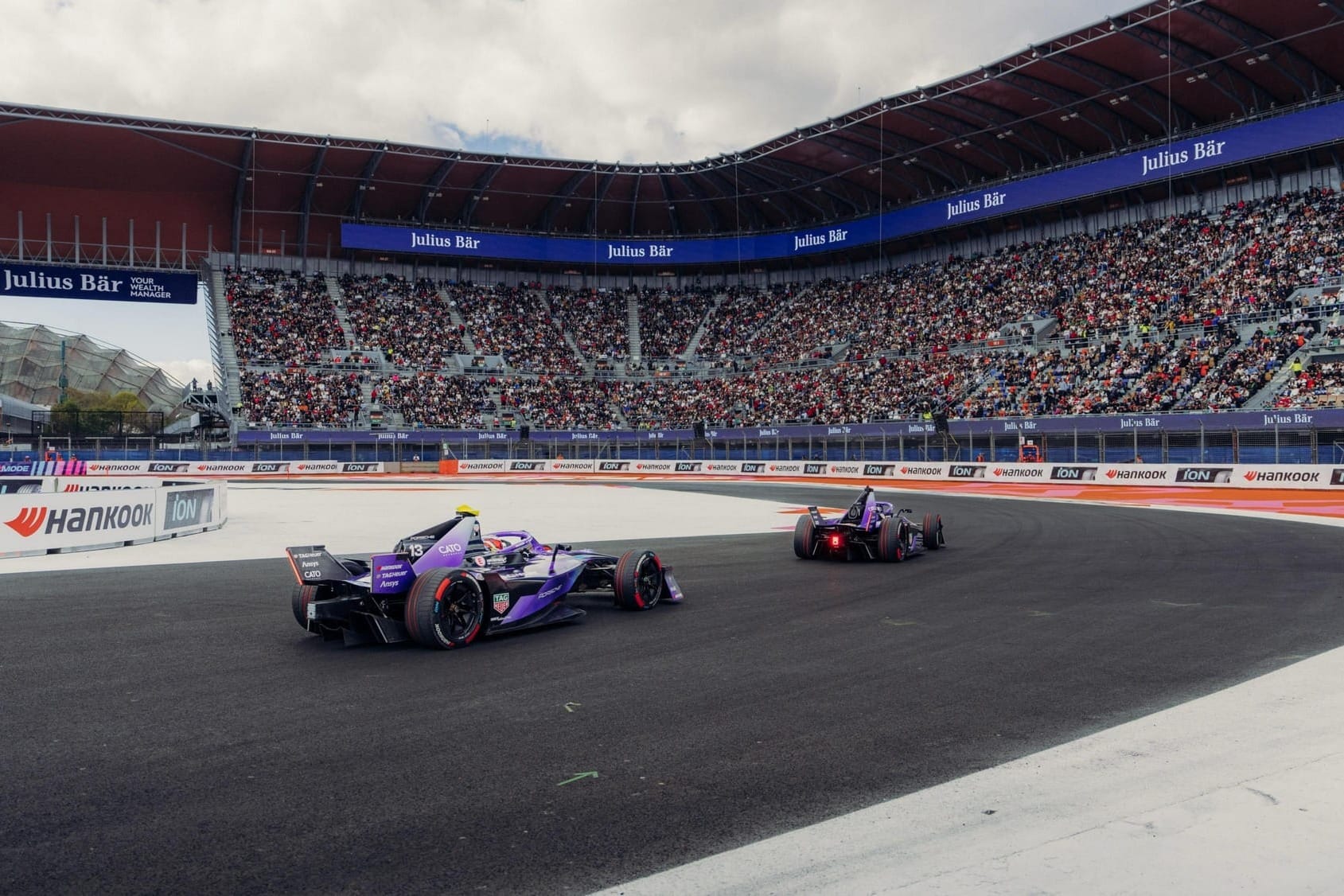
A new year, but the same question: why is Porsche so prolifically good at the Autodromo Hermanos Rodriguez?
Yet, like the imposingly fun 'Day of the Dead' - or 'Día de los Muertos', as the locals call it - there is more than just a bit of mythology associated with this streak of Formula E success.
How do you answer a myth? Or does Porsche already have a stereotypical and metaphorical beach towel laid out on the Autodromo Hermanos Rodriguez podium already this weekend?
Whether or not Porsche does actually hold a slender advantage, you can't argue against its amazing record up in the rarified air of Mexico City.
Porsche's Mexico City success
2020: pole position (Andre Lotterer)
2022: race 1-2 (Pascal Wehrlein; Lotterer)
2023: race 1-2-4 (Jake Dennis (Andretti); Wehrlein; Lotterer (Andretti))
2024: pole position; race win (Wehrlein)
2025: pole position, front-row lockout (Wehrlein; da Costa); race 2-3-4 (Da Costa; Wehrlein; Dennis)
It's easy to understand how a myth was perpetuated. Porsche has something special in Mexico City; Porsche has something in its powertrain that is accentuated at high altitude; Porsche has a tyre pressure or vehicle dynamic trick; it’s the inverters....something 'special' there. And so it goes on.
The high likelihood is that none of those are accurate and in fact a combination of the Porsche 99X Electric's efficiency, the traction and rotation of the vehicle in crucial track areas, a deep understanding of the rubber/track surface, and simply the team executing strong operational weekends early in the season all contribute to the impressive streak.
Similar to Jaguar's excellence at London ExCeL - four wins in the last six races - Porsche has been on one in Mexico for the last five seasons. Its front-row lockout last season was as conclusive as any seen in a Formula E race, with polesitter Wehrlein and then team-mate da Costa.
Back to the mythology. Don't buy the altitude and low air density thing. If this were a turbo or naturally aspirated formula then yes, fair enough. The one area where Porsche may have a tiny advantage could be a mega cooling package that is more efficient at a lower air density. But we just don't have any evidence of that to toss into the myth machine.

Instead let's look at the tangibles. The Porsche 99X Electric has very good traction, especially important for the crucial, low-speed Turns 5-6 sequence and again in the final sector, the famed cauldron of the Foro Sol complex. DS had a similarly impressive rotational dexterity last season, ditto the traction. Mahindra is evidencing so far this season that it may join them in nimbleness where it matters.
Then there is the unseen. The teamwork. Is it just a coincidence that Porsche has been so good at a race that is always at the start of the season?
Hitting the ground running and maximising track time is an obvious point but Porsche is, generally, already on point with its programme from the very first lap of shakedown or free practice. Those small incremental organisational elements are key and they help.
Then there is the software and controls that the Porsche 99X Electric possesses. The car is consistently strong over a lap of the Autodromo Hermanos Rodriguez and on pace and energy consumption it is the clear benchmark. This is especially evident at the final long Peraltada right-hander which in Formula E configuration is a real challenge.
In the past, we have seen Edoardo Mortara and Maximilian Guenther lose control of their cars exiting this corner. It can happen in the blink of an eye. Qualifying is one challenge but the race is another and having the right blend of pace and energy management getting on to, and negotiating this part of the track, is vital. But Porsche is an expert at taming it.
"Good performance in race conditions for Autodromo Hermanos Rodriguez is always defined by performance through the final corner," reckons former Mercedes and McLaren chief engineer, Albie Lau, now an expert voice for Formula E's TV coverage.
"If the car/energy management is good there, it pays so many dividends on energy. Just timing the lift, and how much of a lift, through there makes or breaks the race from an energy standpoint."
When you view back some of the Porsche 99X Electric's quickest laps from previous seasons, you see the confidence of the drivers oozing through the cockpit. While rivals are sawing at the wheel, feeling the adhesion, Wehrlein is making tiny inputs and blending the throttle in a much smoother modulation.
But Porsche is not unbeatable at this track, as Oliver Rowland will attest. Last year he vanquished the Porsches (although this was affected by two safety cars).
There was also some intra-play with Wehrlein and da Costa last season too. This was just a few weeks after the pair fell out terminally at the Sao Paulo E-Prix, when some horseplay on the driver's parade went wrong.
In Mexico City, da Costa was adamant he was not playing second fiddle come what may, and the interchange of the attack modes they both had and the track position that went with it was not appreciated by Wehrlein. But the pair still got second and third, although had David Beckmann not clashed with Zane Maloney at the entrance to the Foro Sol, bringing out the second safety car, Porsche may well have had a clear 1-2.
Instead, the snatch vehicles scooped up the Cupra Kiro-Porsche and saved Rowland - as he was able to impressively scythe past both factory Porsches and Dennis to grab the first win of his title season as the race became a flat-out sprint, negating Porsche's energy advantage.
In the end, Porsche was beaten. In reputation and moral arbitration, it was really still the Mexican king.
Yet Wehrlein, Nico Mueller, Dennis et al will find this season's race in Mexico City, Porsche's hardest yet. With the Gen3 Evo learnings all but exhausted, the opposition is getting wiser to being handed its early-season manners and lessons by Porsche.