Everything you need to know about Toyota's revamped Hypercar
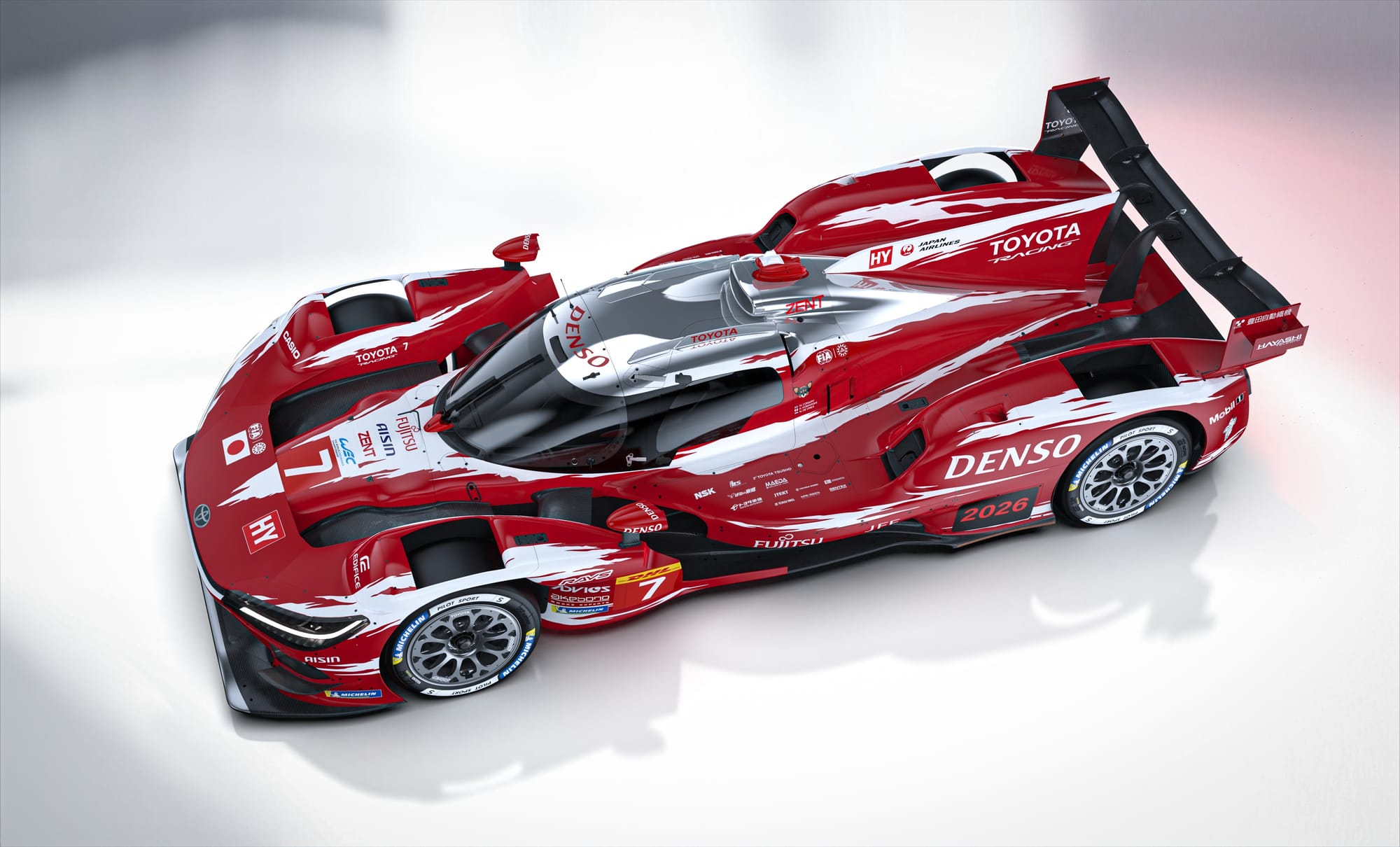
When Toyota Racing released the first official images of its 2026 LMH for the World Endurance Championship last week, the visual overhaul immediately caught the eye. What was missing, however, was the detail – no technical data, no clear explanation of what this new car was really meant to achieve.
While the name has changed, this new TR010 Hybrid is not a clean-sheet Hypercar. It is the latest evolution of the GR010 Hybrid that has raced in the WEC since 2021. And as Toyota knows better than anyone, evolution in the Hypercar era is more about navigating regulation constraints than outright performance.
So why make these changes now? And can this third major evolution finally put Toyota back on top at the Le Mans 24 Hours?
To understand the thinking behind the TR010, The Race spoke to Toyota Racing technical director David Floury.
A delayed evolution but a deliberate one
This evolution was never meant to wait until 2026. Toyota's original plan was to introduce it a year earlier, following two consecutive defeats at Le Mans with the outgoing GR010 package. Instead, the project was delayed for external reasons.
"We made the decision to go ahead with this evo during the first half of 2024," Floury explained. "Initially, the plan was to homologate it for last season. But because the ACO and the FIA had to change the homologation windtunnel from Sauber to Windshear, all 2025 cars had to be homologated at Sauber before the end of December 2024, for contractual reasons. Given the timing, it simply wasn't possible for us, so we decided to postpone it to 2026."
What could have been a setback became an opportunity.
"This year's Le Mans [2025] convinced us to go further," Toyota Racing vice-president Kazuki Nakajima admitted.
The delay allowed Toyota to deepen its work and reassess its direction after a bruising 2025 season – one that was disappointing on track, yet paradoxically still ended with second place in the manufacturers' championship.
As we explained many times, the TR010 Hybrid represents the third major step in that evolution – and arguably the first that has not been forced by late regulatory intervention.
What has actually changed?
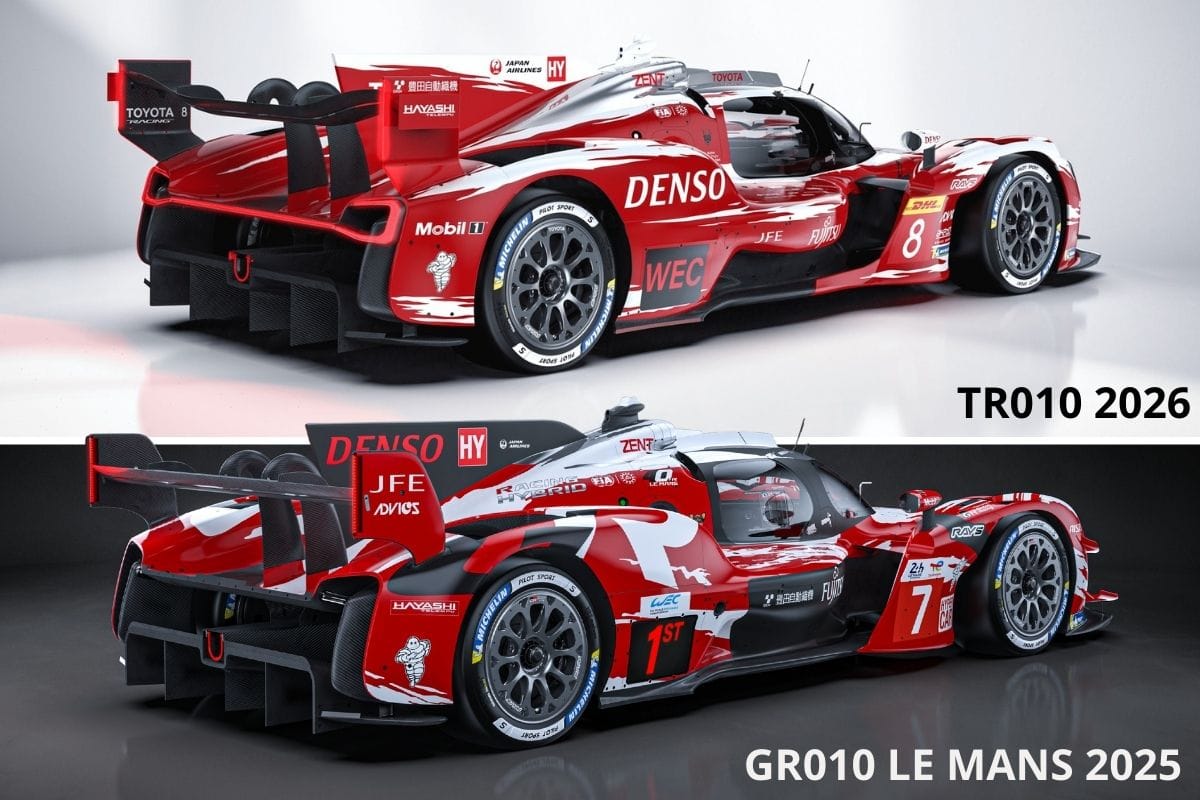
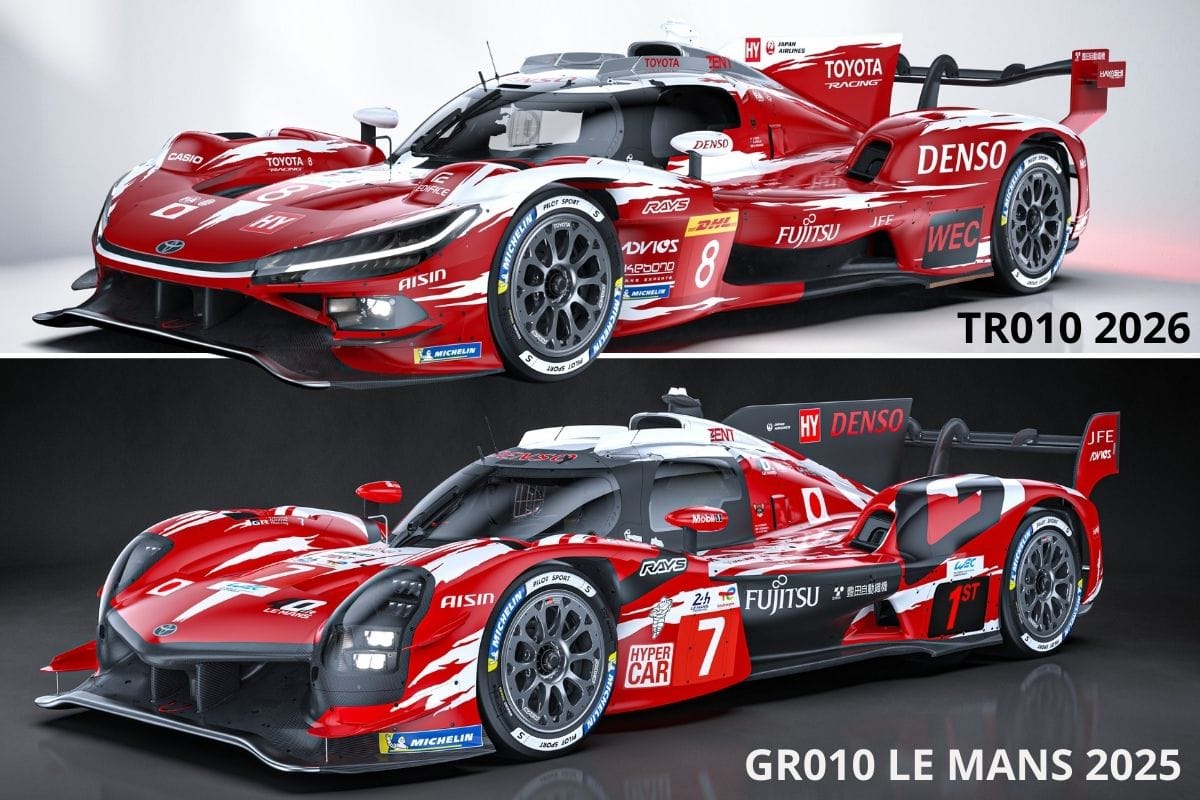
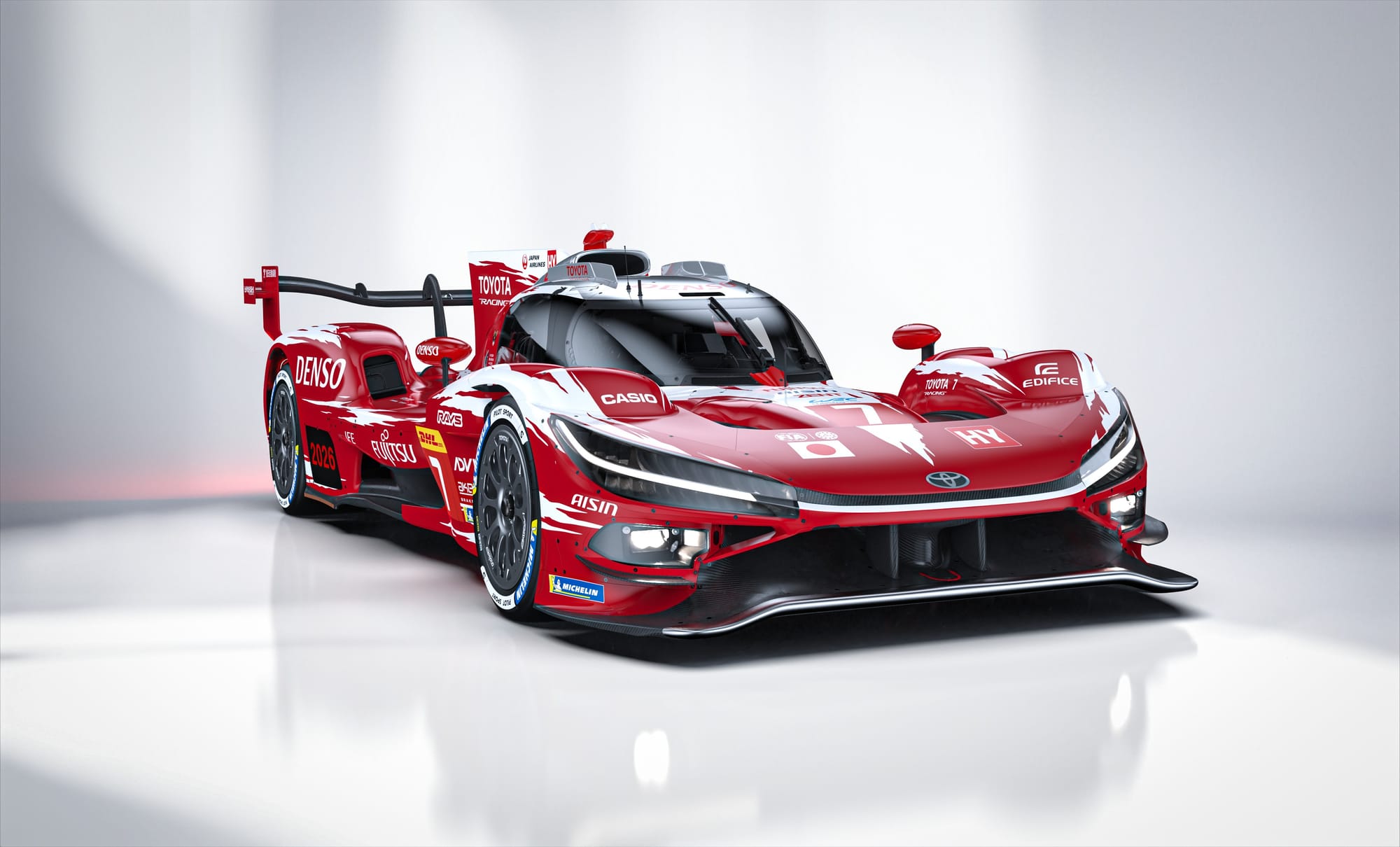
Visually, this is the most radical-looking Toyota Hypercar yet. The front bodywork, engine cover and rear wing have all been redesigned, but the changes go deeper than that. The sidepods are new, the headlights have been completely reworked, and the overall aero has clearly been revisited.
Aerodynamics were the core focus – but they were not the only consideration.
"Until now, there hadn't really been a strong effort to integrate the styling of Toyota's road cars into the Hypercar," Floury said. "There were discussions when we updated the car ahead of the 2023 season, but nothing came of it. This time, I paid particular attention to that aspect, and we started working on it much earlier."
That shift is also reflected in the livery. The black colour scheme has been replaced by red and white, recalling the tribute livery run by the #7 GR010 Hybrid at Le Mans last June in honour of the legendary 1998 GT-One.
"The livery was very well received, so we decided to apply it to both cars," Floury explained. "The team has also changed its name, moving away from the Gazoo Racing branding. Historically, Toyota's colours are red and white, so it made sense."
Symbolically, this is Toyota reconnecting with its endurance racing identity. But symbolism alone does not win Le Mans.
Not a rethink
Was the goal once again to improve the car's balance?
"The 2026 package is mainly about aerodynamics," Floury said. "The mass distribution hasn't changed. We haven't touched the mechanical side. There is the question of top speed, but the primary objective was to make the car more consistent and easier to drive."
That insistence is revealing. Instead, this evo is about refinement within increasingly tight constraints.
"We mustn't forget that the cars have to fit within a performance window, which limits how much we can reduce drag or increase downforce," Floury added. "In the end, a new package doesn't necessarily revolutionise everything. Even with a new aero development, the car still has to sit within the performance window defined by the regulations."
In other words, progress is real – but controlled.
The Le Mans top-speed problem
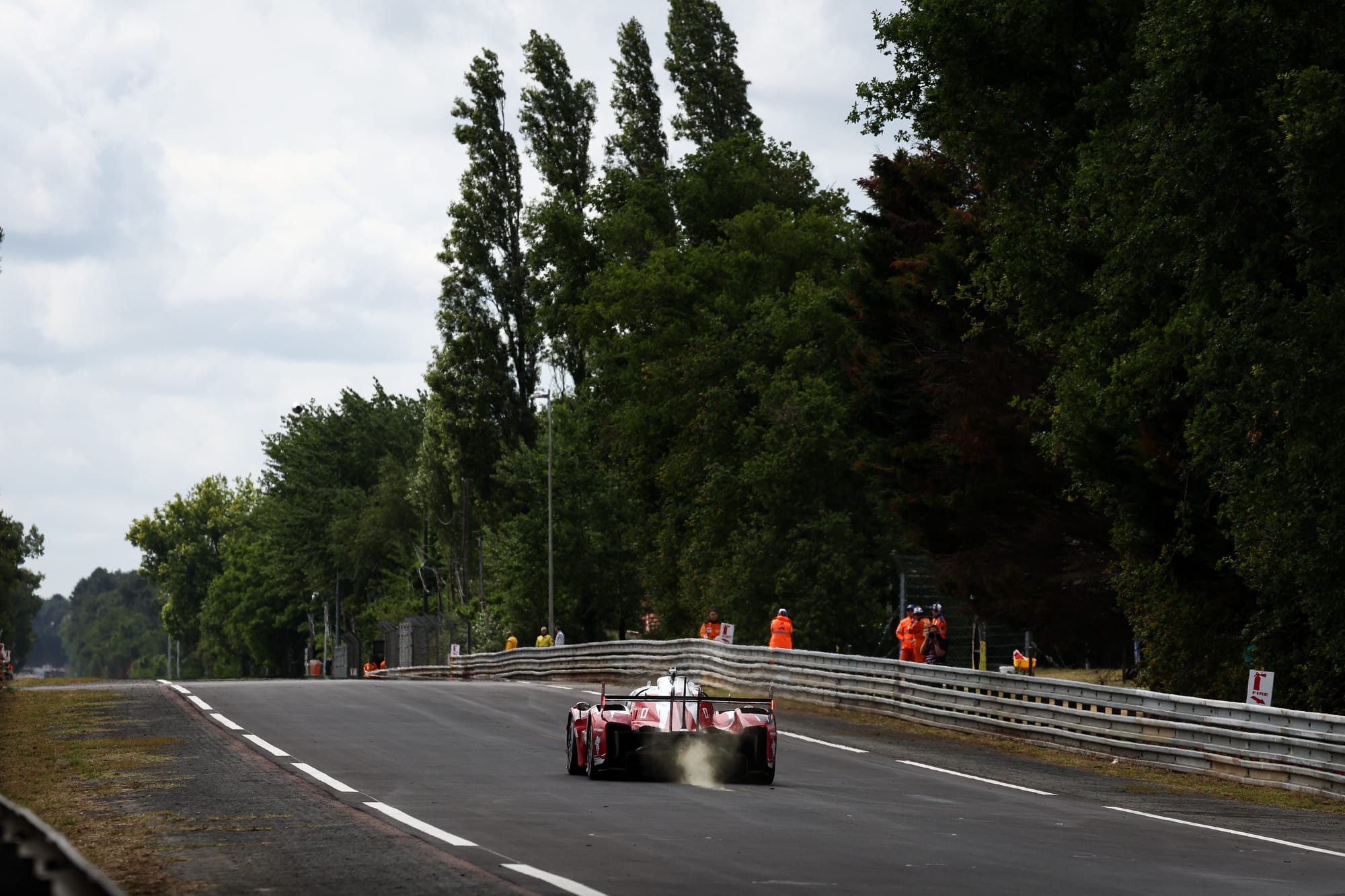
Few topics have frustrated Toyota more at Le Mans than top speed. Even with the introduction of the dual-band BoP intended to equalise straightline performance, the GR010 has often looked vulnerable on the long straights.
"There's no clear conclusion on that topic," Floury said. "But once again, we are limited by the drag range in which the car can be homologated. The window is quite narrow, which doesn't give us much freedom."
That narrow window defines almost every development choice. Toyota can chase gains, but only within boundaries that limit how far any weakness can truly be addressed.
The focus on drivability reflects that reality. Consistency over a full stint matters more than peak numbers. The previous car also suffered from fluctuations in aerodynamic load – something this evolution is intended to stabilise.
"But we've only done two two-day private test sessions so far, so we'll wait for the races before drawing any definitive conclusions," Floury cautioned.
A car to fight the BoP?
Such a thing doesn't really exist – if it did, it would be too easy. The GR010 has often been the heaviest and least powerful Hypercar in the field, or at least the one with the weakest weight-to-power ratio. That has shaped Toyota's recent seasons.
"Yes, we tried to take that into account," Floury admitted. "In the 2024 and 2025 seasons, we had to deal with a car that was relatively heavy and not very powerful below 250km/h [155mph]," he added. "So we tried to factor mass into our studies."
On the other hand, the dual-band BoP introduced for Le Mans 2024 does not fundamentally change Toyota's conceptual approach.
Testing: Making every day count
As an established manufacturer, Toyota does not enjoy the testing freedom granted to new entrants such as Genesis, which remains unrestricted until the homologation of its GMR-001 at the season-opening Qatar 1812km.
Without an IMSA programme and without customer teams, Toyota is limited to just six test days, only two of which can involve running two cars. That has forced careful planning.
Toyota saved most of those days for late 2025, enabling a direct comparison between the 2025 and 2026 cars during the TR010's first outing at Paul Ricard in early October.
"The idea was to have a reference point with the 2025 car and accurately measure the gains from the evolution," Floury said. "It also allowed us to simulate traffic conditions.
"Overall, it's positive, but once again, aero process and wind tunnel have changed. Many of our competitors have also been working hard, so we're certainly not counting our chickens before they hatch."
A second test followed in mid-December at Lusail, the venue for the opening round of the 2026 season on March 28, after the car was homologated in November. Further running is planned before the season begins, including another Paul Ricard test later this month.
Resetting after a difficult year
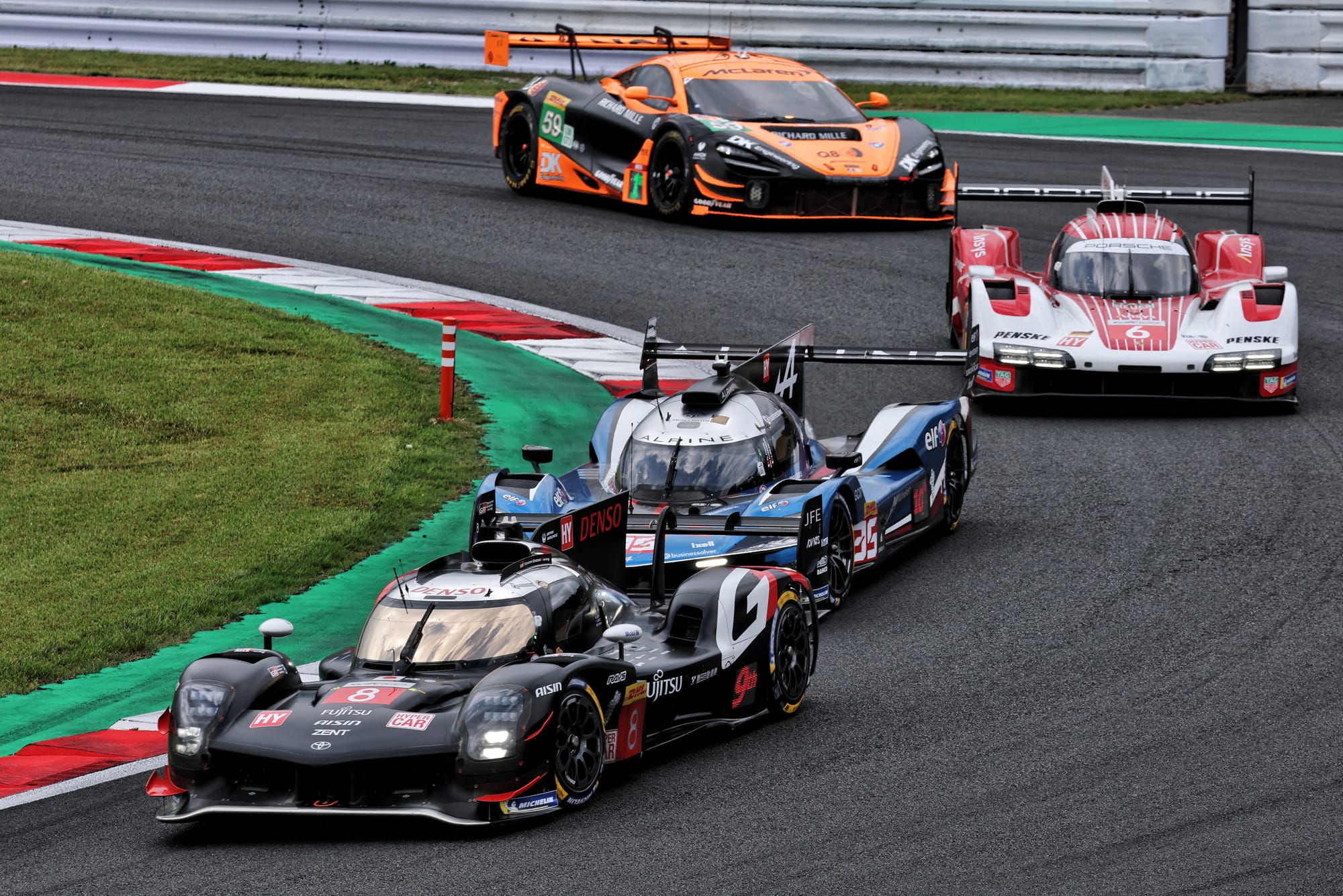
Toyota's 2025 campaign was shaped by a particularly harsh BoP. The pressure told, and the second half of the season featured several uncharacteristic mistakes.
"I've never hidden that," Floury admitted. "I think we had a very strong start to the season. Despite an unfavourable context, we were close to the optimum in the first three races. At Le Mans, we didn't have the performance level to win, but we also didn't run a perfect race."
"Even so," he added, "before the right-front wheel failure, the #8 was – among the Hypercars – the car running the cleanest race in every respect. But to win Le Mans, you have to be perfect from 4pm to 4pm, and we weren't."
Races at Austin and Fuji were more difficult still.
"We had very average races there," Floury said. "And psychologically, when you're used to fighting at the front, it's hard to find yourself in the situation we were in during 2025. Then at Bahrain, we ran a strong race and got back to our usual level."
That recovery, combined with a more coherent BoP among the leading teams, allowed Toyota to secure a 1-2 finish in the finale. Maintaining that level – and ensuring this evolution delivers under Le Mans constraints – will be essential if Toyota is to end its three-year drought at the world's greatest endurance race.
Especially given that the competition has not been standing still.