What we learned from a surprising Red Bull-Ford launch
Red Bull Racing's participation alongside sister team Racing Bulls at new engine partner Ford's season launch was a pleasingly revealing way to start Formula 1's pre-season.
We never expected Red Bull to show off a real car at this event and what we were all looking at in Detroit was just a standard show car based on the generic interpretation of the new 2026 rules.
But along with some useful nuggets throughout the launch itself, there was a twist in the livery reveals as the studio imagery published by Red Bull Racing and sister team Racing Bulls clearly showed several details different to anything we've seen so far about the new cars.
Best 2026 car hints yet
So, were we given a big clue for the real Red Bull Racing and Racing Bulls designs, given they never teased this as a car launch and haven't called them by their 2026 model names in any launch material?
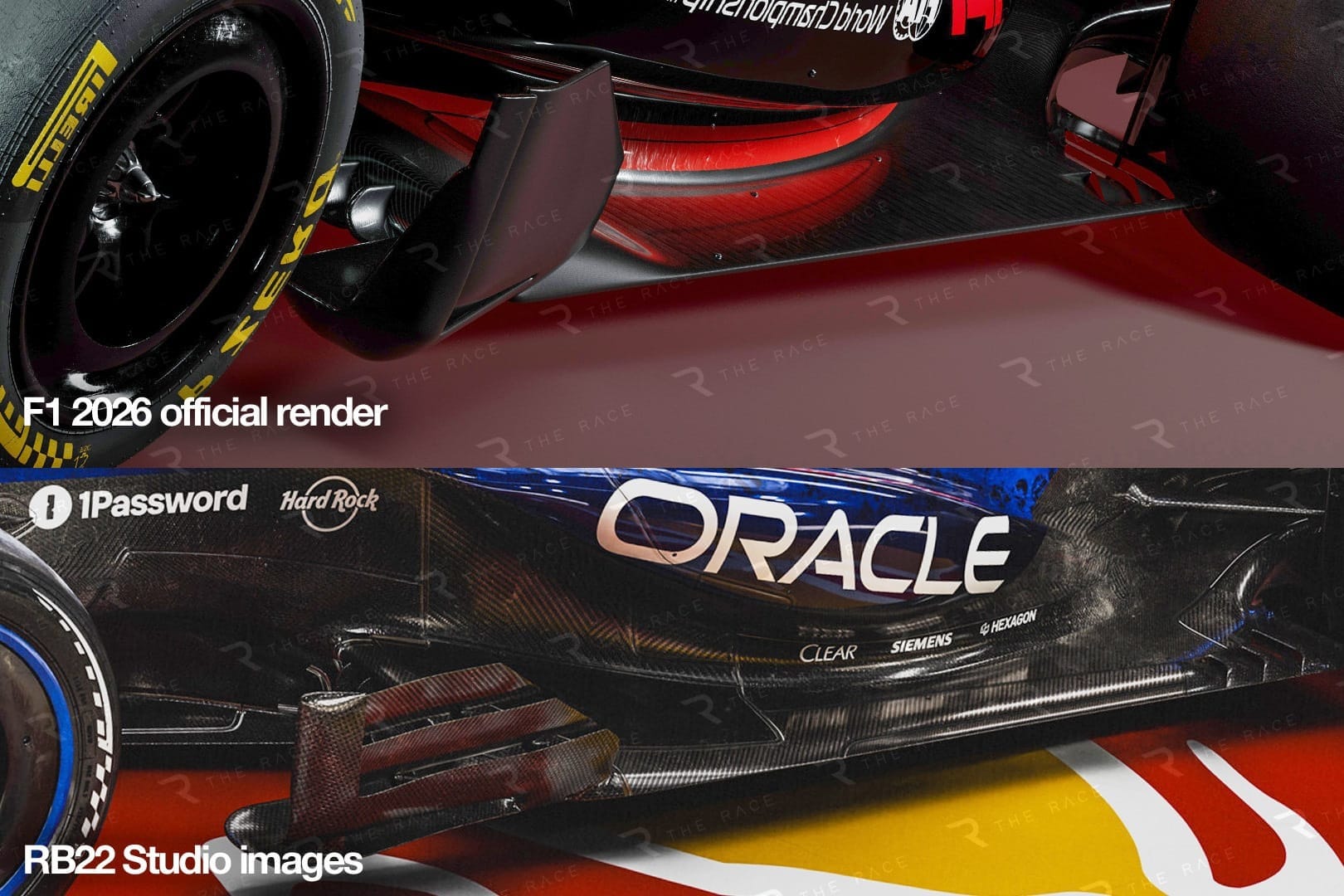
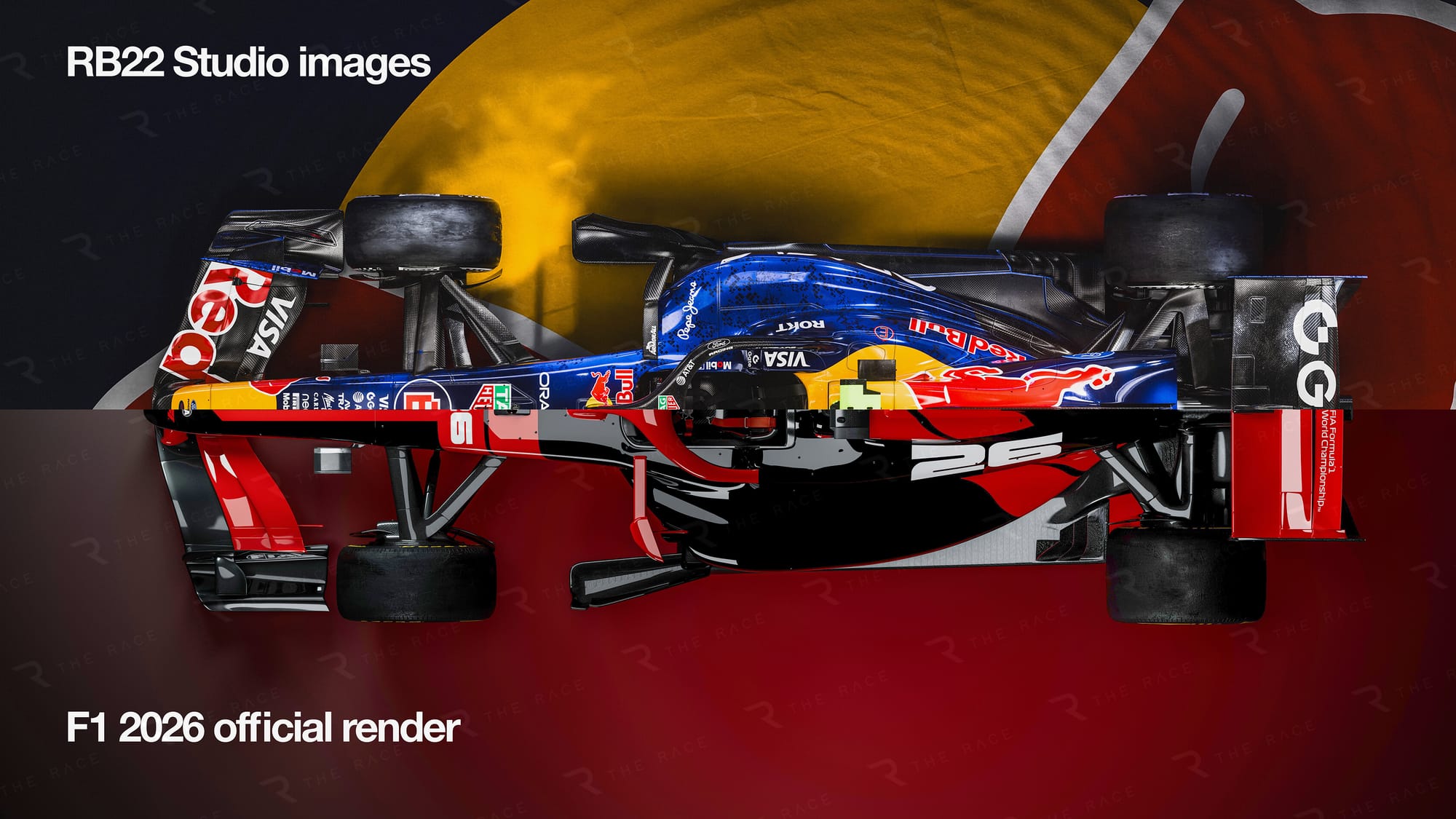
Not quite. But the studio imagery is genuinely different to the F1 show car built by Memento - which is what Red Bull had on-site at its launch.
It represents Red Bull's own visualisation of the rules while stopping short of being a definite hint at the final RB22. Whatever the reason, Red Bull's created its own 2026 mock-up. And that makes it the most relevant interpretation of the 2026 rules yet.
The differences are plentiful, from detail work around the new-look front wing endplates, front brake ducts, sidepods and floor, to things like a more mature forward fence at the front of the floor, split into three elements rather than one big block.
It actually looks like a lightweight version of the super complex bargeboards that used to occupy the space around the front of the sidepod and floor before the 2022 rules eliminated them.
If there's anything here that does tempt us into predicting an RB22 design cue, it's the cockpit position and the suspension layout.
The cockpit is further back than the F1 model - which is what you'd want in terms of optimising the car's physics - and the front suspension is pushrod compared to pullrod on the F1 model, which seems like an odd detail to go to the effort of changing.
Unless, of course, Red Bull's just trying to throw us off...
Again, they aren't real cars, so it would be futile to spend much time pondering the significance of them.
But if nothing else it's a good indicator of where we should be looking to see points of differentiation with the new rules having only seen a vanilla interpretation from the rulemakers themselves until now.
'Struggles' are expected
It's very clear that expectations about the Red Bull power unit, at least in the short-term, are being carefully managed. This was encapsulated in Red Bull team principal Laurent Mekies echoing a similar line to the one that was regularly invoked by predecessor Christian Horner.
"Going to the first year and thinking to be straight away at the level of the competition who have been doing it for perhaps 90 years for some of them will be naive," said Mekies.
Instead, the focus was on the longer-term. Being one of only two teams (alongside Ferrari) that produces the car and engine under the same roof and the overall ambition of the ground-up project were both stressed.
However, all of this came with a warning about early difficulties that indicate Red Bull is either setting itself up to dazzle everyone with a strong product straight out of the box, or far more likely that it is aware that it has some work to do.
"We have the confidence of having put together an amazing group of people, an amazing group of partners, and we will go through the struggle, we will eventually come out on top," said Mekies. "Bear with us in the past few months, and I think these initial difficulties will be a good reminder of how much we went through to eventually get on top."
...but nobody told Bill Ford
Despite the caution over power unit performance, Ford executive chairman Bill Ford, the great grandson of the legendary Henry Ford, wasn't backward in coming forward.
He produced the kind of quote that will be referenced endlessly should the alliance with Red Bull not ultimately succeed. "Together, we're going to be unstoppable," he declared.
There's nothing wrong with being honest about targets and talking of the long-term objective being to win, but this is the kind of bombast that weighs heavily if things don't go to plan.
Then again, much of Ford's success in F1 has been when it has put money into an engine programme for the phenomenally successful Cosworth DFV, rather than having direct oversight, so perhaps such confidence is better-placed than if this were a full-on Ford project.
Needless to say, there was no reference to the fact that Red Bull Racing rose out of the ashes of the dismal Ford-owned Jaguar F1 project...
Ford's role beyond branding
This launch showed how seriously Ford wants its presence to be taken. There is a fairly significant, but subtle, incorporation of the manufacturer into the visual identity of the team and car - with a shift to more Ford-esque colours, while the Ford logo features discreetly on the back of the engine cover and the nose.
But that all mainly plays to the commercial and marketing side. Ford seems quite sensitive to insisting it is contributing to a real technical partnership - despite this launch coming across a lot like a Red Bull engine programme that has a bit of Ford on top, which reflects the reality.
What are now branded Red Bull Ford Powertrain factories were built and the first version of an engine had been developed before Ford got anywhere near the project a year later.
There are some Ford engineers embedded within Red Bull Ford Powertrains and Ford also played a part in filling some holes in the recruitment process. Ford's manufacturing capability has also been exploited, too.
One example is providing equipment capable of 3D printing with industrial metal, which is said to be much faster than using traditional suppliers making castings out of big moulds - and which got an unusual amount of attention in the launch event as Ford and Red Bull gave the engine programme a lot of airtime, which was good to see.
Going old school for new era
There was a lot of old-school Red Bull about this even though it was a Ford event, like incorporating a plane into the car's (eventual) unveiling.
But in another genuine surprise, the Red Bull livery is quite strikingly different - from a tweaked colour scheme to the underlying design and the return to the classic Red Bull logo with a white outline on the front wing and engine bodywork.
It's slightly 'back to the future' by reviving Red Bull styling that hasn't been used in F1 in 10 years, and the older gloss finish instead of the matte that became so familiar with this team in recent seasons.
And Red Bull itself admits this deliberately "harks back to a more classic Red Bull Racing presence".
The revamp feels very significant given the 2025 departures of Christian Horner and Helmut Marko, almost a final act of the new broom sweeping through Red Bull's F1 operation after so many changes of late.
It's a new era that Red Bull wants to make clear is going back to its roots, closer to what the main company wants, after moving too far in an independent direction the current ownership clearly disapproved of.
Long-awaited change is a good thing
Red Bull has been innovative in so many ways in F1, so it's become frustrating how stagnant and uninspiring its liveries have been for well over a decade. Probably the 2013 splash of purple was the last genuinely interesting livery 'innovation' on a full-season Red Bull.
Thankfully, Red Bull has corrected that with a really smart 2026 paint job, one that looks much better in properly lit render form than at the glitzy Detroit launch. And one that Max Verstappen admitted features something he's wanted for a while: glossy paint.
The lighter Ford blue across the sidepods and body of the car makes a big difference, and looks really crisp from the top-down view in particular.
And the blue on the front and rear wing endplates is striking from the side-on angle.
The blue wheel rims won't be to everyone's taste - you'd be forgiven for thinking the car has wet tyres fitted at first glance - but it's a nice bit of innovation in the same year teams have the flexibility to design their own wheel rims.
The Ford badging fits well, big enough to be visible, but not big enough to dominate the livery like Cadillac's testing scheme.
You had to sit through a lot of noise from Ford and Red Bull to get to it, but fans hopefully won't feel short-changed by seeing the first genuinely different Red Bull livery for a long time.
Engines will also be a tribute
One of the most subtle parts of the launch was the reveal that the first ever Red Bull engine has been christened DM01.
It's a tribute to the late Dietrich Mateschitz. The Red Bull co-founder, who died in 2022, was responsible for the sprawling F1 empire the company now has and all the success it enjoyed.
He green-lit the proposal to set up an engine company when Red Bull knew it needed to plan for life after Honda and while his legacy has long been without question in F1, putting his initials on the engine models is a small but significant immortalisation.
"He made that unbelievable decision at the time to put us onto that route of being completely independent, with both the chassis and the power unit," said Mekies.
"He was not scared by the scale of the challenge, and today we have our opportunity to pay tribute and hopefully to make him proud."
Hadjar has an honest target
There was an undercurrent of managing expectations for the immediate future throughout the launch, but not for Isack Hadjar.
He is always pleasingly direct and true to himself, eschewing the fluff and PR speak that some use to obfuscate and over-complicate. When asked what his goals were for 2026, he said what you would expect any serious racing driver to do if they were being straightforward.
"A maiden race win will be good," he said, before adding "at least". That's Hadjar in a nutshell, setting sky-high goals simply because that's how a racing driver good enough not only to get to F1 but land a top seat thinks.
It was the only time that anyone got near to mentioning the w-word in the context of the coming season, albeit offered as an ambition rather than an expectation. And while some will look at the records of the revolving door of young drivers who have failed to get near the top step of the podium when thrown in alongside Verstappen and not take him seriously, it tells you much about Hadjar's mentality.
Racing Bulls an afterthought again
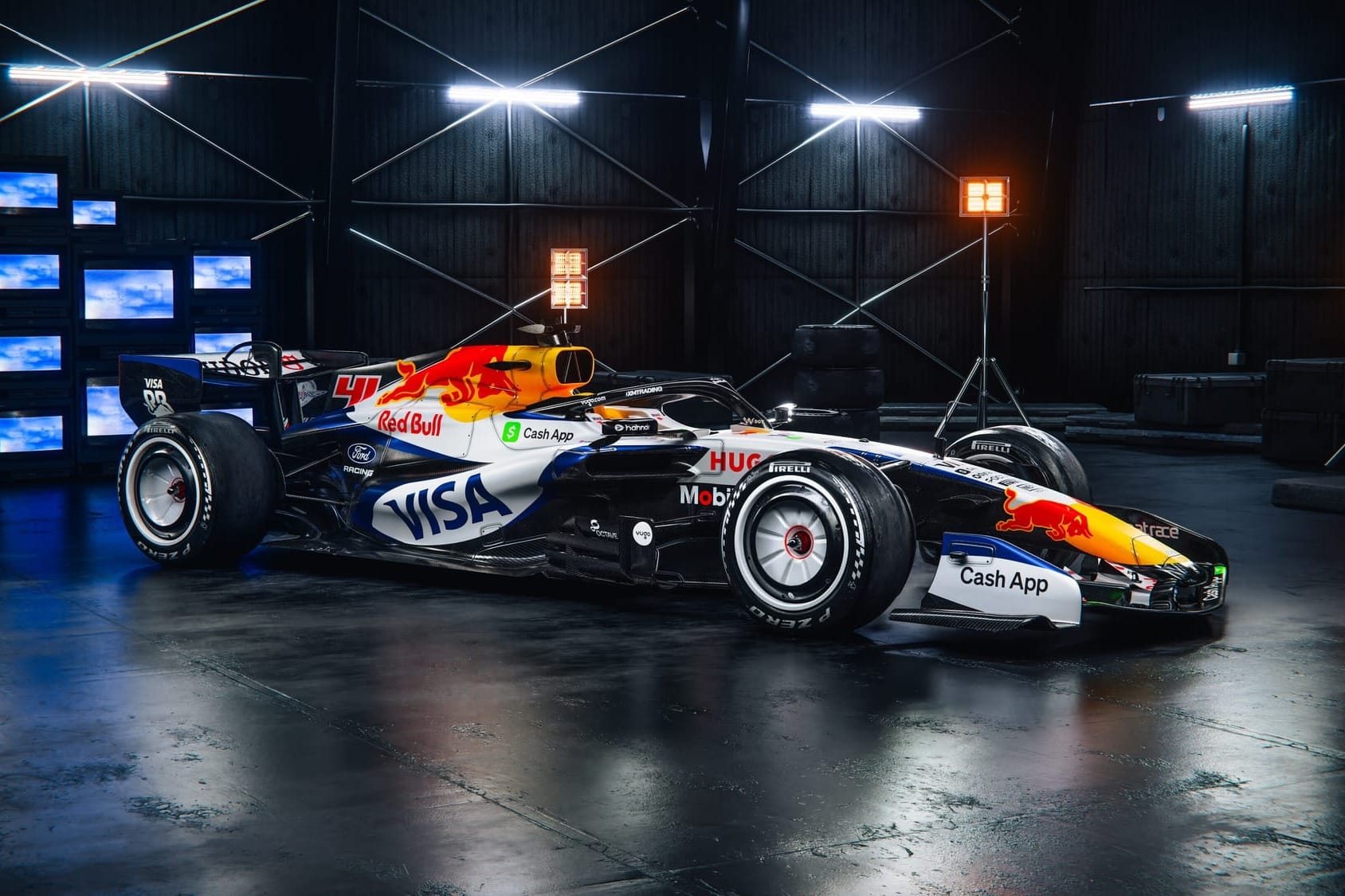
Red Bull's second team also put in appearance at the launch, continuing to be a team that's very much battling an identity crisis.
This time, it was back to being presented as a junior team, or "talent incubator" as CEO Peter Bayer put it, leaning heavily on the young and vibrant creator scene and setting itself up as "not your average race team".
The one enduring characteristic of this team is that it's always been one Red Bull has struggled to know exactly what to do with, ever since Mateschitz was leaned on by Bernie Ecclestone to buy the ailing Minardi team.
Liam Lawson and Arvid Lindblad did their best, but they were hardly given the best of scripts, particularly when it came to answering fan questions, which led to some social-media admin related 'banter' that was never going to hit the mark.
It was team principal Alan Permane who had the chance to come over as the most relaxed and genuine thanks to being able to lean on his genuine long-term connection to Ford in F1.
"I started working in Formula 1 a long time ago, 37 years ago," said Permane.
"The first car I worked on had a Ford engine, the first car I won a race with had a Ford engine, the first car I won a world championship with had a Ford engine.
"So to have Ford partnering with Red Bull Powertrains is a real full circle moment for me, and I can't wait to get started."