'Unstoppable'? Red Bull/Ford mixed messaging isn't what it seems
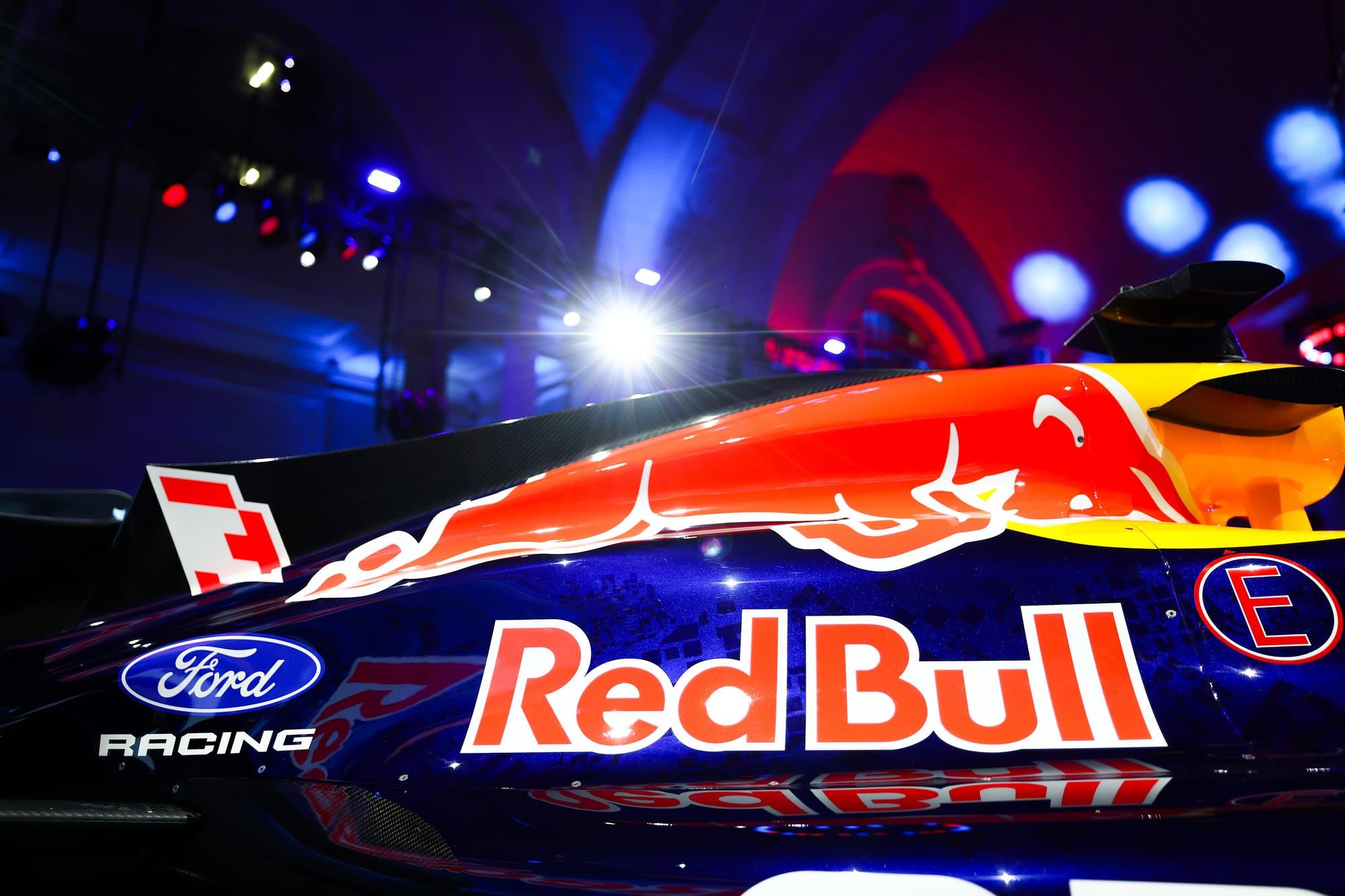
An intriguing element of the Red Bull Formula 1 launch in Detroit on Thursday night was what appeared to be some mixed messages about the prospects for its new Ford-supported engine project.
On the one hand, there were bold claims from executive chair Bill Ford - the great grandson of company founder Henry Ford - about the new partnership.
"Together we are going to be unstoppable," he declared on stage, as he bigged up the Red Bull-Ford alliance as one that was going to make history.
But just moments later, Red Bull team boss Laurent Mekies offered a more feet-on-the-ground assessment of where the project stood as he predicted difficulties ahead.
"We have an unreal challenge, and we have the privilege to be associated with it, to be involved in it," said Mekies.
"So yes, it comes with a few headaches. Yes, this comes with a few sleepless nights. But fundamentally, that's what fuels us."
These two different tones may appear to be slightly at odds, but if you dig a little deeper into the Red Bull engine project you realise that the disconnect is one of timeframes only.
In the short term, it could be a particularly tough start to Red Bull's journey as an engine manufacturer at the beginning of 2026.
But, when you find out what has been going on behind the scenes on the Red Bull campus in Milton Keynes, you sense an underlying confidence about where its starting blocks are and what its ultimate potential is.
A custom build
There was perhaps no better indication of the effort and focus going on at Red Bull Powertrains than its technical director Ben Hodgkinson electing to skip the season launch so he could instead keep working at the factory.
Indeed, as Red Bull's top brass took to the stage, Hodgkinson was burning the midnight oil in the dyno facility helping put a sixth-generation Red Bull power unit through Barcelona race simulations.
Hodgkinson had been one of the first engine recruits that former Red Bull CEO Christian Horner made, as he poached the talented British engineer from Mercedes.
Having good knowledge of what a championship-winning engine manufacturer should look like, Hodgkinson said what has been put in place is on the right level.
And what he felt gives the 700 staff, who are spread across the three factories, an edge is that Red Bull Powertrains was set-up specifically for the new 2026 regulations - so it has almost been tailor-made.
"When I first got presented with the opportunity, I loved the idea of it being a blank sheet of paper; not just the power unit, but the whole company," he said.
"We could custom build it around what we knew the regulations were going to be, and that was a really cool opportunity. I needed to try to turn that into an advantage."
Gains could clearly come in having the facilities built around what the new rules allow, such as maximising dyno numbers and sophistication, or tuning staffing levels and getting the right blend of equipment in.
But, according to Hodgkinson, there were some unintended benefits too that came from Red Bull doing something out of the ordinary and creating its own engine - one of which was attracting people with the right mindset.
"If it was deliberate we'd be geniuses but it was a bit of an accident," he smiled. "If you create a really bold and audacious project, it only really attracts bold and audacious people.
"All the people that are a bit cautious and think that [the new project] sounds a bit risky, they stay put. And so those people [that joined] fit the Red Bull culture absolutely like a glove, and it's brilliant for rate of innovation."
The room for growth
Delivering to the best of its capabilities is not going to be instant, though, and Hodgkinson said the biggest challenge to be faced in the short term is delivering a reliable power unit for the first Barcelona test. Something his then-team Mercedes succeeded in doing, which set it up for the domination that following.
"I seem to remember in 2014 that a lot of teams really struggled just to get the car around," he said. "And the team that ended up being dominant for that year ended up just doing lap after lap after lap.
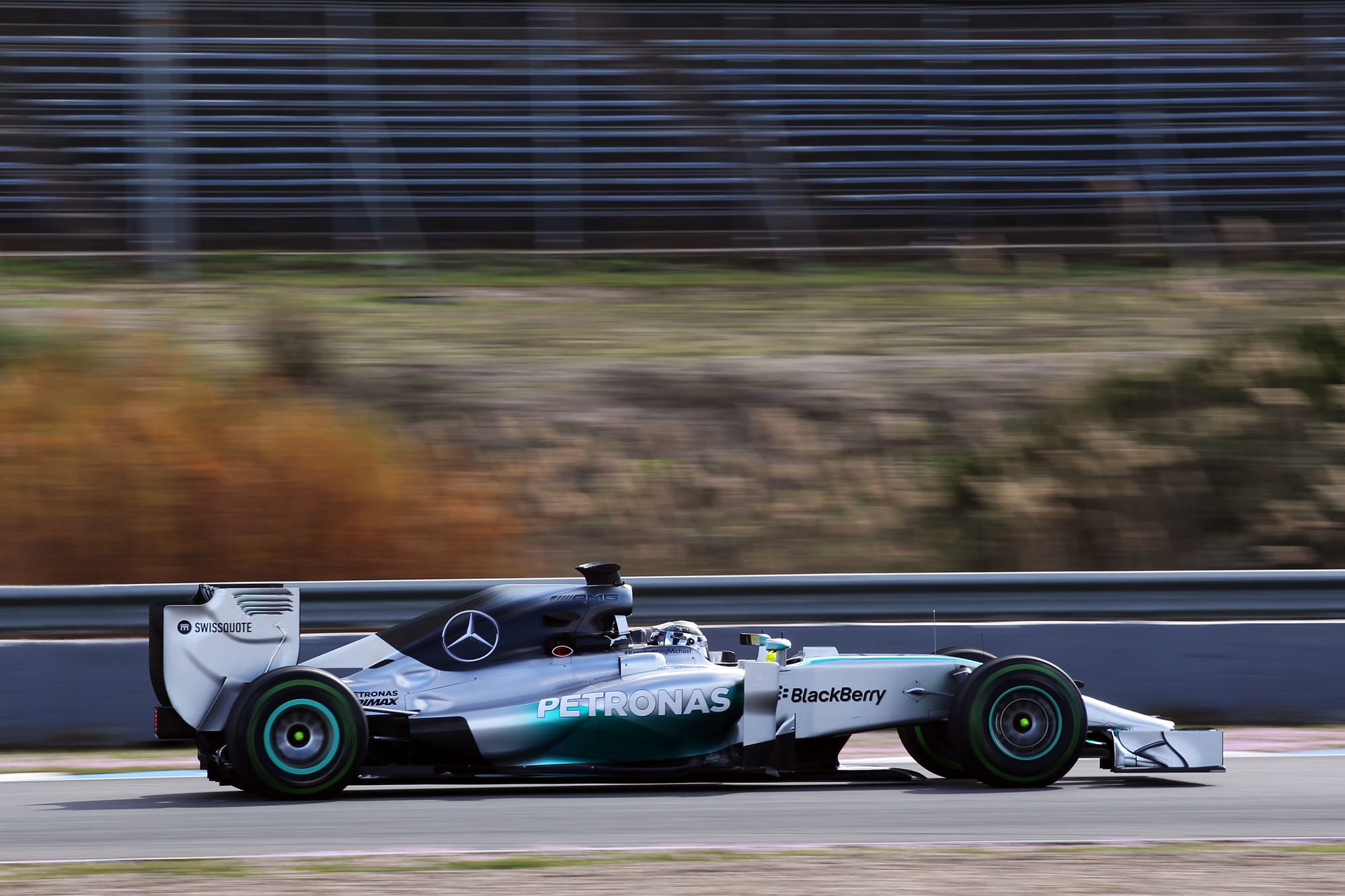
"So it is just trying to give the trackside team and the drivers a clear run at it. So trouble-free is what the aim is."
Beyond the reliability element, it's much too early to know where Red Bull's power unit stacks up performance-wise, and Mekies was insistent at the launch that it would be naive to expect it to be on equal terms with other manufacturers straight away.
But whatever state Red Bull begins the season in, the potential offered by clean-slate regulations means that the scope to improve is huge.
Red Bull's technical director Pierre Wache reckoned that critical to his philosophical approach to the year was creating foundations that offer plenty of room to build on.
"The main opportunity we have in the new regulations, as we saw in the last one, is to give the capacity of the team to develop the car," he said.
This ability to fine-tune and eke out improvements is bolstered by Red Bull for the first time in its history having control over its entire package, rather than having to fit chassis demands around the power unit it has been given.
As Phil Prew, Red Bull Powertrains' chief engineer, said: "The very architecture of the power unit was able to be aligned with the concepts and the direction that we wanted to take with the chassis, to give maximum freedom for the aerodynamics.
"That work started right from the very concept and, as we built the power unit, put more complexity on, we were constantly working with our colleagues in the chassis side to understand the trades that we're making."
Hodgkinson said he believes the gains of chassis and engine staff working from the same building are critical to delivering what is needed to win. He even thinks Mercedes does not have that kind advantage because there is distance between its Brackley team base and Brixworth engine facility.
"It was part of the reason why I'm here," he said. "I think that power unit and chassis being done on one campus is the recipe for success, and of course I've tried to exploit that as best as we possibly can.
"There are definitely choices that we've made that are different, because the real-time decisions we can make are just different to when your power unit supplier is even only 30 miles away."
It all comes together with Hodgkinson convinced that the performance picture of engines is going to evolve a lot as the new turbo hybrid rules play out.
"I've been designing racing engines for 27 years now and even in the last set of regulations, every year there was a big step forward," he said.
"So how much potential is there to come? There was, over a decade's worth, about half a second every year. So my job is literally based on the fact that there is no such thing as optimum and you're done. I'll always make it better if I'm given more time."
And therein perhaps lies the best answer in marrying the supreme optimism of Bill Ford with the more cautious tone of Red Bull right now. Those involved are convinced it has what it takes to come out on top; it's just a case of when.
As Mekies later remarked: "We are going to chase our small piece of history. We know it's going to come with the difficulties, but that's what we are here for."