What to expect from key F1 engine loophole meeting
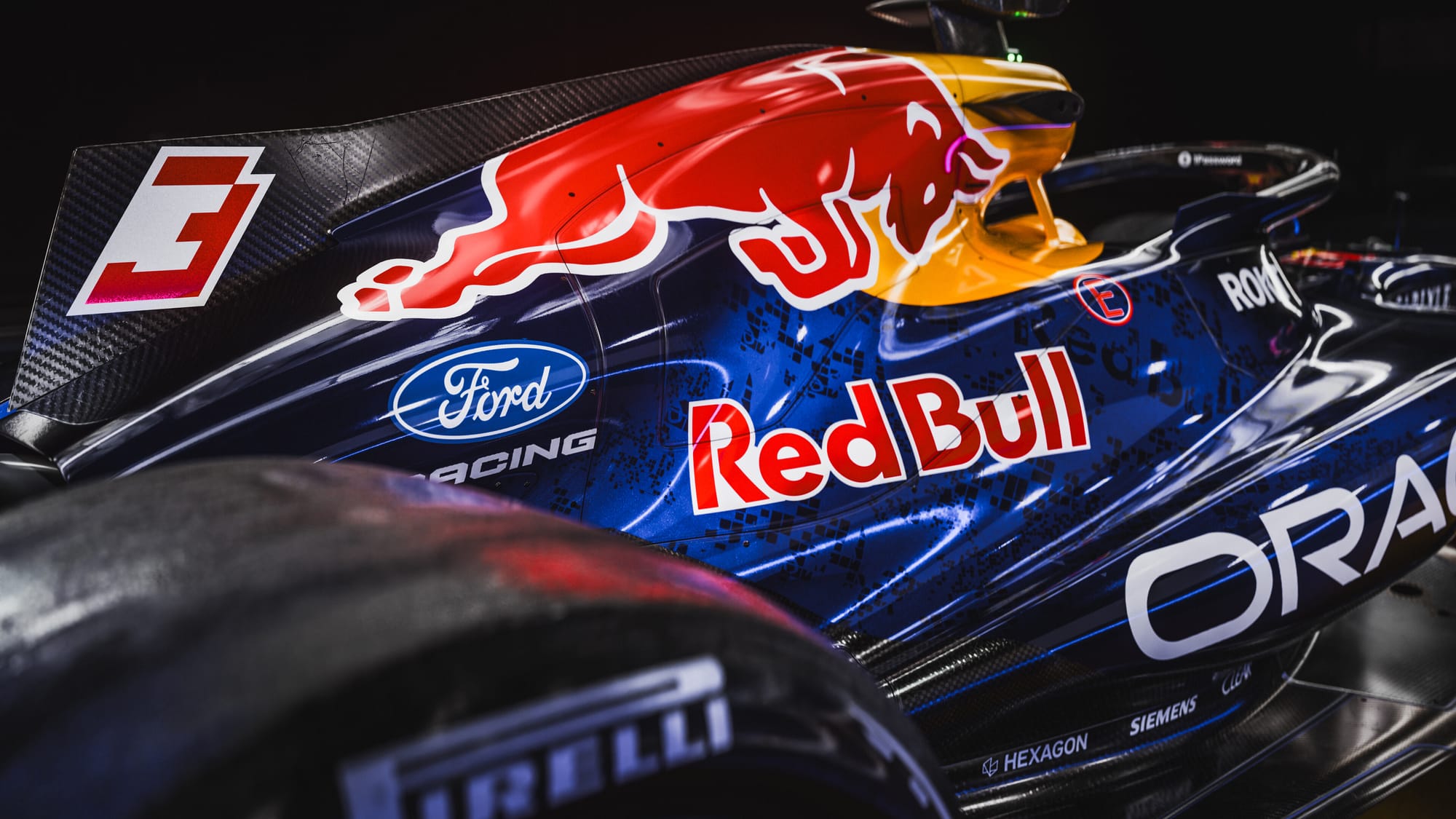
While the FIA will discuss Formula 1’s ongoing compression ratio controversy with manufacturers at an engine meeting later this week, even those pushing for a change to the rules are not anticipating much movement.
The FIA’s gathering that takes place on Thursday will include engine technical experts and is aimed at addressing concerns that have been lodged by Ferrari, Audi and Honda about a potential exploit of F1’s compression ratio limit.
The three manufacturers are unhappy that Mercedes and Red Bull may have found a way to run their engines at a higher compression ratio – which brings added performance – than the 16:1 ceiling that is theoretically laid down in the rules.
But with the FIA having backed the views of Mercedes and Red Bull (that compliance of the 16:1 limit is based on measurements taken at ambient temperatures) and the 2026 rules having evolved to emphasise that very point, there is little expectation of anything changing in the short term.
One insider who has good knowledge of the discussions taking place behind closed doors suggests that the best hope realistically is for the FIA to lay down firmer guidelines to put everyone on the same page for 2027.
This has been backed up by Audi F1 project leader Mattia Binotto, who says that any changes will be more long term.
“It's simply we are trying, all together, to really develop a methodology where we can measure it in real time while the car is running,” he said.
“My hope in that meeting is not clarity on the regulation itself, but more to define a methodology for the future.”
The choice then will be whether those manufacturers who are not happy decide to challenge things with race stewards at an event, potentially through a formal protest, or simply accept they have missed a trick and set about trying to pursue that route as quickly as possible.
That latter option appears to offer the line of least resistance and would avoid a flash point controversy, especially with F1’s 2026 rules offering up potential for those manufacturers who are on the backfoot to be given additional development opportunities in-season.
A matter of time
While some paddock insiders have suggested that F1’s additional development and upgrade opportunities (ADUO) are so generous that they could allow a struggling manufacturer to leapfrog their way to the front, not everyone agrees with that.
In fact, Red Bull Powertrains’ technical director Ben Hodgkinson reckons that the rules do not really fit in with the reality of just how difficult and time-consuming it is for engine manufacturers to make design improvements.
“The bit that I don’t think is fully understood amongst the rule makers is that the gestation time of an idea in power units is much longer than it is for the chassis,” he said.
“So if I need to make a change, firstly, I’ve not just got two cars to update, I’ve got a whole fleet of engines in the pool. So I could have 12 engines that I need to update. That takes time.
“But also, because we’re homologated, you can’t really take a flyer on something that isn’t well proven, because you could be signing up to a world of pain.”
Hodgkinson thinks it can take up to 12 weeks to produce the right high-precision internal components, that time again to check their durability on the dyno, and then a further 12 weeks to bring new units to the race pool.
So even if Audi, Honda and Ferrari all knew exactly what Mercedes and Red Bull were doing (which it is understood they don’t), and were ready to revamp their engines right now, it could take six months to bring new designs through.
This is why Hodgkinson believes that any advantage locked in at the start of this season by a manufacturer will stay intact for quite a while.
“I think that if a team has an advantage on the power unit in race one, it’s going to take some time before anyone else can catch up,” he said.
“So a way to peg them back is kind of what’s necessary, which the ADUO does offer in some respects.
“After six races it’s assessed, so technically at the seventh, you can introduce the update. But I think that it’s quite challenging to come up with an update in a couple of weeks.”
The cost factor
Even a late-season effort to bring a newly homologated engine – should a manufacturer get permission under ADUO – will deliver complications in terms of how a supposedly better power unit gets slotted into a race pool.
F1’s 2026 regulations limit drivers to four internal combustion engines for the entire campaign – and they likely will have cycled through most of those by the latter part of the season.
And while a much better engine specification on tap would be grounds to swallow a grid penalty, changes to the cost cap rules mean there will be a downside to doing that now.
Last year, as Red Bull showed when it gave Max Verstappen a fresh engine in Brazil for performance reasons, the switch was pretty straightforward to bring in as it fell outside the cost cap.
For 2026, the arrival of financial restrictions for manufacturers means that there is now a huge disincentive for extra engines to be brought into the pool if not done on reliability grounds.
Additional supply costs borne by manufacturers bringing in engines that are just for added performance will come directly out of their budget cap – so they would impact spending on further developments.
It is yet another reason to think that any major reset in terms of the divided approach to engine combustion across all manufacturers will not come until 2027.
This is why Hodgkinson believes that the biggest performance differentiator at the start of this season will most likely be the internal combustion engine.
“The ERS (Energy Recovery System) side, I think everyone will be 99% efficient on their power electronics and motor,” he said.
“The best [combustion] engines last season were around 50% [efficiency], so there is still quite a lot to go at."
Key area
The situation surrounding potential to be unlocked from the ICE is why many senior figures think this area will be a key performance differentiator early on.
“The ERS [Energy Recovery System] side, I think everyone will be 99% efficient on their power electronics and motor,” Hodgkinson said.
“The best [combustion] engines last season were around 50% [efficiency], so there is still quite a lot to go at."
Haas technical director Andrea De Zordo believes that those missing out on power could find themselves facing an uphill battle.
“Initially with the PU, as it’s all so new, there is - not necessarily more to gain, but a lot more to lose if you don’t do well,” he explained earlier this week.
“To understand how it works and how to maximize that will probably be the most important part.”