Ferrari blocked F1 race start change - What you need to know
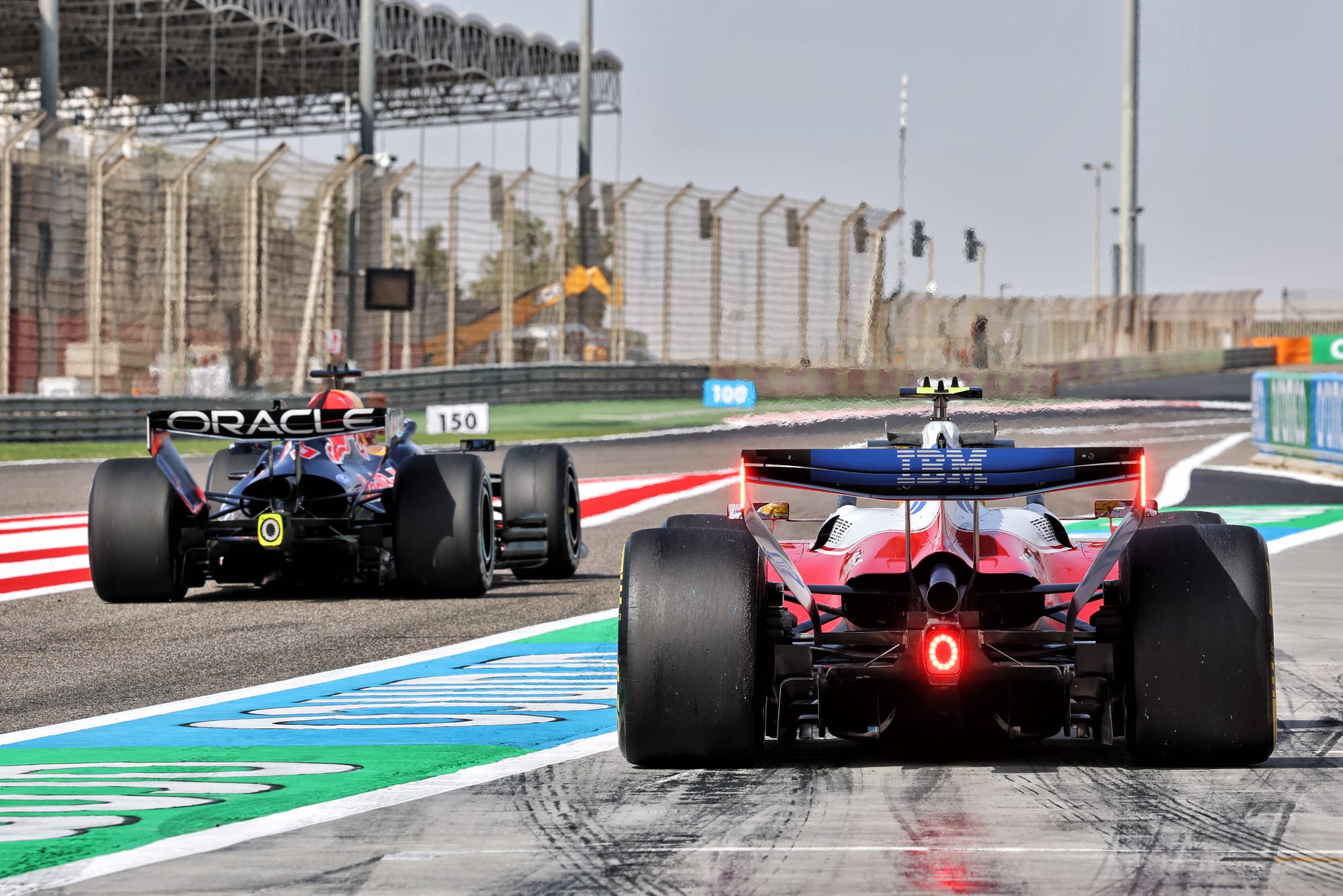
Formula 1 looks set for fresh talks about potential changes to the start sequence at grands prix, The Race has learned, despite a previous move to alter the rules being blocked by Ferrari.
The issue has been triggered by safety concerns about the complicated procedures needed to make good getaways with the 2026 cars.
As previously reported, early testing of the new challengers has highlighted the great difficulties drivers face in preparing for race starts.
The perfect launch now involves ticking off a host of competing demands – which includes keeping the turbo spooled up for around 10 seconds to minimise turbo lag for the getaway, while also avoiding over-charging the battery.
Audi driver Gabriel Bortoleto is one driver who could not hide how big a challenge things were right now.
“Oh man, it's complicated,” he said when asked by The Race about how he was finding the practice starts.
“Yeah, the 10-second thing and then after five seconds, I already lost the count.
“Then the engine's revving up, it's gear in and out, and you need to release the clutch. It's quite a mess.
“It was much easier last year. Let's see how we end up in Melbourne.”
A safety issue
The difficulties that a number of teams and drivers have faced while practicing starts during testing, and the ease with which things can go wrong, has prompted paddock talk in Bahrain about this now being a potential safety concern.
This is because there is an increased chance of drivers getting things badly wrong – with one driver suggesting that analysis suggests 1 in 20 starts are being fumbled.
This effectively means that the likelihood of at least one car hitting trouble at every race is high.
When things go wrong, drivers risk being super slow away from the line – and that could open the door for potential accidents.
Furthermore, questions have been raised about whether there is going to be enough time for drivers to be able to spool up their turbos before the start sequence gets going.
This could be a particular problem for drivers at the back of the grid, who normally have very little time between forming up and the light sequence being triggered.
Cadillac driver Valtteri Bottas, whose five-place grid penalty at his next race means he will likely be starting at the back in the Australian Grand Prix, said he doubted there would be enough time to be fully prepared for the light sequences.
“The only concern for me is the example of, let's say in Melbourne, with my five-place grid penalty, if I'm towards the back of the grid, is there enough time when the light starts to go on to actually get that turbo spinning?" Bottas explained.
"Now it takes like 10 seconds, so that's one thing we’ve got to figure out.”
Rule change debate
Multiple drivers and senior team figures have told The Race that they think the matter needs bringing up with the FIA to discuss whether or not changes can be made to help minimise any risks at race starts.
The first opportunity for this could be at next week’s F1 Commission meeting on Wednesday, which is set to debate a range of matters involving the 2026 rules.
Any discussions with the FIA over the matter are likely to revolve around whether or not potential changes can be made to the start sequence to help avoid the risk of drivers hitting problems.
Two options appear to be on the table.
The first is delaying the minimum time between when the final car forms up on the grid and the lights sequence begins.
Some compromise had already been made on this front last year, when the rules were amended to mandate a minimum time for the five-light sequence to play out.
Previously there was no restriction on how quickly the lights could go on – whereas for 2026 the rules now state: “the time interval between the illumination of each of the five red lights in the sequence described above shall be one second.”
One option to help give drivers enough time to prepare their turbos could be to impose a minimum time between the final car getting into position and the lights coming on.
Another possibility could be to revise restrictions laid down about the use of the battery off the line – which would help get rid of the requirement to spool up the turbo in the way it needs right now.
Under the current rules, drivers cannot use the MGU-K for extra battery power until the car has reached 50km/h – which means they have to rely on the internal combustion engine entirely for the initial getaway.
The rules also lay down that the MGU-K torque can only be negative – so charging the battery – when the car is stationary.
This rules out any assistance in filling in any gaps with turbo lag. So a change here could also be useful in making starts more consistent.
Ferrari resistance
However, despite the matter being up for imminent discussion, any move to get the start procedure changed may not be straightforward to achieve after it emerged that last year Ferrari resisted a previous effort to revise the rules.
The challenges faced by drivers at the starts with the new cars had been predicted by teams during early work on the 2026 cars.
The Race has learned that, as a result, last summer a proposal to revise the start light sequence had been put forward by F1’s Sporting Advisory Committee to the F1 Commission.
However, sources have revealed that the idea was blocked by Ferrari team principal Fred Vasseur – who argued that the problems with turbo lag had been well known by teams during the design of their power units.
So any outfit that had made concept decisions that did not work with the start regulations as laid down had to live with it – as it would be unfair to force those who had made compromises to deliver good starts to make accommodations to suit those who had not.
This suggests Ferrari may have designed its engine in a way that minimises turbo lag - so the start issues are not such a problem for it.