Why F1 2026 starts are a 'recipe for disaster' - and how to fix it
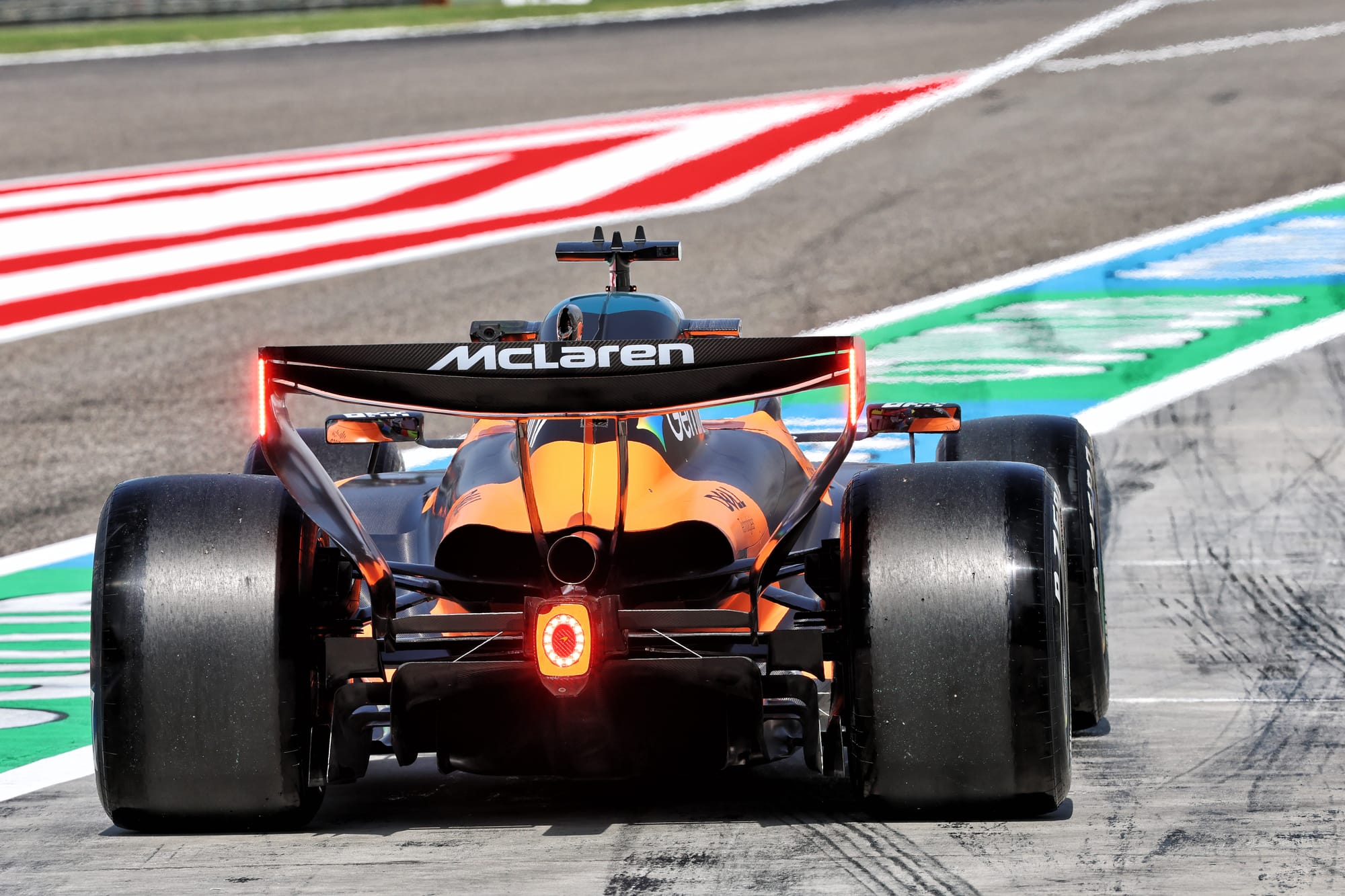
Oscar Piastri fears that Formula 1 risks creating a “recipe for disaster” if start procedures are not changed for the beginning of the season.
Amid growing concerns about the complexities of getting the new cars off the line, many drivers and team figures think that the matter needs to be addressed with urgency.
The combination of the complicated getaways, which includes revving the engine for up to 10 seconds to spin up the turbo, and the fact that when things go wrong on starts it can cause accidents, has triggered worries from many within the paddock.
Piastri is clear that the issue is not just that there is a risk of drivers just being slightly slow away, it is of several cars being stranded on the grid.
“The difference between a good and bad start last year was you got a bit of wheelspin or you had a bad reaction time,” he said.
“This year it could be effectively like an F2 race where you almost go into anti-stall. You're not just losing five metres or so. You can be losing six or seven spots if it doesn’t go well.”
There are also the potential risks involved with cars having lower downforce off the line because they are in straight mode.
As Piastri said: “It’s whether we use straight mode at the start or not as well, because I think a pack of 22 cars, with a couple hundred points less downforce, sounds like a recipe for disaster to me.”
George Russell has admitted the starts are “challenging” and a “nightmare” for engineers to help manage.
But he also raised the issue that while practice starts in testing were done when drivers had waited for the optimum turbo boost, on a real race start drivers have to go when the lights are out, without consideration for the time to spool the turbo correctly.
“I'm only doing my launch when I'm in a given window, but we are very conscious that, for a race start, you go when the lights go out,” he said. “You don't go when your specific turbo is in the right window.”
The possible solutions
While the 2026 cars are more complicated to get off the line, the solutions to the problems do not involve a total revamp of the technology.
The main issue is one of timing; where drivers risk being rushed while stationary on the grid to get their turbo boost into the sweet spot and that could expose them to making mistakes or not provide enough time.
It is a situation that will be worse for drivers at the back of the grid, as they normally have less time once into their grid slot before the start light sequence begins.
Haas driver Ollie Bearman said that the differences between a good start and a terrible one were miniscule.
“It's really on a knife-edge to get it right and it’s a matter of milliseconds,” he said. “If you're too late or too early by half a second then it doesn't work.
“It's complicated and so far we haven't been consistent at all with the practice starts, which is a bit worrying.”
One solution to help could be to impose a minimum time between the final car forming up on the grid and the start light sequence beginning.
Another option could be to allow drivers to use their battery off the line to help fill in any power gaps from turbo lag, with it currently banned from use below 50km/h after the start.
While such solutions would be simple to implement and not involve any modifications to the cars, getting approval may not be easy.
Last summer Ferrari rejected a proposal at the F1 Commission to delay the start lights coming on to alleviate concerns about potential risks of cars stopping on the grid.
This was because team principal Fred Vasseur had warned about the need to make such a change many months before, but his concerns had been dismissed by others.
As a result, Ferrari set about creating its engine concept around one that would be more suitable for a short start sequence, so it would not need the turbo spun up for so long.
So when those that had not made the same compromises with their engine design suddenly came back with demands to extend the start sequence, Vasseur felt he was well within his rights to not support something that could potentially benefit others who had not heeded his earlier worries.
Alpine managing director Steve Nielsen acknowledged that it was only when he saw the practice starts on the real cars in Barcelona that he realised there could be a problem.
“It's one thing to see these things on paper and discuss them before you've actually seen them in real life,” he said. “But I was surprised when I first saw it in Barcelona.
“You see these enormously long, what looks like pre-start revs, but it's actually the drivers building [turbo] boost.
“Then you start thinking, well, we've got 22 cars this year. You imagine them coming around to the grid - and that procedure is very different for the guy on pole than it is for the guy in 22nd. I think it is something that may need looking at.”
McLaren boss Andrea Stella, who has called for FIA action over race starts, lift and coast and overtaking concerns before the season opener, is well aware that changing rules does not come without political considerations.
However, he feels the situation is one that is of the utmost importance.
“This is a bigger interest than any competitive interest,” he said. “So I think all teams and the FIA should play the game of responsibility when it comes to what is needed in terms of race start procedure.”
And even Ferrari customer teams were in favour of making some changes - even though they could in theory benefit.
Haas boss Ayao Komatsu felt that things needed looking at now the reality of the situation had become clear.
“We discussed it last year, but of course we didn't know last year exactly what we were dealing with,” he said.
“It's not a total surprise. I think it's important that we have regulations such that everybody can do a decent start and we have normal racing.”
False picture from fumbled F1 test
The safety debate around the 2026 getaways was further fuelled by the images of a shambolic practice start right at the end of F1 testing in Bahrain this week.
As seven cars went through a test start sequence in the closing minutes of the session on Friday, it was far from smooth.
Alpine’s Franco Colapinto nearly crashed as he arrived at his grid spot after being caught out while trying to warm up his rear tyres.
Then, when the lights went out, Piastri on the front row did not get away at all, while only half the cars behind him moved.
LIGHTS OUT AND AWAY THEY G-oh pic.twitter.com/NykaTRSy2W
— The Race (@wearetherace) February 13, 2026But although it gave the impression of things being out of control, the strange situation was actually a failure of procedure rather than technical problems related to how hard the starts are.
Drivers were not supposed to launch until the car ahead of them had moved – to help minimise the risk of any accidents.
However, while some followed that procedure, others from behind did not.
As Piastri later explained: “I think the start today was just a mix up in instructions. I got told to wait until whoever was in front of me had gone – so do my own launch and not do it to the lights.
“Clearly, some other people had a different idea. So that was nothing to do with the power units.”
But whatever the outcome of efforts to change the start procedure, there seems no doubt it will be a big focal point of interest for the new season.
As Alpine’s Pierre Gasly said: “I advise you to be sitting with your TV on in Australia, because it could be one that everybody remembers!”