What we've learned watching testing trackside with an F1 driver
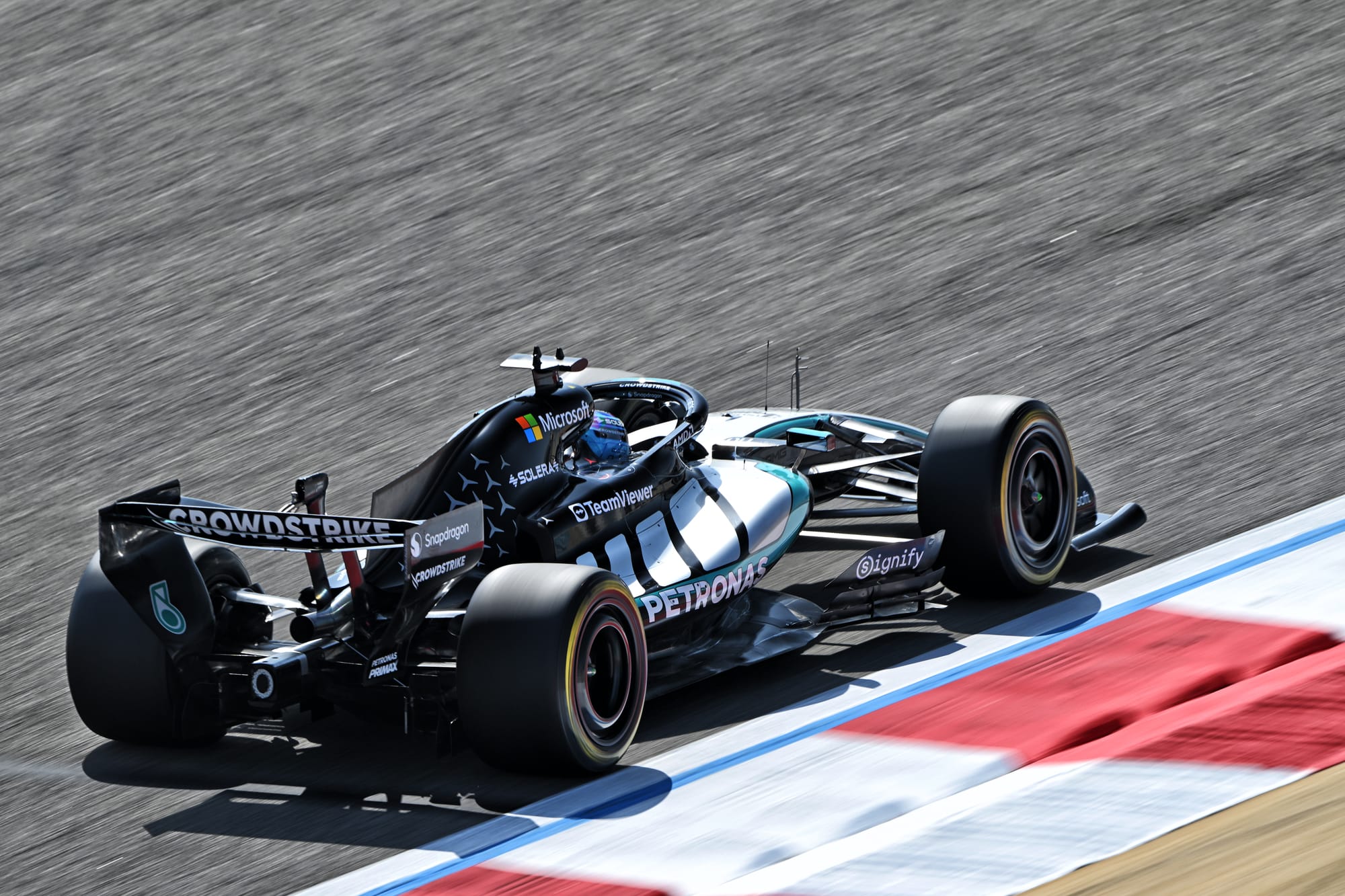
Years of experience watching Formula 1 cars trackside pales drastically in comparison to the expertise of driving the real thing.
One of the first rules of observing cars on-track in F1 testing is that you spot the bad stuff first. It's more obvious, more pronounced. Why that might be happening, and what's going on when the big dramatic lock-ups turn into much subtler limitations, becomes a harder task to work out.
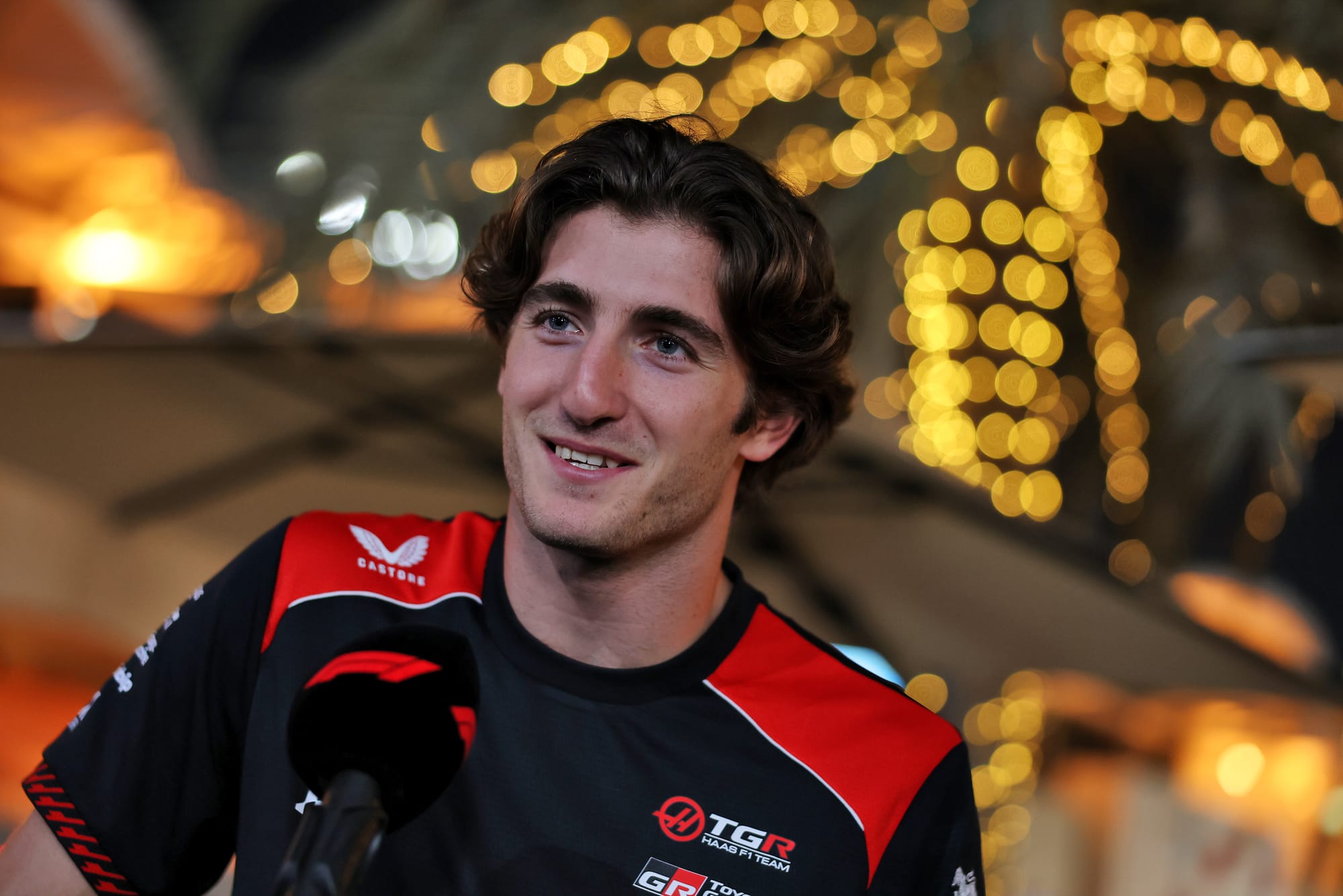
Not so much for those who have felt these experiences with their fingertips, and through their backsides, though. Hence the insight of former Alpine F1 driver and now Haas reserve Jack Doohan proved so valuable during a trip trackside to Turn 10 during the first Bahrain test.
The start of the lesson was delayed by a red flag just as we arrived. In a quirk of fate, Doohan's former team was the cause. But before long the cars hit the track.
"He's not able to stop the car earlier," Doohan quickly tells us of Arvid Lindblad, who was circling at the same time as Isack Hadjar in the Red Bull for a great point of comparison.
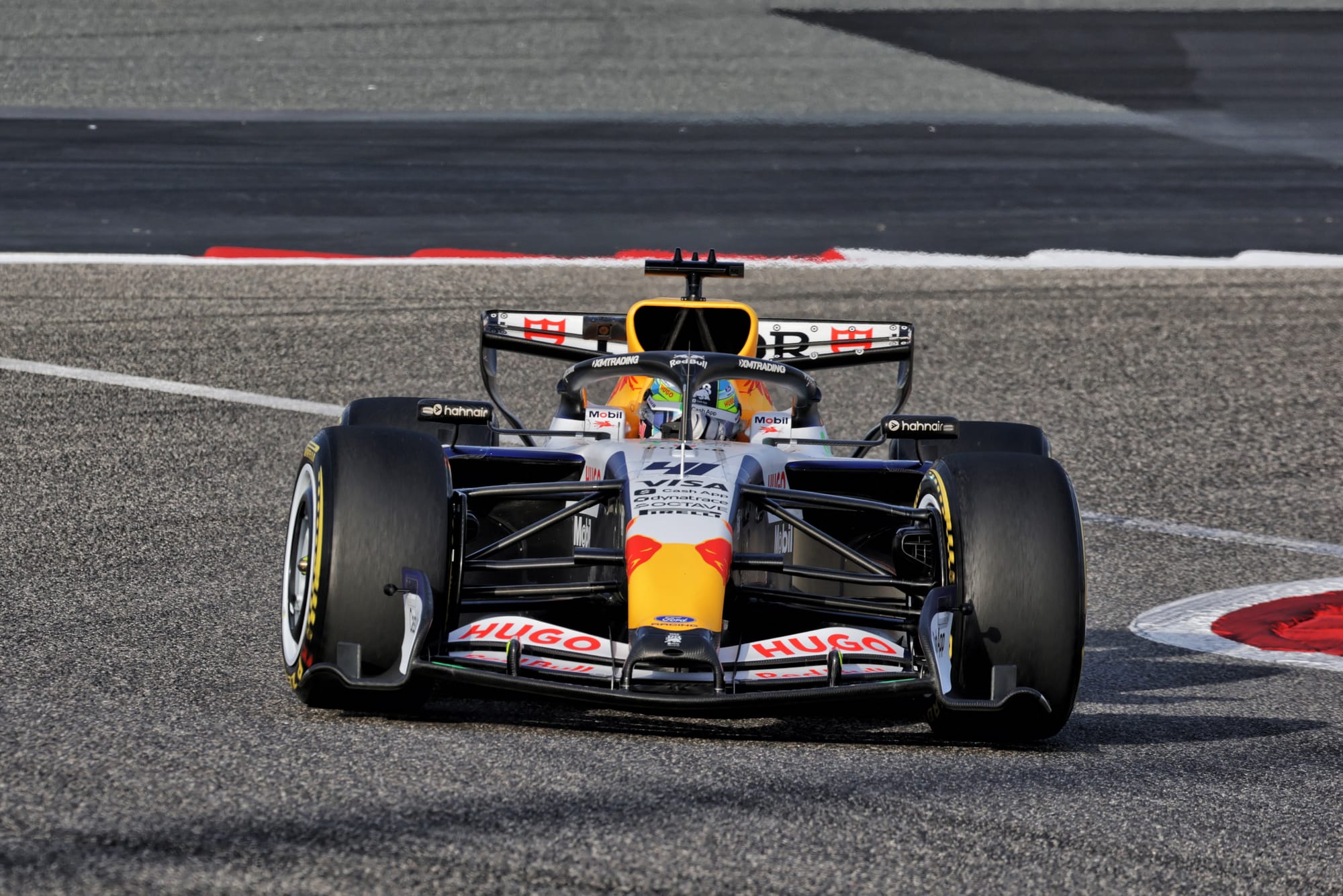
"He's turning in slightly sooner because he's not stopped the car, because he's not putting as much brake pressure on.
"He's sitting in mid-corner, front scrubbing, understeering and having a much later rotation."
It immediately crystallised a limitation observed in the Racing Bulls throughout testing - a car that did not handle the aggressive downshift demands of the Red Bull Ford Powertrains engine nearly as well as its bigger brother, and looked like hard work for both drivers all week long.
Turn 10 is an established favourite vantage point for The Race. It is a bumpy, off-camber corner and a great spot to see if drivers are able to apply high brake pressure combined with steering, versus being scared of locking up, and any car imbalances that arrive on entry, apex or exit as a result of that.
And it stands out even against the general challenges of the new 2026 cars. There's been a lot of locking observed early in this generation, which Doohan reveals is partly a consequence of this year's active aerodynamics on both the front and rear wings: "Typically with straightline braking, where they have the new fancy wing mode, depending on which wing is closing first and at which rate it can heavily dictate what axle of the car is loaded first, and that then really dictates locking.
"But Turn 10 is obviously different, because there's no fancy wing mode between Turn 8 to Turn 10. It can simply be down to how the car is on ride. It's always a limitation.
"There's a lot of front-left locking on the braking into there, but we're seeing the cars that may be struggling a little bit more, which aren't in a nicer window - which is your Aston Martin, your Williams.
"The Audi has been getting better and better over the three days, but we were seeing they had weaknesses in other areas. I think it really comes down to how the cars are riding over the bumps."
One of those Audi weaknesses was the big dynamic reaction the car had in getting down to first gear, which its drivers seemed to be trying to do earlier than most but then had quite dramatic rear instability to deal with.
Doohan hasn't experienced that in reality but is familiar with it from early 2026 simulator work in years gone by and says it was "quite interesting to see how the cars were behaving" in reality - "even the cars that were getting away with it a little bit more".
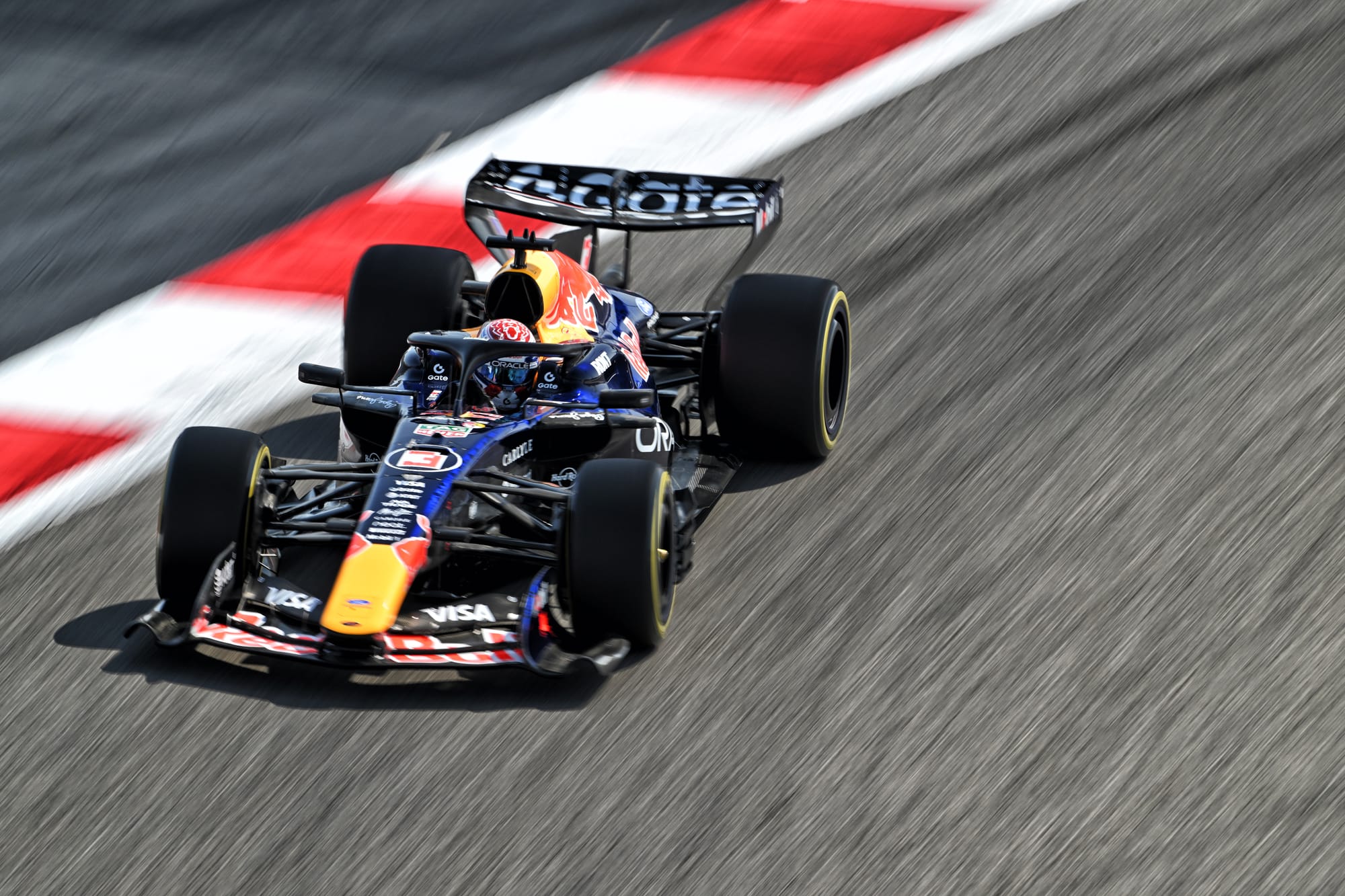
"Your Mercedes, your McLaren, your Red Bull - over one lap, it looks fine," he says.
"The Red Bull is obviously very good at getting down to first gear very early. Seems honestly whether it's gear ratio or what they're able to do, it's handling it very, very well.
"But you see over that long-run distance, after lap three-four-five, where the rear starts to be struggling a little bit more, isn't in prime condition, you can still see on that downshift to first gear, that small, slight little bit of instability that is coming with it.
"They're handling it, yes, but it's still not pleasant.
"However, you see the Aston Martin, the Audi, each lap, it's very rare to see them come through clean on that first-gear downshift.
"When we were there watching, there's probably eight out of 10 laps with [Gabriel] Bortoleto on the Audi, he had a moment with the first-gear downshift, and also in the first-to-second gear upshift on power.
"It's not pleasant at all, especially when it's so short."
This is the most unorthodox thing a racing driver can be asked to do. Especially in F1 where first gear has never really been a factor on the track itself outside of race starts or anomalies such as the Monaco hairpin.
It has become a key early part of seeing the 2026 cars in action because the early downshift is needed to spike the revs and help charge the battery for one thing but also spin the turbo to assist with reducing turbo lag off the corner, as these engines do not have the MGU-H to handle that electronically anymore.
And the reaction the car has to the driver forcing first gear is aggressive.
"Obviously, your first gear ratio is much shorter, and you get much more of a braking sensation from the engine," says Doohan.
"Imagine you're in a road car, you're in neutral, there's no friction, the car is just free-rolling. But if you're rolling at 50km/h in neutral, and then put in the first gear, you are going to have a very unpleasant surprise!
"When you release the clutch the rear wheel is going to lock up, the rpm is going to spike like crazy, you don't know what's going on and think you've just blown up your pride-and-joy wagon!
"And it's similar, in a more controlled environment of a racetrack, but the same sort of sensation of abnormalities and not understanding how you're going to make this work. Because all we've known for so long with first gear is either pulling out the garage, pulling off the start line, or if you've got an issue on track and pulling back on.
"First gear is: clutch, gear, and away you go. So it's strange, but with new regulations, and vast new regulations, comes new challenges and new areas for improvement.
"And first gear with high rpm, with deployment being such a huge factor, not just over the lap but it being deployed and recovered many times throughout one lap, means extreme measures are having to be explored."
We tell Doohan the day after going trackside, having quizzed Hadjar on what we had seen, that he had a big grin on his face answering how well the Red Bull's handling the first-gear anomaly.
"Yeah, well I'm sure they're stoked about it! They're very happy they're able to handle it very well," he says.
"I'm sure they're pretty stoked about it getting into first gear 30 meters before anyone else is, and it not jolting the car. So well done to them."
It is a key early point of distinction because every team is having to handle the phenomenon bar the Ferrari-engined drivers, believed to be a result of that engine having a smaller turbo and not needing to be spun up as much. Those drivers tried it during The Race's other trips trackside but the car/engine package didn't like it.
How each engine and gearbox is designed will determine how much it needs but can also withstand in terms of how aggressive to go with the downshift, and then the car platform will go some way to mitigating the extent of the effect. Hence the Red Bull looking better than the Racing Bulls with the same engine.
And it's something that cannot just be easily solved, as Doohan explains: "You could say, 'OK, why don't we just bolt on a longer first gear ratio and have an amazing Turn 10?' But the consequences that come with that is, 'OK, now we're going to go into anti-stall every time we leave the pits' - or at pitstops, or the launch off the grid.
"There's so many complications that come with it. So it's not as easy as, 'Ah, let's just bolt in this longer gearing and it'll be happy days'. There's plenty of compromises that are going to have to be solved."
One thing that became apparent on our trip is that the Cadillac, on a longer run, was struggling. Not with particularly dramatic vices as it didn't look bad in the 'this seems impossible to drive' sense, it just looked grip-limited on both axles.
It's slower, it's got understeer, but the balance "doesn't look horrendous", Doohan says: "It looks like it doesn't really have the trust to push the entry, mid-[corner] and combine so highly, and then it doesn't really have the traction to put the foot down.
"It looks like they're tiptoeing around a little bit, sliding on top of the tyre. And that's the issue sometimes - the balance can actually feel OK and be in a window, but you end up just being grip-limited, so you push a little bit more and the car snaps.
"When you're inside that limit, it actually feels like a good lap, but you can be two-three seconds off, and that's a very hard, hard thing to fix. Whether that's just lacking aero, plain and simple - which can be the case, I don't know, but it would make sense.
"Mainly it looked more on the degradation side, when they were 12-plus laps into the stint, that it seemed like on traction, or late-combined braking into Turn 10, it was starting to struggle, where up until that point the race pace didn't seem so bad."
A caveat often applied to any of our trackside work is that any individual moment we witness is only a snapshot, which is why we stay out as long as possible, keep going back, and move around the circuit when we can.
Doohan says you "100%" need to be wary of drawing firm conclusions from a single trip but agrees repeat visits help build a relevant picture.
"The corners here to get a pretty good idea of how a car behaves are Turn 8 to 9/10, and also Turn 11," he says.
"You get to see a very low-speed balance and medium-to-high speed balance, you're not going to go to Turn 12 and see the car go through Turn 12 and dictate what the car is doing.
"Within two corners you could really start to see where the cars are at."
That's the 'where', then. Then there's the 'what'. What are you seeing, and what's it really telling you?
"With varying fuel loads, you can make a car look very poor," Doohan says.
"It doesn't look like it's stopping, locking the front left. But the car's got 100kg more fuel in it and the driver's still trying to push like there's 30kg.
"They’re going rearwards on the [brake] bias, now the rears are overheated because you're eight laps into a long run. So instead of locking the front left, you're pinching the rears.
"It's very easy to come to a conclusion that might not necessarily be so accurate."
Which brings us to the 'when': "Knowing that between 5.45pm to 6.30pm most cars are going to be on a new C3 tyre, between 30kg to 50kg fuel, in a window to do a quali sim, that'd be your best time to go out and obviously have an understanding of where the cars are at.
"You don't need to go and see every single corner, because that can vary also, driver to driver.
"But if you have a key slow-speed corner, a key medium-to-high-speed corner, you can have a rough idea of where a car's at or not."
Which makes for a very handy guide for when The Race returns trackside for the final test...