Trackside view: 2026 F1 cars changed hugely over six days in Bahrain
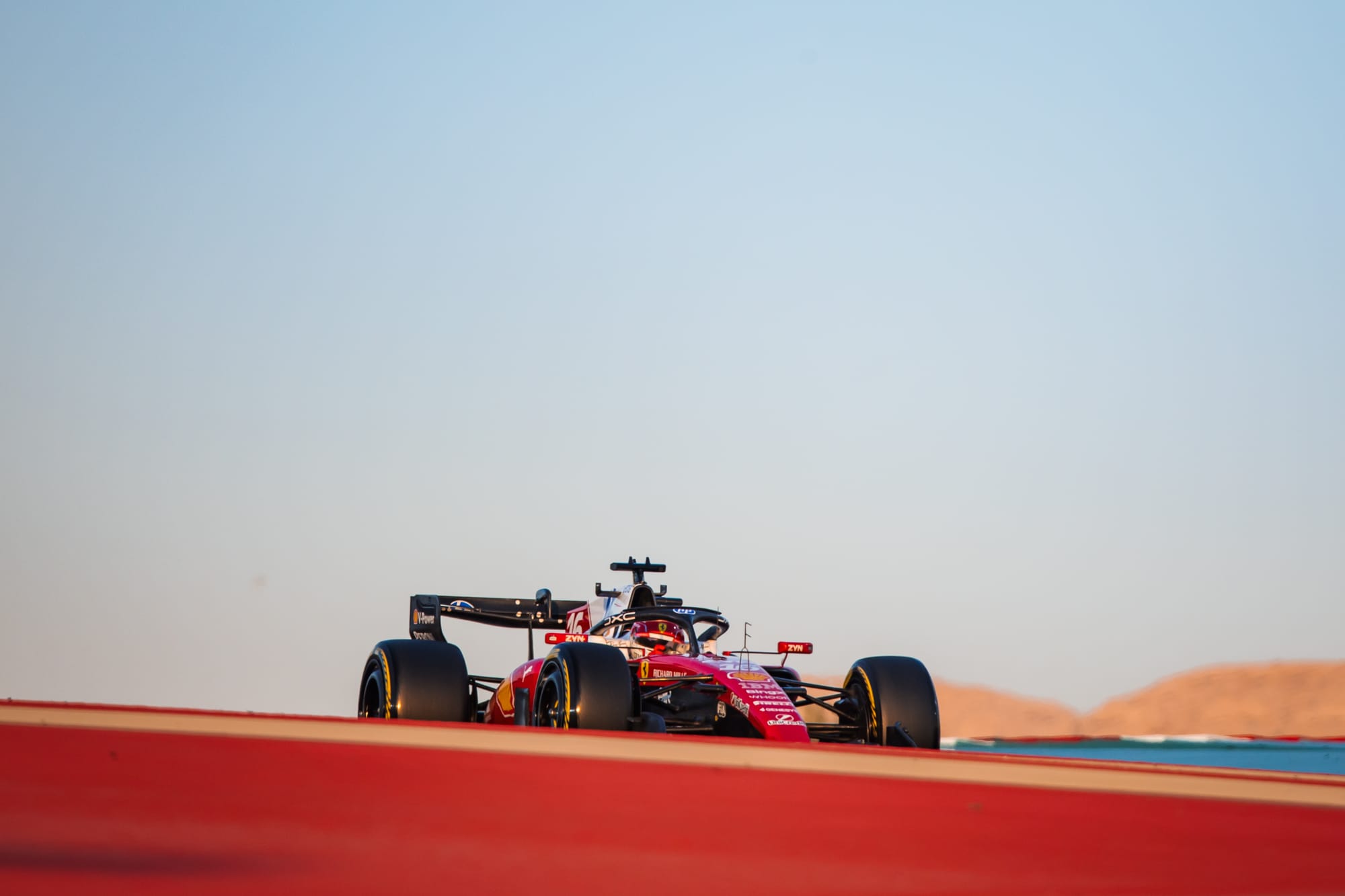
It was like watching a completely different formula. That's how startling the difference between watching the 11 Formula 1 cars on the first day of Bahrain testing and the last was.
That's not so much in terms of outright pace, although the fastest lap at the end of the test on Friday was 2.7 second quicker than the pace of the previous Wednesday, and the runplans meant there were far more laps within what might be called the normal pace spread. Instead, it's about the poise of the cars on track and how at home the drivers looked behind the wheel.
On Wednesday of last week, many looked tentative. That's why the aggressive downshifts of Max Verstappen in the Red Bull stood out in comparison. While others were working to optimise this, Red Bull Powertrains appeared to be more advanced and Verstappen's ability to deal with any resulting rear instability added up to a car that looked much more assured.
By contrast, the Racing Bulls with the same power unit looked all over the place, the Audi sounded like a bag of nails, the Mercedes seemed a little conservative and the Ferrari more conventional in its braking and downshifts.
All of this evolved over the course of testing, strikingly so for the Audi. It still sounded the most brutal of the power units save for the troubled Honda, but by the end of testing it also had the air of being either a different engine or one so dramatically recalibrated that it might as well have been.
Finessing the gearbox and power unit settings - understanding the complex interactions of the braking and downshifts with the dynamics of the car - was a key objective and everyone made significant gains. This is critical under the new regulations because harvesting under braking is your priority when it comes to putting the energy you need into the battery. It's about walking the tightrope between maximising harvesting and ensuring the driver has the stability, and therefore confidence, they need.
One of the many disadvantages of the Barcelona test being behind closed doors amid groundless fears of widespread unreliability is that it meant the early running in Bahrain was stripped of context. The expectation was that the cars would be more refined after the running in Spain, so rather than being impressed with the gains made since that first test, it meant that watching the cars in Bahrain initially was more concerning. The problems with front-locking, the instability, the countless wide moments - all exacerbated by the windy conditions - made for a messy spectacle. It was F1, but it didn't quite look like the F1 we've become used to.
It wasn't just the number of laps spent focusing on data acquisition and outside of what might be called the usual range of running you'd typically see on a grand prix weekend, but also the need to calibrate your eye to the reduced grip of these cars.
However, what did stand out was that the claims that these 2026 machines were more agile and nimble stood up. That was particularly noticeable in the improved responsiveness on turn-in.
The drivers, too, improved dramatically as they acclimatised to the cars and the counter-intuitive elements of the driving style became familiar.
That also played its part to the point where on the final day of running, with the exception of the rarely-glimpsed Aston Martin, the whole field was packed with well-understood, effectively set-up, planted and consistent machines.
Yes, there were still relative strengths and weaknesses and some cars were clearly in a better place than others, but a little instability here, some understeer there, were all in the usual range of dynamic challenges F1 drivers have always battled.
F1 teams make progress at an amazing rate. The cars will be better again in Melbourne, and likely by the time we get to Abu Dhabi at the end of the season they will be significantly faster. That's the essential truth of F1.