Pirelli cancels Bahrain F1 test due to safety concerns
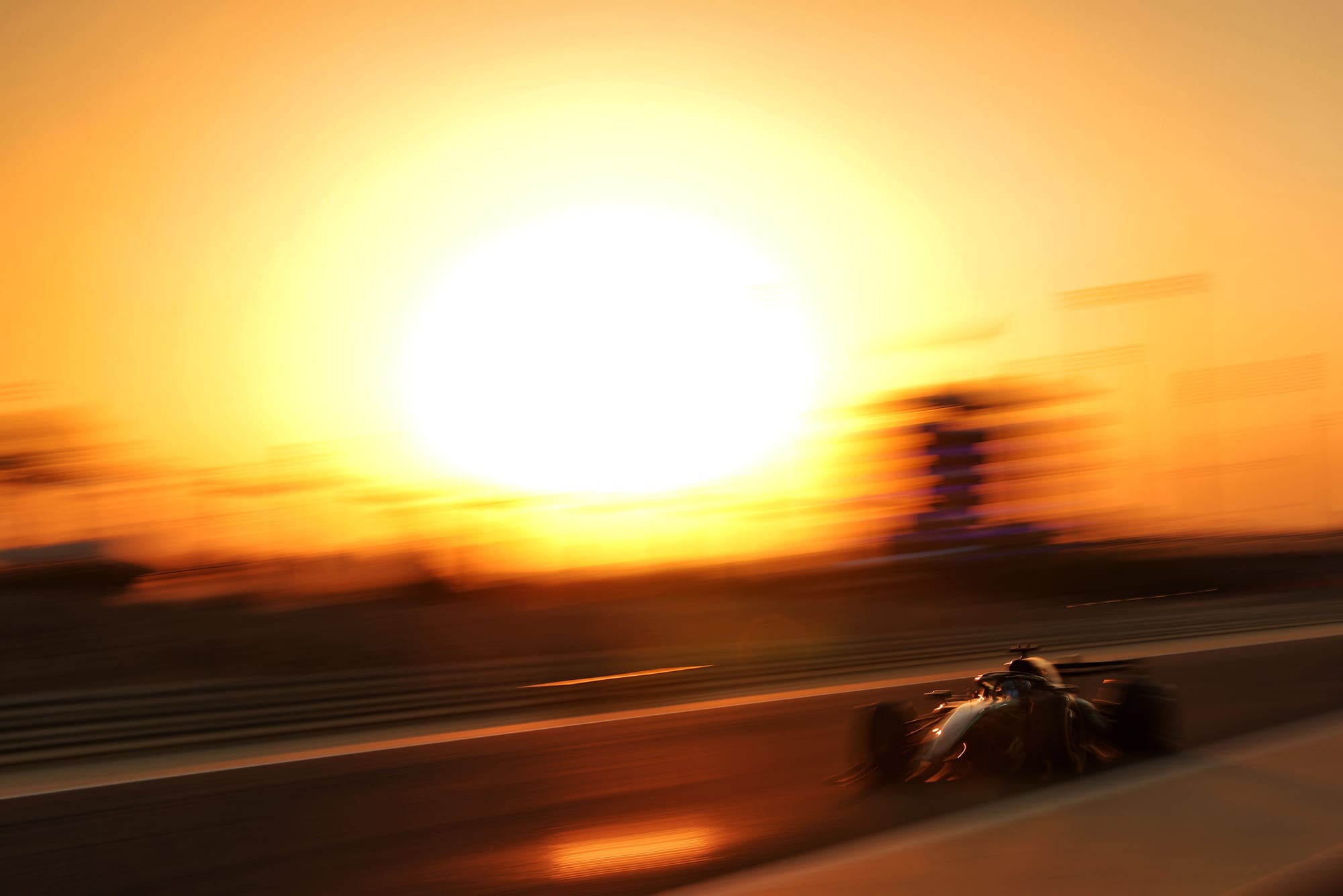
Pirelli has cancelled its two-day Formula 1 tyre test amid the escalating international situation between the United States, Israel and Iran, with further potential disruption to the start of F1’s 2026 season to come.
Pirelli had an unusual wet tyre test planned for February 28-March 1 in Bahrain (using sprinklers) before F1’s Melbourne opener with Mercedes and McLaren, but that’s now been cancelled for security reasons. On Saturday, Iranian forces said they had struck a US naval base in Bahrain.
“The two days of development tests for wet-weather compounds, scheduled for today and tomorrow at the Bahrain International Circuit, have been cancelled for security reasons following the evolving international situation,” a spokesperson from Pirelli told The Race.
“All Pirelli personnel currently in Manama are safe in their hotels.
“The company is working to ensure their safety and arrange their return to Italy and the UK as soon as possible.”
It’s also impacting some teams’ travel plans for F1’s season-opening Australian Grand Prix, as the Middle East is often used as a layover from the UK before onward travel to Australia.
The Race says
Scott Mitchell-Malm
This kind of worrying development in the Middle East triggers two reactions for people in F1.
The first is a human one, especially when you can see that part of the F1 community is there in some way, the Pirelli, Mercedes and McLaren personnel and anybody associated with the tyre test that was due to take place this weekend.
They join the people who live in these affected countries who are right there, while this is happening, which is always alarming.
It can’t help but make it more real for those of us who are otherwise kept at a safe distance from these harsh realities, and brings those people to the forefront of our thoughts, whether they are part of the F1 community or not.
Bahrain has just hosted two weeks of F1 testing. I and others from The Race, our colleagues, our friends in the F1 paddock, basically lived in Bahrain for two weeks.
We stayed in the Juffair area that has just been subject to an attack. It brings it closer to home and it makes for a much more sobering experience simply because you can place where it is happening.
The second reaction will be a logistic one, plain and simple. F1 has a long history of having to operate around geopolitical tensions and events outside of its control.
The show almost always goes on. So attention has to turn, in a lot of places, where are the problem areas from an F1 perspective for this and how can they be resolved?
First and foremost, this disrupts a lot of people’s plans logistically to get out to Australia for the season opener. The Middle East is a very popular transit hub for this journey.
Lots of people will be travelling through Abu Dhabi and Qatar, including myself early next week, where the airspace is currently closed.
There’s enough time for this to be resolved or for alternative arrangements to be made, for people to get to Australia without it being a problem. But if it continues, and people start getting into early next week and not being able to travel, that is when they will struggle to get there for when they need to be.
Beyond that, there’s the prospect of races in that region that you cannot currently travel to and are being subject to military strikes. It’s impossible to know how long that will continue.
F1 is due to race in Bahrain and then Saudi Arabia in April, and both places have closed airspace right now. It will at least be on the radar at a very high level that this needs to be monitored.
Right now, it would be hyperbolic to say those races are a risk. It might sound cruel to even care or consider it, because F1 should obviously come a distant second to the priorities of the people in those areas, but these things do get thought about well in advance.