What's really going on with Aston Martin-Honda's Australia crisis
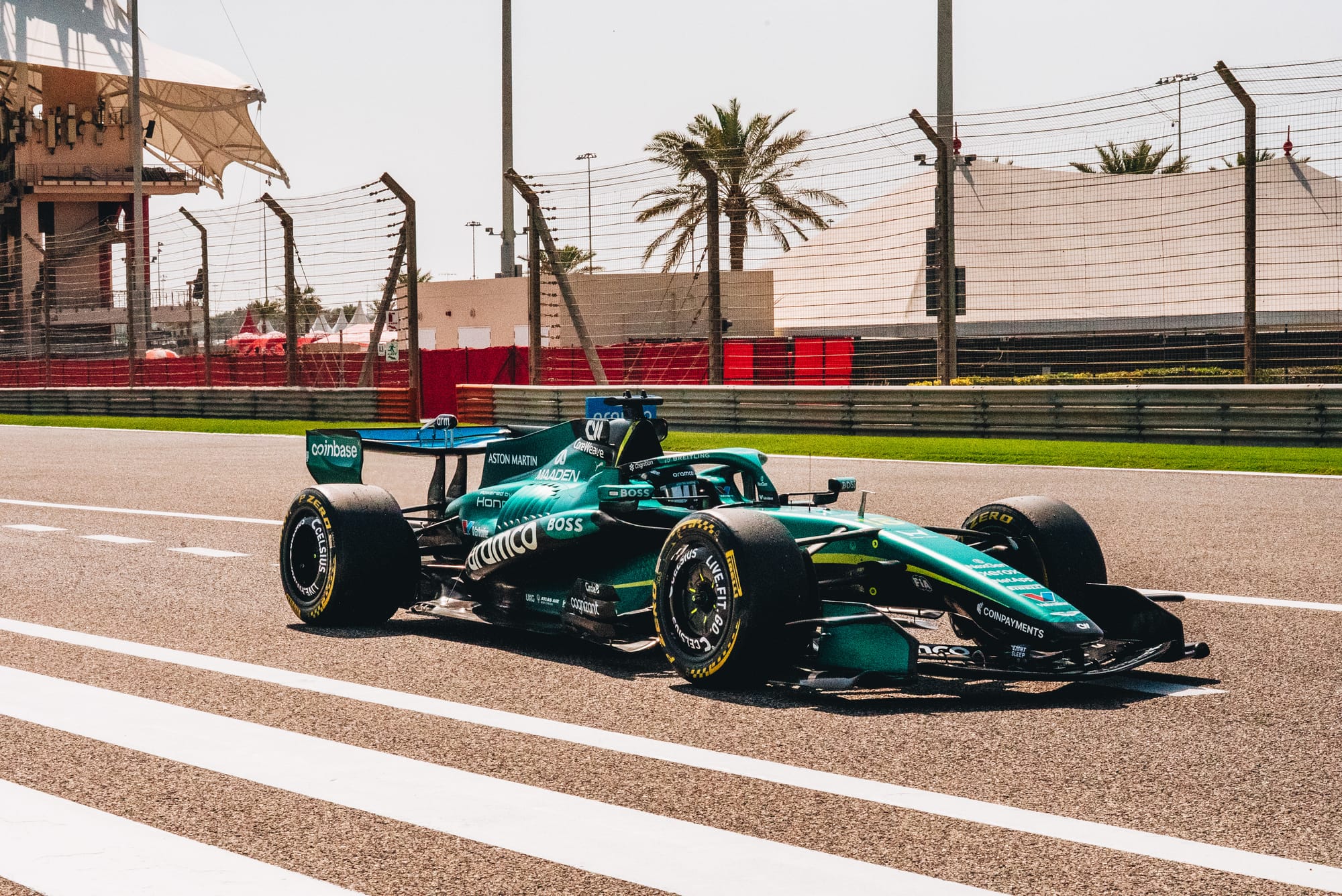
Aston Martin and Honda will trial various countermeasures at the Australian Grand Prix in a bid to manage its reliability crisis at Formula 1's season opener.
A report claiming Aston Martin intends to retire both its cars early in Melbourne, as Honda's engine is unlikely to be reliable enough to complete the race distance, gained significant traction on Monday ahead of the first round of the season.
Aston Martin is not travelling to Australia with a preconceived strategy to do the bare minimum in Sunday's race, though, as it needs mileage to help Honda get on top of its problems.
It will have to balance this against what is realistic, though, meaning a double DNF is possible and maybe even probable.
Honda endured a torrid two weeks of pre-season testing in Bahrain with the fundamental problem being abnormal vibrations that caused damage to the battery.
When this ended Fernando Alonso's race simulation on the penultimate day of the test after 23 laps, it also stopped Aston Martin running again that day - and Honda had to slash its programme to just six untimed laps on the final day of the second test due to a shortage of spare parts.
Though Honda had been able to observe that the battery pack was being aggressively shaken, as of last week it had not identified the root cause. That meant it had no clear solution to the problem and was working on countermeasures to make it through the season opener in Australia.
It is not clear what this will entail but it does apply to both engine and chassis so tests will effectively be carried out during the Melbourne practice sessions to gauge what helps and how much.
Only then will Aston Martin and Honda have an idea of what kind of running is possible in Sunday's grand prix but it stands to reason that its mileage will be limited unless significant progress is made because the nature of the problem means the longer the car runs the worse the impact is as the battery suffers from sustained severe vibrations.
The 14-lap opening stint of that aborted Alonso race run was the longest the AMR26 ran on track consecutively in testing without a pitstop and the engine failing after 23 laps gives an indication of the package's lack of preparedness.
It is also hampering performance. Honda admitted that its engine was being constrained by the reliability problems, so it was expected that the engine would have to run compromised in some way in Australia to try to protect it from failure before a permanent fix is possible.
With such work under way, though, Aston Martin's priority is to get as much mileage as possible through the weekend - most likely in practice, when it can control how long it spends on track and how many consecutive laps are completed.
Were Aston Martin prepared for both cars to line up for the start then potentially return to the garage after just a few laps, it would mark an embarrassing beginning to its Honda partnership and even more disastrous than testing suggested.
But it could protect parts for the following weekend in China, as the season begins with a back to back, so again it will all come down to how much Aston Martin and Honda feel they will need to ration components and manage their on-track work.
In terms of improving the situation longer-term, there may need to be bigger hardware changes.
The deadline for submitting the homologation of the engine to the FIA was on Sunday, March 1 and what was run in Bahrain will essentially be Honda's final specification.
However, Honda will look to change reliability-related parts where possible within the cost cap, as in-season modifications for reliability reasons are permitted with FIA approval.
Honda admits encountering trouble now means consuming part of its development allocation earlier in the season and spending it on reliability when performance is also a problem - but it does not know to what extent.
Its priority is solving the reliability crisis so whether or not a major update comes later in the season is not even part of the current discussion.
A prominent claim after Bahrain was that the engine's regeneration capacity was limited and that running the MGU-K in reverse to charge the battery could not even be done at 250kW let alone the maximum 350kW allowed in some circumstances.
This emerged due to comments made by Aston Martin's managing technical partner and team boss Adrian Newey in private at an F1 Commission meeting.
But Honda suggested it may have been taken out of context from the run plan. The implication is that Honda's MGU-K can charge at maximum capacity but it was not doing so in Bahrain because of the reliability problems and spares shortages.
Improvements to engine performance beyond simply removing the reliability bottleneck will be more limited.
Performance upgrades are strictly controlled by F1's new 'Additional Development and Upgrade Opportunities' system, which is based around an engine performance index that will be created.
There will be three periods - races 1-6, 7-12, and 13-18 - and at the end of these periods it will be determined if a manufacturer is eligible for extra development.
If Honda is more than 2% but less than 4% below the best engine it will be allowed one upgrade; more than 4% and two upgrades will be permitted, with the usage of test benches and cost cap spending adjusted to accommodate that.