‘Very different extreme’ – F1 teams face Australia reality check
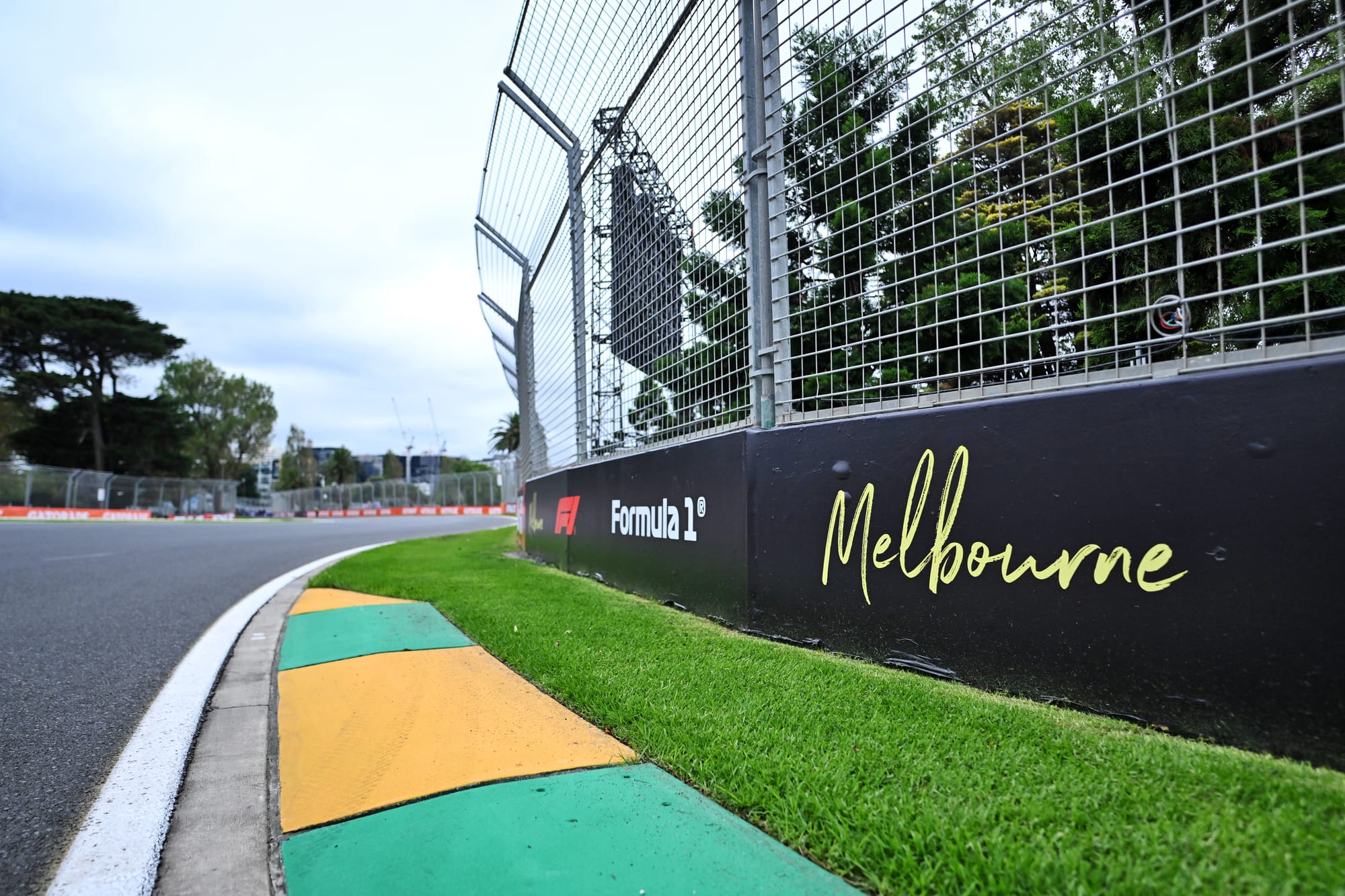
Formula 1’s season opener in Australia is such an unknown for teams and presents such a different challenge to pre-season testing that it could be “either really boring or really really exciting and crazy”, says Audi driver Nico Hulkenberg.
The 11 teams are braced for a reality check in Melbourne as the usual caveats around pre-season testing are amplified greatly for 2026 due to the extent of the new car and engine rules, and their consequences.
Beyond testing always leaving the pecking order relatively unclear, the main unknown relates to just how the energy-management demands of the Albert Park circuit will impact on what performance - and what spectacle - is revealed in qualifying and the race.
It is critical in these cars to recharge the battery constantly as an increased MGU-K makes a near-50% contribution to the engine’s total power output, but this will be very difficult in Australia, as the track has so few big braking zones.
The challenge of doing this effectively was already vexing teams in pre-season testing in Bahrain, where they had six full days of running at the same track, and in Melbourne, they will have to get on top of it across just three hours of practice before qualifying.
Speaking at an event organised by BP, Audi’s official technology partner, Hulkenberg said “don't get the best picture and not necessarily the reality” from Bahrain.
He believes “it's going to be a lot harder to learn all that and to perfect it in only three practice sessions” but as a result, he is “really curious” to discover the true picture as it is “far more unknown now”.
“You get so honed in and so driven on that track,” Hulkenberg said about what had been learned from Bahrain.
“But here is a completely different circuit: the cornering speeds, it's much more flowing, much higher speed corners as well, completely different asphalt. On the energy side as well, it's going to be a lot more clipping here than it was in Bahrain.
“It’s a very, very different set of circumstances.”
He added: “There are not that many heavy brakings compared to Bahrain. That's why we know we go from one extreme to a very different extreme.
“Teams are going to play with that, different strategies, different techniques and practice. That's why you have two cars. We're gonna test, find out, learn, look at results, re-do again – and come up with the best strategy.”
That suggests teams could split their programmes across the two cars more than usual in practice, to zero in on the best compromise as quickly as possible.
The uncertainty and intrigue has been a major theme across most teams in the build-up to the first race weekend.
Hannah Schmitz, Red Bull’s head of strategy, said “there are even more variables to understand” than normal, and McLaren chief designer Rob Marshall noted the need to “dial in the optimum settings with much less time and under the pressure of a race weekend at a very different circuit to what we have experienced throughout pre-season”.
Teams cannot forsake the usual, critical demands on the car side just to focus on energy management either. For example, Williams chief trackside engineer Paul Williams pointed out that the combination of a smooth track surface and high lateral load means teams will have to observe how much graining occurs on softer compounds - something that was a non-issue across two weeks in Bahrain.
Haas team principal Ayao Komatsu called it “a completely different ball game completing six days of testing at one circuit, to going to Melbourne and hitting the ground running in FP1”.
“What we were doing for half a day in Bahrain, we’ve essentially got to do in two runs in FP1, that’s the big challenge this year,” said Komatsu.
“Melbourne as a circuit, in terms of energy recovery, which is critical this year, is going to be much more challenging than Bahrain.
“I think we all expect a huge challenge, but we’re preparing as well as possible.”