F1's penalty and driving standards changes: What you need to know
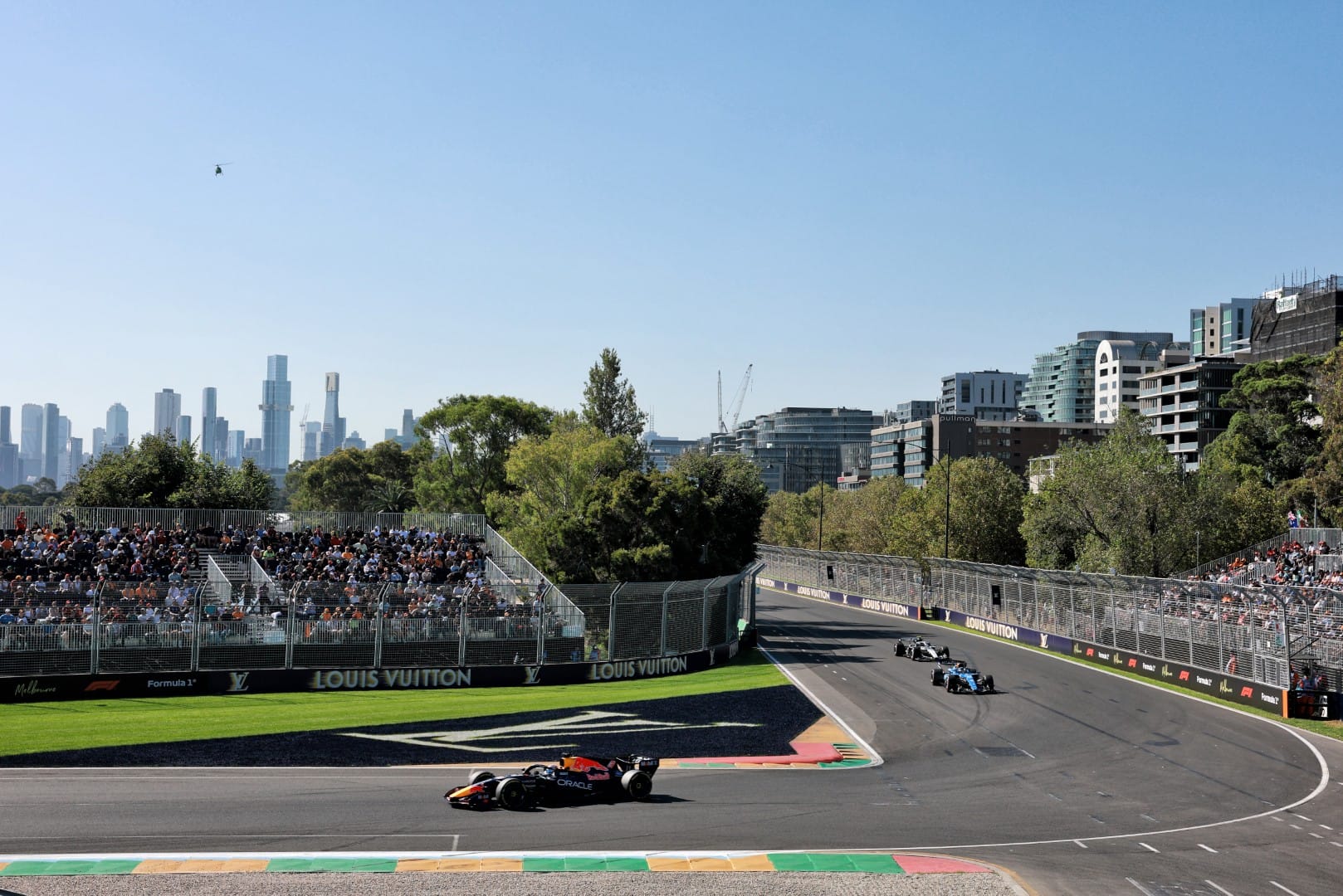
The stewards are likely to give out fewer penalty points in Formula 1 races this year, following changes to the penalty and driver standard guidelines.
The FIA met with F1 teams and drivers at the Qatar Grand Prix last November to discuss some much-requested changes to the guidelines that have consistently come under fire in recent years.
One of the major topics of displeasure among drivers has been the penalty point system, which resulted in multiple drivers, including world champion Max Verstappen, being on the verge of a race ban - which was felt to be disproportionate to their actual offences.
Kevin Magnussen actually acquired the 12 points that trigger a ban in 2024, and current Haas driver Ollie Bearman sits just two points away from a ban heading into 2026.
From 2026, the stewards will now only impose penalty points on incidents that are dangerous and/or reckless or are deliberate actions that result in a collision. As well as any unsportsmanlike behaviour.
The stewards have been granted greater flexibility when imposing the driver standard guidelines and the liberty to take more leniency in certain cases.
Four caveats have been added to the guidelines that the stewards can factor in.
1. A car being overtaken, or performing an overtake, cannot simply “disappear”.
2. A lock-up or small steering correction do not necessarily imply a driver has lost control
3. An apparent temporary loss of control, or a lock-up, may be due to an attempt to avoid a collision, or simply the “laws of physics”
4. The apex may vary depending on the racing line taken and/or the nature of the corner itself
New sections have been added to address guidelines for drivers under yellow and blue flags too, after calls for clarity over those rules.
The stewards have been asked to factor in the following eight points when judging yellow flag infringements.
i) The onus rests with the driver to demonstrate a sufficient reduction of speed to satisfy the rules.
ii) The extent of speed reduction considered acceptable may vary depending on the conditions and visibility of and through the incident.
iii) The requirement that a driver be prepared to stop in the case of double waved yellow flags means that the speed reduction must be significantly and noticeably greater than in the case of a single waved yellow flag.
iv) In evaluating compliance with the rules, the stewards will pay close attention to the extent of driver input (throttle pedal, brake pedal, steering angle) prior to and through the incident location.
v) It will be up to the driver to demonstrate to the stewards, via the “driver input” referred to above or by the method below, that they have complied with the regulations.
vi) One method of demonstrating compliance (but not the only method) would be, in the case of a single waved yellow flag, an increase in the time taken to traverse the flag sector, of at least 5% compared to the driver’s previous lap(s) under similar conditions.
vii) Similarly, one method of demonstrating a significant reduction of speed and preparedness to stop (again, not the only method) would be, in the case of double waved yellow flags, an increase in the time taken to traverse the flag sector, of at least 15% compared to the driver’s previous lap(s) under similar conditions.
viii) In considering what is a lap under ‘similar conditions’ the sttewards will take into account tyre compound, tyre condition, fuel load, energy deployment and weather conditions.
ix) Any car losing control under a yellow flag or double yellow flag will usually be investigated.
There have also been a series of minor tweaks, including granting the stewards the ability to delete a track limits violation if it’s a failed overtaking attempt with no clear advantage gained.
And for the overtaking rules in chicanes and s-bends, a new caveat has been added: “However, other factors such as the sequence of corners will be considered holistically by the stewards when assessing the right to the corner”.
So too for “long radius curves, the stewards will treat case on its merits particularly when there is no defined apex or multiple apexes”.
This is likely to empower stewards to not stick so rigidly in applying the technicalities of the guidelines to complex racing scenarios, a common complaint of drivers.