F1 could change 2026 rules after next race
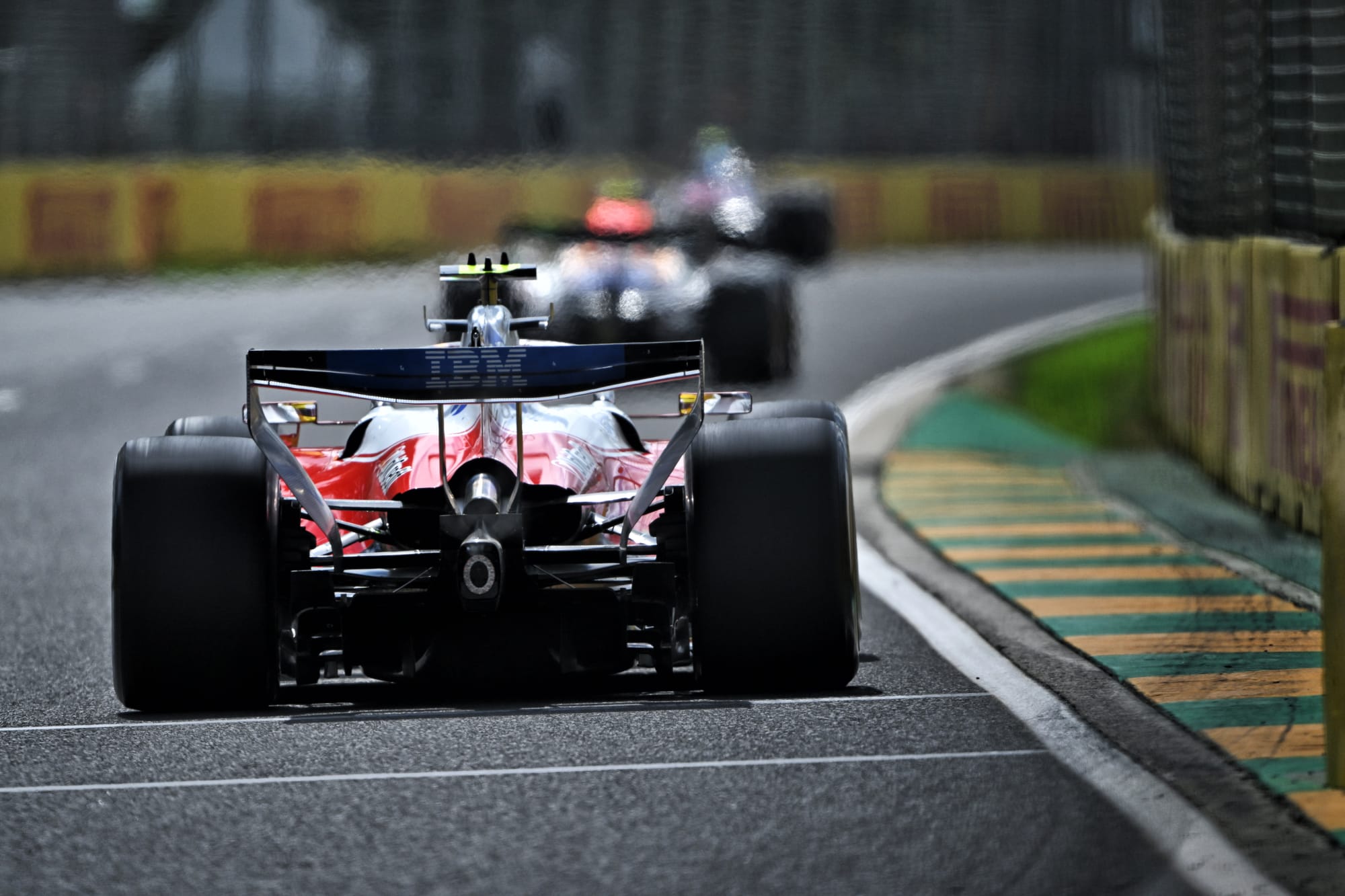
Formula 1 chiefs and teams are to consider changes to the 2026 rules for as early as the Japanese Grand Prix at the end of March, with discussions on the matter set to take place after this weekend's race in China.
The all-new engines and cars for this year have divided opinions among fans and drivers.
While the nimbler chassis that move away from a pure ground effect concept have been applauded, the new energy-starved power units have come under fire.
Many drivers have spoken out about battery management being too dominant a factor in performance – which means they are having to drive in counter-intuitive ways that few of them seem to enjoy.
And while the season-opening Australian Grand Prix delivered plenty of overtakes – almost three times as many as last year's race according to F1's figures – there were complaints that these moves were too artificial.
World champion Lando Norris said over the Melbourne weekend that F1 had gone from having its best cars to potentially its worst with this new rules set.
Furthermore, he warned of major safety risks because of high closing speeds between cars that had lots of energy and those that did not.
F1 bosses and the FIA readily accept that the performance of the current cars in terms of levels of energy harvesting and deployment may not be pitched at the right level.
However, the consensus has been that, despite disdain from some quarters about the rules, it makes no sense to rush through changes to try to improve things.
Instead, it has emerged that, following discussions that took place between F1, the FIA and teams in the gap between Bahrain testing and the Australian Grand Prix, a timeline was agreed on how to sort things out.
No kneejerk response
It is felt that pushing through tweaks before the first race was nonsensical, as F1 needed firm evidence of how the racing would be to know what needed changing.
Plus, with the Australian Grand Prix being in the top four of the worst circuits for energy management over the season, it was agreed that reacting from what happened in Melbourne would be wrong too.
So instead it has been decided to wait until after this weekend's Chinese Grand Prix to evaluate the learnings of the first two races and decide what, if any, action needs to be taken.
Anything that needs urgent implementation can then be done for the Japanese GP on March 29, with further tweaks following in subsequent races.
The looming cancellation of the Bahrain and Saudi Arabian Grands Prix in April, because of the latest Middle East conflicts, will also give some breathing space to sort a proper package out before the Miami GP in May.
Energy in and energy out
The main topic to be discussed is a tweak to the energy management levels – and whether revisions need to be made to the harvest and deployment levels.
Options for improvement can be to increase how powerful super clipping is, which will help drivers charge batteries much more easily.
Another possibility is to decrease the power that can be deployed. While this will mean a reduction in horsepower, it will allow drivers to keep boost levels for much longer.
There is also some consideration to seeing if there are ways to boost the power of the internal combustion engine.
The FIA's single seater director Nikolas Tombazis said that there were several possibilities that could be brought into play.
"The teams' unanimous position was that we should stick to the current arrangements for the first few races and to review the matter when we have a bit more data," he said.
"Our intention is after China to be reviewing the energy management situation.
"We have a few aces up our sleeves on that, which we didn't want to introduce ahead of the first race as a kneejerk reaction, and which we will review with the teams after China."
There is an acceptance in the paddock that the current energy levels, with super clipping limited to 250KW and deployment at 350kW, are probably not ideal.
But, as Williams team boss James Vowles said, it is better for F1 to sit and wait and make changes based on real world findings than rush through tweaks that may not work.
"I think the worst thing we can do is change it and make it worse," he said.
Even Mercedes boss Toto Wolff, whose squad dominated the season-opener in Australia so may not want any change to the rules, accepts that tweaks may be necessary.
But he thinks the driving force for alterations should be based on what fans like – and not just that competitors are unhappy.
He thinks there is an element of drivers looking at things through rose-tinted spectacles when it comes to the previous generation of cars.
"I didn't hear any of the drivers speaking particularly good of the last cars and saying it was the best car," he said. "So we tend to be very nostalgic in looking at past events.
"But clearly, we are all stakeholders of the sport. We need to have a great spectacle, the best cars in the world and the best drivers, and being exciting for the fans. That's why we just need to look at the product.
"One perspective is the view of the drivers, which is an important perspective. Stefano [Domenicali] would say that the single matrix that matters to him is whether the fans like it. That is what we need to look at.
"If it needs to be tweaked, if we need to adjust, I think we have the flexibility in Formula 1 to always take those decisions."
Safety warnings
As well as the topic of the spectacle, there are some elements of safety that are also triggering some concerns in the paddock.
Race starts remain a bone of contention, with F1 having had a lucky escape after Franco Colapinto somehow managed to avoid smashing into the back of Liam Lawson's slow Racing Bulls away from the line on Sunday.
Norris has also warned about the risks of huge closing speeds between cars on different energy levels opening the door for big collisions.
"You can have a 30/40/50km/h speed [difference]," he said. "When someone hits someone at that speed, you're going to fly, you're going to go over the fence and you're going to do a lot of damage to yourself and maybe to others. That's a pretty horrible thing to think about."
McLaren boss Andrea Stella has repeatedly called for action to be taken to avoid such a scenario playing out.
"We should not be happy because nothing happened," he said. "We should be always on the forefoot when it has to do with safety."