The F1 rules tensions rivals could use to peg Mercedes back
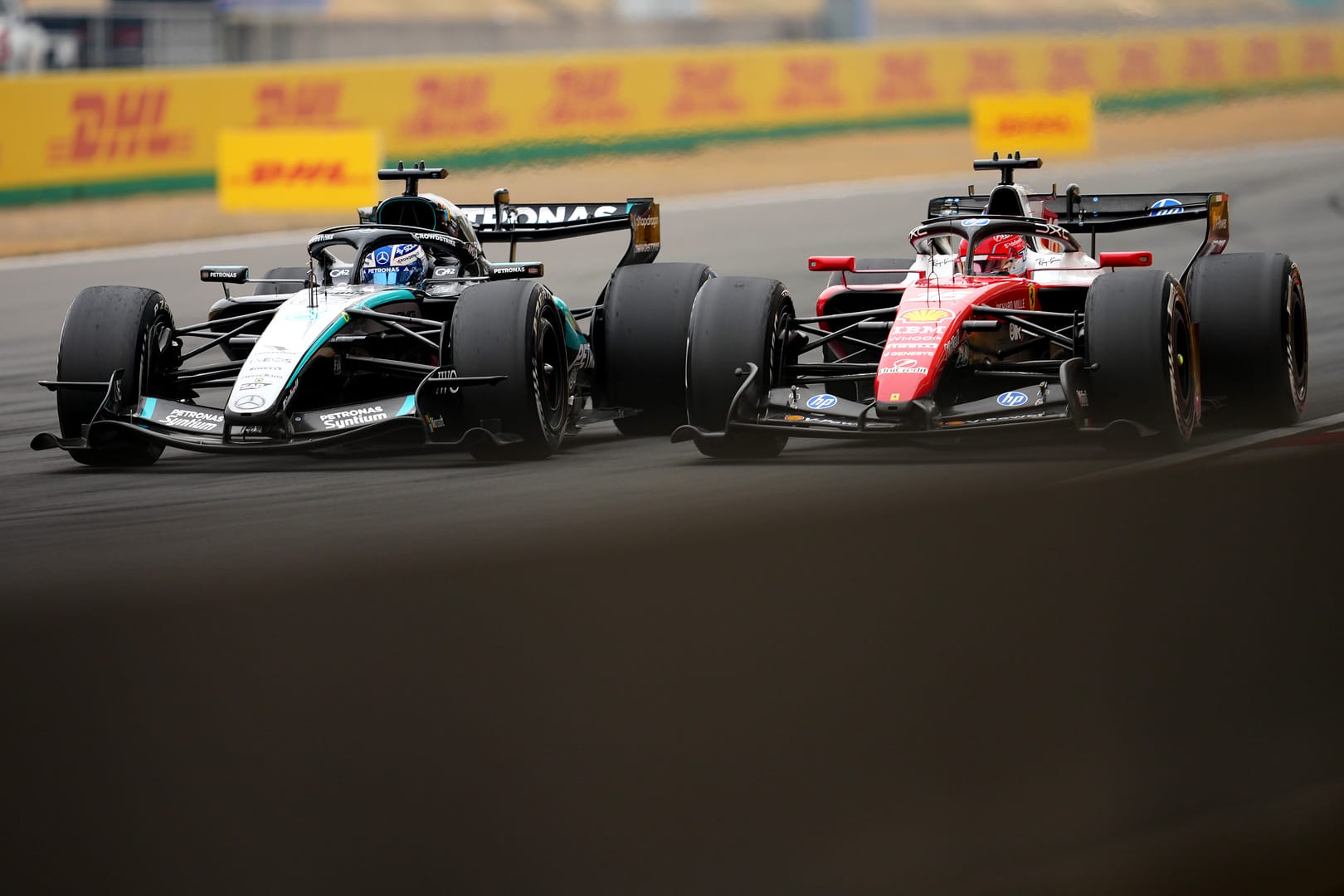
Mercedes is bracing itself for the "political knives" to come out as rivals work to wipe out its current advantage in Formula 1.
The team has made a near-perfect start to the new rules era, with George Russell and Kimi Antonelli winning the first two grands prix of the season in Australia and China.
The back-to-back successes have left competitors in no doubt that Mercedes is the team to beat, and that a pretty major effort is needed to have any hope of closing down the scale of the advantage it has right now.
But Mercedes boss Toto Wolff is anticipating that the manner of his team's strong start will trigger not just a development war elsewhere but also some political manoeuvring behind the scenes that could impact the competitive order.
Speaking after Antonelli's maiden F1 win in China, Wolff said: "We have a good car that, at this stage, is capable of winning.
"But let's see what kind of political knives are going to come out in the next few weeks and months."
While Wolff did not elaborate on the specifics of what he feared could be on the horizon, there are some key battlegrounds that are either bubbling away already or are set to emerge.
Compression ratios and ADUO
One of the big talking points over the winter was the advantage that Mercedes had gained from exploiting the regulations regarding compression ratios.
With a new 16:1 limit imposed for 2026, but only checked when running cold, it had found a way to run at a higher level when the power unit was up at proper operating temperatures.
Mercedes' manufacturer rivals came together and managed to push through rules amendments that will clamp down on compression ratio tricks.
From June 1, measurements of the 16:1 limit will be taken when power units are both cold and hot – while from the start of 2027 compliance will only be taken from the higher temperature reference.
Mercedes is adamant that its current power unit will have no problem passing the new June 1 compliance checks, and will not lose any performance as a result. Its rivals are not convinced.
But with the old mantra of ‘if you can't beat them join them', the prospect remains for Mercedes' rivals to introduce their own power units that exploit this area when they cycle through their next specification engines.
Under the Additional Development and Upgrade Opportunities (ADUO) element of the rules, manufacturers whose performance deficit to the benchmark power unit is past set thresholds will be allowed to introduce an improved design.
So it could be that when the first ADUO steps are allowed, Mercedes' compression ratio advantage is eroded by others deploying the same idea.
It could therefore be key for Mercedes' rivals to prove that they fall outside the 2% performance gap that has been laid down by the FIA as the difference needed for an engine manufacturer to get granted some development opportunities.
Race starts
One of the more recent public spats in the paddock has been over race starts amid an ongoing safety debate.
It emerged in pre-season testing that the challenges of getting the 2026 cars off the line were pretty extreme – with many cars needing a 10-second window to spool up the turbos.
The inconsistent nature of launches pushed drivers to get the FIA to change the procedure for when cars had formed up on the grid, which resulted in the new extended five-second pre-start window.
But there remains some aspects of the starts that drivers do not like – such as the ongoing energy recharge limit for formation laps – which has triggered fresh debate between teams and the FIA about potential tweaks being made.
However, Ferrari has emerged as a key lobbyist for keeping things as they are because it is an area of significance in its performance battle with Mercedes.
Right now, Ferrari's better starts are proving decisive in helping it get to the front off the line even when it has qualified behind.
Early last year, as teams began work on their power units, Ferrari team boss Fred Vasseur had warned the FIA of potential start line risks with the new rules.
But he was told that teams would have to design components to suit the rules – so he duly committed Ferrari to a small turbo concept that is easier to spool up and allows a more consistent getaway.
Other teams, not wanting the power compromises that come from a smaller turbo, elected to stick to bigger versions that are harder to get off the line.
So Vasseur feels it slightly unfair that pushes by those that did not design their cars to best suit the rules are being listened to, because it is wiping away a core advantage his team has in its getaways.
He reluctantly accepted the new five-second pre-start element, even though it hurts his squad.
But he thinks that any more efforts to change start procedures to make life better for rivals should not be accepted.
"I think that we already changed massively the rule of the start with the five second story," he said.
"One year ago I went to the FIA, I raised the hand on the starting procedure to say, ‘guys it would be difficult'. The reply was clear that we have to design the car fitting with the regulation and not to change the regulation fitting with the car.
"We designed the car fitting with the regulation. The change of the five seconds light story didn't help us at all. But I think at one stage enough is enough."
Any further tweaks to start procedures will now involve a bit of a political element.
Energy management tweaks
Perhaps the most significant political tussle to come though is going to be over revisions to the 2026 regulations – especially when it comes to energy management.
The picture from the first two grands prix has delivered enough encouraging signs for F1 and teams to feel that there is no need for any emergency knee-jerk revisions before the Japanese Grand Prix at the end of this month.
So, as revealed by The Race, a meeting of technical chiefs will now take place in the fortnight after Suzuka to evaluate tweaks to the regulations that can iron out areas of concern from the Miami GP at the start of May.
The energy management levels are likely to be the central focus here, with debate raging about how to find ways to improve harvesting efficiencies and allow for better deployment tactics that do not leave cars struggling for power.
But achieving a solution that works best for F1 is also going to have an impact on the competitive order.
Those teams that are struggling to harvest energy as much as Mercedes will gain if recovery is boosted or made easier.
One way of doing this would be to allow super clipping to recover the full 350kW allowed - something that McLaren is known to be in favour of.
Likewise, those outfits that are losing out in deployment terms through not being able to deliver peak power levels for as long as the best will gain if outputs get more restricted to help available energy last longer.
There is also understood to be a push from some quarters to increase the power contribution from the internal combustion engine to help the electrical side of the power unit.
Proposals on this front are anticipated to include ideas of lifting the fuel flow limit, which has been more restricted for this year.
But, while some manufacturers are believed to be in favour of this, others have suggested that this would require major design reworkings that they do not support.
Changes in any area of these power units is going to suit some manufacturers more than others, and it is almost certain that, in the ultra-competitive world of F1, technical chiefs will attempt to suit their own agenda when it comes to getting the FIA to agree rule changes.
A new order?
The outcome of the politicking that will take place in the gap before Miami could well prove decisive in laying out the competitive picture for the remainder of the campaign.
And it can be virtually guaranteed that Mercedes will find itself in the crosshair of the political knives from rivals who want to shut down its advantage.
The uncertain path for the regulations and rules interpretations going forward means that even world championship leader Russell is taking nothing for granted.
"As it stands, we have the upper hand, but we can't take that for granted because obviously we know some things are going to be changing in a couple of months," he said.
"The upgrades are massive at the moment. So yeah, let's see where it falls out."