A windscreen? The legality questions around Ferrari halo wings
Ferrari has proved to be one of the most innovative Formula 1 teams this year when it comes to aerodynamic developments.
It caused a stir in pre-season testing when its SF-26 appeared with a unique exhaust wing, exploiting a design choice with its gearbox and rear crash structure to fit an extra winglet that improves airflow around the diffuser area.
Then it revealed its flipping rear wing, which rotates its upper element through 180-degrees when active aero is deployed to help reduce drag on the straights.
While both these ideas were well understood and accepted by rivals as being wholly within the regulations, the same cannot be said for its halo wings that appeared at the Chinese Grand Prix and triggered legality discussions with the FIA.
Here we take a look at what piqued the governing body's interest and the regulations that are at the heart of the matter.
On for the sprint, off for the grand prix
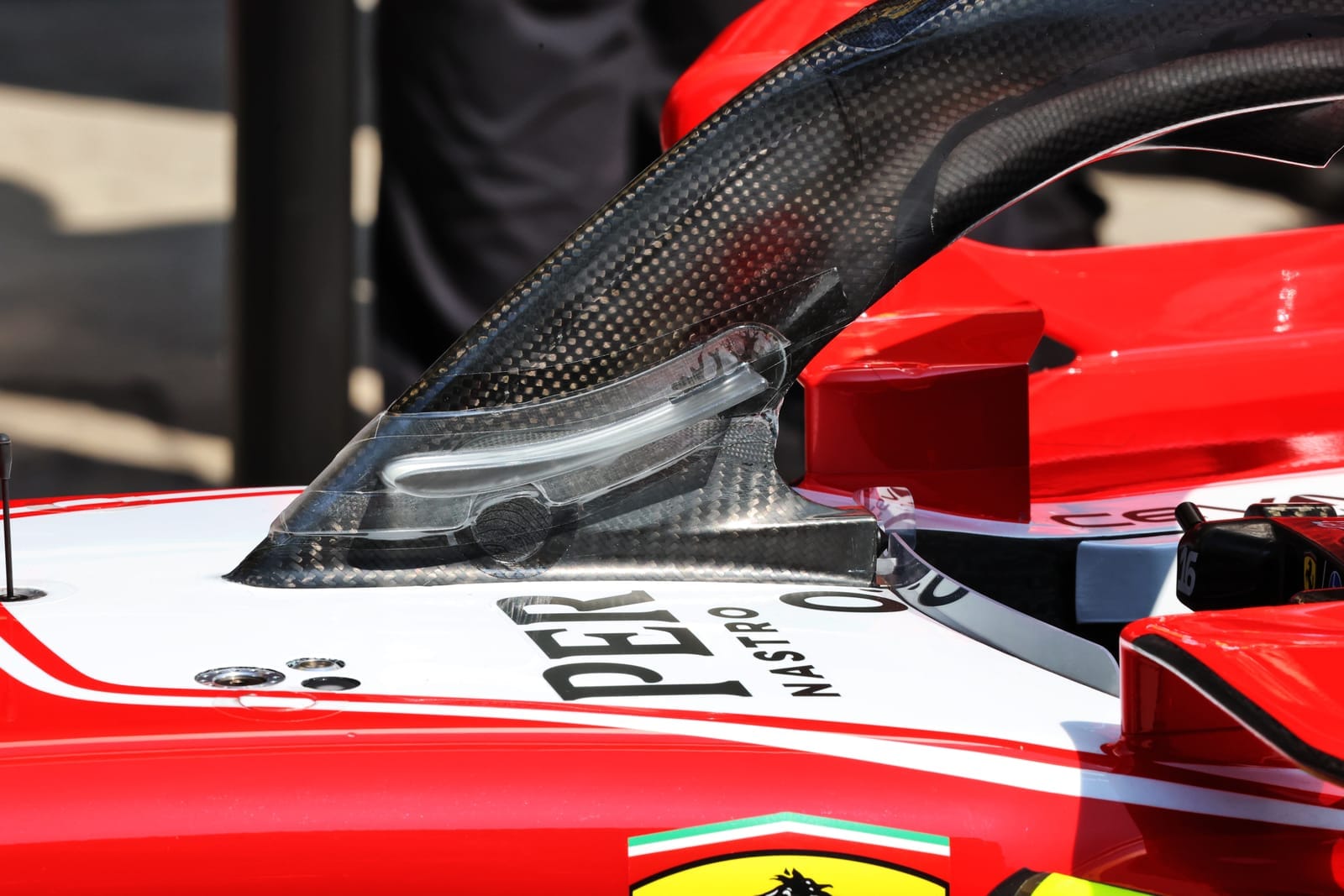
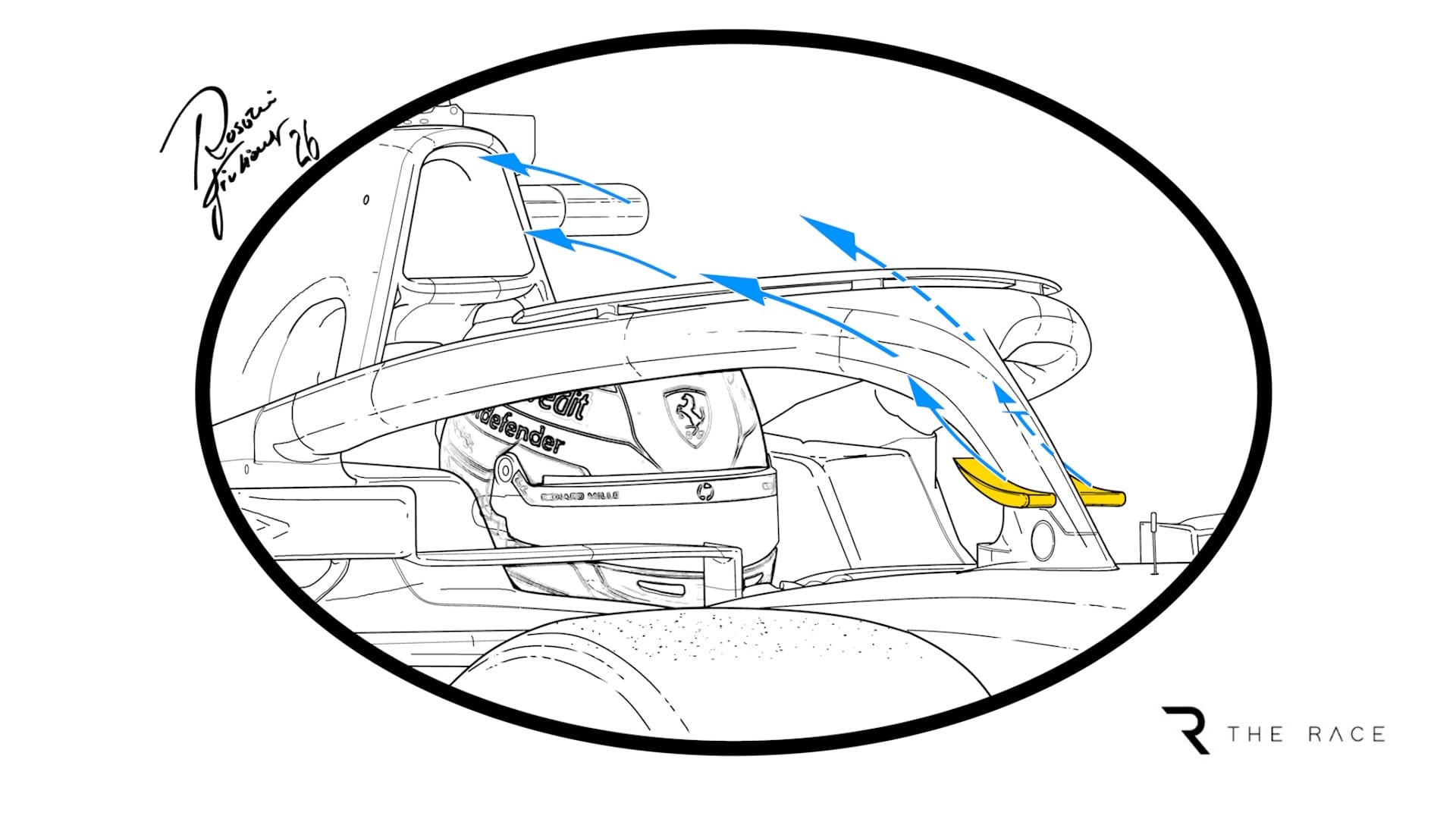
The small winglets, fitted to the side of the halo's central pillar, were aimed at helping optimise airflow around the drivers' helmet and cockpit, delivering benefits downstream and helping contribute to a bit more downforce.
But while the halo wings were fitted to Lewis Hamilton and Charles Leclerc's cars in practice, and used for the Shanghai sprint race, intriguingly they were removed from the cars ahead of main qualifying and the grand prix itself.
As first revealed by The Race, Ferrari took the wings off following some discussions with the FIA.
Although both cars passed scrutineering after the sprint with the wings in place (although according to the official FIA documents these specific components were not checked), sources have revealed that it was subsequent questions from the governing body that set in motion Ferrari's decision to remove them.
The legality questions
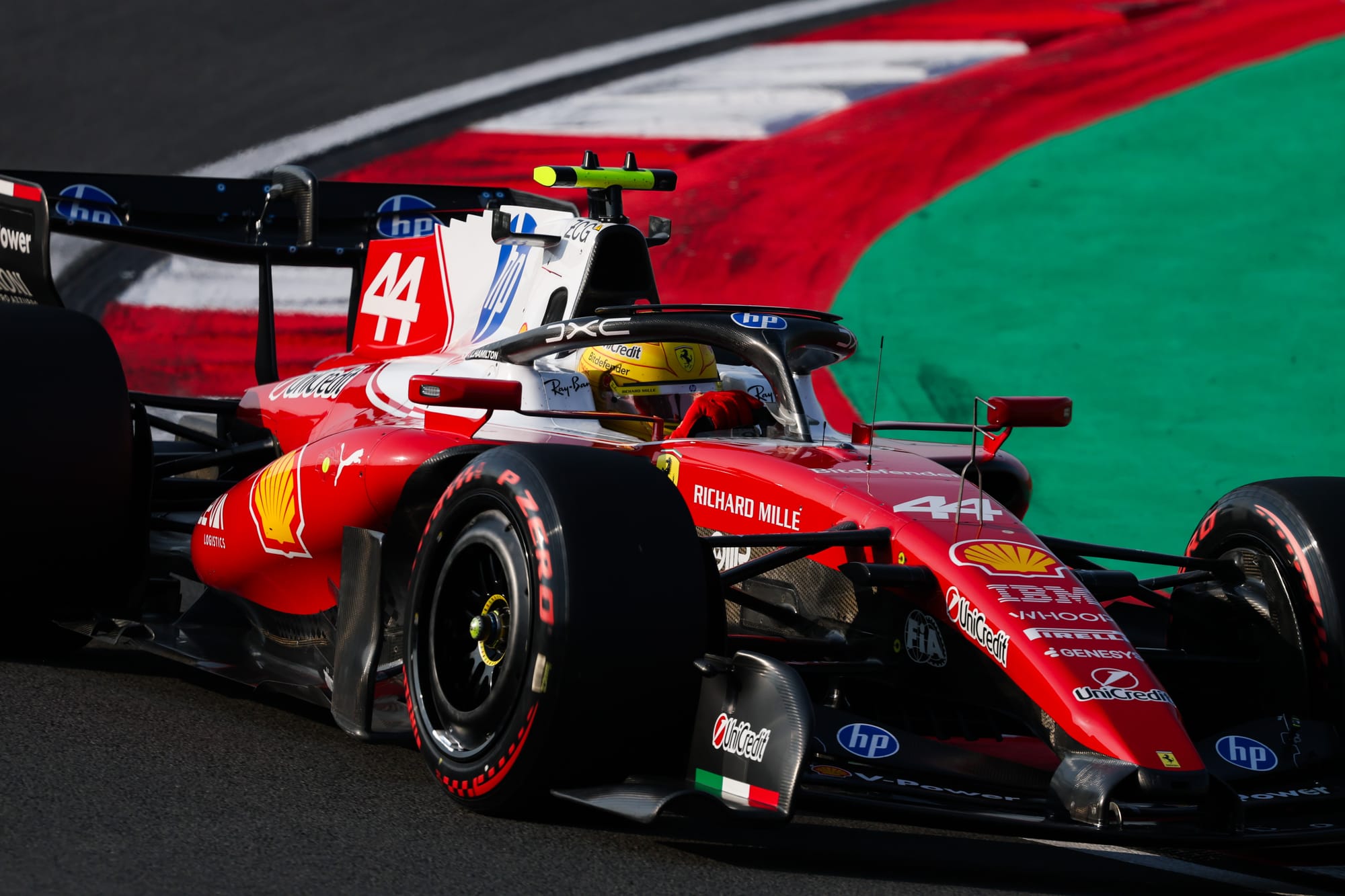
The interest in the halo wing design was inevitable because this is an area of the car that is heavily restricted when it comes to aerodynamic fittings.
Bodywork is pretty much prohibited in the area above the nose, and there are limitations in terms of what can be fitted to the surround of the halo itself.
Article C3.13.1 allows a fairing to be fitted to the halo - known officially in the rule book as the secondary roll hoop - but only in the legality box region known as 'RV-HALO' which is towards the top.
So how had Ferrari managed to fit its winglets to the side of the central pillar in a low area that other teams never felt could be exploited?
There has not been an official explanation from Ferrari, but the team has given us a massive clue about its thinking through the material it used.
Rather than being made of carbonfibre or a metallic material, the winglets are transparent.
This choice of a see-through material will not have been accidental, and it is a smoking gun in pointing us towards the regulatory aspects in play.
In F1's 256 pages of technical regulations there is only a single car component where transparent material is mandatory: the windscreen.
If we focus on the specific regulation that lays out what teams can do with this component, it gives us a good indication of what Ferrari appears to have done: created a windscreen in the shape of some wings.
Article C13.3.1 of the technical regulations specifically allows teams to fit "a transparent windscreen".
There are some axis-compliance requirements where it must measure "less than 30mm in Z, less than 300mm in Y" and be "no more than 3mm thick".
Plus "it may be fixed to the forward face of the cockpit opening and may extend above RV-CH-MID" - the legality box covering the mid-chassis area.
In layman’s terms, this means the 3mm-thick windscreen material must be no more than 30mm high, and no wider than 600mm across the centreline of the car.
Looking in detail at the design of the halo wings, stretching these definitions to the extremes (which is what teams try to do with all the rules), there could be an argument that some of the complex structure that Ferrari ended up with fits within these constraints.
It is understood, however, that the FIA was not convinced.
It wanted some specific answers from Ferrari in terms of how the winglet structure complied with both the strict definition and dimensions of the windscreen element.
This came alongside a secondary aspect that the FIA wanted clarity over, which related to what the winglets were made of.
Article C3.19.2 stipulates that any fairings on the halo must be constructed from a specific laminate that is defined in article C15.5.2, and this list does not include the transparent material that Ferrari had used.
The uncertainty
Amid the probing from the FIA about the material rules and windscreen compliance elements, Ferrari took the decision itself to remove the wings.
It is understood it did not want to waste time debating rule interpretations on a busy sprint weekend.
And, more critically, it did not want to face any risk of a good result being protested afterwards for the sake of something that was ultimately only worth a few hundredths of a second.
Playing it safe, based on the strength of its 2026 car anyway, also means Ferrari can use the time after the China race to get better clarity on whether its legality arguments can convince the FIA.
Teams have been known to seek some aero gains from windscreen tweaks, such as the serrated edges we have seen on the Mercedes and McLaren cars.
However, we have never seen a 'windscreen' shaped like the Ferrari halo wings before.
Whether Ferrari attempts to argue its case in the future to bring the halo wing back remains to be seen, and the grounds that the FIA needs convincing over are now well known.
But it may ultimately conclude that the battle is not worth fighting for something that brings minimal benefits.