Honda needs 'magic' to avoid a painful next Aston Martin failure
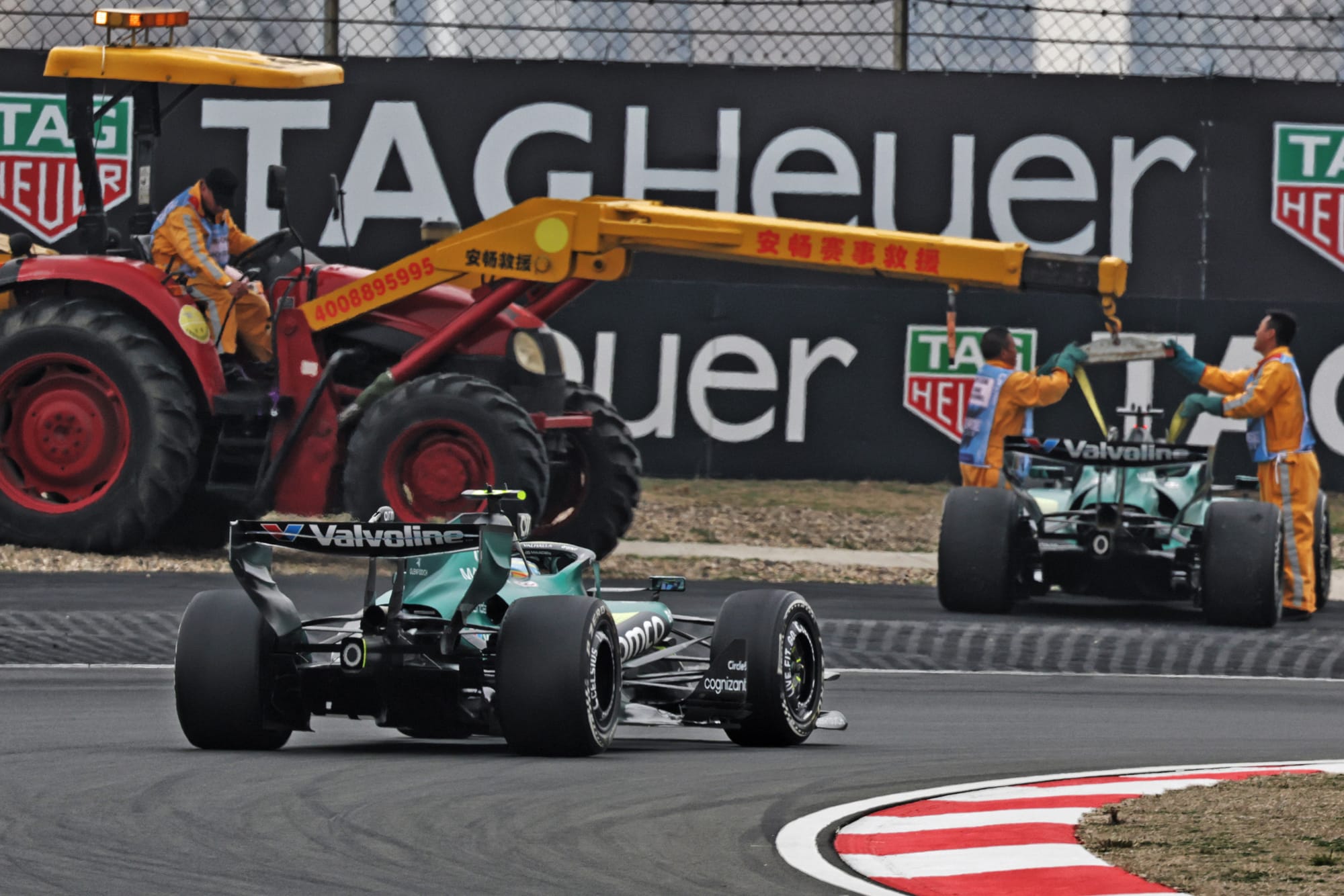
Two grands prix, no finishes with either car. Next up: the Japanese Grand Prix. Aston Martin and Honda face the real prospect of a very painful failure at Honda's home Formula 1 race.
Suzuka will be tough "unless they can find some magic in the next 10 days", driver Lance Stroll said at the end of the China weekend. He half-jokingly added: "Pray with me!" But there’s no way out of this predicament without a lot of hard work and time is not on Honda's side there, even if this short break between races is the closest thing to a reprieve it has had since its pre-season nightmare developed in Bahrain.
"Obviously from Australia to China we only had five days, the engine was exactly the same as in Australia," said Fernando Alonso after the Chinese GP.
"Now we have two weeks so we need more time in the dyno, we need to give Honda more time to understand the vibrations and where they come from.
"All in all we need to give Honda more time."
As ridiculous as it might sound with two double-DNFs to start the season, Aston Martin and Honda have improved. "You will probably laugh if I say we have made progress," Aston Martin's chief trackside officer Mike Krack said in China, but his argument was pretty straightforward: both cars did finish the 19-lap sprint, Alonso got 32 laps into the grand prix, and the knowledge being gained is exponential given how far behind the curve Aston Martin and Honda are.
However, that cannot be misconstrued as 'this isn't as bad as it looks'. There's been a lot of work to mitigate the risk of the cars not running at all, and that worst-case scenario has been avoided, but these first two weekends have still been disastrous in terms of reliability and performance. And even what progress has been made has to have a major asterisk against it.
The vibrations that were shaking its battery to failure in testing and in Australia have been improved but to what extent, really?
Stroll retired from the Chinese GP with a suspected battery problem. Alonso claims the reliability-critical battery vibrations have at least partly been managed just by running the engines at lower RPM, rather than a real fix, which is reflected in the data: the Aston Martin is using lower revs than its competitors whenever they are in the same gear at the same place on track.
And Alonso abandoned a futile race a lap down in last position due to the discomfort he felt in the car from the vibrations being transmitted to the chassis specifically, something that Honda is still working to get to the bottom of, let alone resolve.
"We have improved the vibrations on the systems side, but it's still an issue for driver comfort," Shintaro Orihara, Honda's trackside general manager and chief engineer, said in China. "This is a key area to address as we look ahead to the next race in Japan."
Alonso hit his own threshold for what he was willing to put up with quite suddenly in the race but it had been coming. He had not been particularly happy over the radio throughout and first signalled his concern during the early safety car for Stroll's retirement, when he said "vibrations are higher today than yesterday". Alonso also said he would not brake hard to put temperature through the front axle; whether that was a sign that would trigger any unwelcome extra force through the steering wheel for him was unclear.
Alonso continued only to suffer through a galling restart in which five cars on fresh tyres and with better engines blitzed him in a single lap, which triggered his chuckled message of: "I hope this lap was broadcast."
He also waved at Sergio Perez as the Cadillac overtook him to complete Alonso's slump to last, but carried on for another 15 laps before telling the team: "I think we have to pit soon. Vibrations way too high."
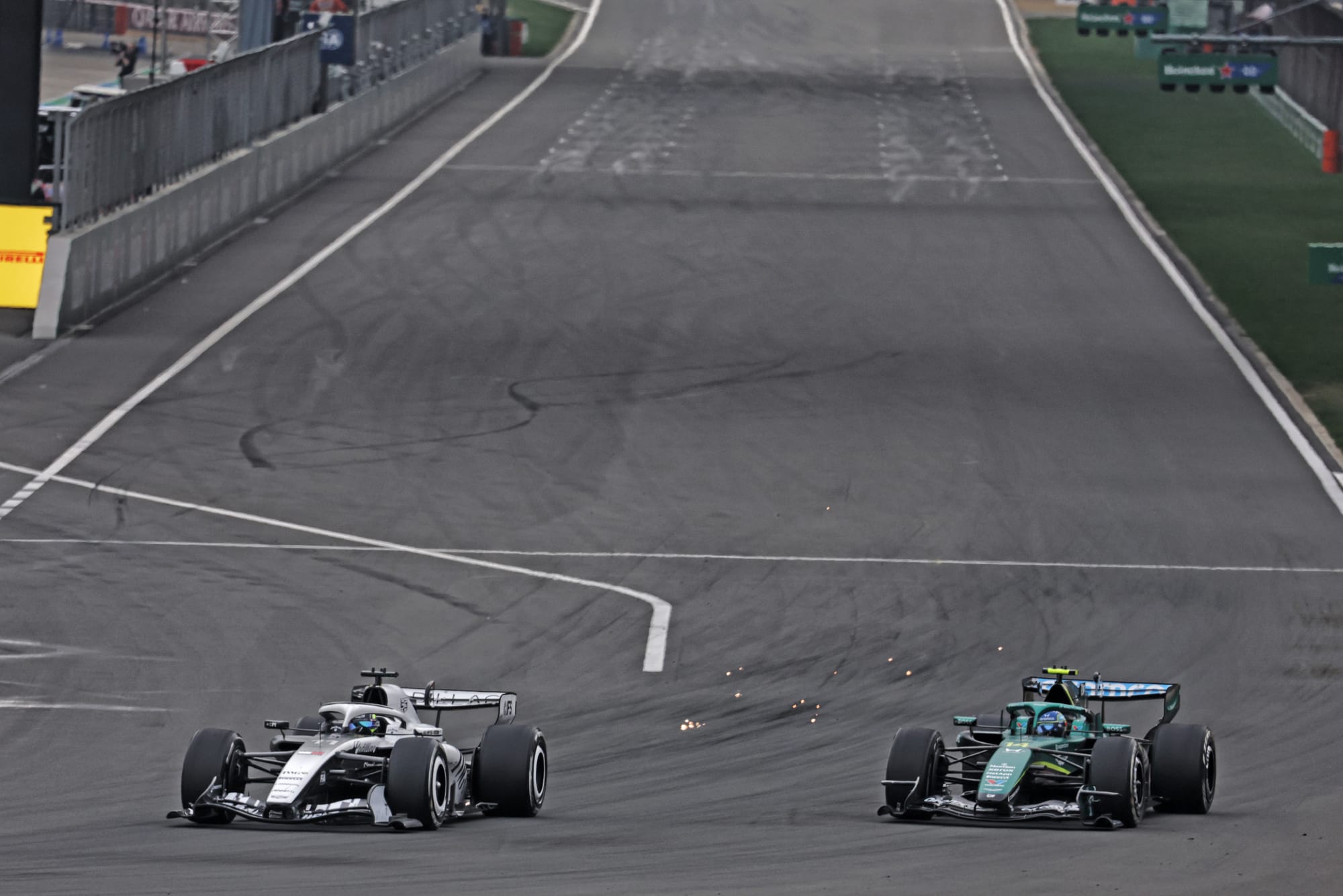
Alonso immediately started flexing hands off the wheel on several straights, completed a pitstop, then returned immediately (and permanently) on the very next lap after being passed by race leader Kimi Antonelli. Race over, and a pretty embarrassing reason given: the Honda engine's not just slow, even when it runs it's too physically uncomfortable to bother persevering with.
Krack played this down based on Alonso saying "if you're fighting for the win, it is possible to drive" and therefore as Aston Martin's position was uncompetitive "it was a decision that was quite easy to make".
However, considering Krack's emphasis is on how valuable laps on track are right now, it stands to reason that its preference would have been to battle on if possible. So whatever the exact balance, the trade-off clearly wasn't worth it, and however easy a decision it was to make having to make it at all is, to state the obvious, extremely problematic.
A silver lining could be that the vibrations still seem to be the root of all evils. Fix that and Honda might well fix a lot. The question is how close or far away that is. Quite how this is supposed to be resolved in time for Japan without some Honda "magic" is difficult to imagine but that is exactly what Honda will be trying to make a reality.
It shouldn't be ruled out because its ability to rush through effective countermeasures is actually very impressive and its motivation to get at least one car to the finish at Suzuka will be massive. It just cannot be guaranteed.
"Obviously everybody is flat-out working on that [the vibrations]," said Krack.
"If we go 10 days back, we were speaking about six laps. And then we found solutions to the problem. Especially for the most exposed point, which was the battery at that point.
"It's obviously not performance progress, we need to be honest with ourselves. But I think we have now a couple days more to work on that, and I'm quite sure that we will come up with further improvement.
"To give you a final timeline on when, it's very difficult to say.
"Ideally you solve it. But this is something we have to do together with our partner Honda, to see really what we can do, in what timeframe."