F1 has a clear priority for post-Japanese GP rule changes
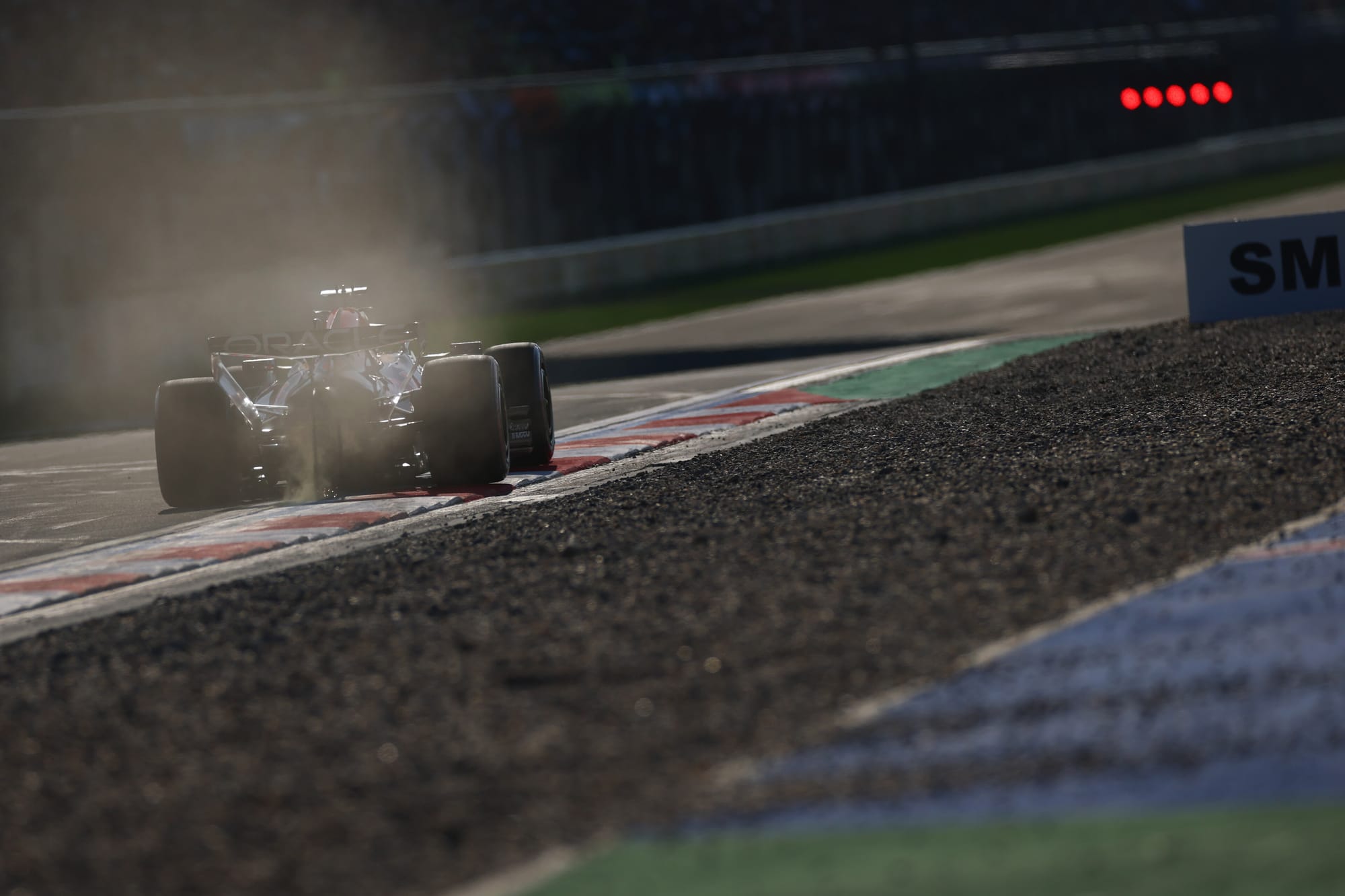
Formula 1 bosses are to prioritise rule changes aimed at addressing concerns the challenge and spectacle of qualifying has been ruined by the new 2026 cars, The Race has learned.
It is hoped that work can be done in the break after the Japanese Grand Prix to push through regulation tweaks that can be implemented as early as the following round, the Miami GP in May.
Amid the review process of the 2026 rules being conducted by F1 teams, Formula One Management and the FIA after the opening grands prix of the season, one of the main talking points has been the impact the new energy-starved cars have had on the fight for pole position.
The scale of energy management that needs to be done has triggered complaints from drivers, fans and teams themselves that it has robbed F1 of a major element of interest from a race weekend.
Things have been made worse by a complicated regulatory framework and the way that energy management systems are automated, meaning that drivers are being forced to adopt counterintuitive tactics to be quick.
The Race revealed this week how a lap from Charles Leclerc in sprint qualifying at the Chinese Grand Prix was stymied by power deployment problems that were not understood at the time.
It later emerged that the issue that slowed Leclerc's effort was triggered by him briefly lifting off the throttle to correct a slide earlier in the lap, confusing his engine system.
It was the lessons from this incident that prompted Leclerc, regarded as one of the best qualifiers in F1, to lament that he could no longer risk pushing too hard for an on-the-edge lap for fear of a repeat.
"I felt in the past one of my strengths was that come Q3 I was just taking massive risks to get something out more, and now when you do that you start confusing the engine side of things," he said in Shanghai.
Leclerc is not alone in his views and there is a growing belief in the paddock that the art of qualifying has been taken away by the levels of management now required.
McLaren team principal Andrea Stella suggested that this required a bit of self-reflection from F1.
"Do we accept that this counterintuitive situation belongs to the business or not?" he said. "I think this is more of a high-level philosophical question.
"I think fans are a part of this in finding the answer, but above all, drivers are a part of this in finding the answer. So I think it's for F1 and the FIA now to collect the feedback, and create a picture."
The possible fixes
The Race has learned that the issue of qualifying took precedence in a meeting between team bosses and the FIA held after the Chinese GP to evaluate what rule changes need to be considered this season.
Sources suggest there was broad agreement that qualifying should be at the top of the agenda when it comes to having some fixes in play.
So this will become the priority to resolve in a meeting of technical experts and the FIA that is due to take place after the Japanese GP.
The hope is that modifications can be made to the rules that will remove any element of battery management influencing qualifying, so it can return to being a flat-out attack as it was in the past.
The complication will, however, be in finding a way to achieve this within the constraints of the current energy limits.
Calls to increase the harvesting allowance from super clipping - where the MGU-K is effectively run in reverse - to the full 350kW would help deter drivers from lifting and coasting, but current energy levels are not enough to allow drivers to run at full boost for an entire lap, so some management would still be required.
One way to resolve this could be in altering the power delivery ratio between the internal combustion engine and batteries for qualifying.
A reduction in battery deployment to 200kW would allow power to be delivered over more of a lap, but this would reduce the overall speed of the cars - something that may get some kick-back from fans.
However, a drop in battery power output could be countered by an increase in contribution from the internal combustion engine, perhaps through upping the fuel-flow rate for qualifying only.
As well as tweaks to the energy characteristics of the cars for qualifying, F1 could also look at ways to simplify the regulations, avoiding the power-limited and ramp-down-rate restrictions that have triggered headaches so far this year.
Races unchanged?
While teams appear unified that improvements need to be made to qualifying, it appears that there is less concern about the need for modifications to alter the racing.
While some drivers do not like the deployment tactics and yo-yo style of battling that has emerged in 2026, it is believed that fans are not so resistant to it, even though opinion clearly remains divided.
Mercedes team principal Toto Wolff said that those criticising there being too much overtaking needed to remember that for years, F1 was under fire for passing being too difficult.
But he acknowledged that qualifying was something that needed some attention.
"We were all part of Formula 1 where there were no overtakes, literally," he said.
"Sometimes we are too nostalgic about the good old years, but I think the product is good in itself. We saw quite some racing in the midfield also and that is I think the positive.
"Now from a driver standpoint, when it comes to the balls out qualifying lap, that is different.
"Clearly lift and cost in qualifying, I'm sure for someone like Max [Verstappen] who is a full-attack guy, it is difficult to cope and digest."