What F1 could do to fix 'silly' qualifying lap losses
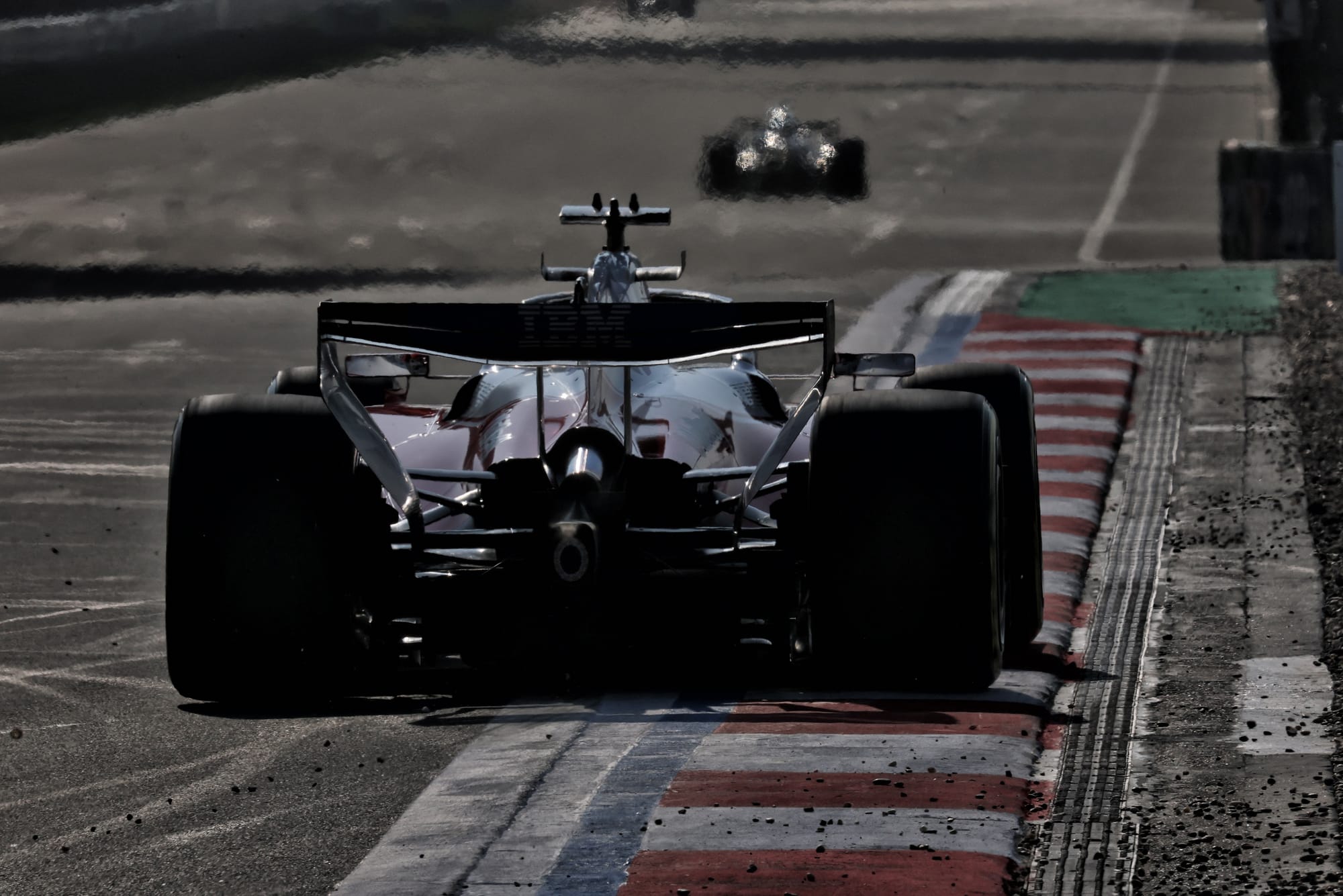
Charles Leclerc thinks Formula 1’s complex rules are “a little bit silly” in the way that qualifying laps can be derailed by a badly timed throttle lift - with the FIA and F1 weighing up several potential solutions.
The Ferrari driver delivered a perfect case study at the Chinese Grand Prix for how complicated the new F1 2026 energy management regulations are, and how they're delivering strange outcomes in qualifying.
As revealed by The Race, Leclerc had a strong final effort in sprint qualifying wrecked by losing energy on the back straight that cost him around four tenths.
It was later discovered that this was a consequence of engine algorithms having deployed too much power earlier in the lap, all because of a throttle lift he had made during the correction of a slide.
In coming off the accelerator pedal, he had fallen outside of a threshold that allows for power deployment to be limited – so effectively burned too much energy in the wrong part of the track.
As efforts ramp up in F1 to address concerns that qualifying is not delivering the challenge nor spectacle it has in the past, Leclerc says that the China example has exposed some key flaws that need altering to give the drivers more influence over what is happening out on track.
“These are the kinds of changes that I think we’re all little by little pinpointing to the FIA, and I’m sure that there will be some changes in the future to try and address those issues,” he said on Thursday at Suzuka.
“It’s a little bit silly to lose half a second just because of a very small lift at some point.”
Leclerc had not known during his lap what had caused his energy deployment problem on the back straight – and almost could not believe that it had been caused by a tiny difference in throttle application.
“I was very frustrated - very, very, very frustrated,” he said when asked by The Race for his reaction when he found out.
“The lift was, I think, two percent or three percent of throttle, which is kind of nothing. It’s in the vibration of the foot.
“It’s not something that I expected at all, but it’s something that I had experienced also before since testing, so I knew it was a possibility that these kinds of things can happen. But when it happens it’s very frustrating, especially when it’s in Q3.”
Leclerc is not the only one to have fallen foul of the strange throttle quirk – with China winner Kimi Antonelli revealing that his fight for pole position in Australia had been impacted by a similar problem after striking a kerb at Turn 4 had caused his foot to lift off the throttle.
“I hit the kerb with the bib [front section of the floor] of the car, and my foot dropped by just 2.7% of throttle,” said the Italian.
“That was enough to trigger the system and I lost in the straight. You need to be very, very consistent and you have to be right with your inputs.”
F1 technical chiefs are due to meet following the Japanese Grand Prix to discuss ways to get qualifying back to being a flat-out affair where energy management is not so critical to laptime.
Several options are understood to be on the table – which include altering harvesting and deployment levels, lifting the fuel flow limit for qualifying only, or removing some of the complexities that are impacting things now.
Haas driver Esteban Ocon, who suffered in China after he had a moment where he lifted off to 97% throttle, reckoned that more needed to be done to stop computer code impacting performance.
“The problem is that there are a lot of things that we don't expect before they happen,” he said.
“We do laps in the simulator, we try and plan for all the scenarios and then you arrive and you do this 3% throttle or 2% throttle drop, which is 2mm on the throttle pedal, and it means you lose three tenths on the back straight while you're having a good lap.
“I'm looking forward to seeing what the FIA and Formula 1 can do about this because we don't have control, the drivers, to be able to really have an effect on this.
“The same as we can't really control what we do in the race and where we want to recharge further to be able to overtake.”