The surprising data showing McLaren can trouble Mercedes
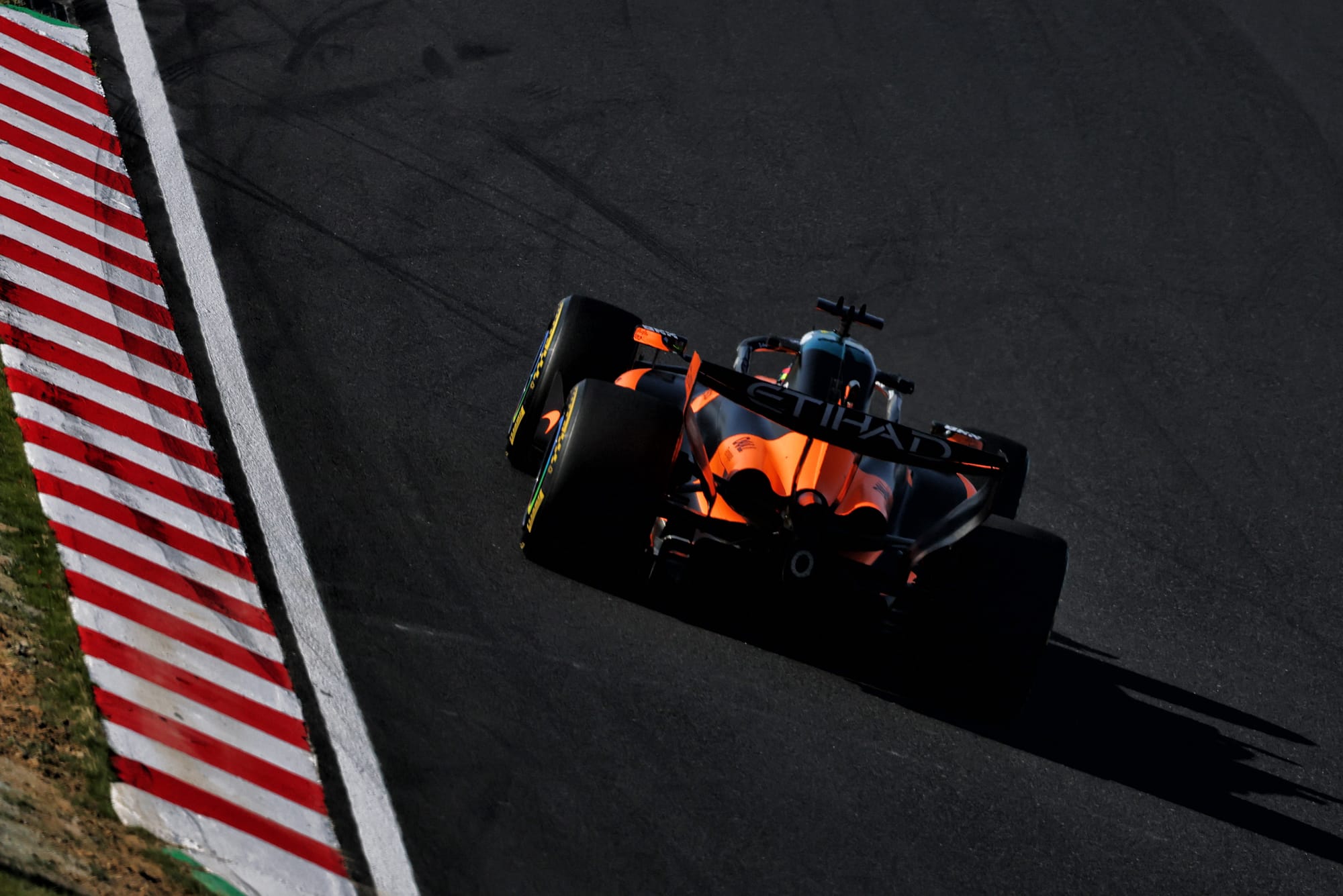
Oscar Piastri’s fastest practice time in Japan on Friday was fascinating not for the fact it beat Mercedes but because of how it was achieved.
Coming off the back of a difficult start to the new Formula 1 season for McLaren, the world champion squad appears to be in slightly better shape at Suzuka (at least over a single lap) with both its chassis and its energy deployment approach.
Of biggest note though was that on a track that is still likely to be quite difficult to overtake on, especially with tyre degradation not especially high, how McLaren was delivering its pace caught attention.
For the 0.092 seconds difference between the lead McLaren and Mercedes’ Kimi Antonelli was not down to marginal variations across the lap – it was down to a completely different energy deployment approach that could open the door to some intrigue in qualifying and the race.
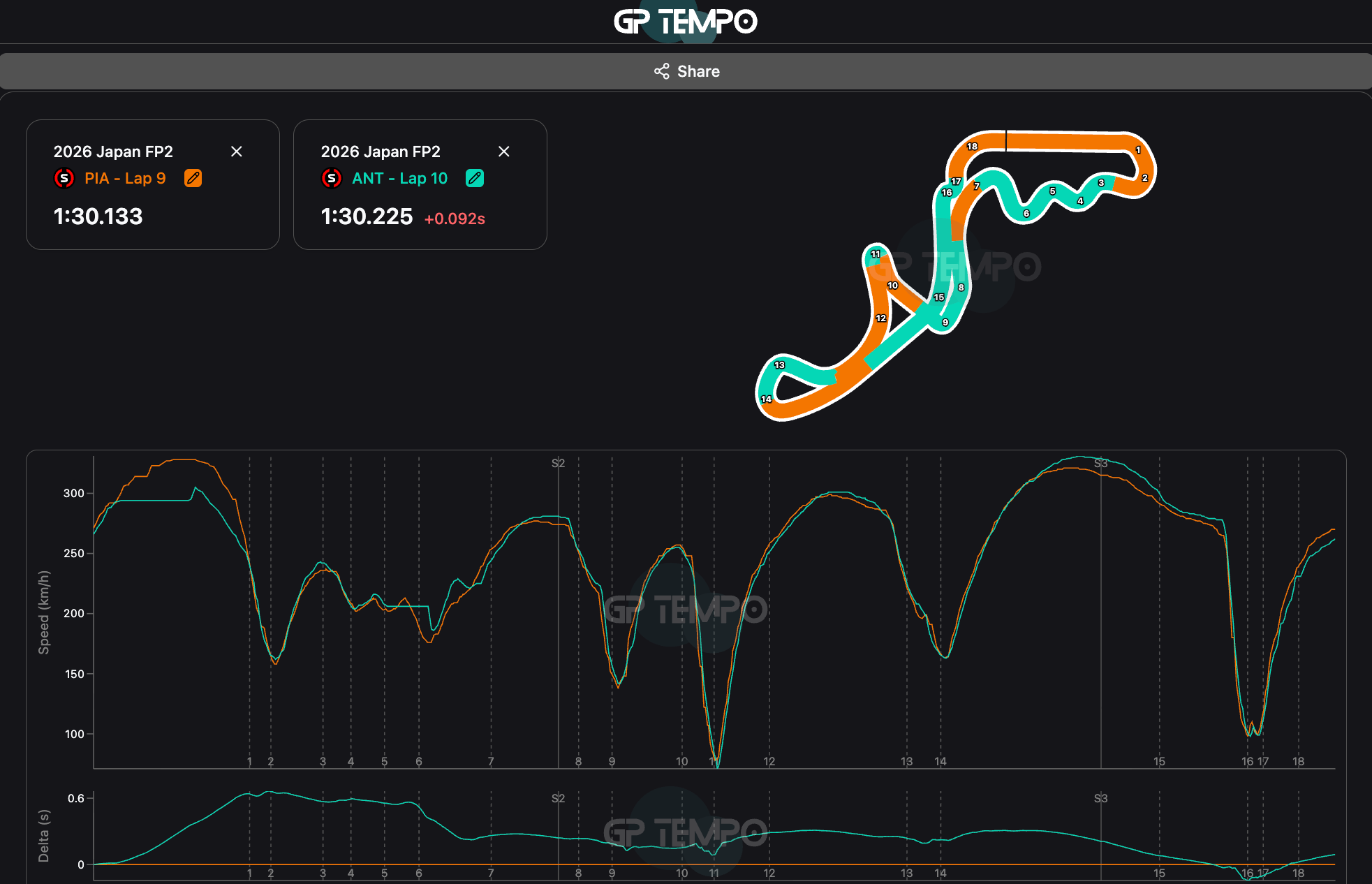
Based on telemetry traces produced by the GP-Tempo website, it is obvious that the two fastest times are the result of wildly alternative approaches when it comes to using the battery.
McLaren has opted to use energy coming out of the chicane – delivering it a big top speed advantage of more than 20km/h on the start-finish straight.
This results in Piastri being much faster through Turn 1 and puts him around 0.5 seconds ahead of Antonelli going into the Esses.
From there, Mercedes is able to steadily chip away at the McLaren advantage – leaving Antonelli just 0.2 seconds off at the hairpin.
The gap then remains stable up until Spoon where the McLaren elects to use more deployment on the run to 130R.
Piastri’s top speed maxes out at 321km/h here, while the Mercedes keeps pushing up to 330km/h – and the two cars stay with a difference of around 10km/h on the run to the chicane.
This puts the Mercedes marginally ahead going into the chicane, before the McLaren manages to leap ahead across the line with the use of its remaining battery power.
The alternative tactics at play, and the scale of the speed variability between the cars at different points of the track, points to the possibility of McLaren being in a position to at least cause some trouble to Mercedes in the race if it can get in front.
And although its long run form may not be enough to keep it there without a battle, the ability to cause headaches for Mercedes at a track where passing around a lot of the venue will not be easy could be enough to give McLaren a sniff of causing an upset.
The track evolution factor
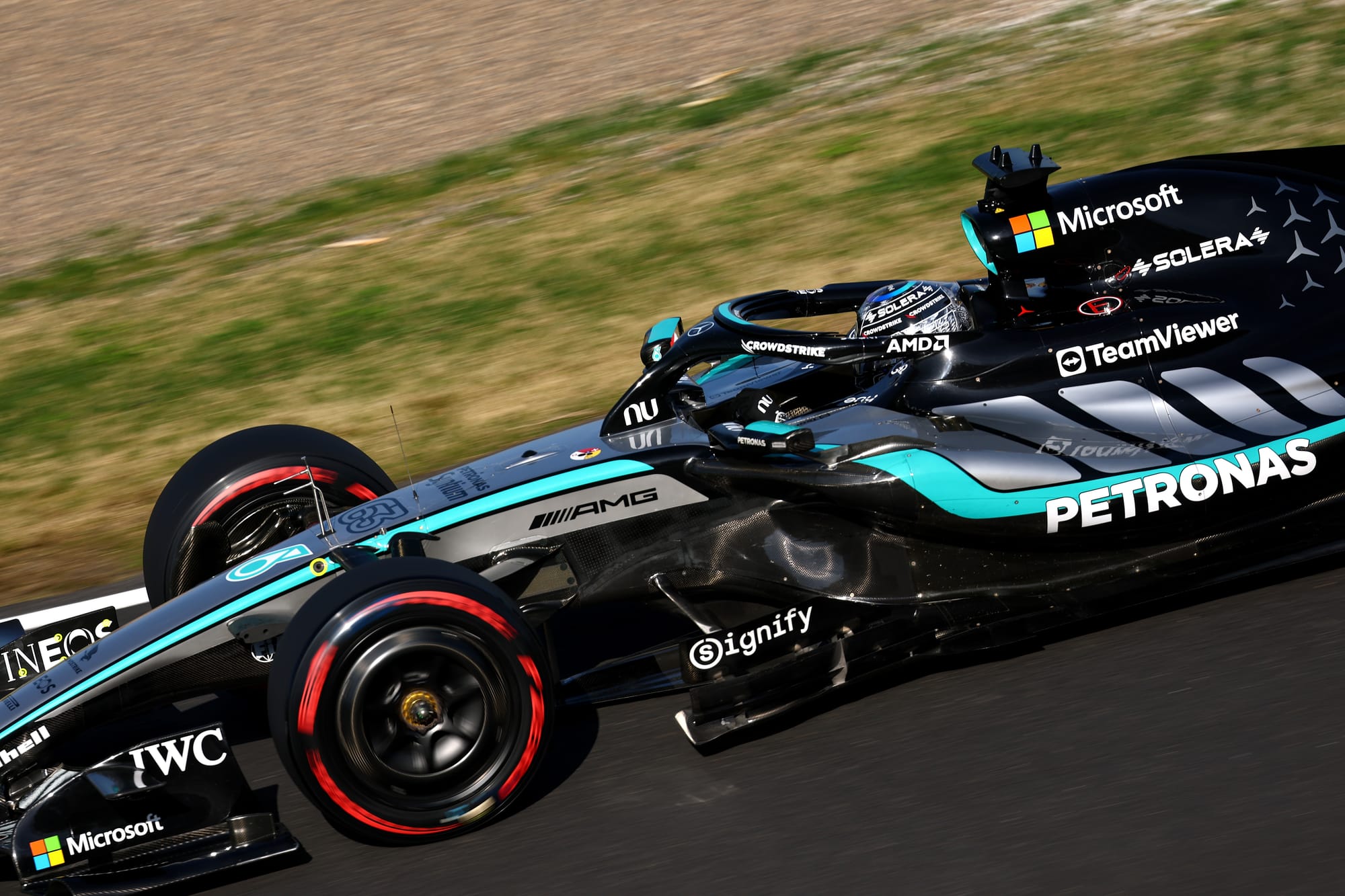
But this all comes with the caveat of understanding that Mercedes’ full potential may not have been on display on Friday thanks to the dirty track.
One of the quirks of the 2026 rules is that, as circuit grip increases across the weekend, harvesting becomes more difficult because braking points become later and corners become faster.
A factor which held George Russell in particular back on Friday in Japan was that he had hit his recharge limit for the lap well before the end – meaning there was no more ability to recover extra energy.
That means no deployment for coming out of the chicane at the end of his lap.
If the changing track conditions make recharging more difficult, then that would mean things are more evenly spread over the lap for Russell – putting him in a better position compared to the McLaren.
A lot of Mercedes’ focus on Friday night was working out just where the track was going to be by qualifying to ensure that its management of energy was spot on.
As deputy team principal Bradley Lord said: “You're trying to work out with the energy management what it's going to be like for the final laps in Q3, when you're actually at what's likely to be the peak of the weekend.
“So that sometimes introduces compromises earlier in the weekend as well.
“One of those is just the driving style through Spoon, and meaning that George was hitting the maximum energy harvest limit earlier in the lap than Kimi, and that was then costing him out of the final corner.”
McLaren well knows that Friday promise counts for nothing come Sunday.
Its long run pace remains adrift of Mercedes, and looks to be slightly behind Ferrari – which did not show its full one-lap potential on Friday.
McLaren will also need no reminding that the season opener in Australia had got underway with Piastri on top on the opening day of practice – and that was a weekend where Mercedes ended up being dominant.