Yet another Mercedes battery failure puts Norris at risk of penalty
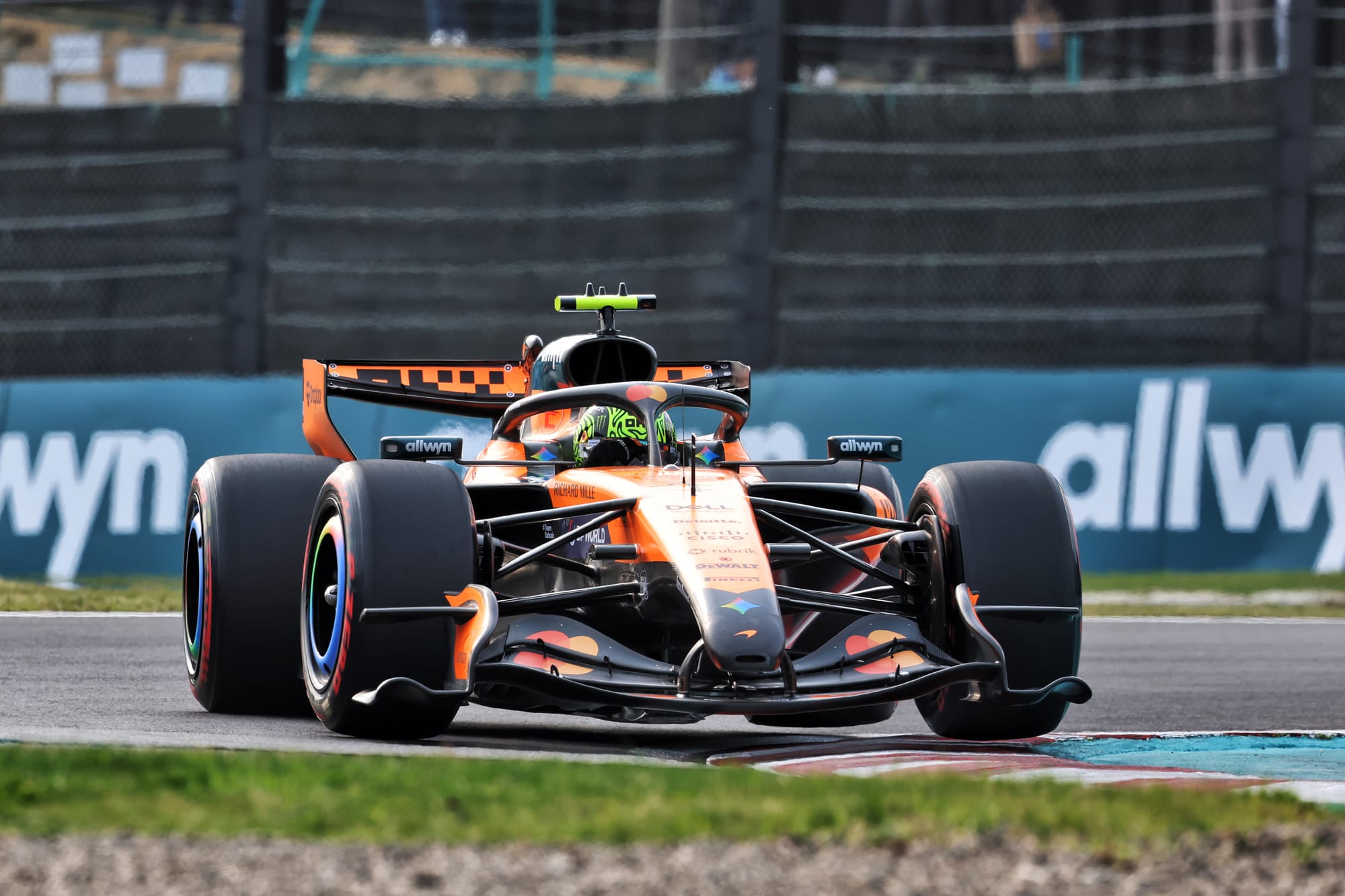
McLaren is down to its last permitted Mercedes battery on Lando Norris's 2026 Formula 1 car, meaning he will incur a penalty if he suffers any further failures before repairs can be made.
McLaren was forced into a battery change for final practice ahead of the Japanese Grand Prix, after discovering a fault on Norris's car.
This comes after Norris was forced out of the Chinese GP before the start with a battery problem. A similar problem meant team-mate Oscar Piastri also missed that race.
"The problem we noticed before the start of FP3 was on the same power unit component, the Hertz module, which includes the battery," said team principal Andrea Stella, when asked by The Race to explain the issue.
"The only way was to remove the pack is to investigate it. Once investigated, we realised that it will take time to attempt a repair.
"We needed to give Lando the possibility to do the session, so we introduced a third battery pack, but we hope that we are going to be able to repair this [failed] battery pack and that we have not lost another component of the three allowed in a season, because the one that had the fault in China, that one is lost."
As Stella indicated, F1 teams are only permitted three battery packs per car under the 2026 regulations, before grid penalties are applied. The problem discovered in FP3 at Suzuka means Norris is already on the limit before race three of 22 has even begun.
The reigning world champion has also taken a significant hit on track time at Suzuka, after his car suffered a hydraulic fluid leak before FP2, meaning he feels he has been “playing catch-up the whole weekend”.
Norris ended up fifth in Q3 - his best qualifying result of the season so far - but almost three tenths down on Piastri, despite managing to split the Ferraris and being only 0.004s behind Charles Leclerc.
"I've done no laps on high fuel, I've done no continuous laps, so luck's not been on my side so far," Norris said.
"But I felt like I was getting better and better in qualifying and understanding how I could push the car more.
"There are things I should have done better, and I didn't do well enough, but otherwise with more laps I could have, I would have improved."
Norris felt this lack of track time is more expensive now, under new rules where there is so much learning and optimisation to be done - with power unit energy harvesting and deployment especially.
"There were some places, as when the grip went up, that I just underdelivered and I underdrove," Norris added.
"I want to improve in some areas and I needed to do more lifting here and more harvesting here, whatever it may be, and if I'd just done more of those laps prior in the weekend, I would've understood those things ahead of time.
"Obviously it's a new car and it's a new track. The Tarmac's a lot grippier here as well, it's a much quicker track, so you have to drive the car a lot differently to the last few.
"You've seen how many mistakes people have been making into Spoon, with the rear and things, so it's not easy.
"Certainly now it costs more than before [to miss practice] - not just as a driver, but also to understand how the power unit works, to get the battery in the right way and then you know you have to lift more into places, or you then have to adjust with the set-up because you have to lift more.
"There's a lot of little things, so it's certainly not all the gap today, some of it is just me not being on top form, but it certainly costs more nowadays."
McLaren anyway very nearly had both cars ahead of Ferrari in qualifying at Suzuka, and Stella felt this improvement in relative performance is mainly down to better "exploitation of the power unit" compared to the first two races.
"We talked about this topic in Australia and we realised there that there were certainly a lot of opportunities - we have worked on these opportunities together with colleagues at HPP,” Stella said.
"There's been also further work in having even the tools that are required and the simulations that are required to optimise the behaviour of the power unit.
"So I think from a power unit exploration point of view, I don't think that we have left much unexploited, and this is possibly a reason why we are closer to Mercedes having the same power unit, but they have a better chassis, and possibly why we are closer or the same performance as Ferrari.
"From a chassis point of view we haven't brought much upgrades at all in these first three races, but I think there's been a bit of improvement in terms of understanding how you want to set up the car: ride heights and some other aspects about balance and tyre preparation.
"So, overall progress but in order to make this confirmed tomorrow I think there's still quite a lot of work to do. I think in the race we will see that Ferrari has an advantage on us and that Mercedes will go their own way like they've done in the first two races."