F1 must listen to drivers not just teams over safety concerns - Sainz
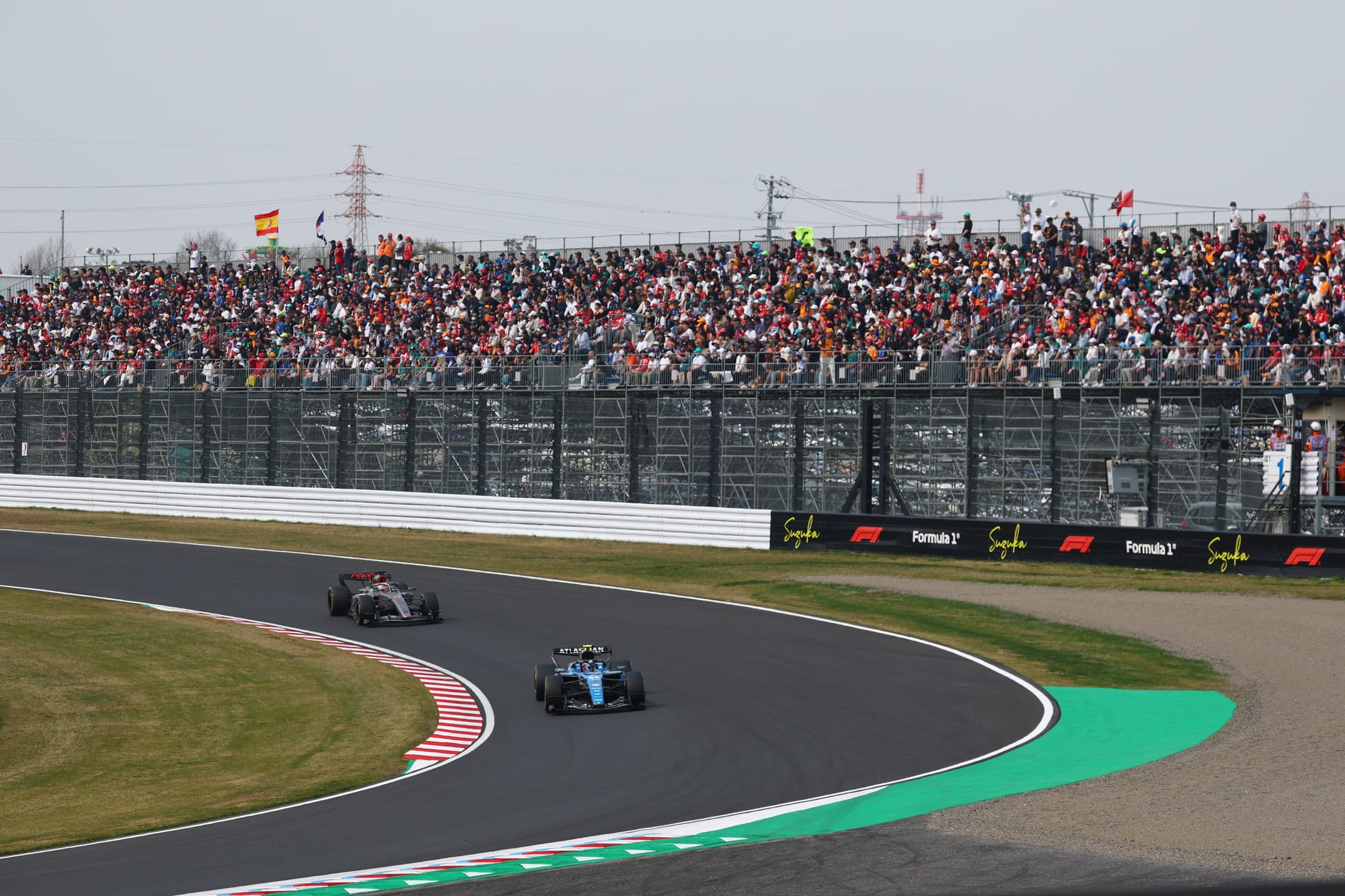
Formula 1 must start listening to its drivers rather than just teams who are defending 2026’s racing product, to avoid more incidents like Ollie Bearman’s scary Japanese Grand Prix shunt, according to Carlos Sainz.
Bearman was sent careering into the barriers at high speed, having been wrong-footed by huge closing speed on the back of Franco Colapinto’s Alpine into the Spoon curve during F1’s Japanese GP.
He escaped the 50G crash with bruising on his knee, but Grand Prix Drivers’ Association director Sainz believes this is exactly what the drivers have been warning the FIA would happen.
“That's the problem when you listen only to the teams, that they will think the racing is OK because maybe they're having fun watching it on the TV,” Sainz said after the race, having not yet fully seen replays of the Bearman/Colapinto incident.
“But from a driver standpoint, when you are racing each other, and you realise that there can be 50km/h speed delta, that's actually not racing.
“There's no category in the world where you have this kind of closing speeds because that's when big accidents can happen because it catches you by surprise, you defend late, it catches you or the car [behind].
“Anyway, I really hope they listen to us, and they focus on the feedback we've given them, rather than only listening to the teams.
“[I hope] they come up with a plan for Miami that improves the situation and a plan also for the medium term future of these regulations to keep improving it.
"Even if you cannot improve everything for Miami, do another good step in Miami and then a big step for, I don't know if it's next year or later in the season.”
He told Sky Sports F1: “I'm not very happy with what we've had up until now and hopefully, we come up with a better solution that doesn't create these massive closing speeds and a safer way of going racing.”
Sainz says he’s surprised fixing qualifying is F1’s main priority rather than addressing drivers’ concerns about the racing too.
“That’s why I was so surprised when they said ‘no, we will sort out qualifying and leave the racing alone because it's exciting',” Sainz added.
“As drivers, we've been extremely vocal that the problem is not only qualifying, it's also racing.
“Here we were lucky there was an escape road. Now imagine going to Baku or going to Singapore or going to Vegas and having these kind of closing speeds and crashes next to the walls.
“I, or we as GPDA, we've warned the FIA these actions are going to happen a lot with this set of regulations and we need to change something soon if we don't want them to happen.
“It was 50G I heard, higher than my crash in Russia in 2015, I was 46G. Just in my mind what kind of crash would you have in Vegas, Baku, etc?
“I hope it serves as an example…to the teams and people that said the racing was OK, because the racing is not OK.”
‘Mushroom mode’ causing problems
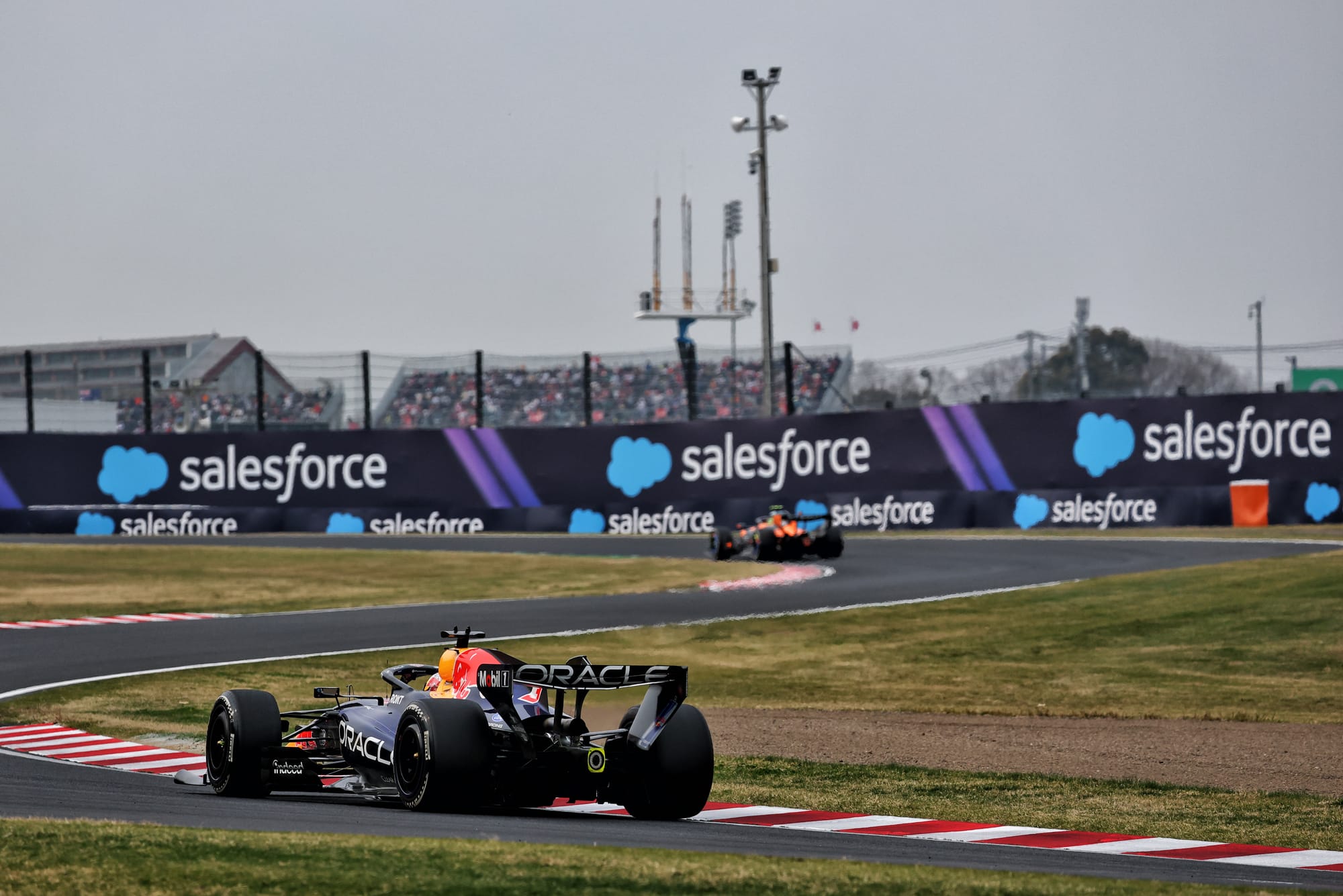
Max Verstappen hadn’t seen the incident either but upon being told about it, said: “That's what you get with these things, one guy is completely stuck with no power, basically, and then the other one uses the mushroom mode, and then it can be 50, 60km/h difference. It's really, really big."
He added: “It can be very dangerous. It looks like moving under braking, moving in general, but it also happens when you have that quick deceleration. You can have a big crash.”
Asked whether the FIA is right to focus on fixing qualifying rather than the racing, Verstappen said: “Well, for me, it's all the same. Of course, in qualifying, you don't want to have this kind of lifting so often.
“And there are a lot of other rules. There's not only about lifting, there's also a lot of other rules where you can't go flat, or you have to lift, or the cars are flat and then a lift.
“It's so confusing, and that's not how it should be.
“It's all super sensitive. In qualifying, to go faster, you need to basically go slower, like less throttle and everything. It's just not how it should be.”
When asked if he’d near misses in the Japanese GP, reigning world champion Lando Norris replied: “I mean, there was a fair few, even with Lewis [Hamilton] at the end. But I've said everything and I don't need to say any more. Same as [the other] drivers. I don't need to keep going around about it.”
Some teams have been voicing safety concerns too, chief among them Norris's McLaren team boss Andrea Stella, who named closing speeds as one of his three key 2026 concerns during pre-season testing.
"It's not a surprise," Stella said after the race.
"We said that already in testing. It is in the agenda of the FIA in terms of the aspects of this 2026 regulations that should be improved.
"We don't want to wait for things to happen to put actions in place so something happened.
"Oliver [Bearman], luckily, it seemed like he got out of it with just some bruises, but nothing too major. We have a responsibility to put in place the actions that, especially from a safety point of view, should be implemented."
Fernando Alonso believes there’s actually another area that’s more dangerous than the closing speeds in races.
“For me, the most dangerous part is qualifying,” he said.
“When someone is on the recharge lap and someone is on the fast lap, the difference in speed is crazy. Places like Baku, Singapore, Monaco, the street circuits, you have no avoiding action or run-off area, that will be tough.
“Especially with 22 cars, thinking about Monaco and things. But yeah, let's see from now to then if there are some tweaks on the regs or whatever.”
The FIA says: “A number of meetings are therefore scheduled in April to assess the operation of the new regulations and to determine whether any refinements are required”.