The new Mercedes engine trick that's annoyed Ferrari
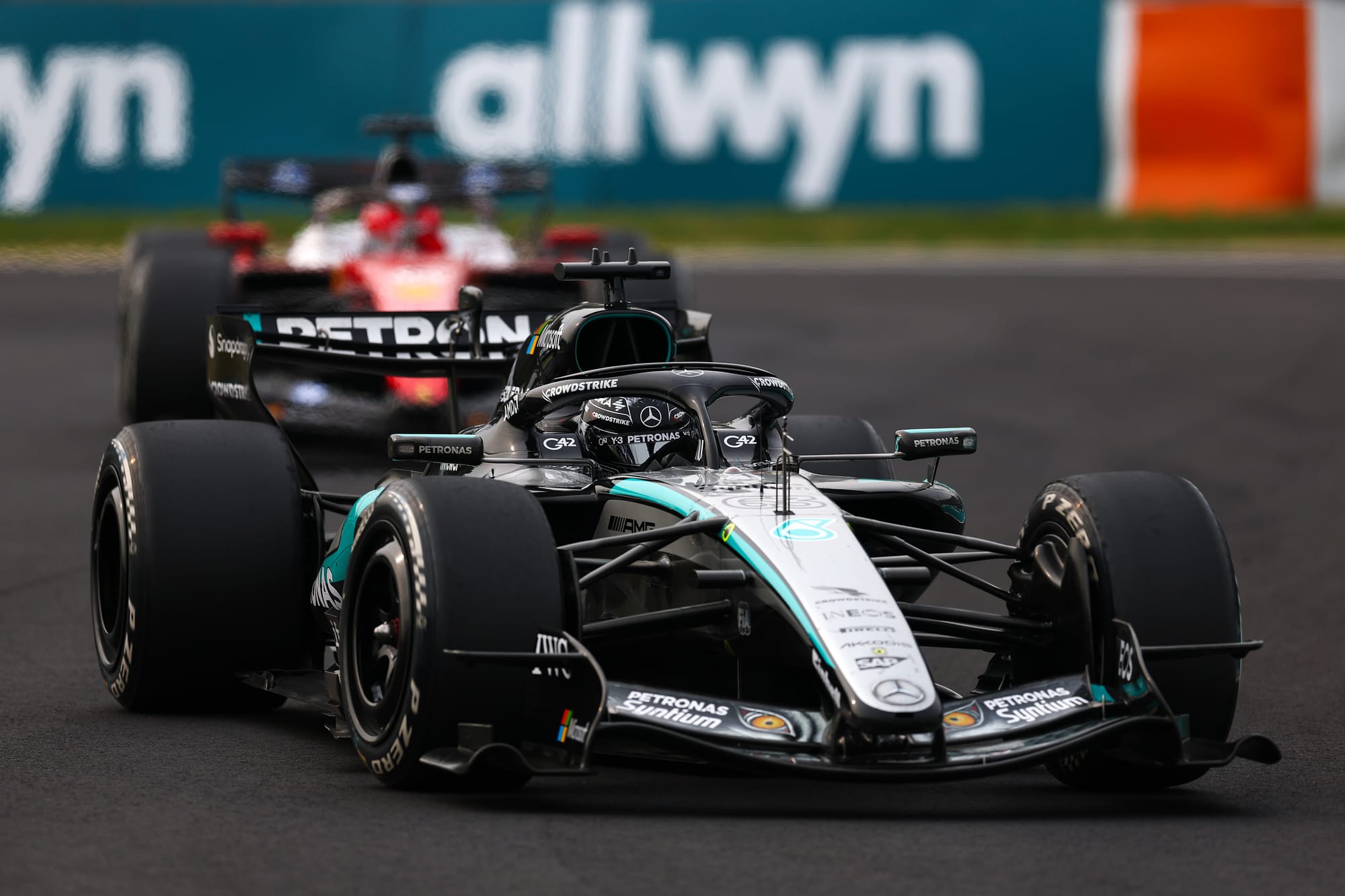
A qualifying trick used by Mercedes and Red Bull with their Formula 1 engines has come under the spotlight of the FIA after it was exposed by a strange side-effect.
Both manufacturers have found a way around the complicated power reduction demands of the new engines at the end of qualifying laps.
They are able to deploy maximum electric power for longer at the cost of the engine's MGU-K being locked completely for 60 seconds afterwards.
In certain circumstances this then leads to drivers almost without any power, which is what caused Williams driver Alex Albon to stop on track in Friday practice in Japan.
But it also meant Mercedes' Kimi Antonelli and Red Bull's Max Verstappen were left limping through the high-speed sweeps in the opening sector in FP2 as well.
Antonelli had the same problem back in Australia FP1 too, but it went largely undetected.
These have all occurred when the drivers backed off significantly after completing a flying lap and slowed right down to let another driver pass.
The drastic and very visible problem is a bizarre, unintended consequence and a smoking gun for a way Mercedes and Red Bull can run their engines to exploit F1's complex rules around energy management as much as possible.
The trick explained
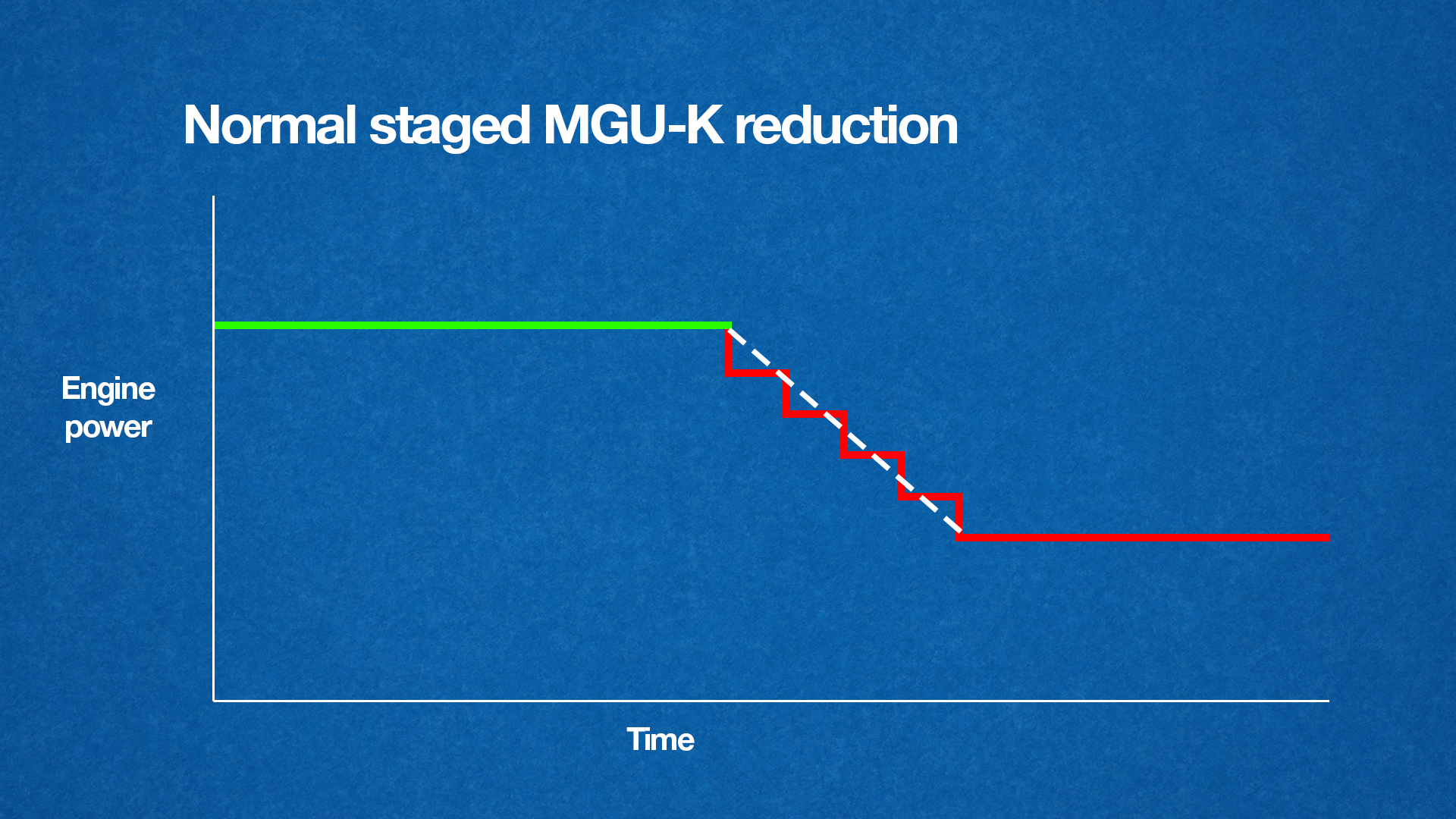
F1's MGU-K usage rules include a staged ramp down from full deployment to none. In the simplest terms, it usually has to be phased out 50kW at a time in one-second intervals.
So after deploying full power exiting a corner, at some point on the straight, there will be a gradual, stepped reduction in the engine's total power output.
But the Mercedes and Red Bull engined teams are able to cut the MGU-K from full 350kW to zero deployment in one go, right at the end of their qualifying laps - thereby extending the time they get full MGU-K power.
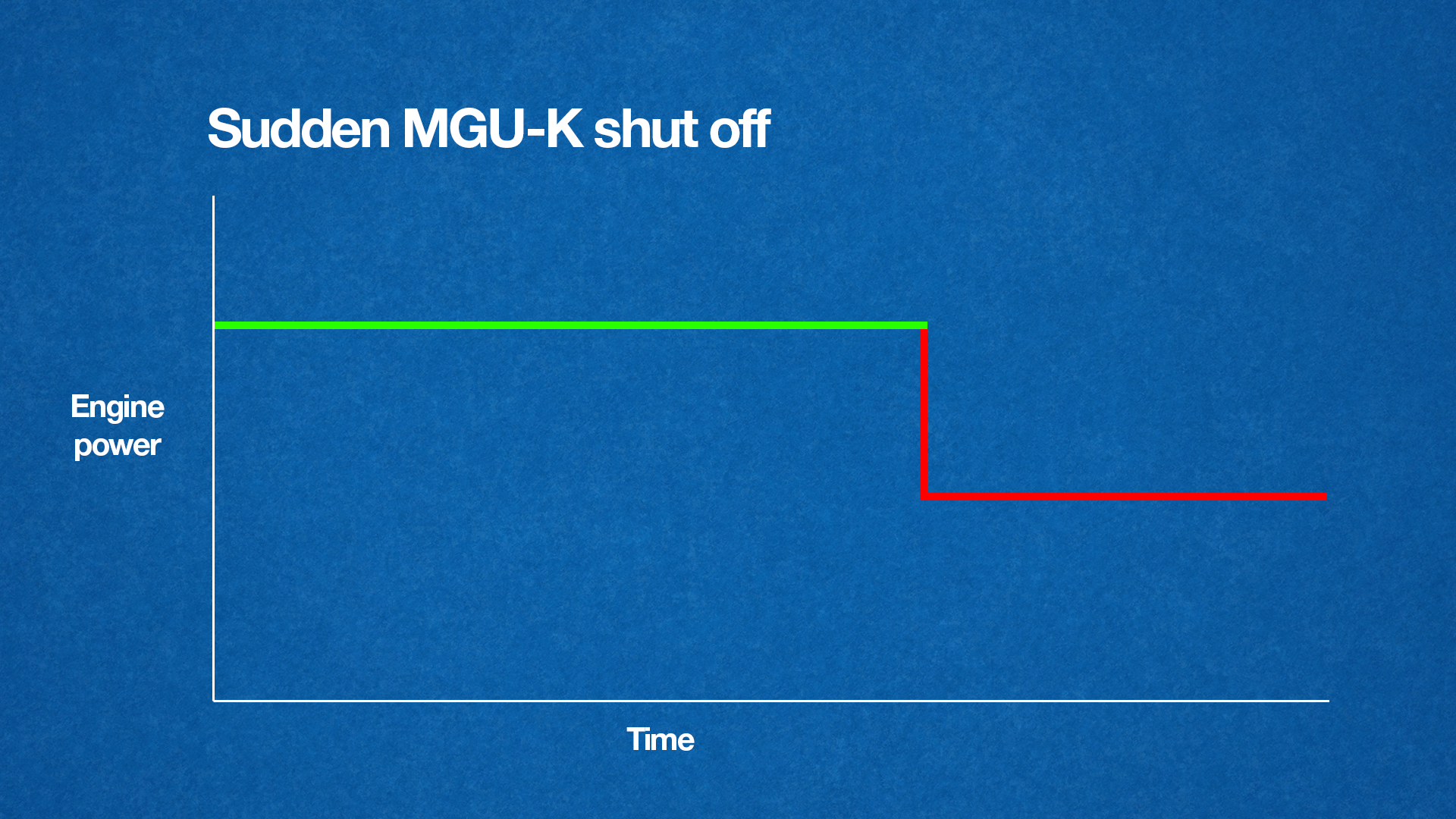
It does not change how much energy they can spend, so running at 350kW will mean they deploy for less time compared to running at gradually reducing power levels, but it can be a small net laptime gain overall.
What they are doing is legally taking advantage of a system in place that is intended for emergency use in case a problem means the MGU-K must be shut off suddenly.
The rules allow for a reduction in MGU-K deployment at any time, and of any amount.
To stop teams from abusing it by exploiting it on more straights and in normal racing conditions, it comes with a 60-second lockout: if you activate this type of reduction, then the ECU locks it for at least one minute afterwards.
Usually, this is an effective deterrent because on a normal lap the cost of having no electric power for a full 60 seconds would be too high.
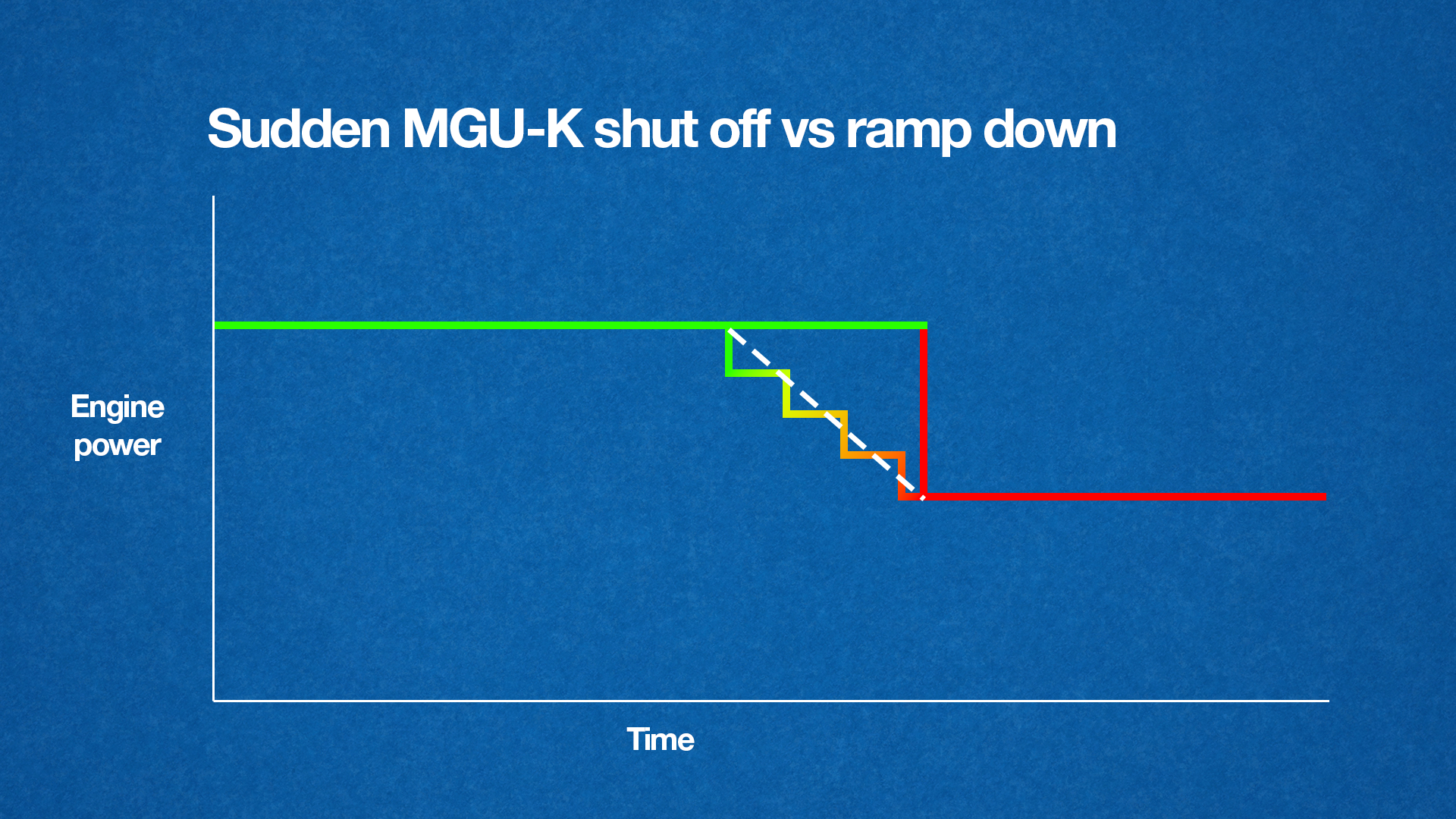
However, doing it right at the end of a qualifying lap, and getting a helpful power boost right on the run to the finish line, should not be problematic as then the driver is just missing the MGU-K for the first half of a cooldown lap or in-lap back to the pits.
But there can be a big price to pay for being without the MGU-K, as shown by the trio of issues in close proximity in Japan.
Verstappen called it a "glitch" when the engine revs drop too low and you do not downshift quickly enough. More specifically, the engine rpm drops, as does turbo boost pressure, which will already have been reduced as the cars slow down after the finish line.
This is normally manageable even at reduced speed but if a driver slows suddenly and significantly to let a faster car through, and the revs drop even more, the engine loses almost all power and it is very hard to get it back.
As is well established with these engines because of the problems many have had with race starts, the big turbos struggle to run at the required speed now that the old MGU-H has been removed.
The horrible lag on these engines can be 'filled in' with electric power from the MGU-K in normal circumstances, but here it is not possible, so the engine is left limping.
It is possible to build the power up very gradually with a small amount of throttle to spin the turbo.
This is counterintuitive for drivers who initially think their throttle pedal isn't responding, and stab at it trying to get power, which achieves nothing.
But as building boost pressure with gradual pedal application may take a while anyway, it can just be a case of just waiting for the 60-second lockout to end so the MGU-K is available again.
That is usually 20 or 30 seconds or so from the problem starting because a good chunk of the 60-second lockout has usually passed by the time the car gets into trouble.
Why Ferrari is annoyed
This saga has triggered yet another case of Ferrari being annoyed by its rivals.
While this is something Red Bull has engaged in too, that frustration really relates to Mercedes, given Mercedes is the benchmark with these rules and Ferrari has an engine deficit to eradicate if it wants to start winning races in 2026.
Ferrari and Mercedes have clashed several times already with these rules. First, Ferrari was upset with Mercedes' interpretation of the compression ratio rules.
Then, Ferrari got frustrated by the successful push to change the start procedure to help those, including Mercedes, who were struggling to manage the launches given their turbo designs.
Ferrari felt this was totally unnecessary as it raised the issue of difficult starts a year ago, was told to change its engine for the rules rather than the other way around, and settled on the design it did that has potentially compromised its total performance.
So its view is that part of its own advantage has been clipped, while Mercedes has been given an assist more than once.
Now, this MGU-K trick is seen by Ferrari as an example of rule exploitation that the FIA should probably clamp down on, but wants clarification on it either way.
It accepts that what Mercedes and Red Bull are doing is within the rules but it was not the intention. So it wants to know why it is allowed and if it will continue to be allowed.
We do not know if that means that Ferrari has tried to replicate the trick yet, but all manufacturers are aware of it and have looked into it.
Building it into the energy management systems without triggering unintended consequences is difficult though, especially if they only found out about it in Australia and have not had a huge amount of time to figure out how to comply with the rules and make it work safely.
Is it worth the risk?
The complexity and the potential safety implications of this trick is a trade-off that even those pioneering it are not quite getting right.
This is most useful on circuits where there is a slightly longer run to the finish line and where eking out a fraction more at full power deployment, at the cost of an elongated ramp down, could be worth a small but not insignificant laptime gain.
At Suzuka, it was relevant because the run out of the chicane is a reasonable deployment zone, about 50 metres longer than at Shanghai, for example.
However, the track layout also plays a part in how big the consequence could be.
The long run to Turn 1 at Suzuka is around 700 metres, which is ample time for a car slowing down after a qualifying lap to be caught by another. The opening sector at Suzuka is surprisingly tight, too, which means getting out of the way urgently is essential.
This resulted in Albon having to basically stop at the apex of Turn 1 and Verstappen and Antonelli slowing right down before the sweeps, because they were caught at very awkward moments.
Assuming it is even possible to stop the engine dying down too much in those specific scenarios by quickly downshifting, it is clearly not automatic enough yet for the drivers to do it by default.
That is why the FIA is known to have had some communication with at least Mercedes about using this engine mode at Suzuka after the issues in practice.
Even though it was not the intention for this to be used competitively, the FIA presently accepts that the rules do allow it to be the case.
Multiple issues for different cars at Suzuka alerted the FIA to a potential safety concern though, and this is where it would be inclined to step in in the future, if it all.
Whether it was informed by discussions with the FIA or not, The Race understands that Mercedes opted not to continue using this deployment trick over the rest of the Japan weekend.
Privately, there is known to be a feeling among some that it might not be worth the risk anyway.
It is not the silver bullet behind Mercedes having the best engine, so if there is too much of a likelihood of engines uncontrollably 'shutting down', and even worse creating a safety risk, it may be shelved at future races too.
Or the teams may work to understand the circumstances better, tune their drivers to detect what is really going on as much as possible, and look to bring this trick back for wherever it offers a slight performance edge.