Our verdict on F1's plans to fix 2026 rules
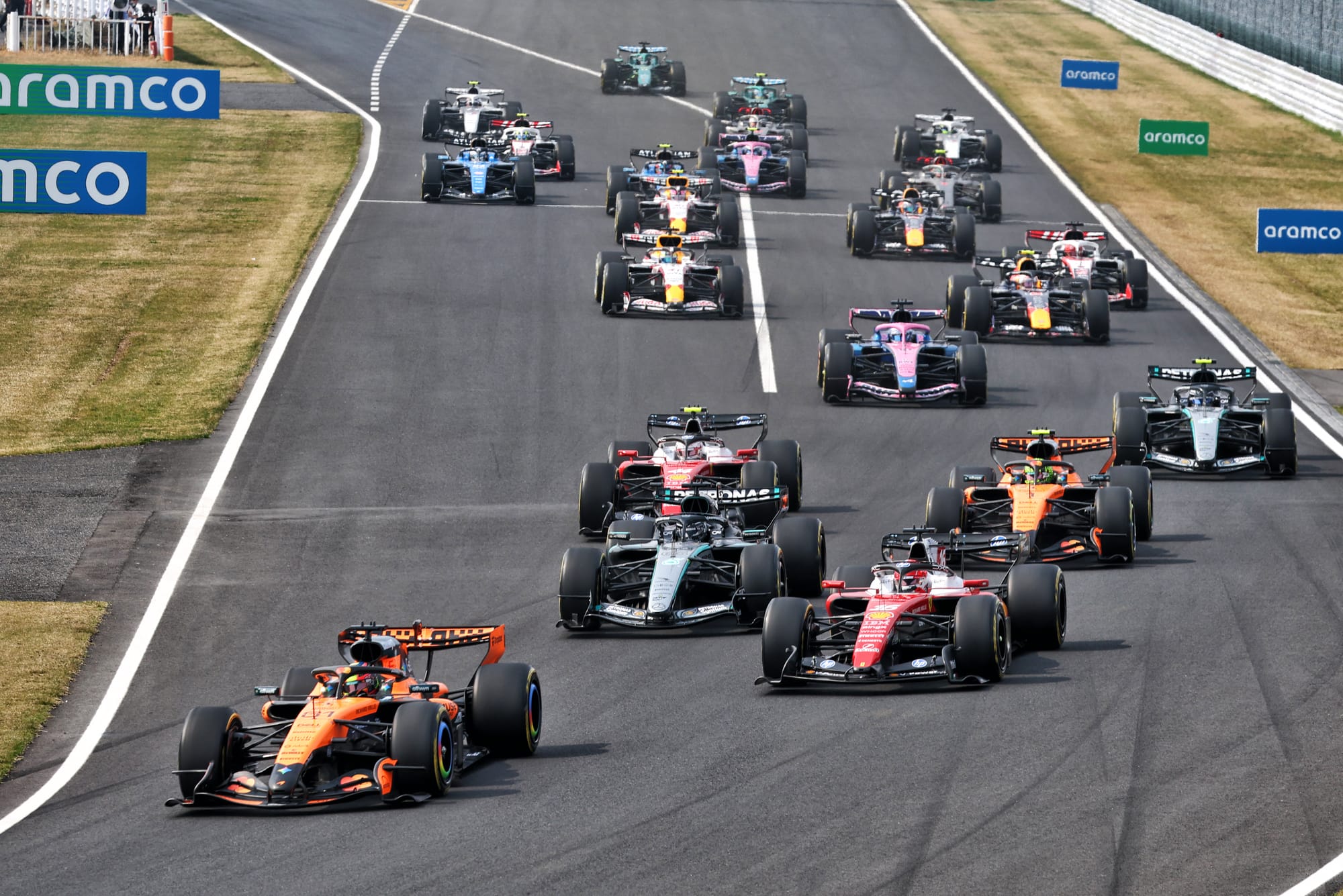
Formula 1 stakeholders are meeting to decide how to change the 2026 F1 rules this week.
But of the changes on the table that The Race revealed last week, will any of them be able to make a meaningful difference?
Here's what our team thinks...
F1's trapped by decisions made years ago
Edd Straw
Fix? No. Mitigate? Yes. There are some ideas on the table that, if implemented correctly, will have a tangible effect, particularly on the neutering of qualifying, but there are hard limits that F1 is stuck with for as long as these power unit rules exist.
The laws of physics are notoriously stubborn and the fundamental problem is the 4MJ battery. To achieve a decent laptime, this must be charged and discharged continually, even on a qualifying lap. Ideally, you would not want it being charged at all, or at least requiring only recharging under braking in the normal course of a lap, but that's not close to possible while achieving an acceptable laptime no matter what you change.
This is a box F1 is stuck in and while you can widen it a little with the suggested tweaks, the fundamental problem remains. You can talk of development and improvements all you like, but the maths of the energy equation can't be changed entirely.
None of this comes as a surprise. If F1 wanted to fix the problem, then it needed to do so years ago when the fundamentals of these rules package were set out. There were legitimate arguments for going in this direction, given the need to hang on to existing manufacturers and attract new or returning ones, but this came at a cost. F1 is paying the price for that - with the decisions being made now deciding how high that cost will ultimately be.
F1 won't throw away all-action Sundays
Glenn Freeman
The genie is out of the bottle now. Regardless of how legitimate many of the overtakes are that we've seen so far in 2026, there will be many F1 decision-makers with plenty of clout who will be loving what they deem to be all-action racing on Sundays.
So I'm expecting any changes to be the minimum F1 believes it needs to make for safety reasons, with any other factors like pushback from disgruntled anti-'battery racing' fans largely being ignored.
There's no such thing as the perfect amount of overtaking in a grand prix, but given the choice between no wheel-to-wheel action as we had at Suzuka in 2025, and lots of passing and repassing like we had at Suzuka in 2026, I know which of those two extremes F1 chiefs will want to see more often.
The hope will be that people get used to 'battery racing', or at least get bored of complaining about it so vociferously as the season goes on.
In the meantime, F1 will see and hear lots of excitement coming from the people paying expensive ticket prices to sit in the grandstands, and it gets plenty of overtakes to share on social media (which seem to be attracting very positive, bot-like replies on platforms like X).
F1 will be hoping it can find a neat compromise where it can make enough tweaks to satisfy safety concerns, without giving up this new, divisive style of racing.
Lipstick on a pig
Ben Anderson
Cool, yeah, let's shuffle some deck chairs on the Titanic…
F1 can bang some heads together, try to make these engines less rubbish, but there's only so much polishing you can do.
They're still fundamentally rubbish. No amount of fiddling with the energy recovery limits a bit is going to change that.
F1 is stuck, and the choice seems to be one of either leaning into the energy starvation by making the cars slower and even more underwhelming to drive than they are now, or making them more dangerous to drive by allowing unsolicited use of active aero - which is never going to fly, in my opinion.
In any case, when one manufacturer enjoys such a significant advantage over the rest, and at least two more are only in F1 because of the way the rules are now, good luck getting agreement on whichever form of lipstick you think is best slapped on the pig.
But in all seriousness, the least-worst 'solution' for me would be to at least make the cars drive more normally, even if that means adding another couple of seconds onto the laptimes.
Then use the time that buys you to find a way to bin these battery-dominated power units at the first available opportunity.
F1 must return power to the drivers
Jon Noble
F1 chiefs may well be able to shuffle the harvesting-deployment numbers to eradicate the worst aspects of the 2026 cars, but there are more fundamental principles that need addressing before we can consider that a full fix is in play.
So while a scalpel rather than a sledgehammer can get us into a place where qualifying is nearly back to being flat-out, and the worst of lift and coast tactics are eradicated, F1 has bigger decisions to make about what sort of championship it ultimately wants to be.
The more we have learned about the new F1 2026 rules, the more it has become obvious that the influence of driver talent is making way for the impact of computer code.
Weird quirks such as the power limited pending 98% throttle demands, ramp-down rates, super clipping, and algorithms that dictate deployment tactics have become the things that are deciding poles and race wins, rather than the best driver coming out on top.
And that's not a good thing for the long term. A core attraction of F1 has always been that the drivers are the stars, so they have to be the ones who are fully in control of their destiny.
F1 ended up with these compromised rules because it listened too much to what manufacturers wanted and, in executing them, it has gone down a complicated rabbit hole.
So yes, let's sort out some quick fixes to make things better from Miami but, longer term, some bigger philosophical changes need to come into play to put things back in the hands of the drivers.