The 10 weirdest quirks of F1's 2026 cars
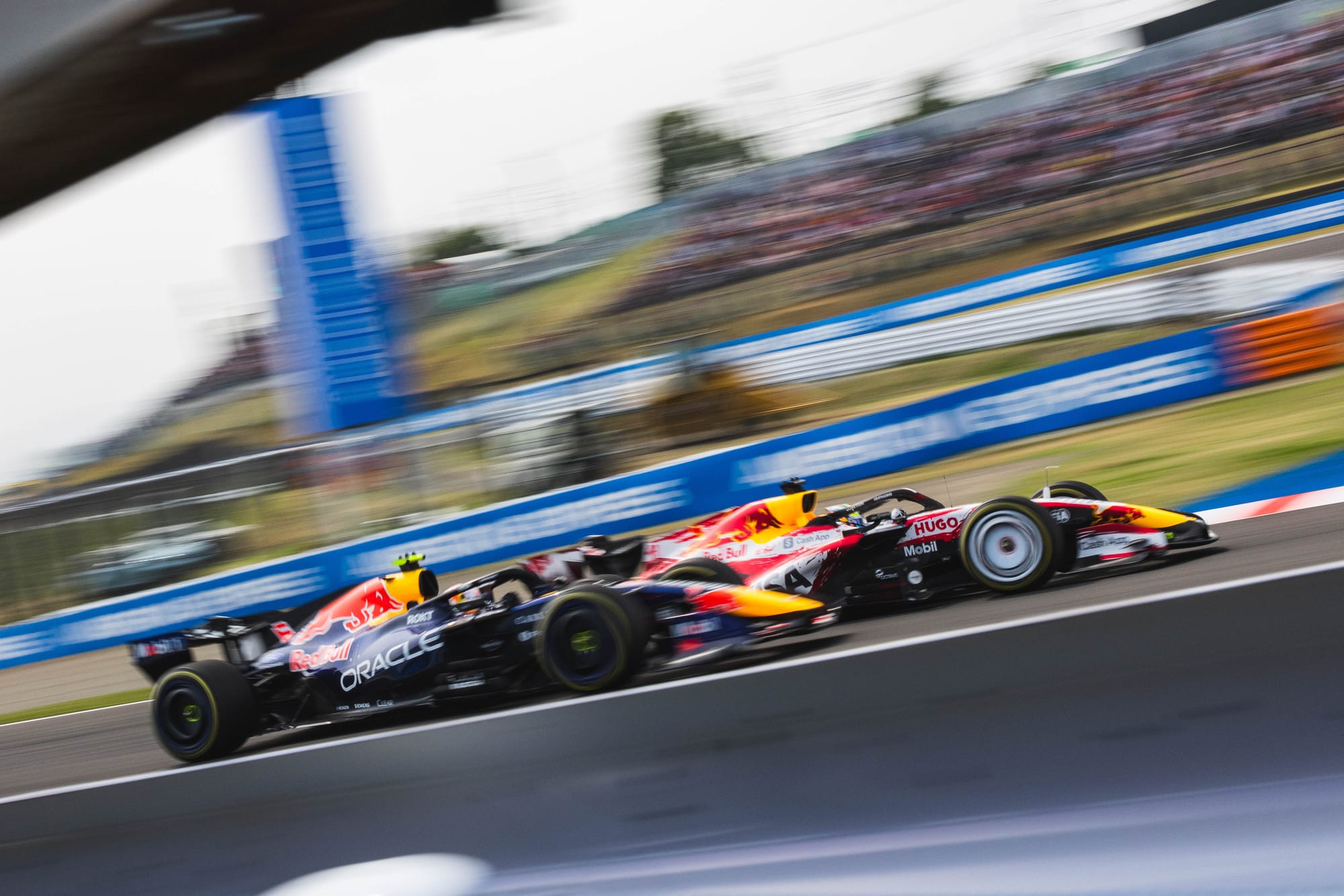
Formula 1's rules revamp for this year, with energy-starved cars so reliant on battery power, was always going to make grand prix racing a different beast from what we knew before.
Some of the new regulations have worked well and some need addressing, which is why a series of meetings have been planned for the weeks before the Miami Grand Prix to try to revamp things.
Three races in, it is fair to say that drivers and teams have been on an incredible journey of discovery as they have unlocked their fair share of quirks with the new cars.
Here we look at 10 bizarre elements that have caught our attention so far this year, ranging from amusing glitches to dangerous flaws that need urgent action.
Accidental overtakes
Love it or hate it, a lot has been said about F1's new yo-yo style of racing.
But one of the strangest aspects of this fresh way of battling is that sometimes drivers have made passes by accident.
The most recent example was Lando Norris in the Japanese GP, when he found himself accidentally overtaking Lewis Hamilton.
Norris had fallen foul of an algorithm that drivers first became aware of in qualifying (more below) where, in backing off to avoid running into the back of Hamilton's Ferrari, he had automatically triggered a different engine configuration.
No longer in a power-limited mode, when he got back on the throttle his battery deployed a lot more than he wanted.
That was enough to carry him past Hamilton, but left him with an empty battery for the following straight - so he was quickly overtaken again.
It's why Norris has pointed to the racing, while exciting on TV, not being as "authentic" as it appears.
What's wrecking qualifying laps
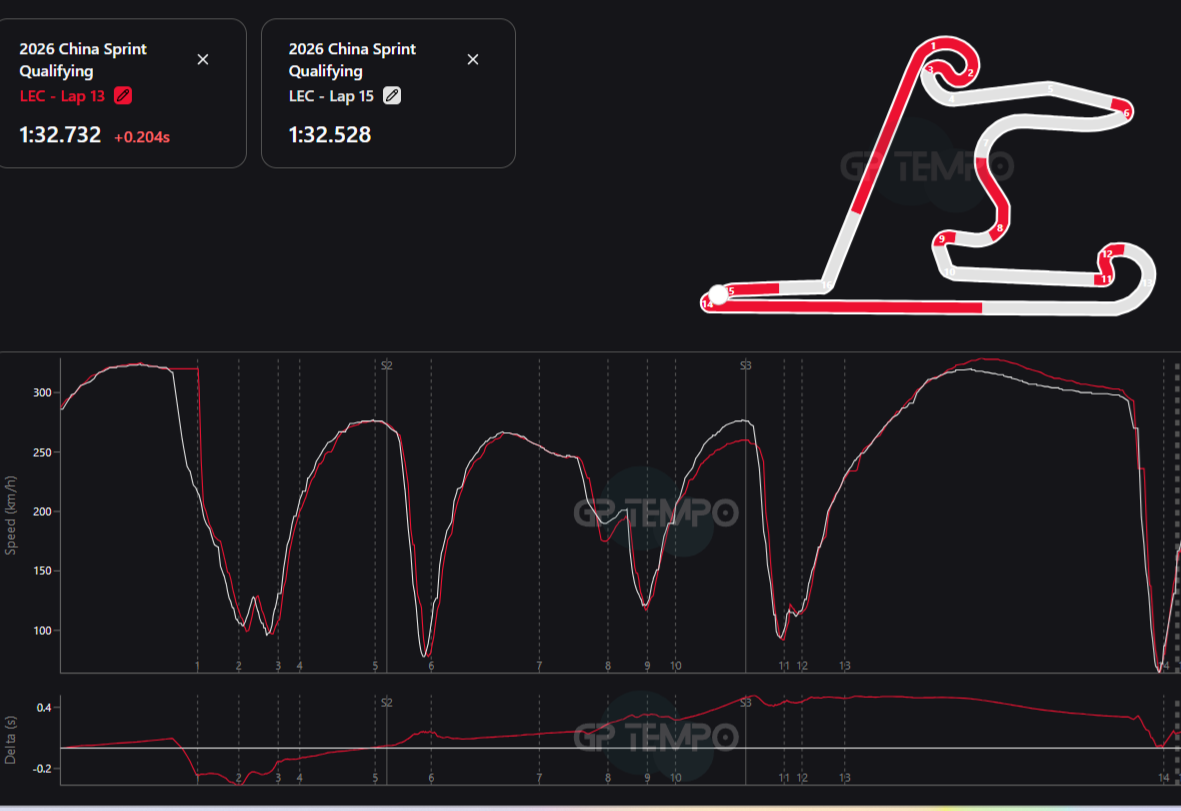
One of the strangest behaviours of the new cars this year has been how power units are automatically getting switched into different engine modes just because of a brief lift of the throttle.
There are rules that dictate a minimum amount of power must be deployed if a driver gets above 98% of throttle.
So if a driver lifts off for a moment - to correct a slide, for example, or because they have hit a bump and their foot has moved, as happened to Kimi Antonelli in Australia - when they get back on the accelerator they are powerless to stop extra battery power being burned through.
This is what derailed that Australia effort from Antonelli, thwarted a sprint qualifying lap from Charles Leclerc in China, and triggered Norris's accidental overtake of Hamilton in Japan.
Burning through extra energy means there is an immediate speed boost, but then a lack of deployment several corners later.
Speaking after what happened to him in China, Leclerc said: "It's a little bit silly to lose half a second just because of a very small lift at some point."
Turn it on and off again
With complicated rules and brand new technology, it was inevitable that there were going to be some computer glitches.
But teams still appear to be discovering more - and some software bugs are proving extremely costly when they put drivers into the wrong engine modes or even stop the cars totally.
For example, in the Japanese GP, George Russell lost a position to Charles Leclerc (and with it a shot at the podium) when his car suddenly switched into super clipping mode - when a car is at reduced speed because it is harvesting power at full throttle.
The cause of this was revealed later to have been an anomaly.
Mercedes trackside engineering director Andrew Shovlin explained that there had been a bug in the software, triggered by a button press and a gear shift happening at the same time.
There have been times when teams have been so baffled by what is happening to their cars that their only course of action has been to do what we do to our computers at home: switch them off and switch them back on again.
The algorithm is king
Energy management algorithms are proving to be king with the F1 2026 cars, as computer code cleverly dictates how best to spend the sparse battery power over a lap.
There is also a bit of self-learning here, too, because the systems refine the deployment patterns lap to lap based on what a driver is doing - adjusting where and how power is deployed for maximum performance.
But while this is all well and good if drivers follow exactly what the computer plans for, it leaves little room for freedom.
If a driver lifts off in the wrong place, or takes a corner slightly faster and therefore does not recover as much energy, then their whole lap may be ruined because of it.
That is because the computer will already have burned up energy that it otherwise thought would not be needed later on in the lap.
Drivers can no longer properly think on their feet because computers are deciding more than before.
Keeping up the revs for starts
F1's race starts have a very different build-up this year, with high-revving cars sat stationary for much longer than had been normal in the past.
This is down to the new power units that no longer feature the MGU-H, the energy recovery system that made use of hot exhaust gases.
The MGU-H was previously called upon at race starts to help spool up the turbo and ensure cars could get away at their optimum performance.
With the MGU-H gone, things are now much more difficult and drivers have to rev their cars for around 10 seconds to get their turbos into the right window.
Getting that done consistently proved so hard in pre-season testing that the FIA reacted to fears of accidents and changed the procedure before the lights come on.
There is now an extra five-second pre-start window for drivers to rev their cars, but we're still seeing major differences in the quality of the launches.
Formation lap burnout headaches
As part of F1's rules package, drivers are restricted in terms of how much energy they are allowed to harvest on each lap.
This limit is also in place for the formation lap before the start, which has triggered its fair share of headaches.
With batteries getting rapidly charged under braking, and drained when accelerating, the normal stop-and-go formation lap antics to warm the brakes and heat the rear tyres are leaving drivers exposed to quickly burning through their recharge limit.
Antonelli and Russell found in Australia that they had hit the harvesting ceiling before the end of the formation lap. There, neither could charge their batteries anymore nor do any burnouts, meaning they had cold tyres and, subsequently, poor starts.
The recharge limit has also proved difficult for drivers to adjust to for safety car restarts as well, because too much braking and accelerating induces the risk of getting close to the ceiling.
This is exactly what caught out Russell in Japan, as he was left without enough battery power to defend from Hamilton at the restart following the safety car for Ollie Bearman's big crash.
Shutting cars down to boost quali laps
A truly bizarre trick has been used by some teams this season to boost qualifying laps, using an emergency procedure to shut some of the power unit down.
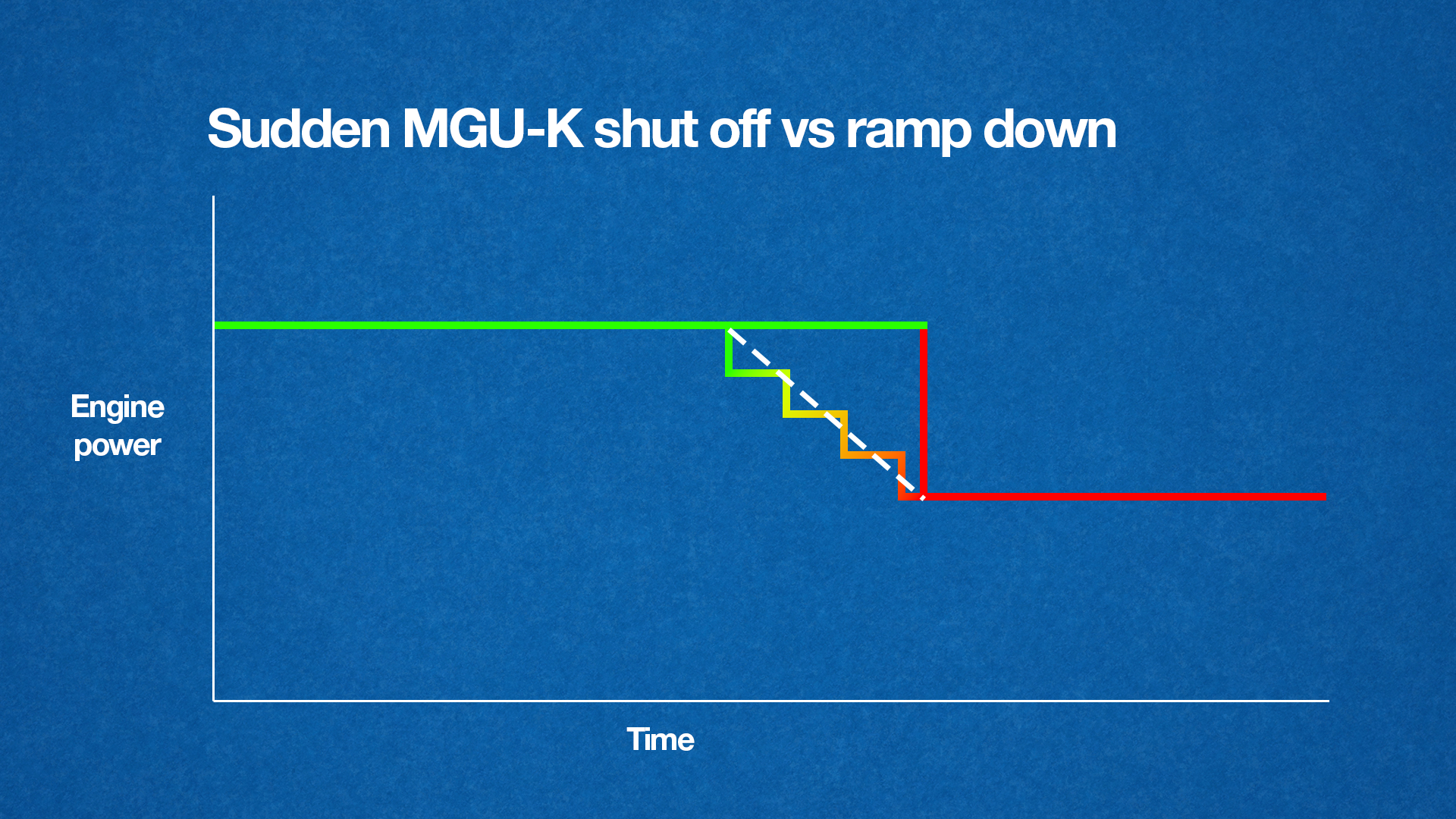
F1 cars are supposed to follow a steady ramp down reduction in battery deployment levels down the straights - typically dropping away from the maximum 350kW in 50kW steps every one second - to help avoid the risks of a sudden, cliff-edge drop-off from full to zero power in an instant.
But Mercedes and Red Bull have found a way to keep running flat-out for longer, and avoid this ramp-down, in the final dash to the line on a qualifying lap. This means more power for longer to help shave off a bit more laptime.
They do this by activating an emergency measure that allows them to instantly switch off the MGU-K and go from the full 350kW down to zero. The consequence of this is that the MGU-K must then go into shutdown mode for 60 seconds.
That is rarely a problem for cooldown laps but, as has been seen several times now, including for Alex Albon in practice in Japan, it can cause cars to stop on track if the drivers are not ultra-careful in how they use their throttle.
The vanishing 50km/h on the straights
The dramatic speed drop-off that the F1 2026 cars suffer on long straights has been labelled as soul-destroying by Norris.
Whereas it was not uncommon for the previous generation of cars to hit top speed towards the end of a straight before they ran out of battery and slowed slightly before the corners, things are much more extreme now.
The Australian and Japanese GPs showed the worst of this as the cars dropped up to 50km/h from their peak speed halfway down the straights when they approached quick corners, where a change of active aero mode added to the woes.
The way that this speed drop-off looks and sounds from onboard cameras has become one of the aspects of the new rules that fans are particularly unhappy about.
It is no wonder that addressing this issue - to try to find ways for cars to reach top speed much nearer the end of straights - is one of the key targets of the meetings set before the Miami GP.
Terrifying closing speeds
The speed drop-offs at the end of straights, triggered either by cars running out of battery power or the need to harvest energy, has been one of the biggest safety concerns.
It is leading to situations where there are huge closing speeds, with the car in front slowing dramatically while the one behind potentially uses a bit more boost. There can be differences of around 50km/h in these moments.
It was this exact circumstance of cars on different energy deployment patterns that contributed to Bearman's huge Japanese GP crash.
The Haas driver had been caught out by the speed at which he caught the slower Alpine of Franco Colapinto ahead of him and took avoiding action. That put him on the grass, where he lost control and then spun off into the barriers at 308km/h.
That incident has highlighted that some of the quirks of these cars can have very dangerous consequences, which is why some fixes are needed urgently.
Slower is faster
The new generation of F1 cars have triggered a big rethink compared to previous eras, because there are times when it is actually quicker to go slower, even in qualifying.
The gains that can be had by harvesting a bit more energy on the way into a corner, and delaying getting on the throttle out of it, can be quite substantial when it comes to giving a driver a power boost on the straight afterwards.
Minimum speeds still count for a lot, but drivers are having to think a lot more about which corners are worth attacking on, and where it is better to take it easy.
Until the rules change, it means flat-out attacking qualifying laps are a thing of the past.