How F1 has got rid of one of 2026 rules' strangest quirks
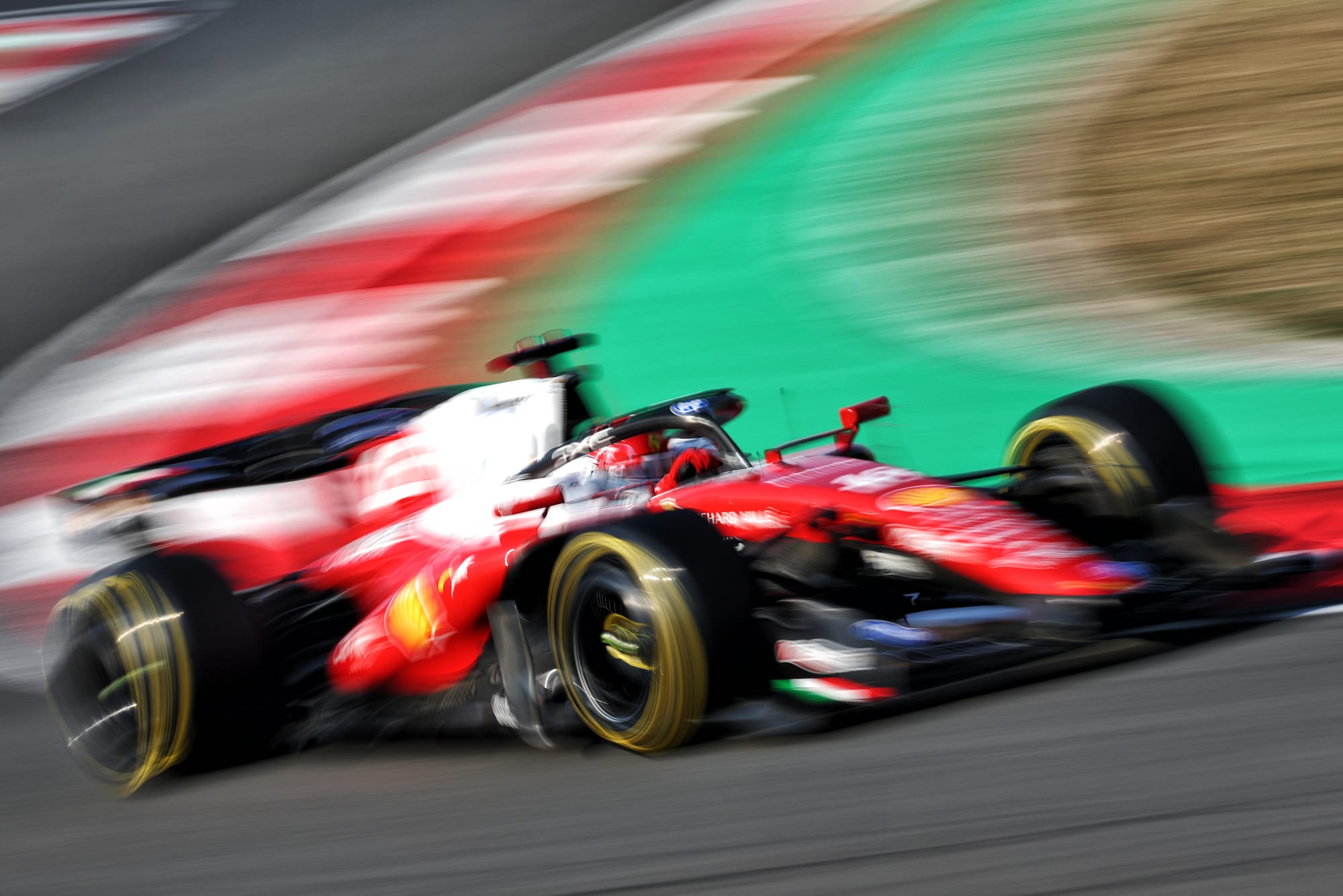
Formula 1 has got rid of one of the biggest oddities of the 2026 regulations – one that famously caught out Charles Leclerc this season.
As part of the regulation revamp that was agreed by teams ahead of the Miami Grand Prix, a raft of measures was introduced aimed at improving the challenge and spectacle of qualifying.
While some of these modifications have been announced – including the reduction of a recharge limit per lap to 7MJ – other alterations have not been made so public.
The Race has learned that one of these elements is aimed at removing a quirk - labelled by McLaren team boss Andrea Stella as "peculiar" - that had grabbed attention this year because drivers including Leclerc had fallen foul of it.
As part of complex algorithms introduced to manage energy deployment rules, drivers are forced to use a certain amount of power when accelerating out of corners.
For those areas of the track where they do not want to burn through too much battery, they can enter what is known as a power limited mode that ramps down deployment to stop energy being burned where it is not needed.
To enter this power limited phase, drivers have to register being above 98% throttle for a full second, which is a period that is known as power limited pending.
This transition worked well when drivers behaved normally, but it caused trouble on occasions when drivers lifted off the throttle after getting to the 98% threshold and beginning the process.
Backing off even for a moment reset their systems and meant that when they got back on the throttle and above 98% again, they would have to restart the power limited pending phase which would burn through more power than they wanted.
In sprint qualifying in China, Leclerc was caught out by what he called this "silly" rule after he lifted to correct an oversteer moment out of Turn 10 – briefly dropping below 98% throttle.
When he got back on the accelerator, by going through the mandatory one-second power limited pending phase again, he used too much energy on the run to Turn 11 – and that left him with not enough available battery for the main straight where he needed it.
In a bid to prevent such weirdness recurring, tweaks have been agreed that will now simplify the transition from corner exit into power limited mode.
Now, rather than the requirement being for drivers to have to be above 98% throttle for a full second, the algorithm will approach things differently.
Drivers will be put in the power limited mode automatically one second after they activate the power limited pending phase at 98% - irrespective of them backing off after that moment.
This should help avoid unexpected changes in energy deployment from restarting the power limit pending phases, and will also mean drivers will not be deterred from pushing hard on corner exit for fear of needing to make any small corrections.
While the hope is that this change will get rid of any of the strangeness that drivers had encountered, a final conclusion will have to wait until it is seen in action in Miami.
McLaren technical director performance Mark Temple said that with so many unintended consequences having played out this year, it was impossible to be sure everything had been covered off to make qualifying totally natural once again.
"Certainly, the intent is to improve that a lot," he said. "If there's one thing we've learned with the regulations, it's that you can't anticipate everything.
"I think we've made good steps to avoid those issues and simplify them, but until we actually go out there and we explore all of the different ways that a driver can come up with things, they can do unexpected things.
"No doubt there will still be some quirks that we identify, and we can then look at addressing."
McLaren driver Oscar Piastri was hopeful that weird consequences, like backing off resulting in a power boost, would be a thing of the past.
"I think every qualifying session so far one of us has made a mistake somewhere and actually it's helped us rather than hurt us, which is not how it should be," he said.
"So I'm pretty sure that these tweaks that they've just introduced will maybe not fully solve it, but certainly go a way to solving it."