FIA's big threat to any F1 teams who abuse new start procedure
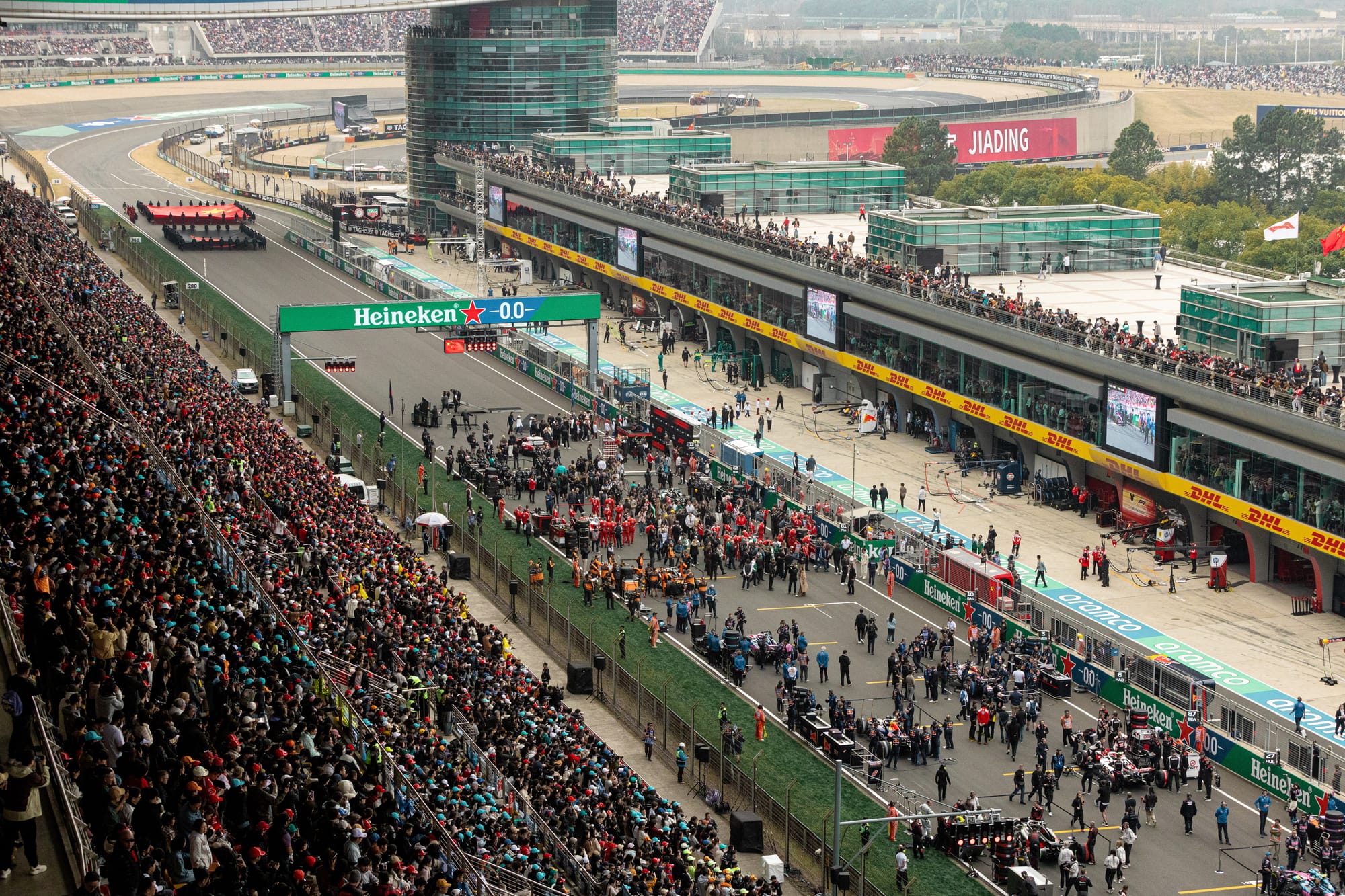
The FIA is ready to impose strict penalties - such as mandatory drivethroughs - if teams abuse Formula 1’s planned new start safety protocols for competitive gains.
Following problems that drivers have had in getting off the line this year, the FIA is to begin tests of a new low-power start detection system at this weekend’s Miami Grand Prix to avoid the risk of cars getting left stationary on the grid.
The idea will be that if on-car computers detect that a driver has badly fluffed their start and is near stationary on the grid, then emergency protocols will come into play to help them get away.
This will involve allowing the MGU-K to deploy battery power to help get the car up to speed - with the use of the energy recovery device currently banned until the car is above 50km/h.
Tests are planned for the new procedures after the first (and only) practice session in Miami and the FIA will monitor in more detail the actual race starts, but it will not be enabled for the sprint or grand prix in Miami this weekend.
No funny games
The scope to allow drivers who get away poorly to receive an extra power boost has inevitably prompted fears about teams potentially finding ways to game the system to help them make better starts.
The MGU-K kicking in at the perfect time could in theory hand a decent enough power advantage to help a driver make a strong launch - and that could trigger temptation for starts to be deliberately fluffed.
Turning the emergency start safety system into a tool to make better getaways is something the FIA does not want to happen, which is why it has laid out clear warnings to teams against doing anything untoward.
The FIA’s single seater director Nikolas Tombazis has revealed that its original plan to deter teams from exploiting the start protocols was to make it mandatory for any driver who used it to face a drive-through penalty at the end of the opening lap.
While teams convinced the FIA that such a tough stance was not needed, so the drivethrough idea was dropped, the governing body says it will continue to carefully monitor things.
If it feels teams are benefitting, then it will not hesitate to clamp down.
Tombazis said: “We made it clear that first of all, this is not supposed to be a mechanism whereby people would be even tempted to do it on purpose to come up better off.
“What this will do is convert a disastrous start to a bad one. It will not convert a bad one to a good one.
“And indeed, when we first discussed this option with the teams, we proposed that if this mechanism kicked in for any car, they would have to do a drivethrough at the end of lap one.
“The universal feeling of all the teams, in order to completely discourage any funny games, was that when they are in that scenario, they're already out of their control and definitely in a bad place. Therefore that would not be necessary, and we accepted that.
“But if we see that for whatever reason, we've missed something and people start using it for advantage, then we would, of course, intervene. But we don't think that's the case.”
Not helping everyone
While there has been a big variation with race starts this year, the FIA says the new system is not aimed at helping everyone get away the same.
In fact, Tombazis says that if it had been in place from the start of the season, it would have been rarely called upon - but would have assisted in the most difficult moments.
“There's a detection of how well the car is accelerating a small amount of time after the start, and if that is below a certain threshold, then it kicks in,” he said.
“I think it would have intervened this year on two or three occasions in total.
“I don't think it would have intervened for Max Verstappen's bad start in China, but it would have certainly intervened in Liam Lawson's start in Australia. No doubt about that.”
Tombazis said that it was not clear when the new system will be activated fully for a race, with the FIA wanting a few trial runs done first before it gets introduced.