The biggest problems with Audi's first F1 engine
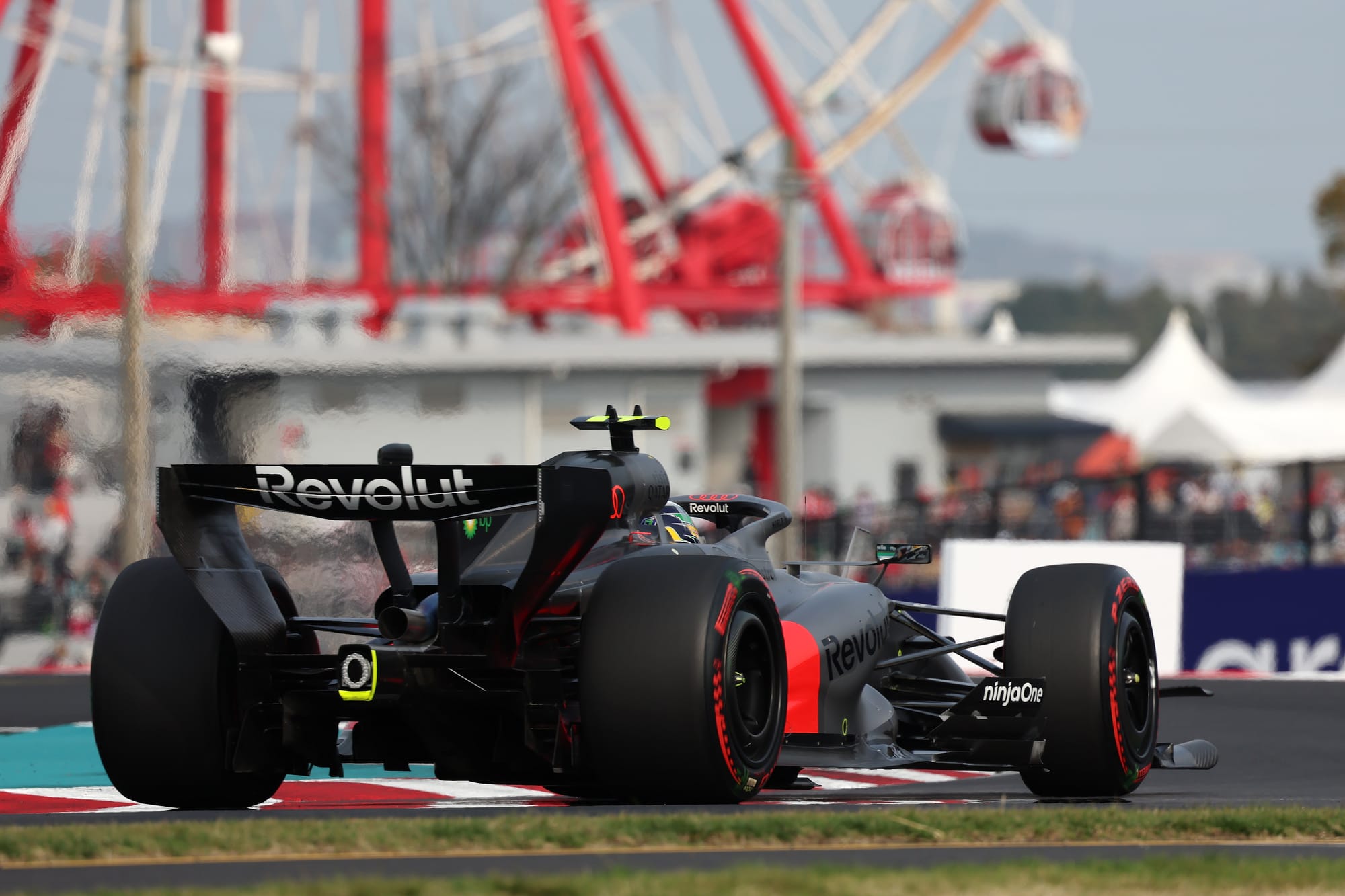
Audi may have had a solid start of its Formula 1 adventure, but it is already evaluating a new engine concept to help address what it says is its main deficit to the front.
The idea is to deliver a revamped power unit design - for either 2027 or 2028 - that will be a departure in some key areas from what it is running at the moment.
This step is viewed as a key element to help it achieve its title target by the start of the next decade.
Speaking in an exclusive interview with The Race, Audi F1 project leader Mattia Binotto laid out that delivering on its ambition would likely need a bold step change.
We delve into what has triggered these thoughts and why it is not just a matter of more horsepower.
Finding its feet
Audi's start to the 2026 season has been encouraging.
Although there have been some reliability niggles and what are clearly some challenges to overcome with race starts, it exceeded its ambitions with a points-scoring debut outing in Australia as Gabriel Bortoleto finished ninth.
But despite having made what it says is a "huge step" with its chassis, the gap it has to F1 pacesetter Mercedes is around 1.5 seconds.
It acknowledges that most of this deficit to the front comes from the engine. But it would be too simplistic to conclude that the difference is entirely a matter of horsepower.
Audi's situation is more nuanced than that and, as Binotto admitted: "It is a combination of power, energy deployment, how efficient you are and driveability."
He added: "In terms of control, software calibrations, there is so much we can still do.
"Gear changes are very harsh - which is even affecting the car in braking, making it unstable. It's affecting the car when going on power because of very harsh shifts.
"And when you've got such a difficult driveability, to properly balance the car becomes more difficult, because you need to protect the rear of the car, and you cannot balance it the way it would perform in a better way.
"So, I keep saying, for us, it's a combination, really, of pure engine power; and efficiency from the energy or the way we use it. In terms of tools, we need to improve on driveability.
"Overall, that's the biggest gap we've got to the best teams today, which at least is a second."
Delivering fixes
Some progress can be made with software improvements, which can help with Audi's harvesting and deployment strategies to better manage energy over a lap. But not all of the progress needed can be achieved that way.
For example, Audi's poor race starts this year are understood to be a consequence of it having what some believe is the biggest turbo on the grid. Making a fundamental change to this area of the power unit is not something that can be done overnight - or really even in-season.
That is why both drivers and Binotto have talked of it being a long-term effort to fully get on top of this problem.
In terms of improving the overall power of the Audi engine, there is some scope for hardware improvements over the remainder of 2026.
Audi's deficit to the front means that it is almost certain to be granted some extra development chances this season and beyond under F1's Additional Development and Upgrade Opportunities system.
But while the rules could open the allowance for some extra in-season development, Audi does not think that changes it can make in the short term are what it needs to get to the front over the long haul.
And that is why it thinks its best long-term solution could be the new engine concept, even if it must wait for another two years.
As Binotto explained: "Part of it would mean for us to go through maybe a different concept of engine design, that would maybe not be '27; could be even '28."
How this fits with Audi's vision
Not having a new design potentially until 2028 as Binotto suggested - rather than fast-tracking changes through as quickly as possible - seems an awfully long time to wait.
But it needs to be put into the context of what Audi's big masterplan is, and that is to be able to win the world championship by 2030.
To be able to do that, the team needs everything lined up and to be hitting its peak at the same time, so it cannot rush through an engine revamp if it is not making sure that its car and infrastructure are up to standard to make the most of it.
Binotto said: "We need to be patient. I know that. We know that.
"But on the other side, while we are patient we can still try to deliver. And what we are doing today - it's OK, it's not too bad."
But Binotto is not shying away from both the work needed to improve now, and what is needed further down the road.
Audi certainly has plenty to do in terms of getting on top of its reliability niggles, which are a run of different issues rather than being a fundamental flaw in anything.
"It has never been one problem that has been repeated," said Binotto. "On one side this is encouraging, because it means that we are addressing or solving the problems we are facing.
"But on the other hand, it shows how still young and non-mature our project is because it is our processes or our organisation [behind the issues].
"The problems we are facing are sometimes design, sometimes operations, sometimes basic mistakes, human mistakes, which may happen when you are such a young team. But they are all different types of small problems which are still stopping the car."
Binotto is convinced though that Audi has the right attitude needed to move forward on this front; in being diligent in improving areas of weakness.
"I think it is a checklist. It is consistency, no stones unturned and making sure that all details matter at the end.
"But I have to say that the team is very focused and concentrated, and they understand what's required where we are, and they're really pushing hard to make sure that we are solving them as soon as we can.
"The more we run, the more we will learn. So I cannot say that today I'm confident that we are fully reliable. We are not. Things may still happen.
"But that's why somehow we set an objective which may feel so distant, 2030, but we are at the base at the moment."
In fact, if there is one thing that Binotto will not allow, it is letting short-term distractions prevent Audi from being able to deliver on that long-term objective, which it has labelled Mission 2030.
"What will be important for us is to balance the short term against the long term, because our objective I think it's toward the future," he said.
"So while working to make it right for the moment, we should not be distracted from our long-term ambition and long-term objective.
"Because we are in a budget cap environment, we are limited in terms of our own capacity. The long-term [improvements] are the most important tasks.
"And whatever we can do within the boundaries for the short term will be done. But it's more important to look at the future and to build."
It means being clever for now with how it deploys resources, and thinking bigger-picture about what's best to tick the right boxes for the future rather than throwing everything at it now. It's against this backdrop that the thoughts of a new engine concept have emerged.
Binotto added: "We cannot miss the 2030 [target], so we need to continue climbing our mountain in the meantime.
"Obviously, to do well in '26, it's important for ourselves, and for our partners, to keep training our muscles.
"But I will not compromise the future for the short term."