Why F1 drivers can launch qualifying laps at full throttle again
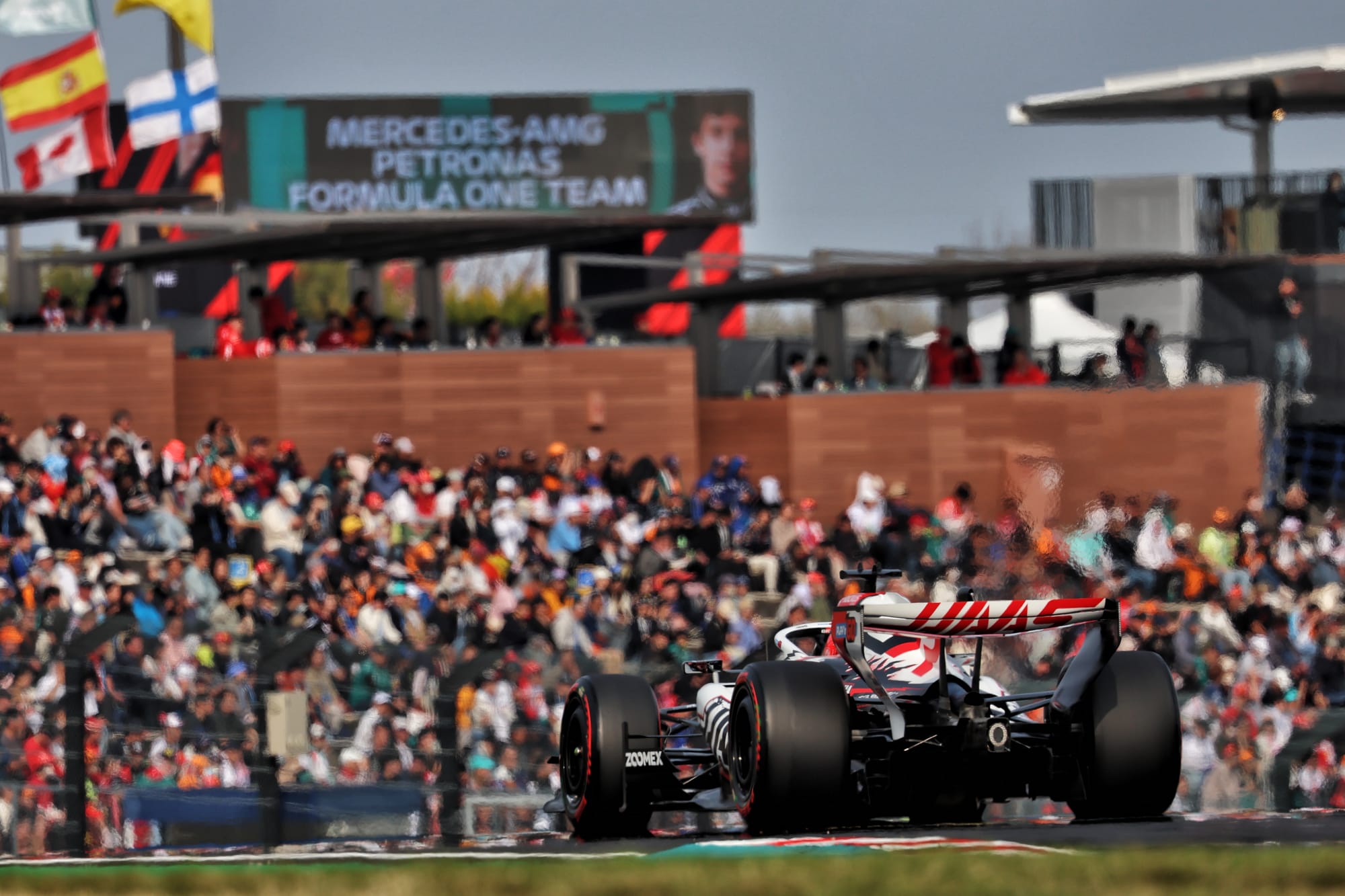
Formula 1 drivers will be able to launch their qualifying laps at full throttle again as part of the regulation changes implemented from this weekend's Miami Grand Prix.
One of the side-effects of F1's energy-starved 2026 engines was drivers manually holding around 50% throttle exiting the final corner before starting a qualifying lap, then accelerating before they got to the start line.
This was because going at full throttle would mean the MGU-K had to be activated and part of the battery's 4MJ capacity would be drained before the line, hurting the optimisation of the energy deployment on the lap itself.
The extent to which this was an issue depended on the circuit layout as a longer run from the final corner to the start line meant more management was required.
As Haas driver Ollie Bearman said: "We were having to manage the throttle manually, it's like 50%, so you're having to look down at your dash to see exactly how much throttle you're using when starting a lap, which is a bit dangerous."
Various regulation changes were agreed by stakeholders during F1's long April gap between races - with the headline updates relating to battery charging and deployment restrictions.
Making qualifying more ‘normal' again for drivers and reducing extreme energy management demands was a priority, but smaller items within this have been cleaned up, too – including the part-throttle qualifying lap launch.
Bearman said this is one of the "really nice" consequences of the rule changes that are in force from Miami onwards, while Haas team-mate Esteban Ocon also said "the big gain is the automatic launch".
"This is similar to how it was last year," Ocon said. "We can prepare the last corner well and start the lap."
Allowing the drivers to be on full throttle has been achieved by freeing up when the MGU-K deployment can begin.
Haas team boss Ayao Komatsu said "we can decide when we can actually deploy the energy" – indicating this is now more in the team's control rather than dictated by specific throttle positions or car speed.
While the driver will now be on full throttle, the battery will not be saved until the start of the lap. This is because deploying some MGU-K power early, and slightly depleting the battery, is going to be a net gain on some tracks because of the straightline speed gain.
"You have to deploy electrical energy at some point so that you cross the start-finish line fast enough, otherwise you carry the penalty all the way into Turn 1," said Komatsu.
"So it's circuit dependent, but that out-lap, that last corner to start-finish line bit, rather than a driver really waiting for the right moment, being told by an engineer, ‘OK, this is the point where you can go full throttle', you can just go."