Three key reasons McLaren beat Mercedes to Miami sprint pole
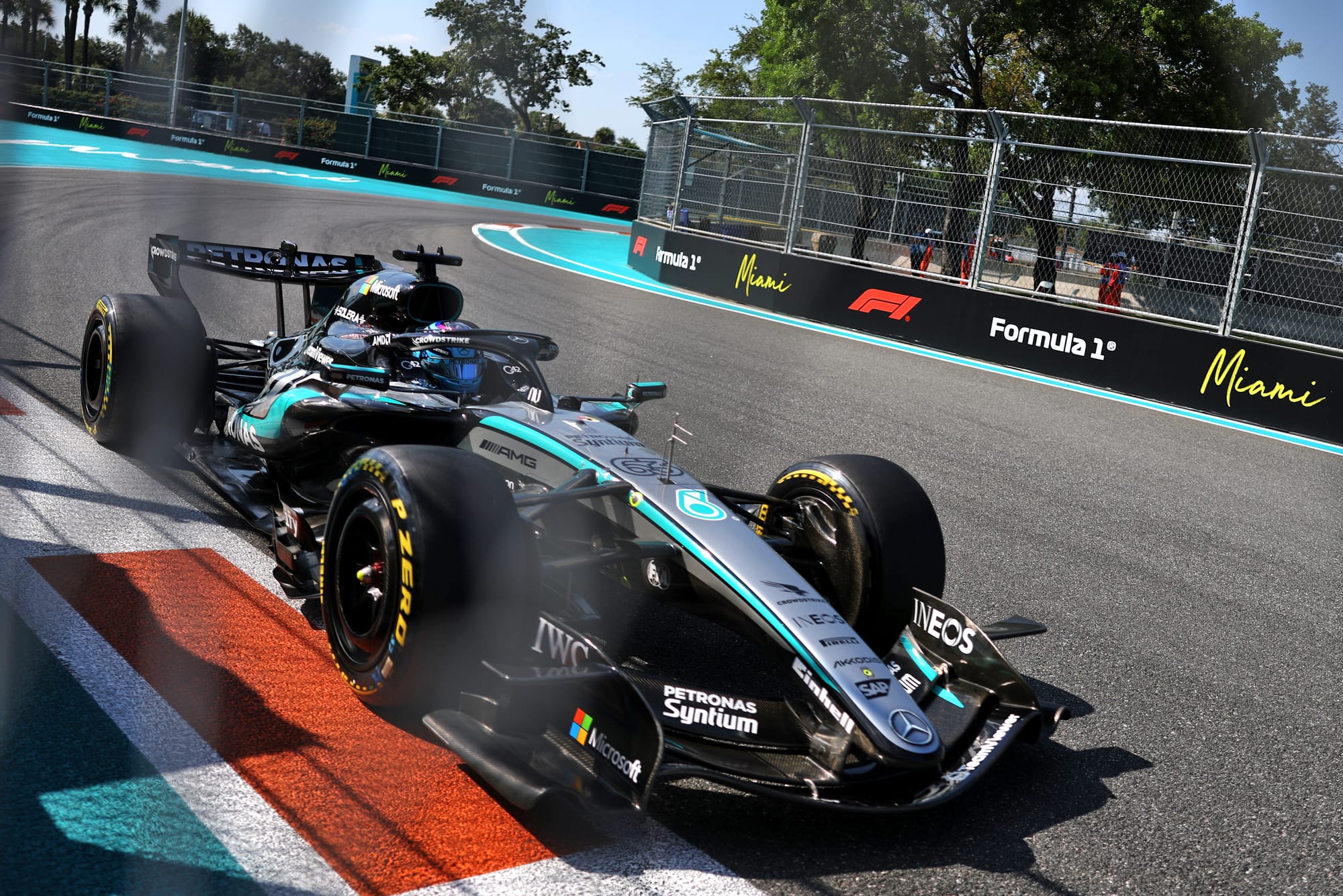
Lando Norris’s pole position for Formula 1’s Miami Grand Prix sprint race is the first time that Mercedes has been knocked off the top spot this season outside of a practice session.
While Kimi Antonelli’s late effort got him within 0.222 seconds of his McLaren rival to secure second place, George Russell’s sixth means for the first time in 2026 Mercedes has not locked out the front row of a grid.
This change of form has inevitably triggered intrigue about what has caused it – especially on a weekend when F1 has introduced a raft of rule changes aimed at improving the qualifying spectacle.
But the performance swing has nothing to do with the new recharge limits and harvesting tweaks – because energy rich Miami was never a track where the refinements to the regulations were going to make much of a difference.
Instead, there are three key factors behind why Mercedes’ run of perfect qualifying results has come to an end.
Mercedes did not nail the set-up
Amid the praise for the Mercedes power unit this year, both Russell and Antonelli have been at pains to point out how good the W17 chassis is.
But having enjoyed things being pretty planted all season, one of the factors that played against them in Miami was that neither driver was particularly happy with the set-up.
Russell in particular could not get comfortable – and a consequence of the car sliding more was overheating tyres.
“Miami's not a track that I love, to be honest, especially with these hotter conditions,” he said.
“I was just overheating the tyres a lot in that twisty section in the middle. I was struggling to get the right balance with the car. Not much more to say than that really.”
Antonelli too admitted that things had been “pretty messy” as he was left struggling to get things hooked up on the medium before it suddenly came alive on the soft in SQ3.
Different deployment tactics
One of the things that McLaren has spent a lot of time working on better understanding since the start of the season is energy management.
Having been caught by surprise in Australia by just how far advanced Mercedes was at getting the most of the new harvesting and deployment tactics, McLaren has burned the candle in trying to better understanding things.
That manifested itself in a step forward in Japan, where it ran a slightly different strategy to Mercedes by using more power on the start-finish straight.
In Miami, it has once again gone down an alternative path that appears to have paid dividends.
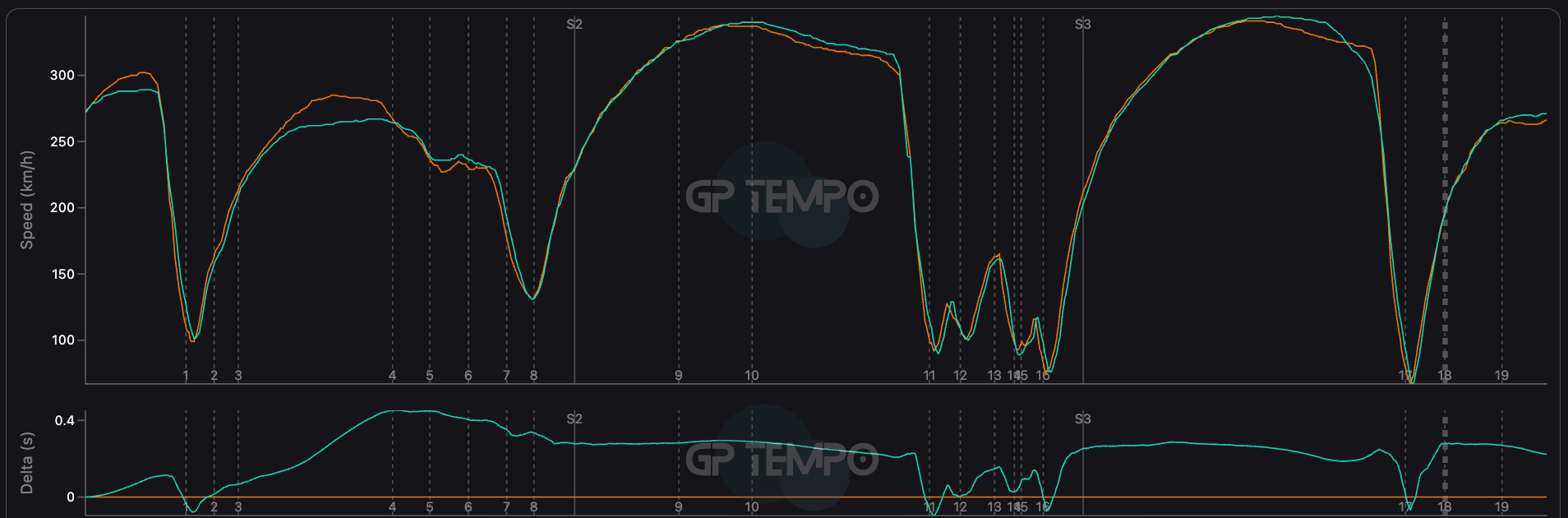
Telemetry data comparing Norris’s pole lap to the best effort from Antonelli highlights how McLaren had done its own thing in choosing to deploy more energy on the run out of Turn 3.
This handily gave it a just more than 20km/h boost over the Mercedes at that section of the track.
And while that meant Norris did not have as much energy as Mercedes for key straights later in the lap, it seems its rival did not gain as much back from deploying there instead.
This will be a lesson learned for Mercedes, who will almost certainly evaluate a potential change of tactics for proper qualifying on Saturday.
The influence of the upgrade war
The five-week gap between the Japanese Grand Prix and Miami provided a golden opportunity for teams to work on major upgrade packages for this weekend.
But interestingly Mercedes was not one of those squads, as its refinements were limited to just a small exhaust wing and a tweak to its front brake drum.
It has elected to save up on unleashing a car revamp until the Canadian GP at the earliest – which will give it a bit more development time compared to those teams who brought new parts here.
Having an upgrade offset against rivals like McLaren, Ferrari and Red Bull, who all delivered major development overhauls, always ran the risk of leaving it on the back foot for this weekend.
That seems to have played out, with its three closest challengers all appearing to have delivered a step forward in pace that Russell said was bigger than Mercedes had anticipated.
“It’s pretty surprising how big a jump McLaren and Ferrari have made, so that's pretty damn impressive,” he said. “We knew they'd probably close the gap, but they've been quicker than us.”
Mercedes will not be able to address the lack of upgrades over this weekend, but it will hope that its tactic of waiting for bigger gains later will pay dividends over the long haul.