Our memories of Alex Zanardi's extraordinary life and career
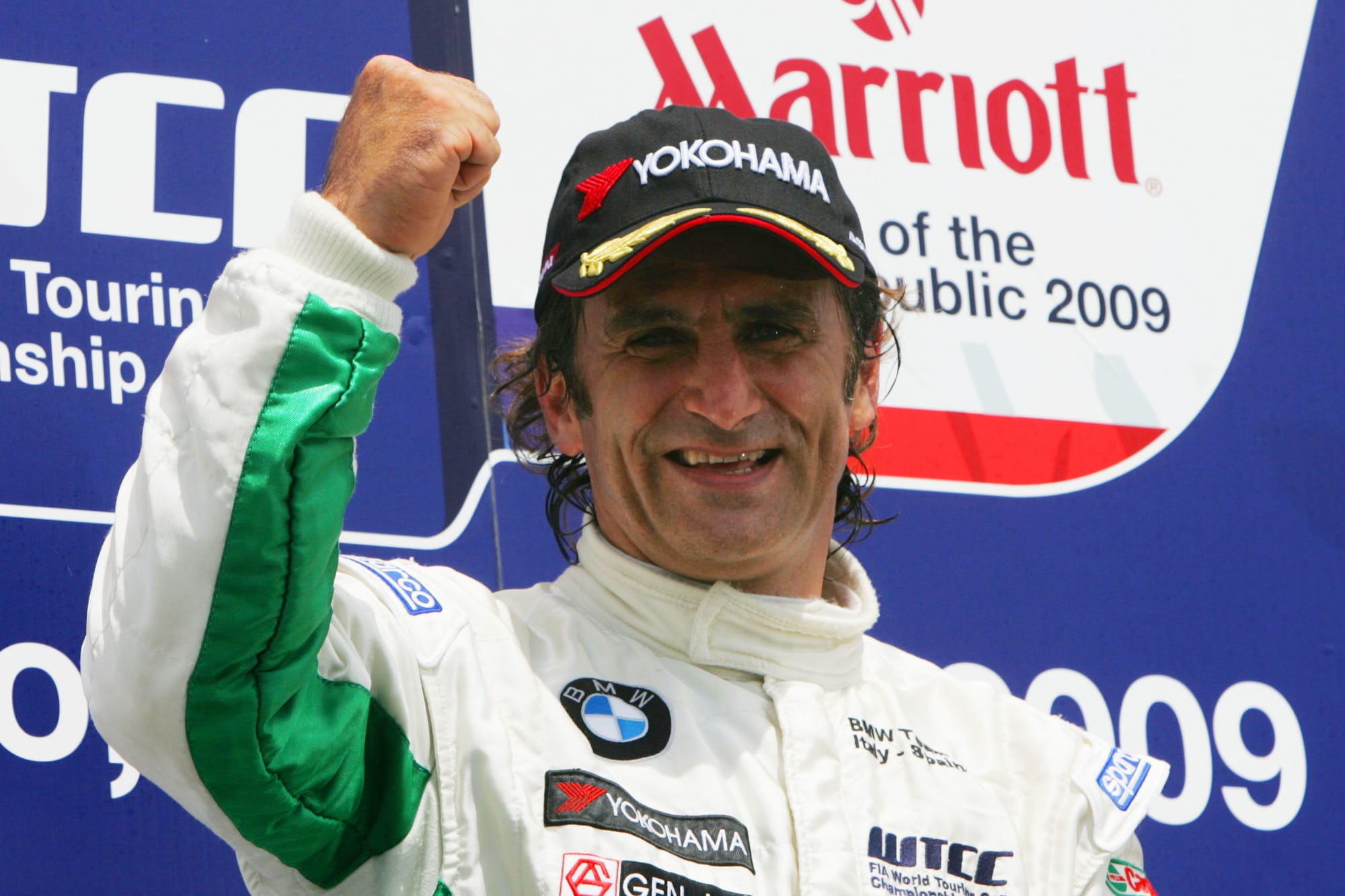
Motorsport hero Alex Zanardi has died "suddenly" but "peacefully", just under six years after being seriously injured in a handcycling accident.
Zanardi’s unique career - from Formula 1 promise to incredible IndyCar success in CART Champ Car, then F1 return disappointment, a life-changing injury and a second career as a pioneering disabled racer then a Paralympian gold medal winner in handcycling - touched many members of The Race team. Some of us worked with him, others covered his key moments, or just idolised him growing up.
We attempt to tell Zanardi’s story through our memories of him.
Early F1 promise
Gary Anderson's memories
After finishing second in Formula 3000 in 1991, Zanardi had a variety of intermittent F1 chances in his mid-20s across Jordan, Minardi and in particular the original Lotus team, though he seemed to have dropped off the grid for good when Lotus closed at the end of 1994.
Gary Anderson worked with Zanardi right at the start of his F1 career with Jordan in 1991. They crossed paths again when Gary was working with Reynard in Champ Car 10 years later, just before the catastrophic accident in which he lost both his legs.
Here are Gary's memories of the explosive talent Zanardi was when trying to prove himself to the F1 world with Jordan right at the start.
I knew Alex pretty well from way back then. He was a lovely guy. When he drove for us in 1991, that was the start of his Formula 1 career. It was quite interesting because he didn't know how to go slow. That was one thing about Alex.
He was always on it constantly, all the time, every lap was just another banzai lap. And he was driving for his future as well because he didn't know where he was going after the little trip with us.
We’d had Bertrand Gachot and Andrea de Cesaris at the beginning of the year, then Bertrand had his misdemeanor with a taxi driver, spending a month in prison. Along came Michael Schumacher, and set the world alight really with his efforts at Spa.
Due to contractual agreements or disagreements - whatever you like to call them - he was soon gone and we swapped drivers with Benetton and had Roberto Moreno. Roberto, again a very good friend of mine, did two races with us. And to be honest, the right thing for us to have done at that time would have been to have kept Roberto. But we were looking for money as a team.
And then Alex came along. He was just flat-out constantly. He probably did more damage in those three races than any other driver we had in the car. Luckily, it was the end of the season!
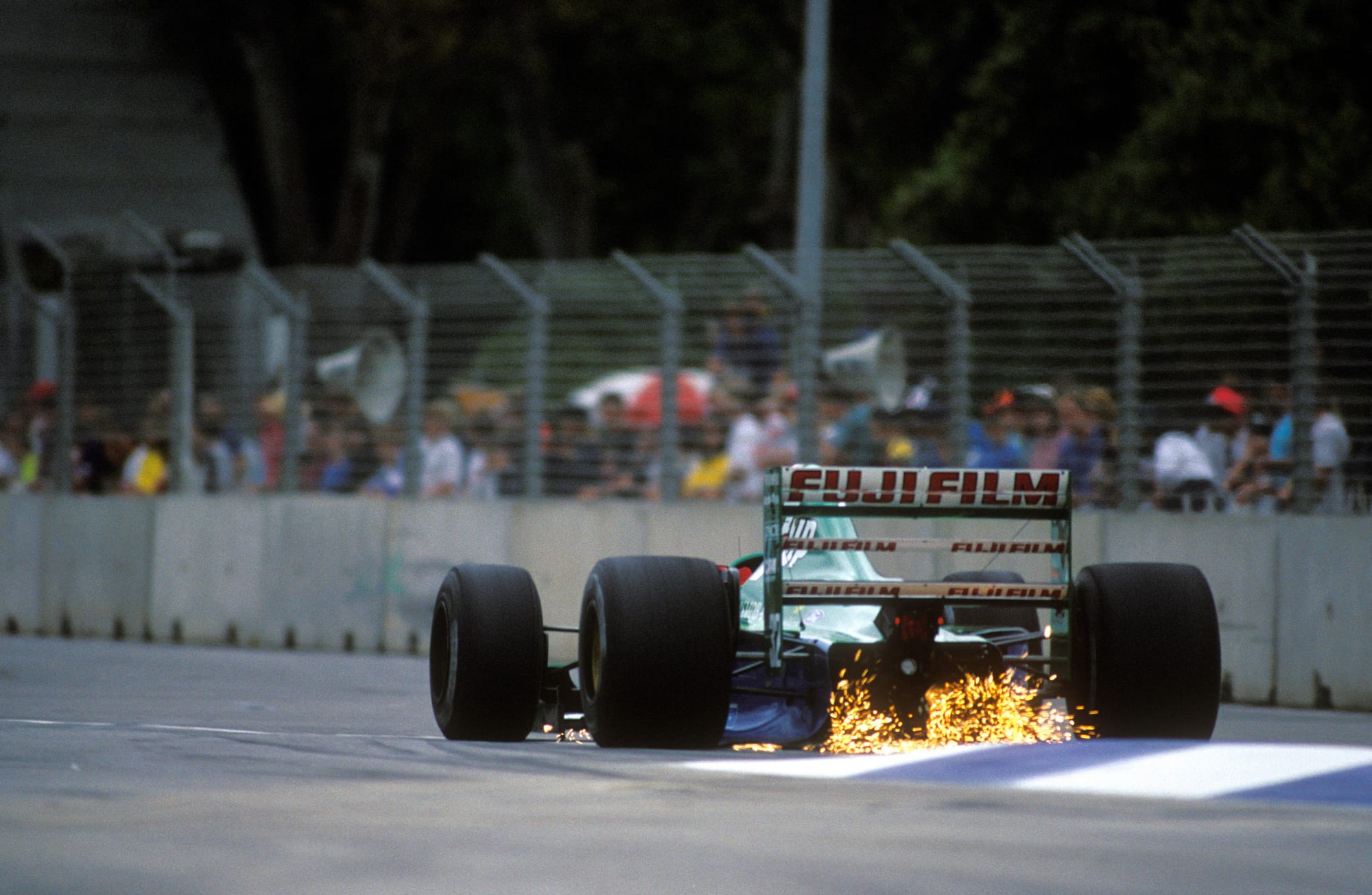
The best moment - but also most destructive - was in Australia. In Adelaide at that time there were some big kerbs. And Alex was just a kerb user. And every day was a new experiment or a new experience. The car would come back in different levels of destruction, I suppose you might call it.
We went from using his race car on Friday to using the spare car and then having to swap to the spare chassis we had in the box. And then I think it was after Saturday qualifying, we had to take that one that we had committed as finished out of the box again, start injecting all the glue around the nose supports and the front suspension pick-ups and rebuild it as a car for race day. So he used up all our bits and pieces in those three races.
But on the way there, he was wringing its neck, trying as hard as he could. That race in Adelaide was wet and stopped early. And there were crashes all over the place. When the race was stopped, we were actually running fourth and fifth. On countback that became seventh and eighth. Just one more lap under a green flag would have put us fourth and fifth, which would have a great result for our team.
I remember when they were talking about restarting the race, I got both Alex and Andrea together and threatened them both with violence if they took each other off if there was another lap of racing - “whatever way you get going, you stay that way. You just don't bother trying to race each other. I don't care which way it is, but if you two take each other off, you’ll have me to deal with!” But the race never restarted again. Obviously we enjoyed working with him, but it wasn't to be.
The next time I worked with him was in 2001 in America when Alex had gone back to Champ Car. I worked for Reynard for a year trying to sort of develop the IndyCar a little bit more. And Alex was there with Mo Nunn Racing. And actually, interestingly, by that time, I think he had matured and lost that real hunger, that real fight and he got himself to a point where he was trying to make things too good. He was working constantly on getting the car right all the time as opposed to the Alex I knew from 1991 when he would just wring the car’s neck.
I was there at the LausitzRing when he had his accident and I actually sort of had to go and do an analysis of the car and of the accident for the circuit and the police. It wasn't a pleasant sight and that memory will stay with me forever.
Alex, it was great to know you, you showed the world that setbacks shouldn’t interfere with your dreams. Anything is possible if you apply yourself to it.
The incredible CART years
Matt Beer's memories
After a year of barely racing in 1995, Zanardi was the surprise choice for a Ganassi IndyCar seat in 1996 - just in time for the team’s breakthrough. What followed made a huge impression on a teenage Matt Beer.
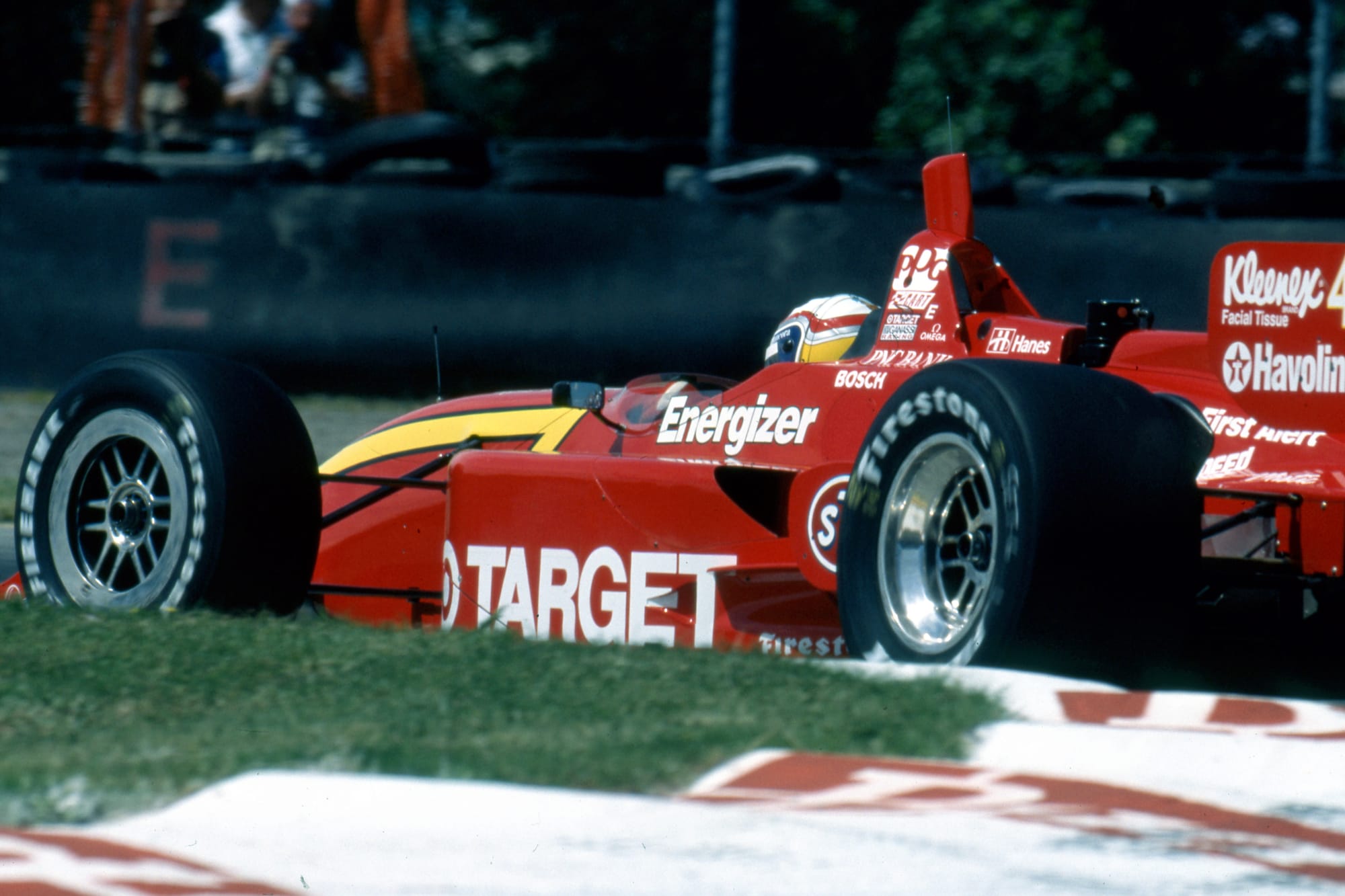
Anything is possible… that was certainly how it felt as a Zanardi (super)fan during his first stint in what was then CART Champ Car over 1996-98.
He didn’t merely gel with the Chip Ganassi Racing Reynard-Honda. His affinity with that car, that rules package, that team, those Firestone tyres was such that the combination - and his willingness to try the seemingly impossible - let him reach another level of ability and imaginative racecraft.
It felt at the time like a slow-burn initially in 1996, Zanardi’s points leading team-mate Jimmy Vasser, established big names Al Unser Jr and Michael Andretti, fellow explosive rookie Greg Moore and the CART/IRL war hogging the attention. But even before Zanardi’s first win at Portland in round nine, there had been so many hints of what was coming - pole on the Rio ‘roval’ in his second start, in victory contention in Long Beach before tangling with the lapped Bobby Rahal, dominating the US500 before his engine blew. Something special was brewing.
The two championship titles and the 15 race wins are the key stats. But it was the manner of three iconic wins in particular that made Zanardi a legend - the last-lap Corkscrew dive-bomb to deprive Bryan Herta in the 1996 season finale at Laguna Seca, coming from 23rd to first after a penalty at Cleveland in 1997, then from a lapped 21st with bent suspension to win in Long Beach in 1998. And ‘The Pass’ at Laguna brought him to within 22 points of champion Vasser. Zanardi had been on course for 22 when taken out of the lead by backmarker PJ Jones in Vancouver a week earlier. That Corkscrew move could so easily have made him a rookie champion.
So often when you thought a race was lost, Zanardi conjured something no one else would’ve done. Every time, even though he’d done it before, it felt barely believable that it could be happening.
I’ve never screamed so loud at races as I did over those moments. I was a massive motorsport fan by 1996 but my driver loyalties in F1 had flitted around. Becoming a diehard Zanardi supporter is what turned motorsport into a life-dominating obsession for me. It’s still a more-than-a-career job three decades on, but I’ve never loved motorsport as fervently as I did when following the Zanardi magic for those three years. As things started to get a little too easy for him by mid-1998 (the odd settling-for-points moment, too many wins won in the pits not with a dive-bomb), and then when F1 went so badly wrong for him in 1999, a little bit of realism replaced romance in my motorsport fandom, a little naivety was lost maybe, and it’s never been quite the same since.
F1 disappointment with Williams
Zanardi’s heroics with Ganassi caught the eye of Frank Williams, who brought him back to F1 for 1999. But it was a disastrous season and they parted at the end of it with Zanardi having not even scored a point.
Then Williams marketing chief Jim Wright reminisced about it for an episode of Bring Back V10s on Zanardi’s 1999 troubles. Here are a few of Jim’s key memories, as expressed on that podcast.
Alex had such an engaging personality. It wasn't as if people didn't warm to him. Everyone wanted it to work because of Alex's personality and we'd all seen him racing in America and loved his style and his forcefulness.
Deep down, the 1999 F1 cars needed a style of driving that was alien to him. And that probably was his downfall.
I remember being in Australia, he had an early spin and then he just did not make any progress up against backmarkers. I was looking at the sector times and it was so far away from what we needed and what Alex was clearly capable of. Something was fundamentally wrong.
Frank Williams and Patrick Head were fully behind him and trying everything to try to understand what his problems were. Frank had several conversations with Chip Ganassi and Chip was as perplexed as we were. Chip offered some advice about how to get the best out of Alex, but I think it was stuff that we already knew.
But as Patrick said at the time, it's just such a different type of car than he'd been used to racing. Alex's style in Champ Car was very aggressive - really aggressive on the brakes, aggressive on the tyres, leaning on the tyres in the corners. And in Champ Car you could do that.
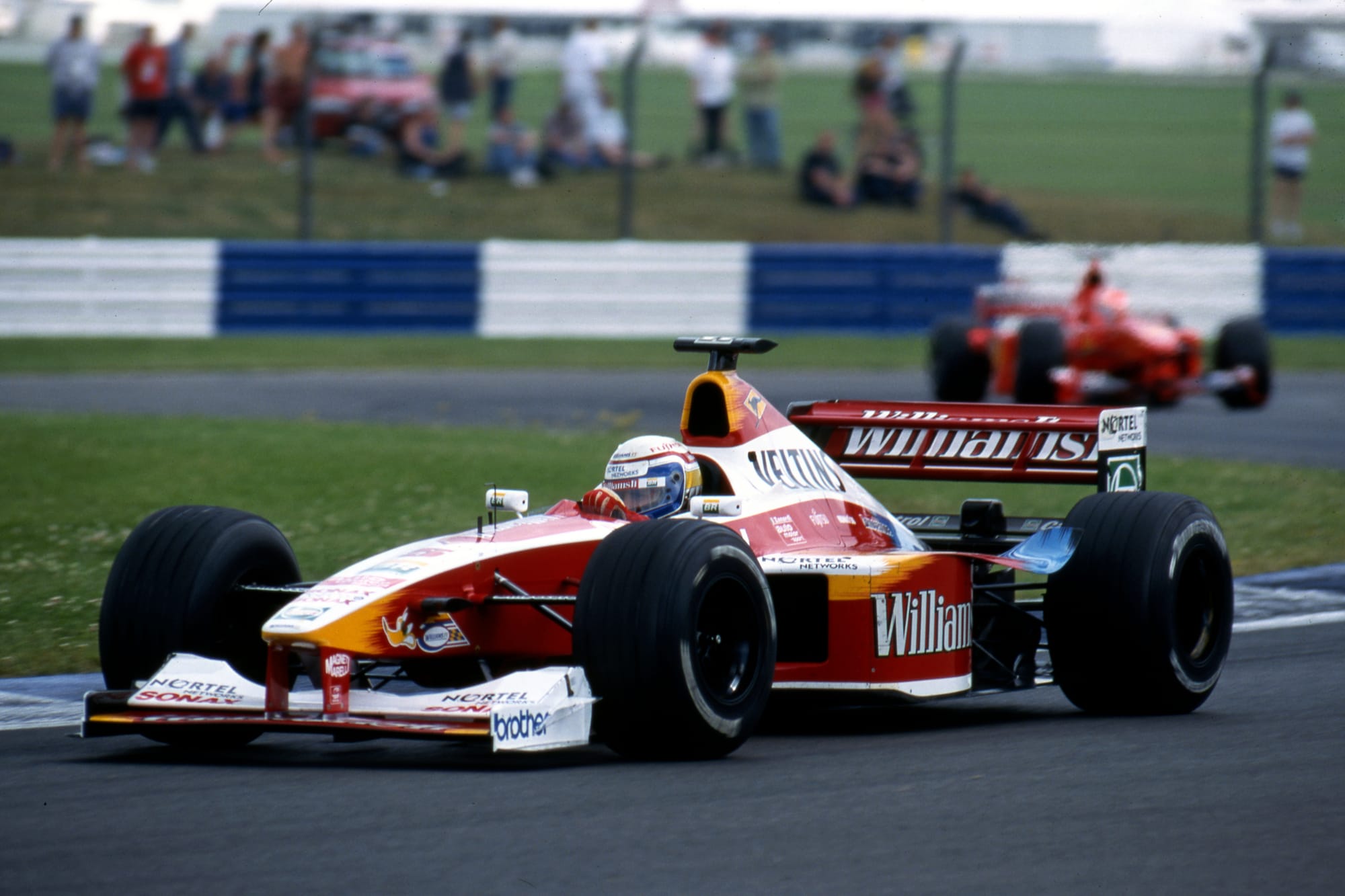
The two main differences were obviously fully slick tyres as opposed to grooved slicks that we had in Formula 1, and also the track of the cars in Champ Car. You had a much wider car which was much easier to bully into a corner and get rewards through the steering and through the tyres.
Alex later said he was disappointed that he didn't get the results for Frank. They loved each other, those two, absolutely adored each other, had a fantastic time together, shared a real passion for life, jokes, and humour. Frank wouldn't even start the darkest or deepest meeting with Alex without asking him to give him a joke. There really was a warmth and a passion between those two and a sadness when it didn't work out.
Life after Lausitz
Edd Straw’s memories
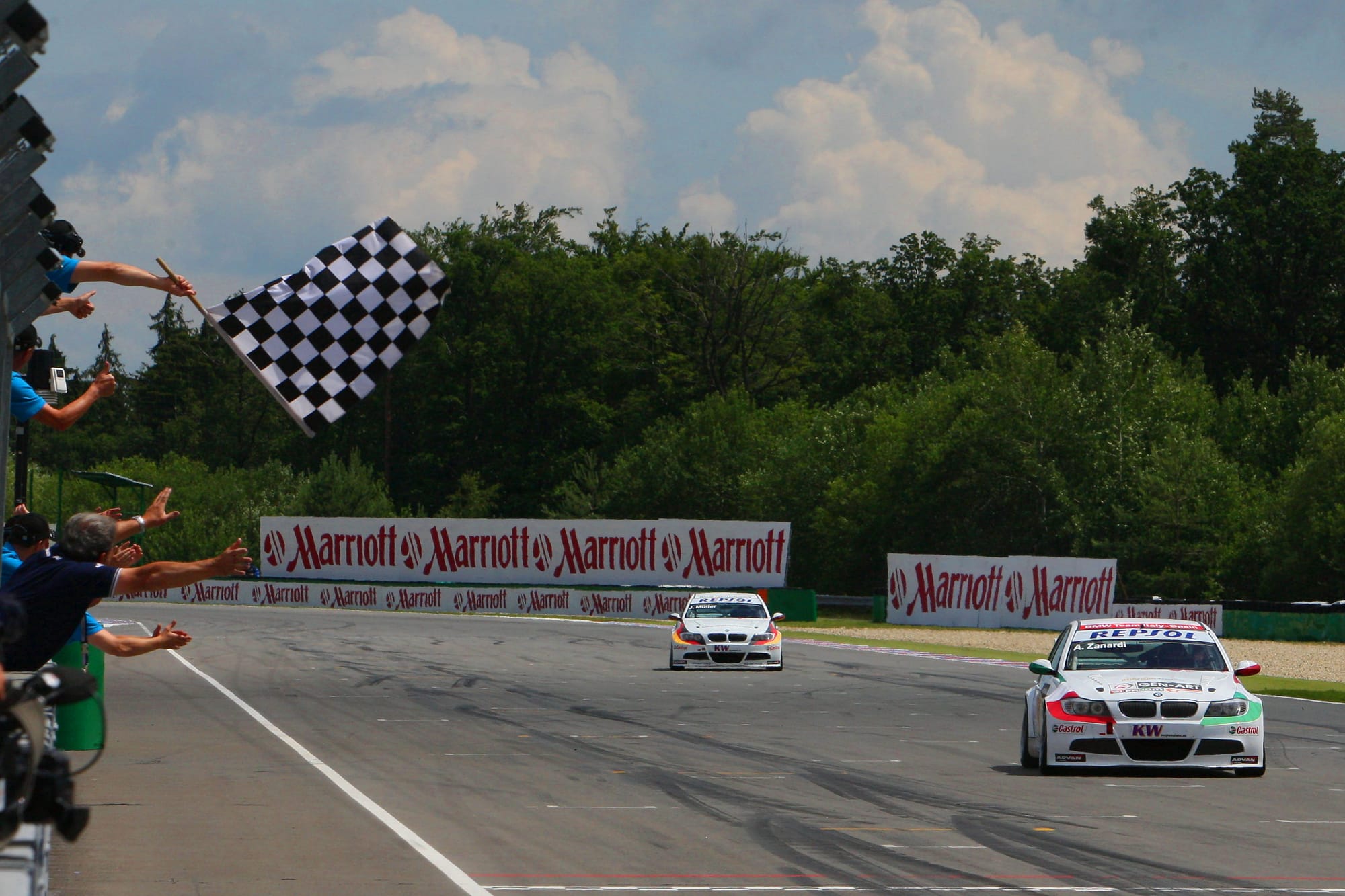
After spending 2000 on the sidelines, Zanardi returned to CART with his Ganassi engineer Mo Nunn’s new team in 2001, but the magic had gone and it was a tough season that ended in horrific fashion with the Lausitz crash that cost Zanardi both his legs.
But, incredibly, that wasn’t the end of Zanardi’s sporting career. The greatest chapter yet followed, as he first returned to racing in adapted touring cars then conquered handcycling to Olympic standard.
Edd Straw was there to cover many of those incredible moments.
I had the privilege of getting to know Alex Zanardi while he was in the World Touring Car Championship, where he made his remarkable comeback to frontline racing, initially in its ETCC guise.
It took a little time to break the ice properly with him, but I remember the moment things shifted. We were talking about evaluating driver performance and I said something to him along the lines of, “Obviously I have to cover you as a racing driver — not just this remarkable story of the driver who’s dealing with limitations that might explain occasional incidents”, that was gist of it anyway.
That conversation seemed to unlock access to a new level of Alex Zanardi. It encapsulated what he loved to seen as: Alex Zanardi the racing driver. Not Alex Zanardi the double amputee. He didn’t want to be seen as a novelty act at this stage of his career - and he absolutely wasn’t one.
He won four races in the WTCC (and took an Italian Supertourismo title), but the day that really lit him up was when he took a WTCC pole position at Brno. Brno was a good track for him because the corners were relatively brisk. He struggled more at tight, slow corners, where there was simply more to do in terms of inputs — nowhere more so than at Macau, where at one stage he was having to slip into neutral just to get round the ultra-tight hairpin. He couldn’t do everything he needed — manage the gears, operate the throttle while applying enough lock — all at once with hand controls (although astonishingly he did brake using his prosthetic leg).
There were weekends and circuits where he was held back, and sometimes in wheel to wheel combat he had incidents if he got too out of shape, but there were tracks where he could really express himself.
I remember sitting down with him I think at Brno after that pole - although I may be conflating two separate occasions here. He was at a high table eating a little plate of biscuits, and when I asked him how things had gone he started off by giving me a lengthy technical appraisal of the relative qualities of the different biscuits laced with the technical evaluation language of the racing driver.
But then he revealed how much it meant to him to be quickest and take a pole at world championship level. It meant more to him than even the wins he’d had.
That told you everything about him as a competitor. It was always about being flat out, maximum attack, speed. We saw that throughout his career, and especially in the moments when he produced some of the most sensational performances ever in a racing car in CART.
I also recall interviewing him about the challenge of driving with a disability in a road car context. We sat outside the BMW hospitality, and he reflected on campaigning to change Italy’s road driving licence laws, which ridiculously initially made it impossible for him to get a licence. Absurd because of course he was perfectly capable of driving, as are many in his condition. That wasn’t just for him, it was for everyone.
He also told me a story about wanting to swim with more conventional prosthetics and working with a company to develop them. There were what I understand to be prosthetics that had a single fin-like design, but he wanted to be able to walk to the pool and jump in. So he worked on conventional prosthetic legs that were essentially aquatic. And of course he made it happen. From conversations with him, he seemed to put as much thought into the set-up and technical details of prosthetics as he would a racing car!
I respected him hugely before covering his WTCC exploits, but the chance to get to know him a little gave me the chance to appreciate the depth of character and personality that made him who he was.
He could so easily not have done any of it after the accident. But coming back, competing at the top level, achieving so much — not just in car racing, but at the Paralympics as well — showed the competitive spirit burned.
It’s a story tinged with tragedy. He had so much misfortune in his life, but he always seemed to confront it as a challenge to be conquered. There must have been very dark days, how could there not have been, but I can barely even begin to imagine how it was to experience that. It’s impossible to put yourself in his position and I didn’t know him well enough to probe too deeply there.
And it wasn’t just the CART accident — there was the Formula 1 crash at Spa in 1993, which took a lot of recovering from as well. He came back from that too. The handbike accident he suffered in 2020 was unbearably cruel given everything he and his family had already been through.
We never saw anything near the best of him in Formula 1, but I’ll always remember those remarkable drives in CART. But it’s as a person — for his attitude to competition, to racing, to life — that I now first think of him.
What a life and legacy. For anyone facing adversity, Zanardi is the most astounding role model. He knew that and played that part, but first and foremost he was all about being the fastest, the hardest charger, the ultimate racing driver.
That’s how the man I came to know a little wanted to be seen first and foremost when it came to his remarkable life in motorsport.