Gary Anderson's take on the grey areas Ferrari's exploiting
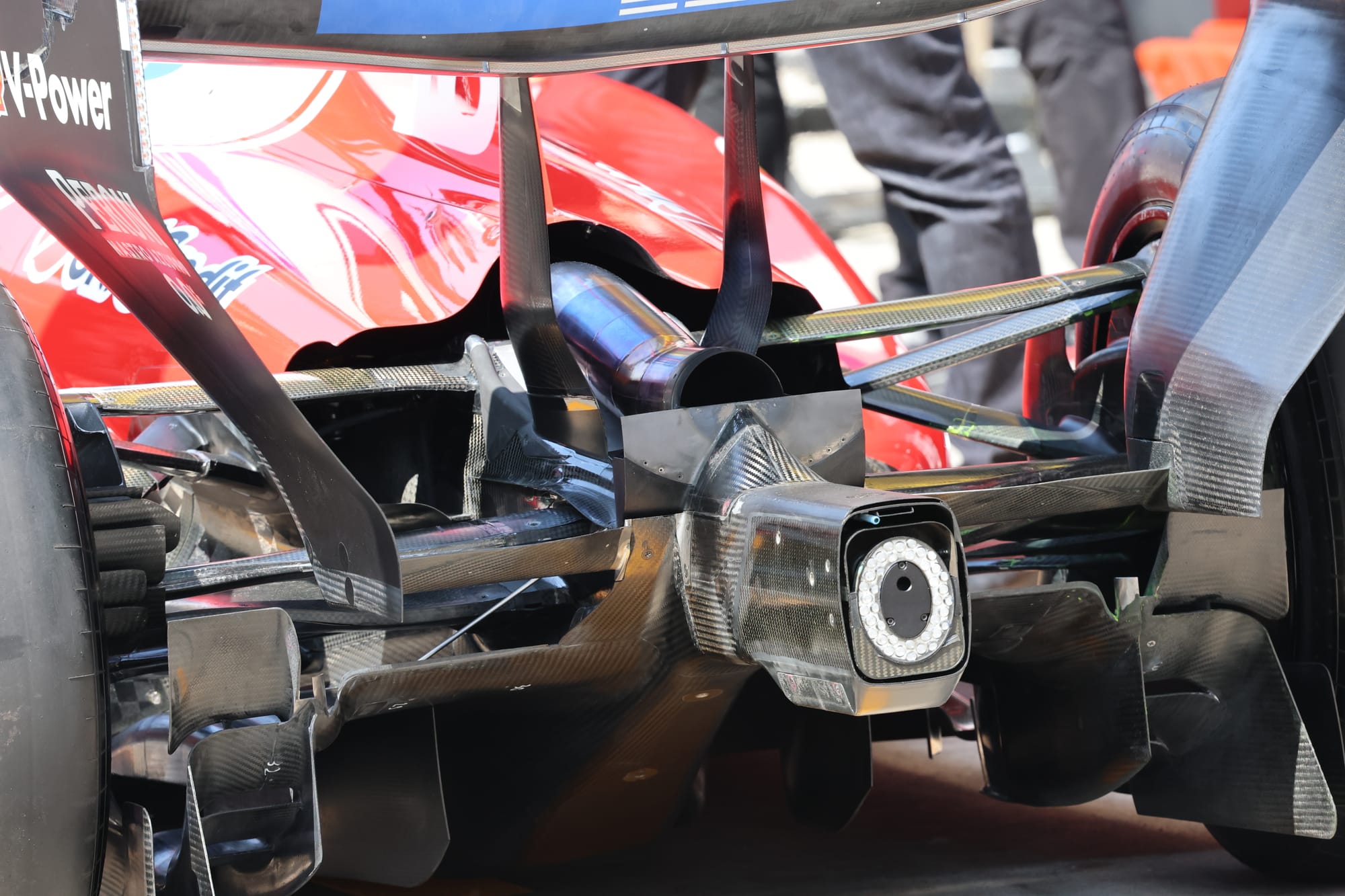
Ferrari brought the most new developments to Miami of any Formula 1 team, and some of them in my humble opinion are a little questionable. But decisions on what is acceptable or not are down to the FIA and not me.
However, this early in the season, it's important to have vision of what was the intention of the regulations as opposed to what grey areas perhaps 2000 very clever engineers spread around the teams have found. I'm not saying ban things with immediate effect, but at least limit how far the teams exploit these grey areas going forward.
The intention of the regulations was all about creating better racing. From what I'm seeing, it looks like for the teams this is the last thing on their minds. That's understandable, but the rulemakers should be there to ensure that it is imposed and not just accept the direction any team has taken.
My first question mark is over the exhaust outlet blanking turning vane.
So what is it doing? We have all heard how the smaller turbo gives the Ferrari improved starts by producing boost pressure with less engine revs. Yes, that is so but the negative is that when the engine revs are high that same turbo is getting closer to its maximum 150,000rpm.
To control this, you either open the wastegates earlier or more - which, as the word, defines is wasting exhaust gas energy and response at high engine rpm - or open the plenum pop-off valve earlier or more to stabilise the boost pressure, again wasting exhaust gas energy.
So, generating back pressure on the exhaust gas outflow at high engine rpm will give you better response when the driver is optimising the throttle position.
The regulations for the exhaust outlet are defined in detail:
d. only have an exit whose entire circumference lies:
i. between XR = 390 and XR = 400.
ii. above Z = 350.
e. over its last 370mm, have a circular internal cross-section of a constant diameter between 90mm and 130mm.
f. remain unobstructed internally and in full compliance with the provisions of this Article after Final Assembly of all Bodywork groups and application of Apertures.
XR is the centre line of the rear wheel going rearwards, Y is vertically from the bottom of the chassis.
Back pressure is when the exhaust flow is obstructed by something or that the exhaust outlet is too small in area. It means that the turbine (exhaust side of the turbocharger) is being held back by something other than the compressor side of the turbocharger.
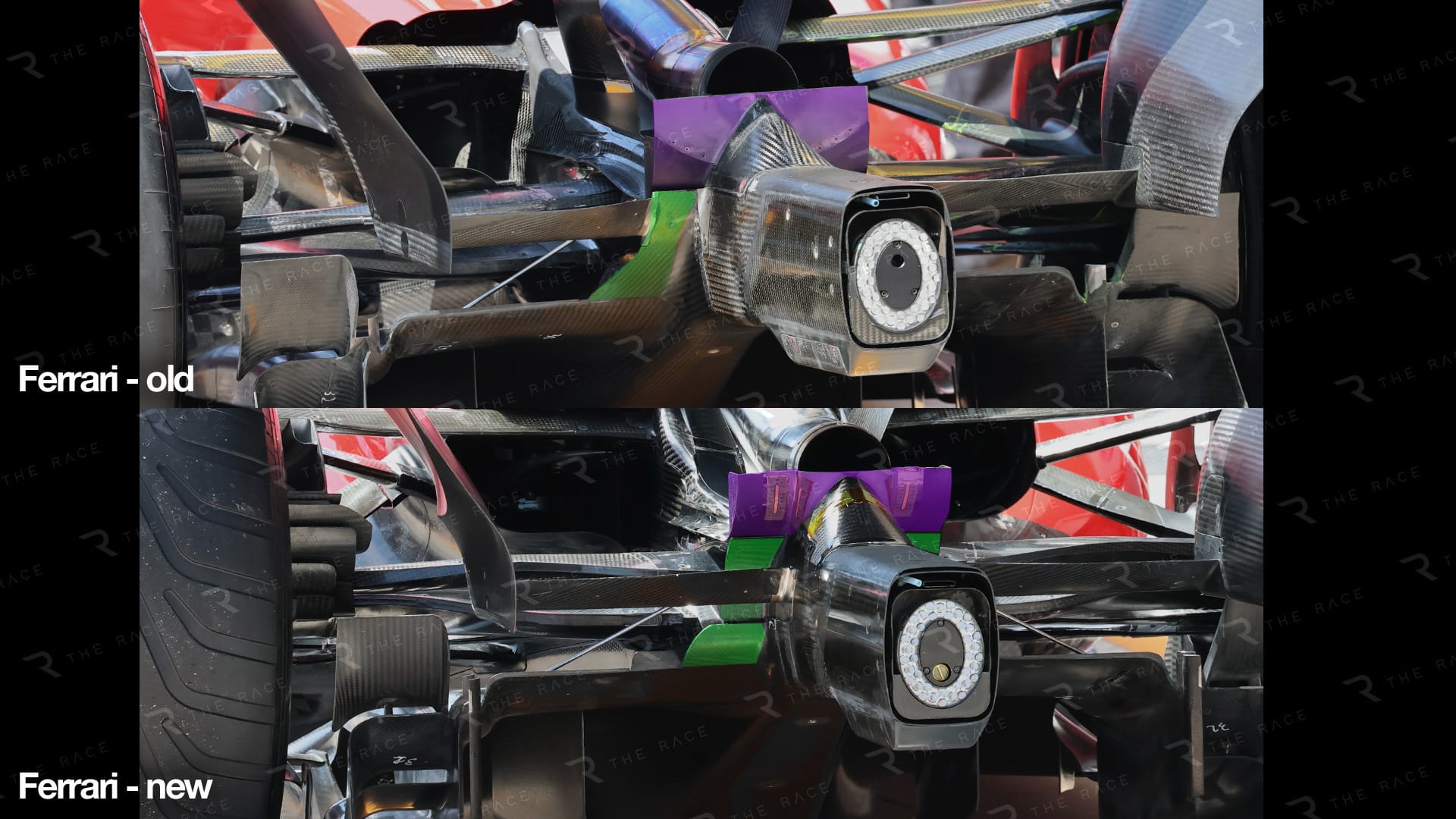
This turning vane highlighted in magenta could also create some degree of exhaust blowing for those green turning vanes, which are working on the inner section of the suspension members and, in turn, the central section of the diffuser's boat tail around the gearbox.
As you can see above, the regulations are pretty clear as to the positioning and diameter of the exhaust outlet. In my humble opinion, this blanking is contravening the intention of these regulations in this area. It would be very easy to clarify any misunderstanding by just adding that the exhaust outlet in its entirety has to be visible from behind the car.
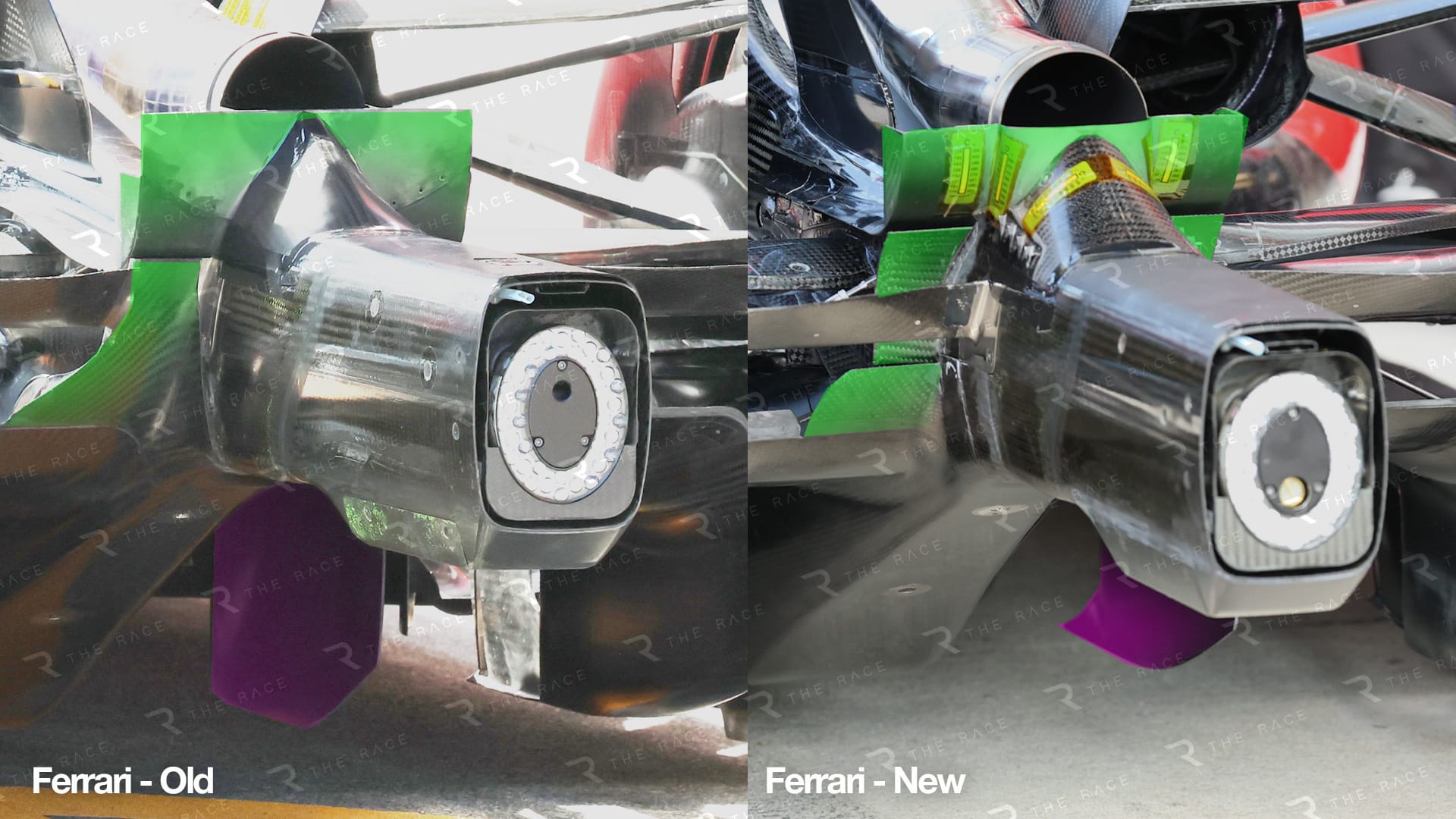
There is also what looks like a new splitter highlighted in magenta underneath the crash box. It's very difficult to see in detail its true position, but it looks more central than the previous, larger version. If it is on the centreline and fixed to the crash box it could be to reduce the risk of transverse flow mid-corner. These various turning vanes highlighted in green will have a fairly serious influence on the airflow around that section of the crash box.
When the car is in yaw mid-corner you need to make sure that their influence is improving the performance of the complete diffuser and not just part of it.
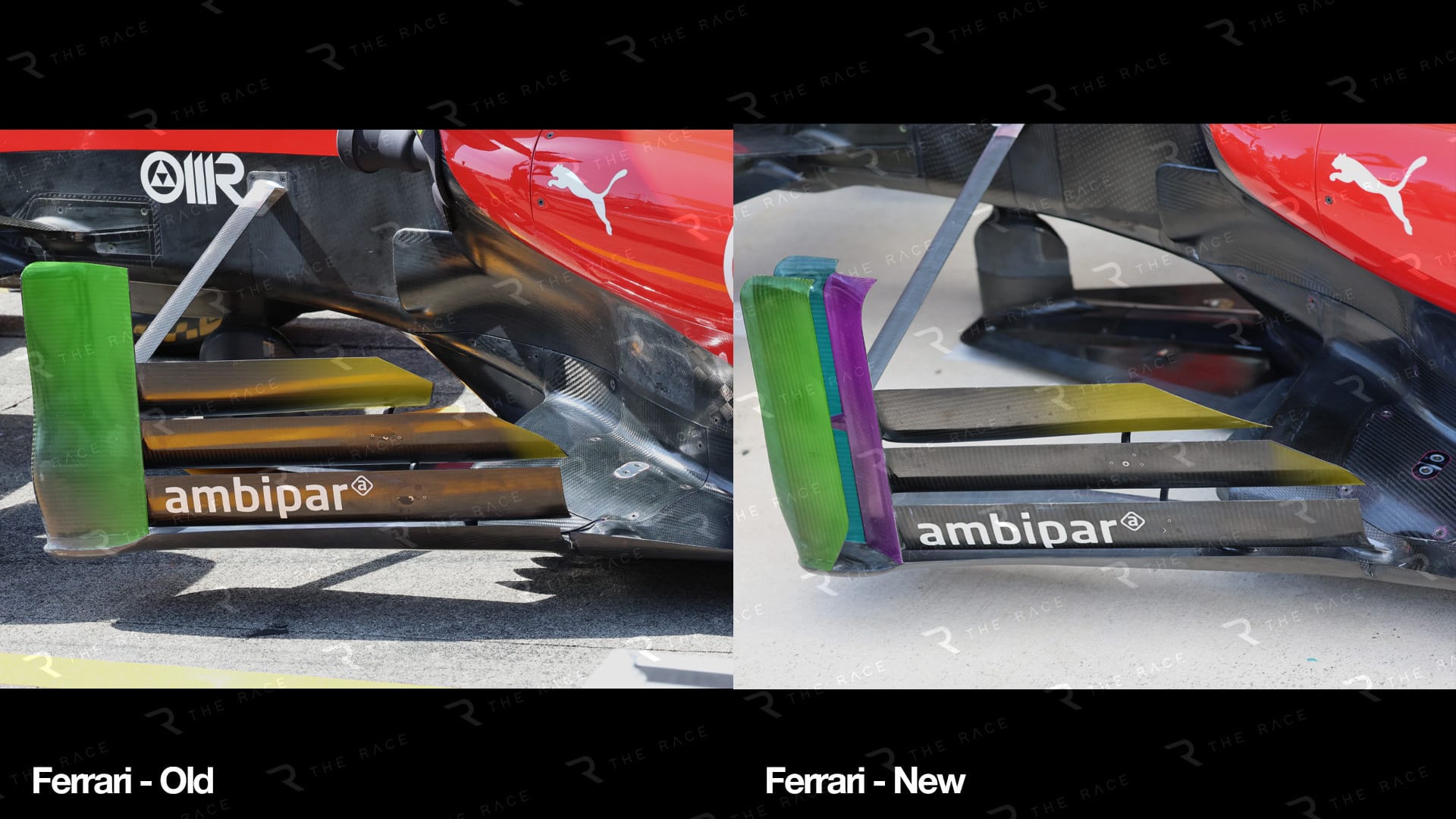
Again, the intention of this year's 'bargeboards' was to induce in-wash, but all the teams have done their best to create a natural wash (if not exactly outwash).
These multi-element vertical vanes, which have replaced the single vertical vane, pick up the airflow trying to fill in the void behind the rear of the front tyre. As with the horizontal vanes, these do their level best to send that airflow down the outside of the car, improving the underfloor performance.
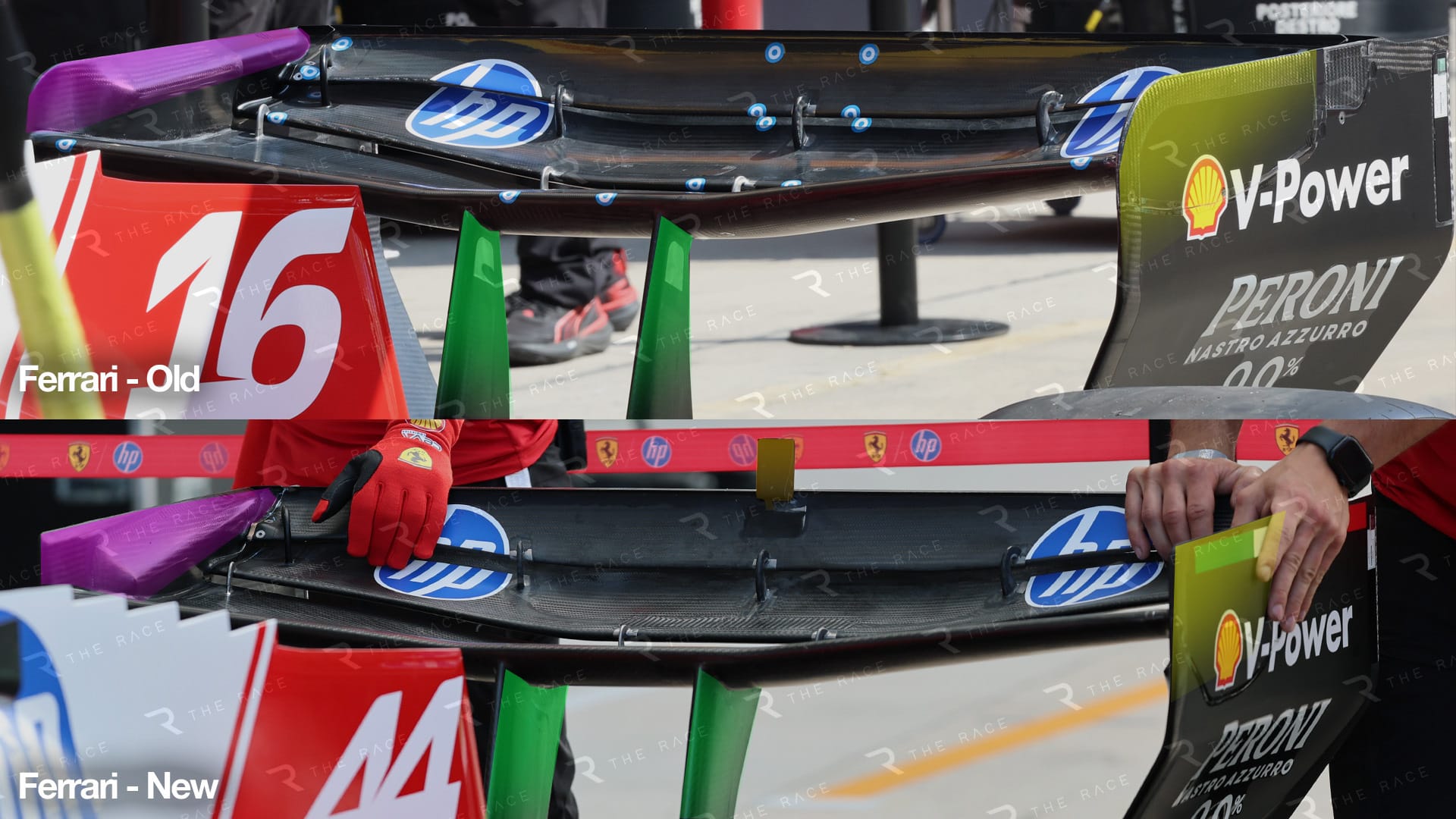
The rear wing mounting change highlighted in green is a simple structural development to improve the support on the rear wing mainplane. Although the vertical mounts where they meet the rear wing are longer, the overall package is probably lighter. That, combined with optimising the function of the active aero package with a slightly revised actuator angle, highlighted in magenta, will increase the stability of the package especially when the rear wing is inverted.
The opening, highlighted in green, for the top wishbone forward leg and pushrod has been tidied up. It looks like the diffuser top surface curvature profile has been softened.
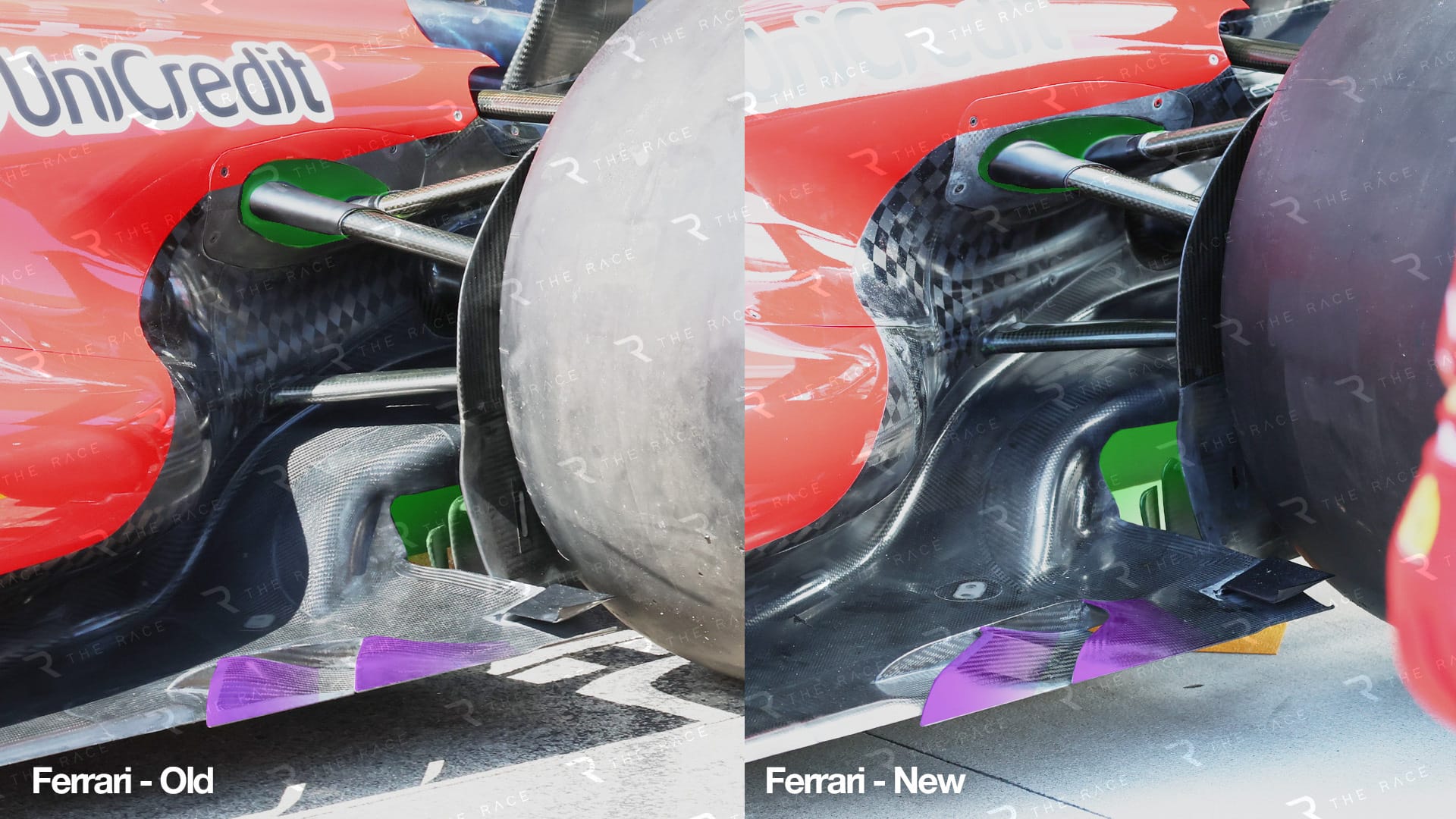
I can only assume the same has happened to the actual diffuser surface to the lower wishbone forward leg. It doesn't look any higher, the mousehole (as it is often called, highlighted in green) is bigger, and the floor vanes, highlighted in magenta, look like they have increased in size.
I'm not against the engineers finding grey areas and exploiting them - after all, I spent many years trying to do the same. But currently, with 264 pages, the regulations are incredibly defined so it surprises me that so many areas are left open to interpretation and exploitation.
Some day, when the powers that be realise that the intent of the regulations has been undermined, it will be far too late to pull it back.