The biggest annoyance drivers still have with 2026 F1 cars
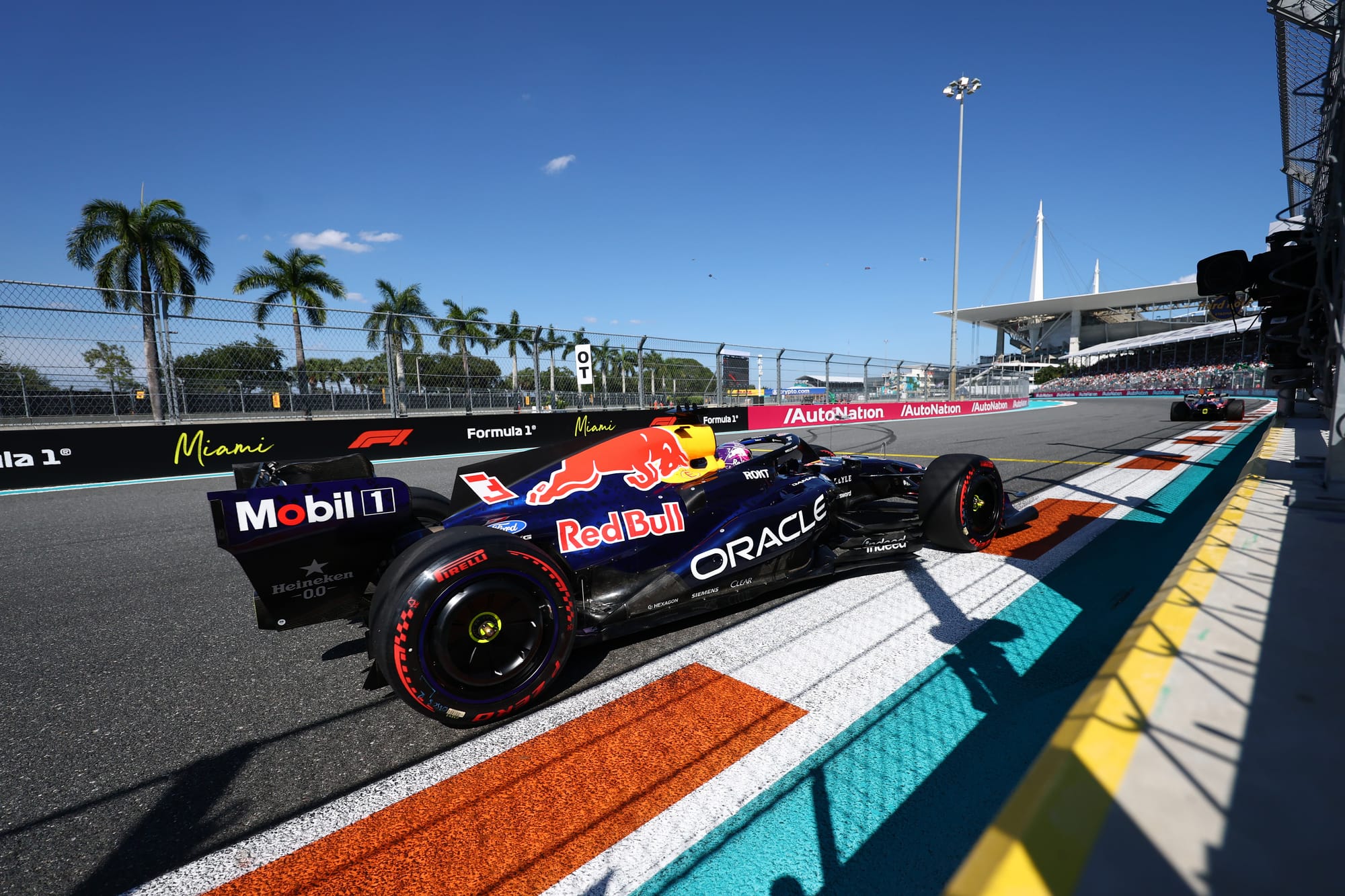
While rule tweaks made ahead of the Miami Grand Prix were certainly a step in the right direction, Formula 1 would be wrong to say drivers are now happy with the 2026 cars.
In fact, despite an improved qualifying spectacle and an exciting race, leading stars including Max Verstappen remain insistent that fundamental flaws remain – such as needing to drive slower to be faster.
Yes, some of the biggest issues have been addressed. There's less need for lift-and-coast tactics plus speed drop-offs on straights are now less dramatic. But there is still plenty to do before F1 can be sure that the majority of the grid is actually happy.
Verstappen, one of the fiercest critics of the 2026 rules, said that despite the new recharge limits for qualifying having been imposed, everything felt "still the same".
Plus he said: "It's still punishing you. The faster you go through corners, the slower you go on the next straight. So, that's not what it should be about."
What Verstappen is referring to is the way that having more energy stored in the battery pays greater dividends for lap time through boosting top speed on the straights than taking a corner quicker than anyone else.
Haas driver Esteban Ocon said that this scenario was manifesting itself in drivers needing to do some counterintuitive things in how they take corners – as it was beneficial to lose more speed there.
"The problem is you can't drive the way you want," said Ocon. "You need to over push the first part to not go on throttle for the second one.
"It would be more important [previously] to prepare for example [Turn] 4, get good minimum [speed] into [Turn] 5 with some throttle and then keep the minimum speed higher, which you can't really do right now."
This requirement for a slightly strange approach to taking corners is the end result of the central problem in play: that F1's 2026 cars do not have enough energy to run properly flat out all the time.
There is only so much that can be done within the constraints of the desire for the 50-50 split between internal combustion engine (ICE) and electrical power – and limitations imposed by the size of the batteries.
World champion Lando Norris said about the rules refinements: "It's a small step in the right direction but it's not the level F1 should still be at yet.
"If you go flat out everywhere and you try pushing like you were in previous years, you still just get penalised for it. You should never get penalised for that kind of thing, and you still do.
"So honestly I don't really think you can fix that. You just have to get rid of the battery. So hopefully in a few years, that's the case."
Hardware tweaks needed?
Getting rid of batteries is not an option, but there are growing thoughts about the need for hardware changes to help boost the ICE element.
This could be done potentially through an increase in fuel flow – as well as being further helped by lifting harvesting limits so there is regularly more energy going into the battery than out of it.
But a fuel flow tweak is not an easy step to make, because it would require reliability revisions to engines to make parts more robust for the increased power.
Plus, the consequence of cars needing more fuel for races would be a requirement for bigger fuel tanks.
With engine designs already quite fixed for next year, plus some teams understood to be eyeing chassis carryover into 2027, such a change is not likely to get the necessary support before 2028.
Grand Prix Drivers' Association (GPDA) director Carlos Sainz accepted that where things go from here is very much dependent on paddock politics – as he said he would try to do everything in his power to get more changes fast tracked.
"It's just getting all the teams [that are] politically opposed to agree, which is what's holding everything back," he explained.
"Clearly I think there is a lot of interest, political interest from people that have done better homework than others in different areas, and they don't want to lose the performance advantage because of the rule changes.
"You give the teams so much power in the end, especially the PU manufacturers that are going to fight like hell for their own interests."
A different picture in Canada
Pressure to make further changes was eased by Miami's spectacle being good, but it was always going to be a venue where judging things would be difficult – because it is one of the more favourable circuits for energy management.
Next up is Canada. The long straights of Montreal – and especially that run from the hairpin to Turn 1 with just the single final chicane between them - will expose the true nature of the 2026 rule changes much better.
But as Fernando Alonso said, even a clearer picture over the next few races will not allow F1 2026 to escape its biggest flaw.
"We need to give a little bit more time, but anyway these power units will always be rewarding going slow on the corners," he said.
"With whatever strategy and clipping you have, you need the energy on the straights, and you need to save it on the corners."