The real story behind Red Bull wing that eclipsed Ferrari's
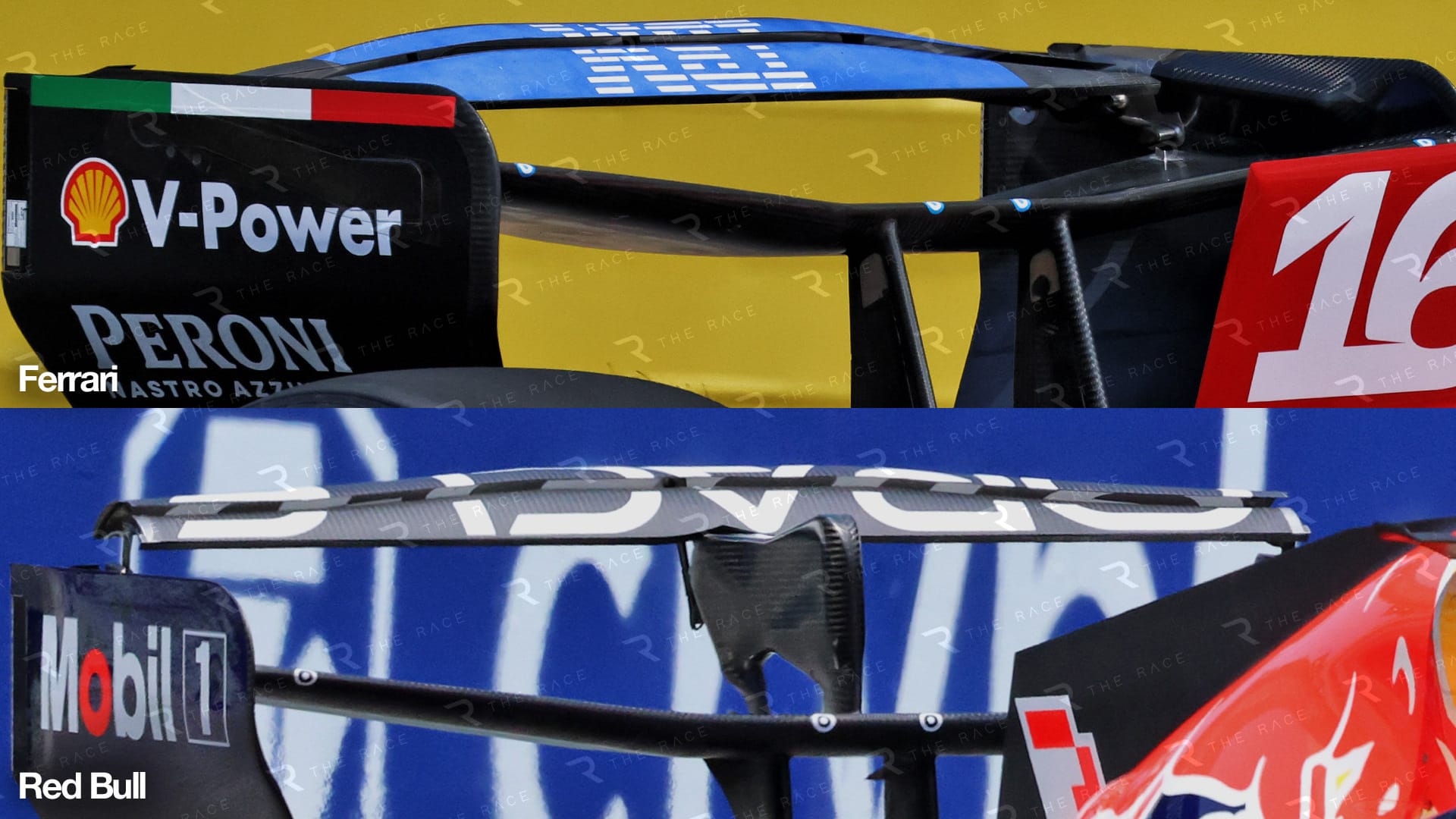
When Red Bull debuted its rotating rear wing at the Miami Grand Prix it immediately eclipsed the Formula 1 team that had initially earned such fanfare for the same thing.
Ferrari turned heads in pre-season testing back in February with a rear wing that did not simply open on the straights but fully rotated the top part to create a bigger opening and theoretically greater drag reduction.
It was rightly lauded as innovative, novel and creative. But, as it turns out, it was not unique.
As Ferrari's broke cover more than two months ago, spawning names like the 'Macarena' or 'flip-flop wing', and nothing like it had been seen since, the emergence of a Red Bull equivalent seemed like a clear case of one team taking inspiration from another.
The order in which they appeared meant nothing more than simple chronology, though. What transpired in Miami - two different teams racing rear wings that turn upside-down, for the first time, in the same grand prix - was a remarkable coincidence.
Ferrari had spent a long time trying to get its design ready to race, in the public eye. The wing appeared in testing and again in China, where it was withdrawn from the car. Ferrari's issue was getting the upper part of the wing to complete its revolution in 0.4 seconds, as stipulated in the regulations. It seemed to cause at least one notable issue for Lewis Hamilton in practice when re-attaching too slowly under braking.
The Japanese Grand Prix came and went without the wing being raced, before Ferrari tested a revised version at Monza during F1's April break. This provided ample time for Ferrari to complete its troubleshooting, and so the wing was finally ready to be raced in Miami.
Amazingly, Red Bull had been going through the same process at the same time, just in the background.
There were hints of Red Bull seemingly running its version of Ferrari's wing during a Silverstone filming day with the RB22, where its major Miami upgrade package was trialled on-track for the first time.
When it was finally shown off to the world in Miami, it turned out to be a different interpretation to Ferrari's.
Whereas Ferrari's rotates front to back, flipping round quite dramatically, Red Bull's rotates up and over from the rear - a simpler motion but resulting in a visibly greater opening.
Red Bull's also utilises a centre-mounted actuator on the mainplane itself, rather than in the corners like Ferrari, which the trailing edge of the wing sits on top of when inverted.
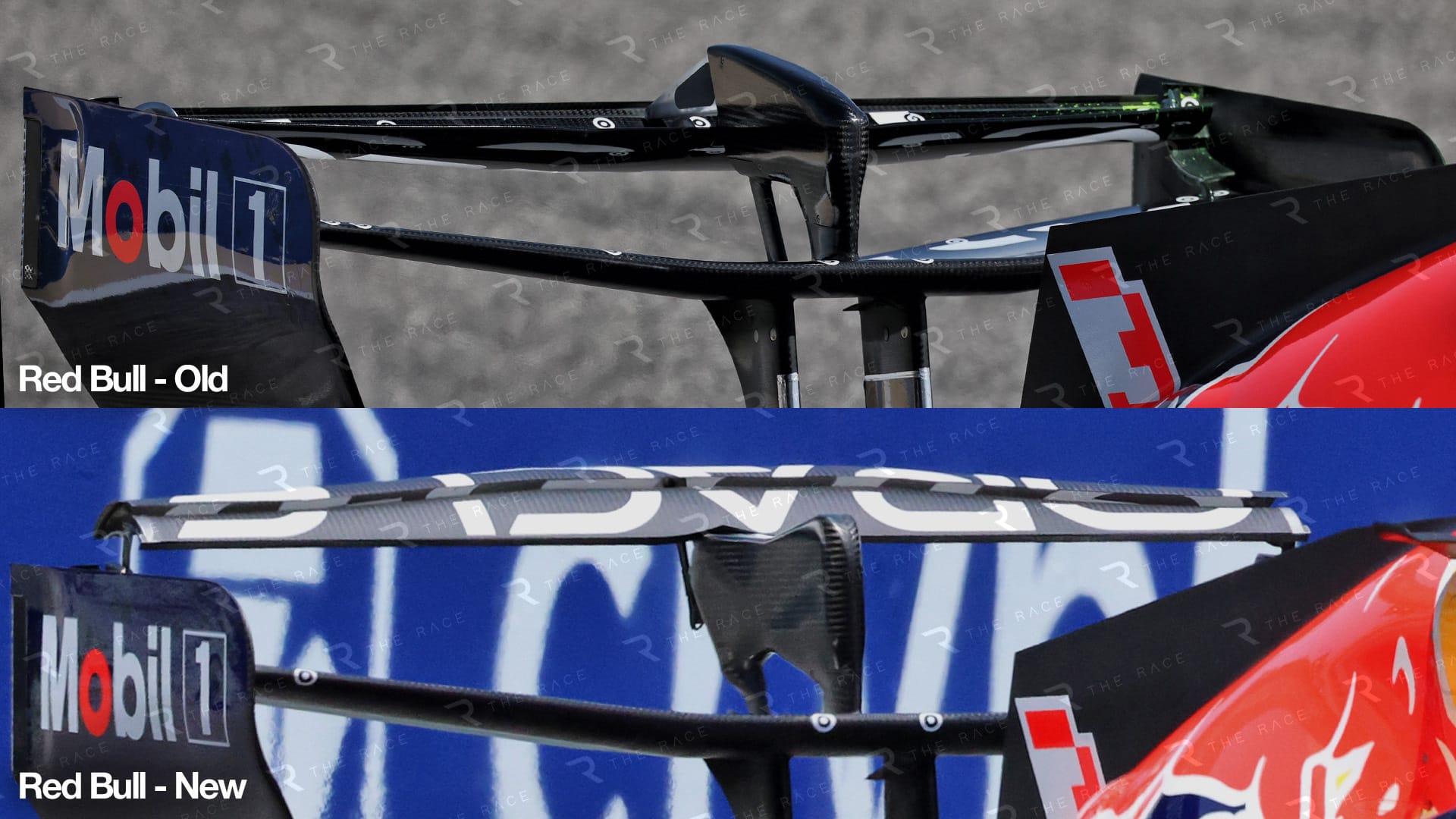
Red Bull team principal Laurent Mekies was keen to give his designers credit.
"As much as you will not believe me, I have to say, in fairness to the guys, they came up with that concept far, far before we hit the track and we saw what everybody else had been doing," he said.
There are no points for being first to show a design off to the world - at least if that design doesn't make it onto the car early enough to deliver an actual performance advantage in the races.
And rather than be annoyed that Ferrari beat it to the punch, internally Red Bull was reassured that someone else had pursued a similar design, as it underlined the merit in the idea beyond its own observations from windtunnel testing.
The Race understands that Red Bull first started working on its version of the wing in November last year when conversations with the FIA made it clear the new regulations around a different kind of movable rear wing for the 2026 cars invited such an interpretation.
The old drag reduction system rules, as they existed through to 2025, meant the only aerodynamic motion available was a gap cracking open between the mainplane and the flap, like a letterbox. Teams had a permitted slot gap range of between 10mm and 85mm - the latter setting a clearly defined maximum.
The 2026 rules are different. One key Red Bull figure said that the critical part of what makes this design possible is the rules stipulate that, when viewed from below, the axis of rotation must be fully obscured by the flap. The wing must also switch between the two fixed positions in no more than 0.4s, and have a minimum distance between the two rear wing profiles of 8-12mm.
In other words, the rules have changed from defining how the rear wing must open to defining the open and closed positions. How they get there, and what size gap they create, is free for greater interpretation.
Red Bull worked on this for months and had planned to introduce the system well before Miami. It targeted pre-season testing, and as recently as Suzuka, but could not get it to work reliably. The only difference to Ferrari is nobody saw that - plus, Red Bull had other car problems emerge very early, even back in the January shakedown at Barcelona. So there were other priorities ahead of getting this rear wing to work.
Even when it was ready, there was still a degree of risk in what Red Bull opted to do once it was confident in the design.
Miami featured a comprehensive upgrade package for the RB22, including updates to the floor, sidepods, and top bodywork. Bringing that many changes simultaneously, alongside an entirely novel rear wing mechanism, was an acknowledged risk.
But Red Bull was evidently satisfied by its work behind the scenes and what Silverstone validated - and Miami's track layout meant the benefits would be immediately felt, with two extremely long back stretches where better drag reduction would be most welcome.
The package worked. Max Verstappen was immediately competitive and Red Bull found itself right back in the thick of pole and podium fights. And the wing was part of that.
It might even have proven immediately more beneficial than Ferrari's - which, while potentially better when in cornering mode because the wing flaps are clear from any disruption from the actuator, does not shed as much drag.
Though engine performance has a clear impact on straightline speed, it could be telling that Hamilton seemed perturbed by a perceived deficit to other cars on the straights. Given Ferrari's rear wing should confer a bigger drag reduction than the nine teams with conventional designs, that is slightly surprising.
Looking ahead to the next race in Canada, Hamilton said: "We're going to another track with long straights and we're losing three-to-four tenths just on straightline speed.
"We need to see if we can cut some drag before the next race because on the straight we've got that deficit, so we've got to have a look into that."
After the understandable initial assumption that Red Bull copied Ferrari, could it be that the opposite happens now the designs have been raced and their relative effectiveness has provisionally been measured?