What would have happened if Horner still ran Red Bull?
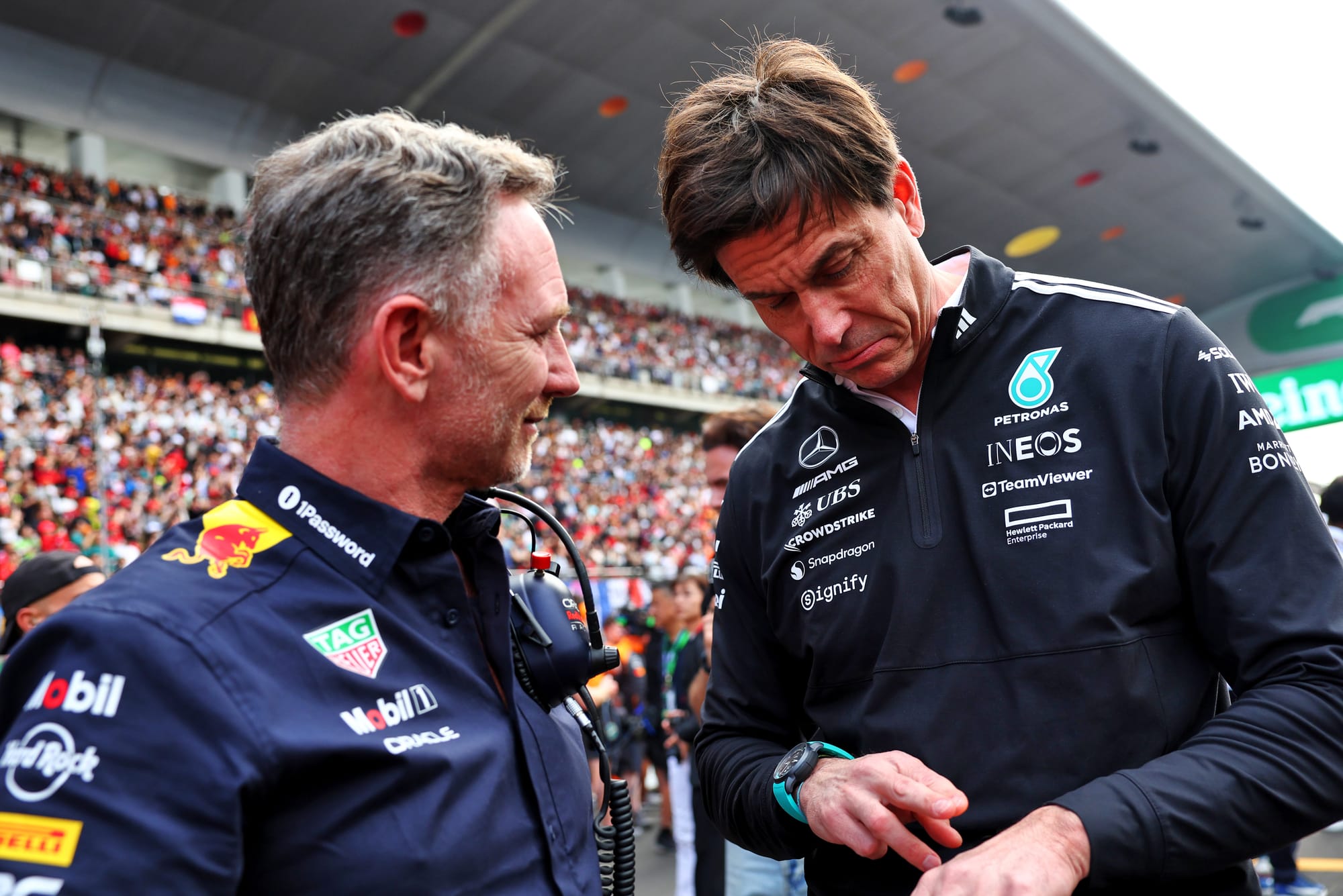
Former Red Bull boss Christian Horner is officially a free agent once again and finally allowed to work for another team in Formula 1.
Ten months after his surprise dismissal from the squad that he took to multiple world championships, a non-compete clause that prevented him joining a rival until early May this year expired after the most recent grand prix in Miami.
Horner still clearly has ambitions to return to the F1 paddock, and is interested in the 24% stake in Alpine that shareholder Otro Capital is looking to offload.
If that deal comes off then it will not just give Horner the financial stake in a team that he so craved, it will also include some management influence too – as it is understood the minority shareholding includes some veto rights over drivers and leadership structure.
Horner faces some competition though, as there are other candidates hoping to convince Renault that it is the right candidate – and that includes Mercedes, which has put in a bid.
If Horner emerges as the preferred candidate, he could be back on the pitwall before the end of the year.
But what would have happened if he had stayed at Red Bull?
There have been plenty of flashpoints - and form swings - involving his old team and his old arch-rivals since he left the paddock. And we reckon many of them might have been handled very differently.
So here we take a fun look at pondering how things may have played out if Horner had remained in his previous role...with a fictitious snapshot of an alternative start to 2026.
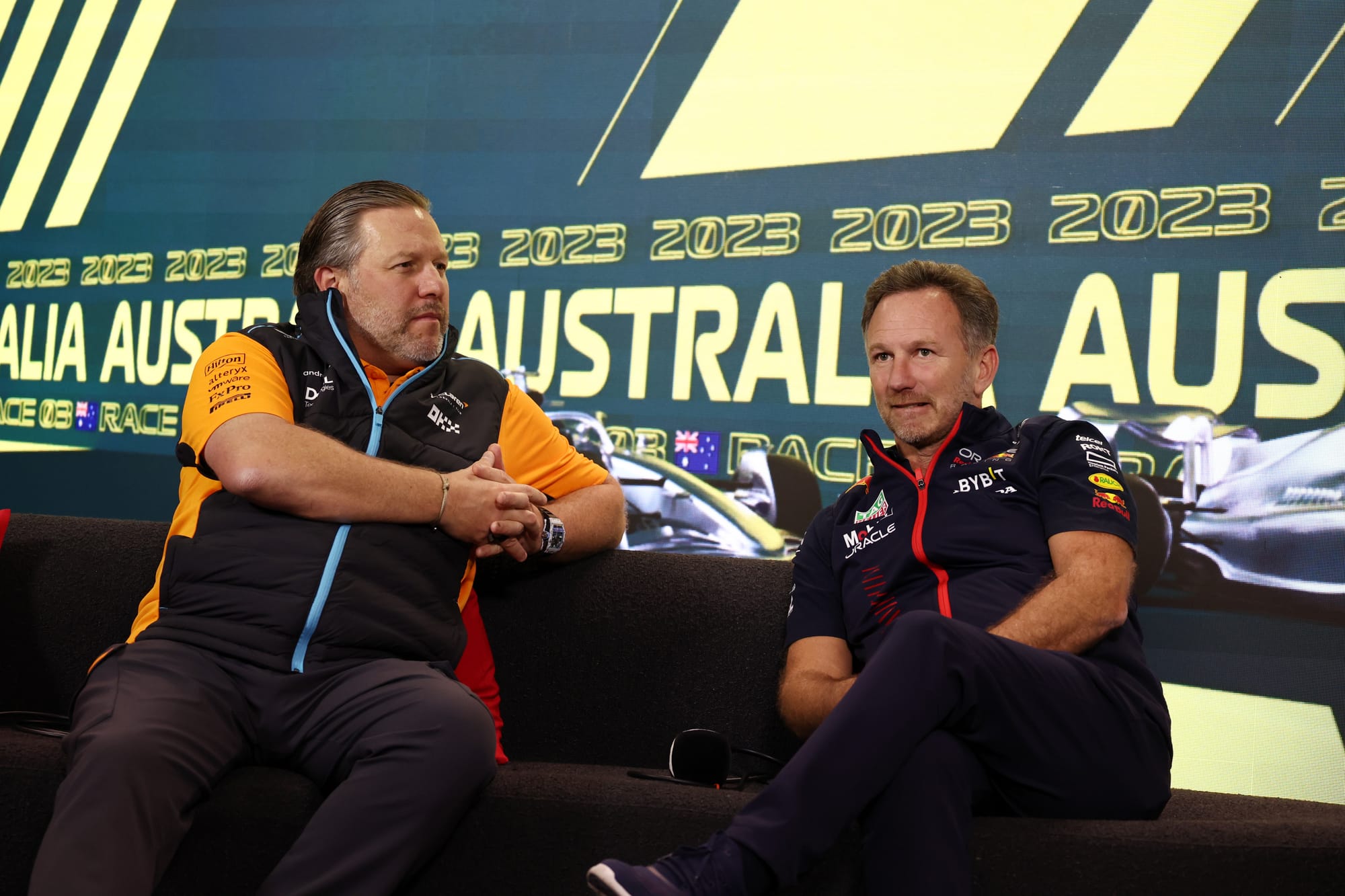
Horner still at Red Bull - An alternative 2026 story
McLaren CEO Zak Brown was spotted walking into the Red Bull hospitality unit on race morning at the Miami Grand Prix for a meeting with Red Bull team boss Christian Horner – prompting a fair bit of intrigue about what they were going to talk about.
Relations between them had not always been great, and there had been a few sparring moments in press conferences and flashpoints over recent months.
One of the big bones of contention was McLaren being frustrated about Horner standing firm in making it wait until the middle of this year to get hold of new strategy chief Will Courtenay from Red Bull.
Despite Courtenay having signed for McLaren as long ago as September 2024, Horner always made it clear that he was not going to do anything to help allow an early exit.
His mindset in F1 had always been that he was not a charity, and there was little to gain by helping the opposition out and being nice.
So McLaren had been told plenty of times that it would have to wait until Courtenay’s contract was finished before it would get him and there was no interest in any financial sweetener to fast-track an early switch.
This was not the only staffing matter that had flared up between the two teams either.
Over the winter, McLaren had made a big effort to lure Red Bull’s head of racing Gianpiero Lambiase away from Milton Keynes after hearing that rival Aston Martin had launched a big-money effort to sign him as team boss.
Horner had caught wind of others sniffing around Lambiase and wasted no time in sitting 'GP' down and laying out the framework to extend his current contract beyond 2028.
Lambiase, personally close to Horner, had clearly been flattered by the interest from elsewhere but concluded that there was no reason to call time on a partnership that had endured for more than a decade.
Sure, Horner had lost some key figures over recent years – including Rob Marshall, Adrian Newey and Jonathan Wheatley – but by and large there was still plenty of loyalty from those who remained and liked the way he ran things and looked out for them.
He was often first in, often last out at Milton Keynes – and with regular walk arounds of the factory floor to check on people, the impression of Horner being the pantomime villain outside of Red Bull was very different to the one inside the campus walls.
But Brown’s chat with Horner that morning in Miami was nothing to do with personnel.
It wasn’t even about the controversial finish to the 2025 world championship in Abu Dhabi when Horner’s 'never give an inch' approach put him and McLaren at loggerheads.
The end of the campaign had been a close-fought one as Red Bull unexpectedly found itself heading to the season finale with an outside chance of the title.
Windtunnel correlation problems that had been exposed prior to the summer break had prompted Horner to elect to pause upgrades on the 2025 car to help get things lined up perfectly for its 2026 car.
This was not good for short-term hopes of keeping immediate pressure on McLaren, but the strong platform that Red Bull already had, allied to brilliant driving from Max Verstappen and late-year wobbles from McLaren (including that double disqualification in Las Vegas) meant Verstappen had gone into the last race of the year in with an outside mathematical shot of the crown.
Winning was not going to be enough, as he needed a fair few other cars ahead of Lando Norris and Oscar Piastri to be guaranteed the crown.
But if there was even the slimmest of chances, Horner’s mindset was to do everything to go for it – and on this occasion it meant an aggressive approach to the race.
With Verstappen having muscled his way into the lead at the start ahead of both McLarens, the Dutchman followed the team play and duly started to back the field up after the first stops – triggering a chaotic and stressful end to the race for the McLaren pitwall.
There were position shuffles in the chaos train behind, a fair few lock-ups, and open frustration on the team radio from both Norris and Piastri about their life being made so difficult by the tactics Red Bull had chosen.
But in the end Norris held on to the place he needed to be champion.
McLaren, while happy to have done the title double, had been distinctly unimpressed by Red Bull’s strategy, but Horner had stood firm that there was nothing in the rules against what he had done.
Speaking in his post-race media session, Horner argued this was not really a different situation to what Lewis Hamilton had unleashed in similar circumstances in 2016 in a failed attempt to beat Mercedes team-mate Nico Rosberg to the crown.
Time moves on quickly in F1 though, and the competitive rivalry between Red Bull and McLaren that had got intense at the end of 2025 had mellowed quite a bit at the beginning of 2026.
In fact, the squads had formed a bit of an unlikely alliance as they both did what they could to try to halt the early-season dominance of Mercedes, whether through on-track efforts or off-track political manoeuvres.
Brown found himself privately quite happy that actions he could not take - for obvious reasons as a Mercedes customer - had been embraced by Horner.
None more famous than the Chinese Grand Prix when Red Bull had protested both Mercedes cars after the end of the race over alleged front wing infringements.
Horner had spotted that the front wings on both Kimi Antonelli and George Russell’s cars were not switching between straight and corner mode as quickly as the rules demanded. He had gone public in stating his belief that this was a straightforward breach of the rules.
Mercedes had argued that the slow return was a failure of its hydraulic systems and not any deliberate effort to get around the rules.
The FIA stewards’ stance was that technical breaches were black and white affairs, but deferred judgement for a post-event hearing.
In the end, Mercedes convinced the FIA of that happened being was accidental and not deliberate – and kept the result
But the protest itself was enough to further ramp up tensions between Mercedes boss Toto Wolff and Horner – especially because the only potential gain for Red Bull at Shanghai if both Mercedes were excluded would have been for Isack Hadjar to jump from eighth to sixth.
This had not been the only disagreement between Wolff and Horner over the opening part of the campaign though as they sat in clearly opposing camps when it came to the regulations themselves.
As Wolff proclaimed that the 2026 rules were delivering entertaining racing, albeit with some tweaks needed, Horner had been the ring leader in pushing through more dramatic change.
Horner had persuaded other manufacturers into a way of thinking that he had openly spoken about for three years: that the 50/50 split between combustion engine and battery was not sustainable for the long term. It was time to get rid of the Frankenstein machinery.
Horner had whipped up enough support within the Power Unit Advisory Committee (PUAC) – needing four of the six manufacturers on board - to push through a raft of rule changes after the Japanese Grand Prix that set in motion the shift to 60/40 engine to battery power for 2027.
It was a move that had some clear personal motivations too: because his own Red Bull engine’s internal combustion engine element was certainly the strongest part of its package, so making that a bigger contributor would surely help it get closer to the front.
Furthermore, less battery management would increase the chance that Horner could try to convince Verstappen to stay for 2027.
However, others sensed that Verstappen's mind was made up in seeking pastures new, especially since it had been announced that long-time ally Helmut Marko would be retiring at the end of the year.
This was a matter that would only play out over the following months once performance-related clauses were triggered over the summer break.
It was, however, a totally different topic that had brought Horner and Brown together that day in a Miami: a planned buy-in of the Alpine team by Mercedes.
Brown had long been against team alliances, and his previous angst had been directed at the relationship between Red Bull and Racing Bulls.
But acknowledging now that the investment Red Bull had made into F1 meant its Racing Bulls relationship probably needed at least a short-term exemption, he had found that Horner was a useful ally in his concerns about Alpine becoming a Mercedes junior squad.
Together, they were ready to make a push with FIA president Mohammed Ben Sulayem to close down any future collaborations.
For Horner, this was just another of the many plates he continued to spin at the helm of Red Bull.
The team may not have been on the top step of the podium so far in 2026, but it was still aggressively fighting its corner, and continuing to be chief disruptor – exactly as Horner liked it.
He always had the belief that every minute your rivals are fighting fires you have lit for them, is a minute they are not concentrating on making their own cars quicker. It was an approach that had long served Red Bull well.
What really happened
In the post-Horner Red Bull reality, here's how all the scenarios we imagined above actually turned out:
- Red Bull made McLaren wait a while for Courtenay but he did begin work there at the start of 2026
- Red Bull is losing Lambiase to McLaren at some point by 2028
- Red Bull kept 2025 car development up to the end and was in a stronger competitive position at the decider
- But it didn't try any 'roadblock' tactics in Abu Dhabi, with Verstappen just getting on with winning the race for himself
- No one actually formally protested Mercedes over its Chinese GP wing oddity
- Red Bull hasn't voiced any criticisms of the 2026 rules in public
- In- and post-season rule tweaks are happening but Red Bull hasn't been a public ring leader in the push for them
- Marko was out of Red Bull by the end of 2025 rather than having a planned end of 2026 retirement
- Despite his dislike of the 2026 rules, Verstappen seems more settled inside Red Bull and less likely to want to leave the team itself
- Brown is conducting his new anti team alliances crusade alone...
- ...but he has been in touch with Horner, and is interestingly quite supportive of his efforts to get back into F1...