The traits that explain Vettel's lopsided F1 career
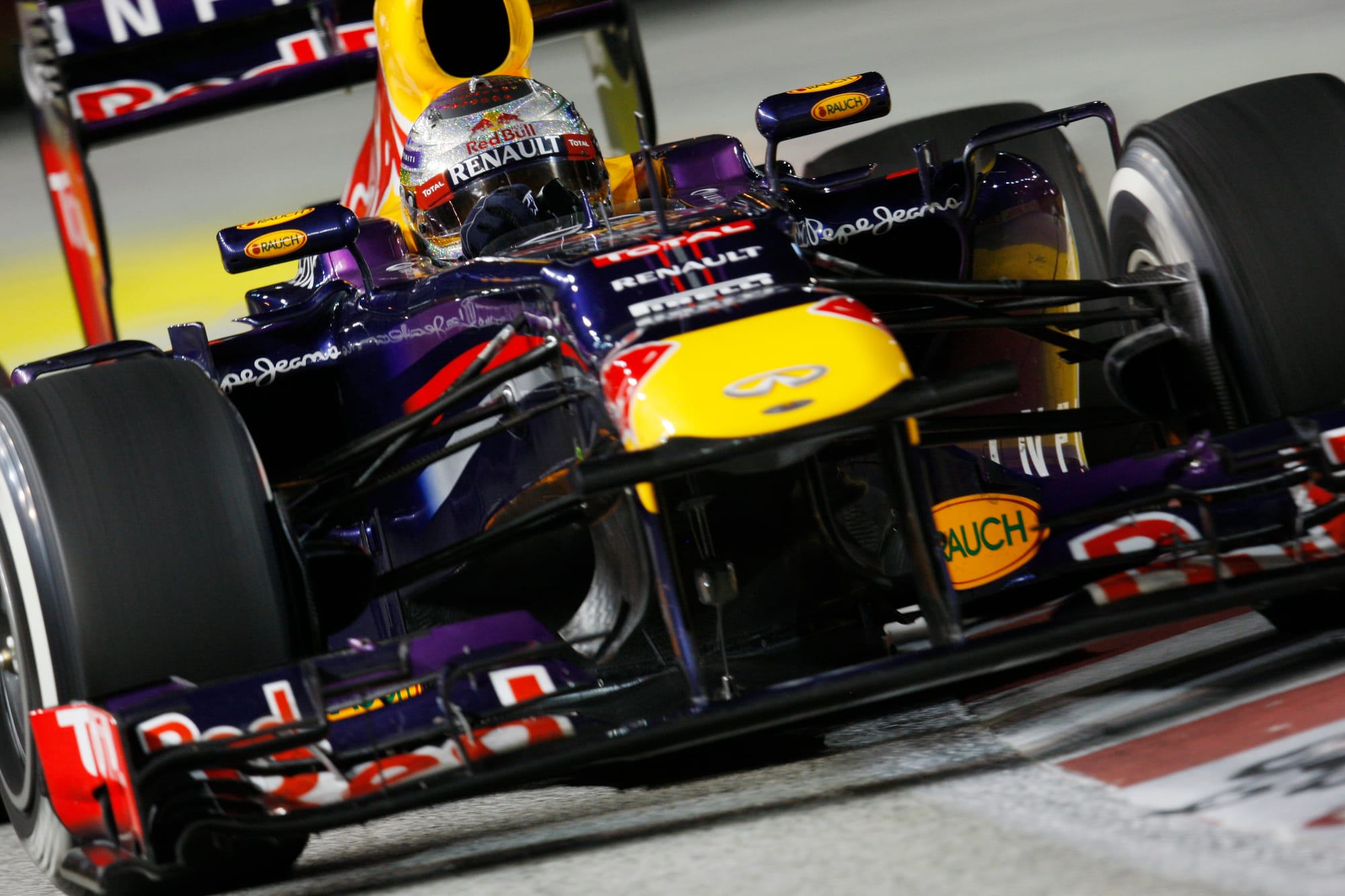
Why was four-time world champion Sebastian Vettel a driver whose Formula 1 career swung from him being crushingly dominant to looking completely lost on track?
Just as during his career, Vettel's legacy and place among the F1 greats still remain the subject of fierce debate.
At the heart of that was a unique driving skillset that explains why his F1 career was so lopsided, something Edd Straw and Mark Hughes explain in the latest episode of Driving Style Secrets - our exclusive members-only podcast that takes an unapologetically deep dive into the driving techniques of the biggest names in F1.
By signing up to The Race Members' Club, you can listen to the full podcast - as well as other episodes from all three series of DSS on other greats including Michael Schumacher and Max Verstappen.
But below you'll find a taste of what to expect from the Vettel analysis episode…
The 'extraordinary' glory years
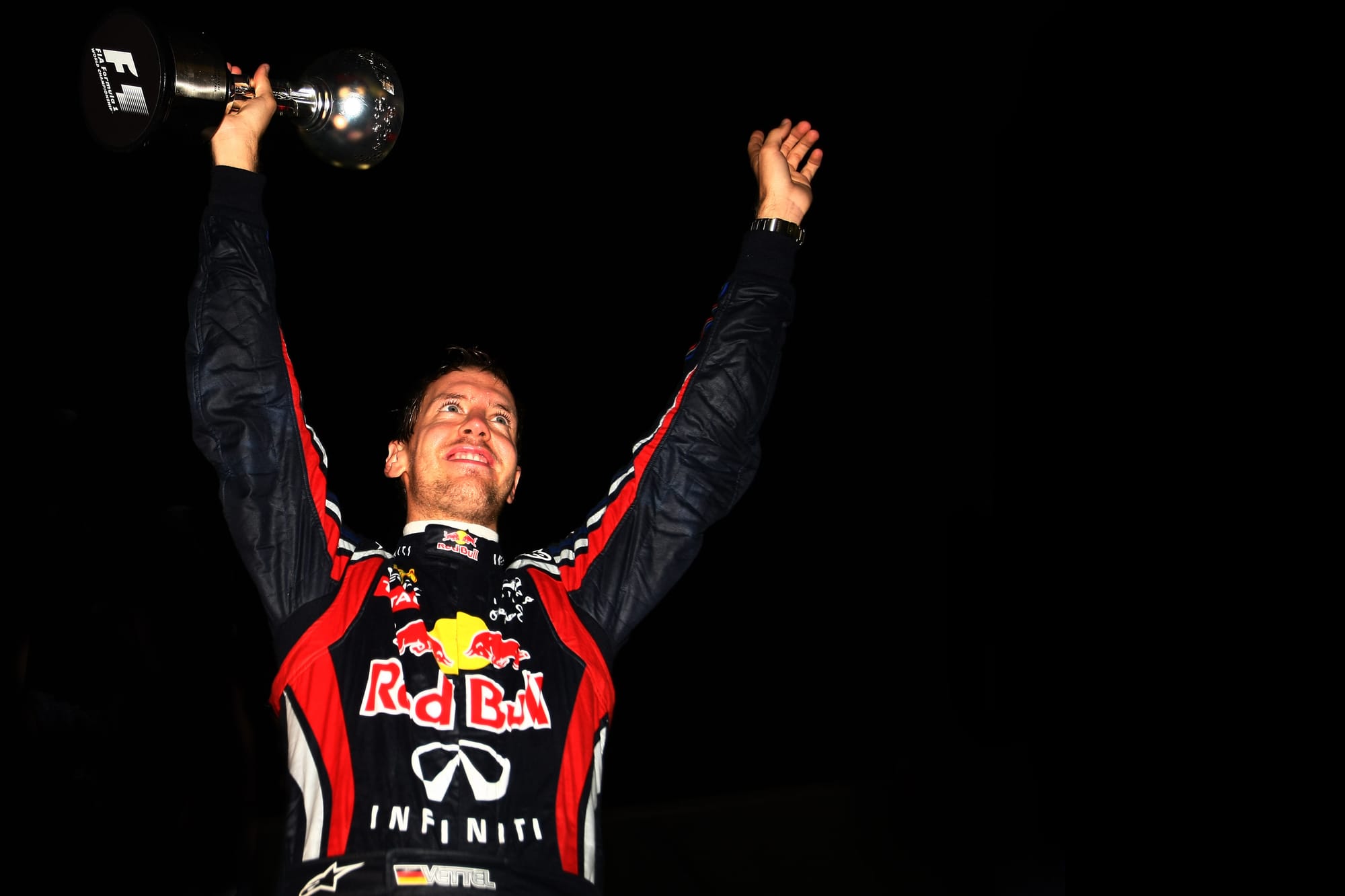
Vettel hit his pomp early in his career with Red Bull Racing, becoming only the third driver in history to take four consecutive F1 titles.
He benefitted from Adrian Newey's genius turning Red Bull from F1 midfielder to frontrunner following the huge aerodynamic rules overhaul in 2009.
But it was Vettel, not his more experienced team-mate Mark Webber, who best exploited the machinery, with particularly dominant seasons in 2011 and 2013.
"He was helped in the sense that he was in a rocketship of a Red Bull for a good five seasons, but I think some of those blown diffuser titles were extraordinary," Hughes said.
"He was able to drive that particular type of car, which required a very unusual driving technique to really fully exploit.
"Very counterintuitive, in the sense that in slow corners in particular, as the car's beginning to oversteer, you need to stand on the gas, which feels like you're about to spin, but it didn't, it actually increased the gas flow through the diffuser. And give you more rear grip. He was able to balance that very, very well indeed.
"That made him, in a blown diffuser car, that made him absolutely magnificent."
That essentially gave him what Straw calls "a rear instability off-switch if you can assess it", which was handy for Vettel, given rear instability was his big weakness.
Hughes continued: "He had to sort of overcome his fear of rear instability and do the opposite.
"Sometimes you could be a lot more bold with it than you might expect.
"It was something that Mark never got his head around in the same way. He could do it, but he couldn't do it to the same level of accuracy and exploitation that Seb could.
"That was the main differentiating thing for them then. He was generally, even when they took the blown diffuser away [from 2012], he was generally a bit better than Webber in the slow corners.
"But in the fast corners, Webber was the man. And then Seb couldn't live with Webber through the fast stuff. So Turn 9, Campsa at Barcelona, Webber was the first one to take that flat. Just absolutely no lift whatsoever. It was fantastic, into a blind corner. And Seb never did. He never, never nailed it.
"In that sort of competitive one-upmanship that they had, Webber's was always that, ‘Seb's not quick through a quick corner'. Then somebody said that ‘German drivers never win in Indianapolis.' He said, ‘well, they're rubbish through quick corners, aren't they?'
"He'd always say things like that within Seb's earshot. And he did. You could see Seb didn't like it. But you've got to say Vettel held a decisive upper hand through their five years together."
The mindset contrast
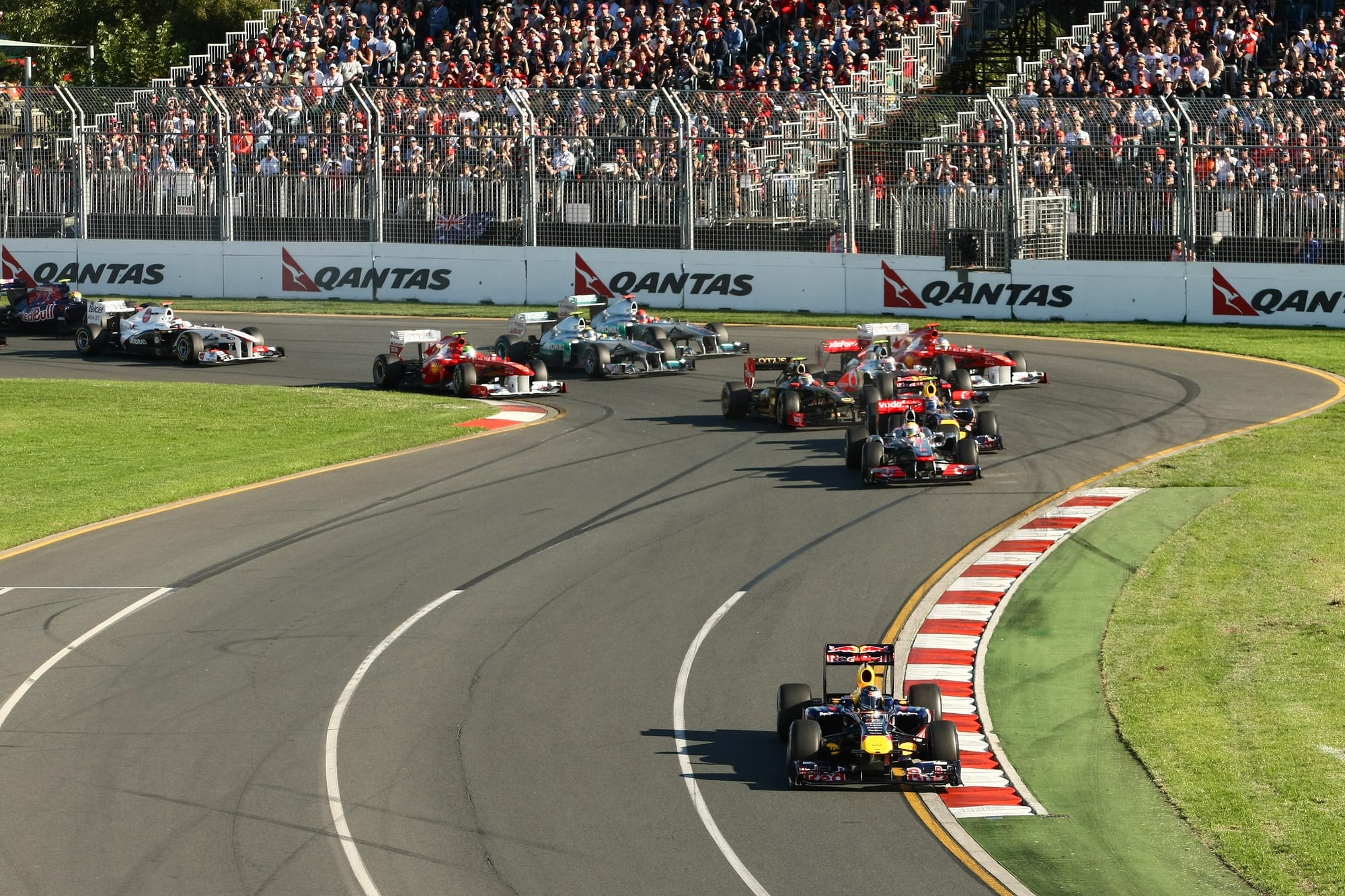
Vettel's title-winning run wasn't just about his driving style meshing perfectly with the Red Bulls though…
"I would say one of the outstanding things about him wasn't so much his technique, blown diffuser technique aside, but just his management of himself, his mind management," Hughes explained.
"Typically, he'd get into the lead, open out a devastating gap in the first two or three laps, and then just monitor it from there and just keep just out of reach, just so that he couldn't be out of undercut range and all that.
"He was outstanding at that and was very comfortable running there, but probably less impressive when he was in the pack."
But it was that same solid mind management that would desert him later in his career during some key moments with Ferrari.
"He was quite an emotional driver as well and I wonder whether that played a part because there are a few high-stress moments where he let himself down," Straw said.
"In his Ferrari career with [Charles] Leclerc, when he hit him at Interlagos [in 2019] and you can see just in moving across on the straight and he just goes a bit too far.
"He wasn't great at accepting the mistake."
Nowhere was that more evident than at the 2017 Azerbaijan Grand Prix, where a furious Vettel drove his Ferrari into Lewis Hamilton's Mercedes under the safety car.
Hughes said of that: "His button had been pressed and that was it. That wasn't calculated.
"That was just pure fury. And he could struggle to contain that sometimes. He's a very emotional character, actually, beneath the sort of sunny disposition."
Vettel certainly wasn't helped by his environment at Ferrari. He'd been signed by Luca di Montezemolo as the team's new spearhead, its first true spearhead since Michael Schumacher, given Fernando Alonso had been brilliant but was seen more as an individual than a Schumacher-like team builder.
However, di Montezemolo was gone by the time Vettel arrived in 2015, and he faced a very different feeling from the new Ferrari leadership.
In Hughes's words, Vettel was "being challenged by the team to prove to them that he was worthy of that status, and it really didn't work well with [team boss Maurizio] Arrivabene and him".
Vettel and Ferrari went head-to-head with Hamilton and Mercedes for the 2017 and 2018 titles, with the latter the real missed opportunity.
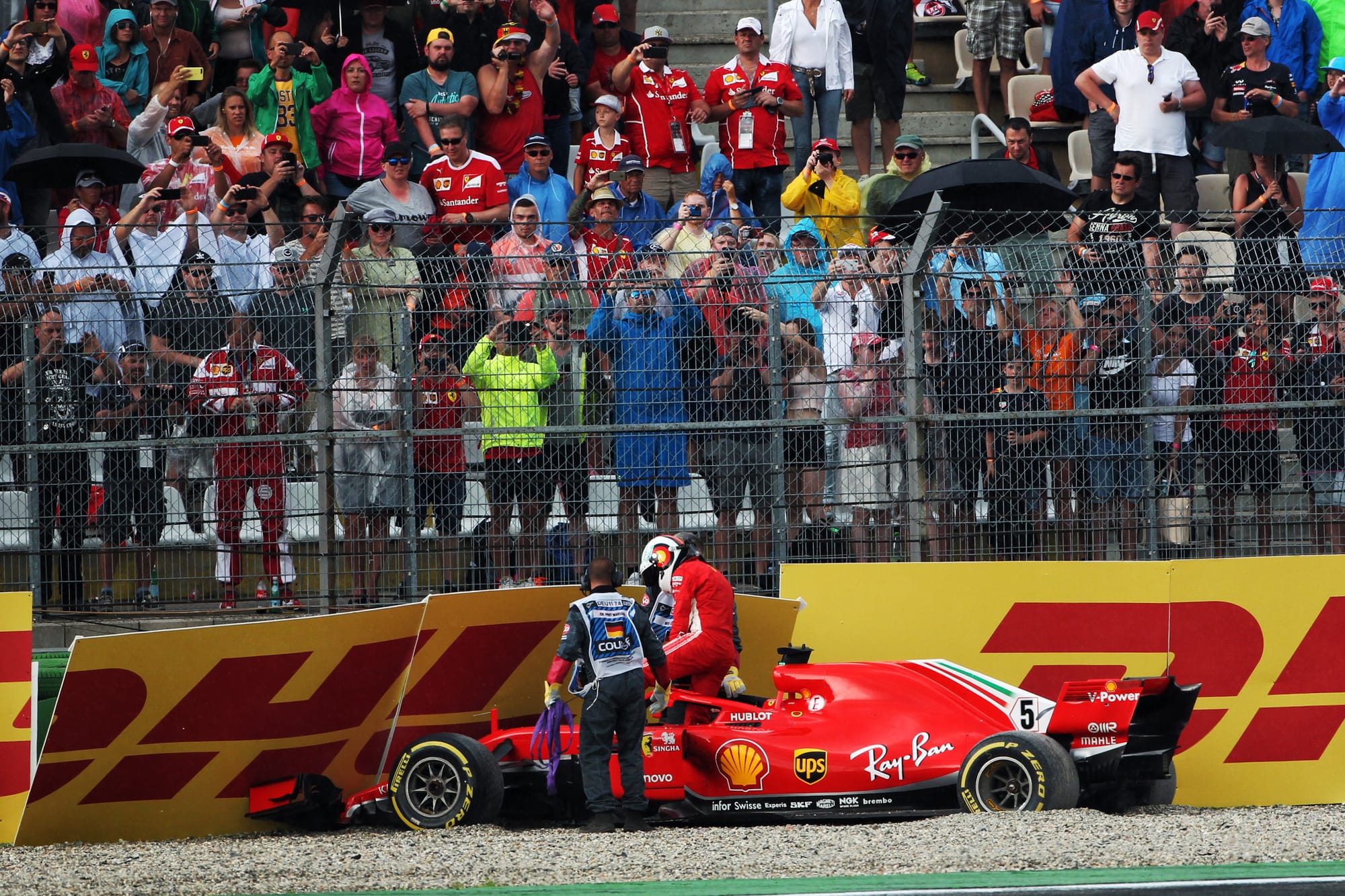
"The errors seemed to feed upon themselves. From Hockenheim when he crashed [out of the lead] there onwards, it really got a bit scrappy and messy," Hughes explained.
Straw added: "That Hockenheim mistake, the fallout from it is so profound, because it seemed to be used as a stick to beat him within the team. It's like yes he's gone off, he knows it's a mistake.
"And it was really weird because some of the stuff he said in public about it, he was quite defensive. I don't feel like he was defending against the notion he'd made a mistake or people pointing it out or whatever, but it's almost like the internal thing, because teams ultimately have to take the point of view of ‘errors happen' and it's annoying, but the driver knows."
For Hughes, it "underlines the point about the support he didn't get from within the team, from the way it was being run at that time, the management philosophy or lack of it.
"It did contribute to Seb's performances, you've got an emotional character, you need to make sure you support them as much as possible."
Vettel's legacy
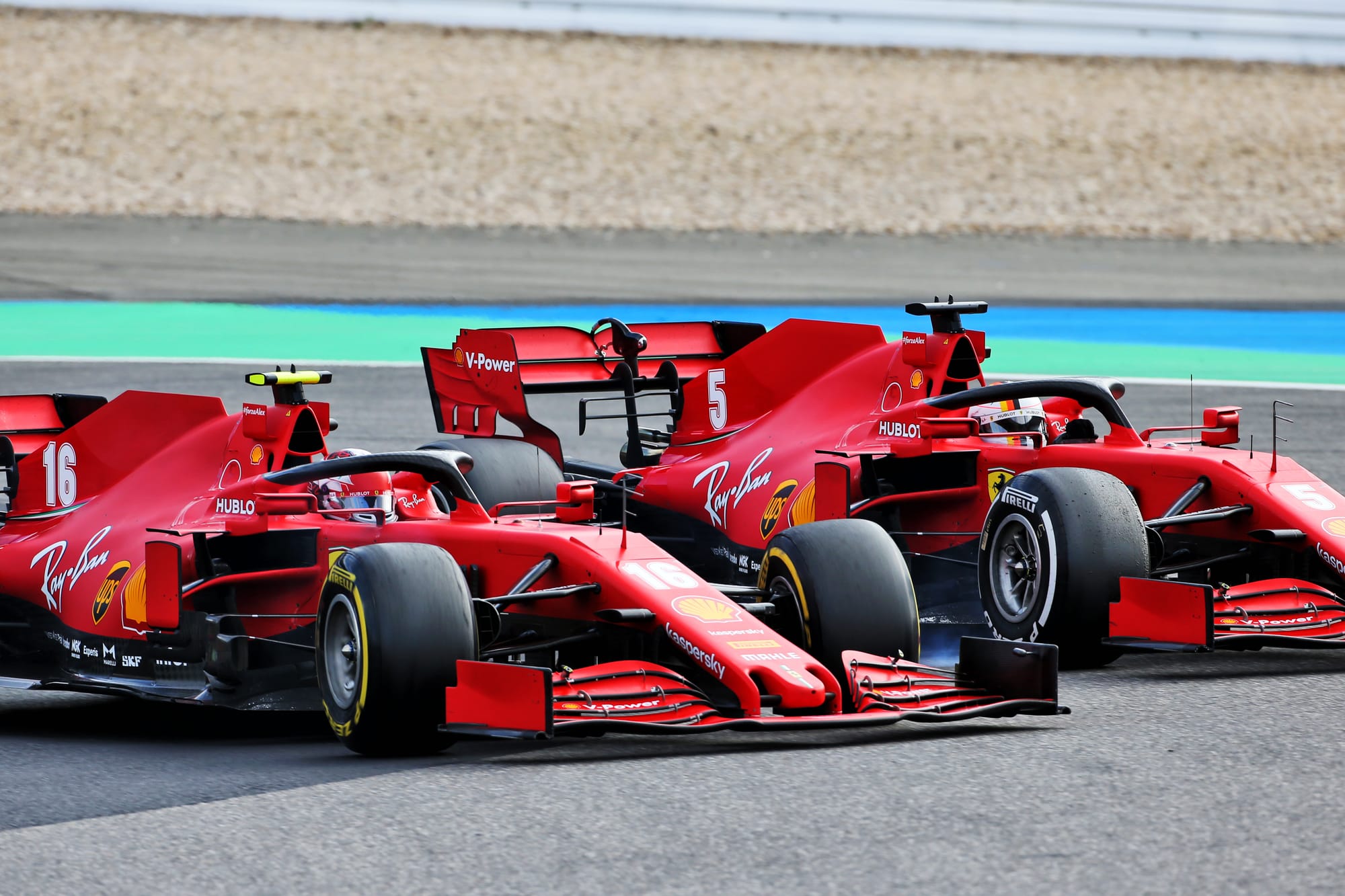
How to sum up a driver then, with four world titles but some tricky seasons such as being thrashed by Charles Leclerc at Ferrari in a bruising 2020 season, or 2014 when Daniel Ricciardo was promoted into Red Bull and immediately outperformed him?
"I would say his epitaph as a grand prix driver is that brilliant when in the right window, but ultimately not adaptable enough to be in the absolute top echelon of the great drivers," Straw said.
"Being in the second division there is still outstanding, still not many drivers at that level. But I think probably he was never going to have the car under him and the team around him to be the Red Bull peak Vettel for 15 years of his career.
"That was never really going to be possible."
Hughes believes Vettel "was flattered a little bit by the circumstances of his career, but he was an absolutely brilliant driver and would have probably won titles regardless of those special circumstances".
"But whether he would have had quite the run of success he did, I think is an open question."
If you want to hear the full episode - including why BMW didn't rate Vettel as highly as Robert Kubica, the real standout moment in 2008 beyond the Monza win and why Ricciardo got the better of him at Red Bull, make sure you're signed up to The Race Members' Club and head to this post to listen to the episode.
The final episode of this series of Driving Style Secrets will focus on 2016 world champion Nico Rosberg, you'll get exclusive access to it in The Race Members' Club - plus all of the other bonus content there, including the ability to ask questions for the post-race podcast at the Monaco Grand Prix next weekend.