The realities Formula E's running into as it finalises Gen4 format
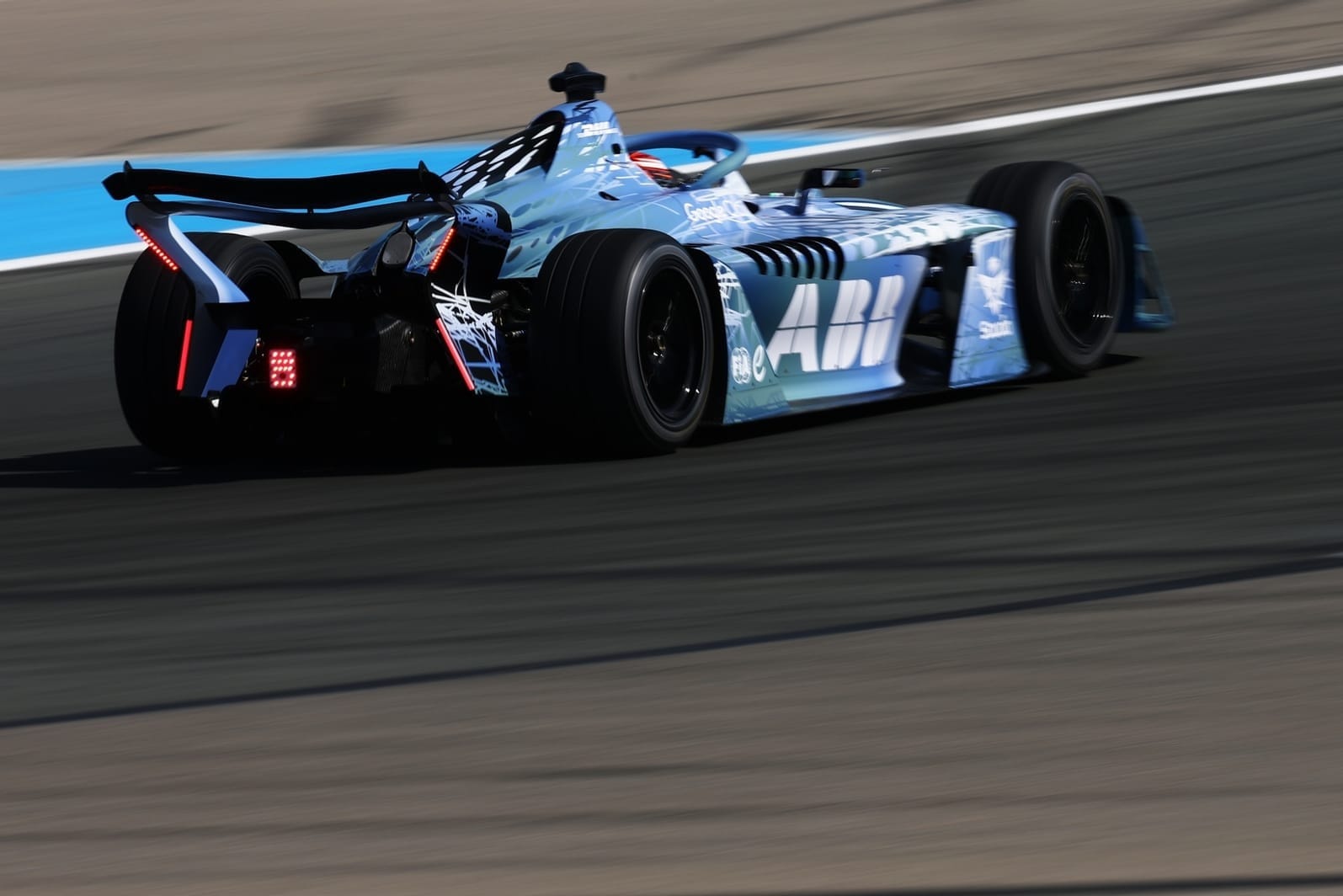
Ambiguity. There has been very little of that from Formula E when it comes to the Gen4 project, which publicly broke cover at Paul Ricard last month. Subtle it is not.
To its credit, Formula E has generated a great deal of noise about the car and it's now got a big image and big promises to uphold.
And big is the operative word. Bigger in every department, the 600kW car may be a heavier, punchier big brother to the current Gen3 Evo but when it comes to how it will race in terms of sporting format and outright logistical structure... well, that's where the ambiguity comes.
At the recent Paul Ricard Gen4 launch that topic was, for the teams and manufacturers at least, taking the shine off the project a fair bit. But seven hours after entering a meeting room in the south of France, as the Gen4 car blasted down the Mistral straight just a few metres away, some ease and clarity started to emerge from the extensive meetings.
From that point on, the FIA and Formula E Operations helped, with a lot of discussion and forthright opinion, to stem some of the doubts. But there is still work to do before the full package - of how the Gen4 car will race and what teams will need to prepare come December, when Gen4 racing sparks into life for the first time - comes together.
The key points that needed addressing were:
- The race weekend sporting format
- How the two-tiered aerokits will be practically used
- Freight and logistical plans
After the Paul Ricard launch, another meeting took place in Berlin, then another remotely after Berlin, and one more was held in Monaco. Next up is a technical working group meeting this week and a final sporting working group one shortly after. An intensive period of discussions should conclude imminently.
Where things are presently is that the Formula E Teams and Manufacturers Association is submitting "a piece of work that needs to be done by the manufacturers to be presented with the next SWG [sporting working group], which will go quite a long way to formalising some of the things", according to its chair, Andretti team principal Roger Griffiths.
"The main one still up for debate is around the race weekend format and how that's going to work, particularly the two different downforce levels, the different power modes that we have; what is the right combination from a sporting aspect, from a product on the racetrack aspect, from an operational position?" added Griffiths.
This is where there appear to still be some conflicts, yet traction is seemingly being gained ahead of this month's all-important FIA World Motor Sport Council meeting.
"In an ideal world, you want to do everything perfectly, but we don't live in that ideal world," says Griffiths.
"We may have to make some compromises to just help the flow of the weekend go a little bit easier.
"But because we do live in a cost-cap world, we do also have a limit on the freight and how much - not just weight, but also volume - we can send. Some of the things that are being proposed, which are all great in the theoretical world, are not so straightforward to manage in the practical world. So, there are some things that are still under discussion."
It is believed that the teams' association has been very clear on its position and what it would like to see in Gen4. It realises that Formula E, as a promoter, will want to showcase the Gen4 car at its highest performance level in qualifying but, with tight turnarounds between sessions and the intricacies of downforce-level changes, these practicalities are not so straightforward.
"If it was a case of pressing a button and the car changes downforce mode, that would be one thing. But when you've got to physically change our parts, it's not so easy," reckons Griffiths.
"We just sort of try and find the best compromise."
As well as making sure qualifying fully shows the car's speed, teams are keen that the current duels format that sets up varied grids without losing meritocracy is retained.
“I think the qualifying is mega," said Porsche motorsport chief Thomas Laudenbach.
"I wouldn't change anything there because I think it's really good and it's really fair and I think it's good for the fans."
There's still some work to be done and the next few weeks will have to produce some definitive conclusions because a large amount of the regulatory points will have to be submitted at that World Motor Sport Council meeting in mid-June.
"Each meeting that we have, there is positive progress and we get closer and closer to establishing the race format. And a lot of this was set out from the meeting that we had in Paul Ricard, where the teams' voices were heard loud and clear," adds Griffiths.
The Race has learned that it is highly likely the sporting format for single-header race weekends will be broadly the same as it has been in the Gen3 era.
There had been some discussion about the possibility of spreading free practice/qualifying and the race over two days, but this has been dismissed. A single free practice session on one day before second practice, qualifying, and the race is still highly likely to be the structure of an E-Prix.
But changes to a double-header weekend have more chances of being mandated. This could result in more Friday races, although that will likely depend on the specific circuit and promoter.
And as far as Laudenbach's concerned, Formula E needs to be ready to make changes on the hoof as the early events of the Gen4 era play out.
"I'd like to do two or three races for the fans with the Gen4 and then we see how good it is, how big the step is and if we have to change, if we have to tweak it a little," he said.
“I think we already have got a very good combination between the fact you cannot dominate, so that means you will always have close racing and you have different cars winning, which is good."