Audi's demand for F1's V8 return plan
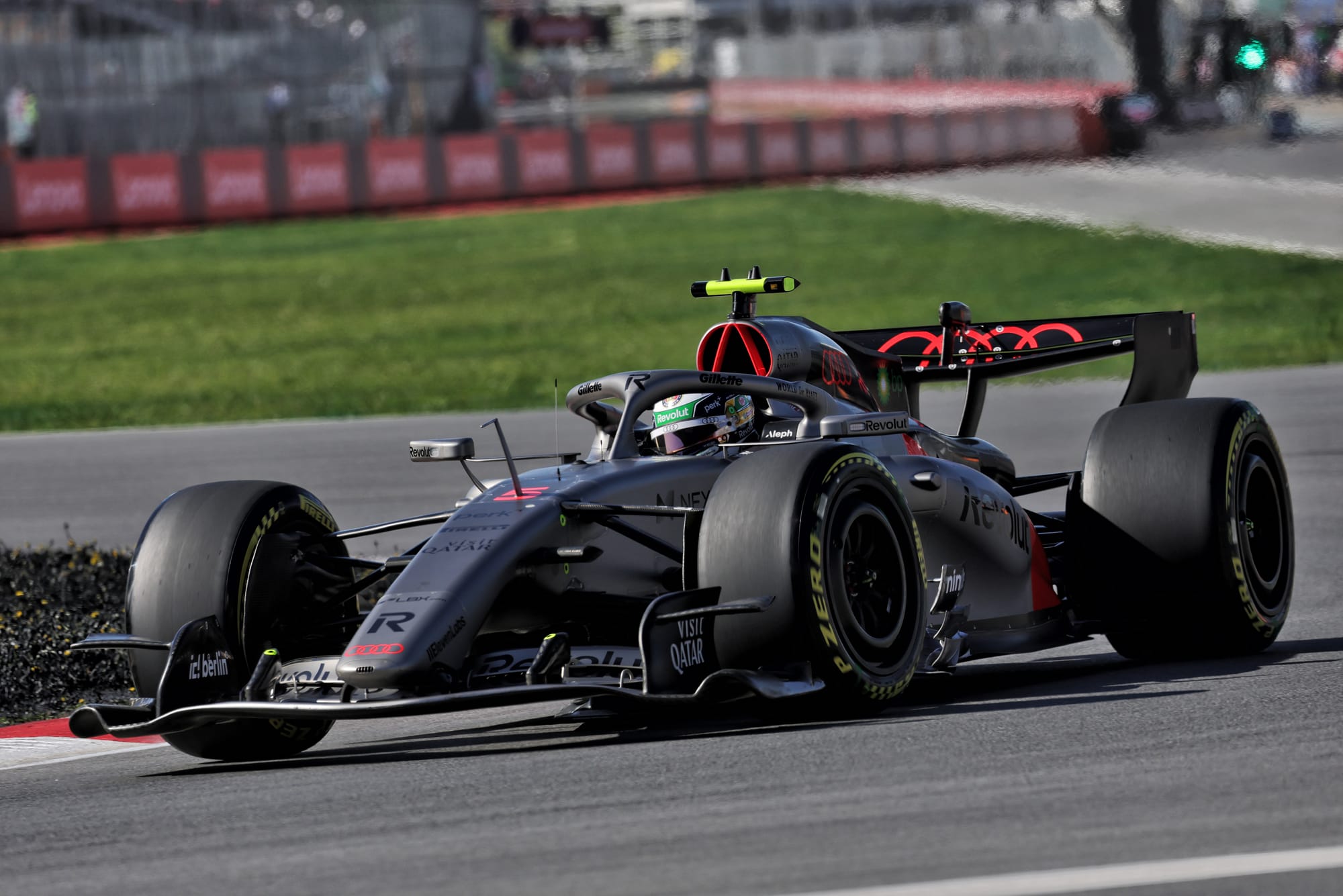
Audi has indicated that it wants turbo engines to remain in Formula 1, despite a push by FIA president Mohammed Ben Sulayem to switch to V8s from 2031 at the latest.
With both the FIA and F1 feeling that the current turbo hybrids are too complex and too expensive, there is growing momentum for the next ruleset that is planned for 2031 to address these two factors.
Ben Sulayem has talked openly that this will be a V8 engine - most likely normally aspirated - and declared in a social media post earlier this week his reasons behind that move.
"V8s are lighter, simpler and more cost-effective, while sustainable fuels mean they can remain aligned with our environmental ambitions," he wrote.
"Most importantly, they bring back the unique, visceral sound that fans around the world associate with Formula 1."
But ahead of the Monaco Grand Prix, in an event discussing the launch of Audi's new Nuvolari V8-turbo hybrid supercar, its CEO Gernot Dollner said that a move to normally aspirated engines is one his company is not eager for.
He said the key priority for Audi was having "a regulation that has energy efficiency in the focus", something a turbo offers more than a normally aspirated engine.
Asked if that meant keeping turbos, Doellner said: "That's definitely more important than talking about the number of cylinders.
"That's crystal-clear from an Audi perspective. We prefer turbo due to the efficiency aspect. More important than the number of cylinders."
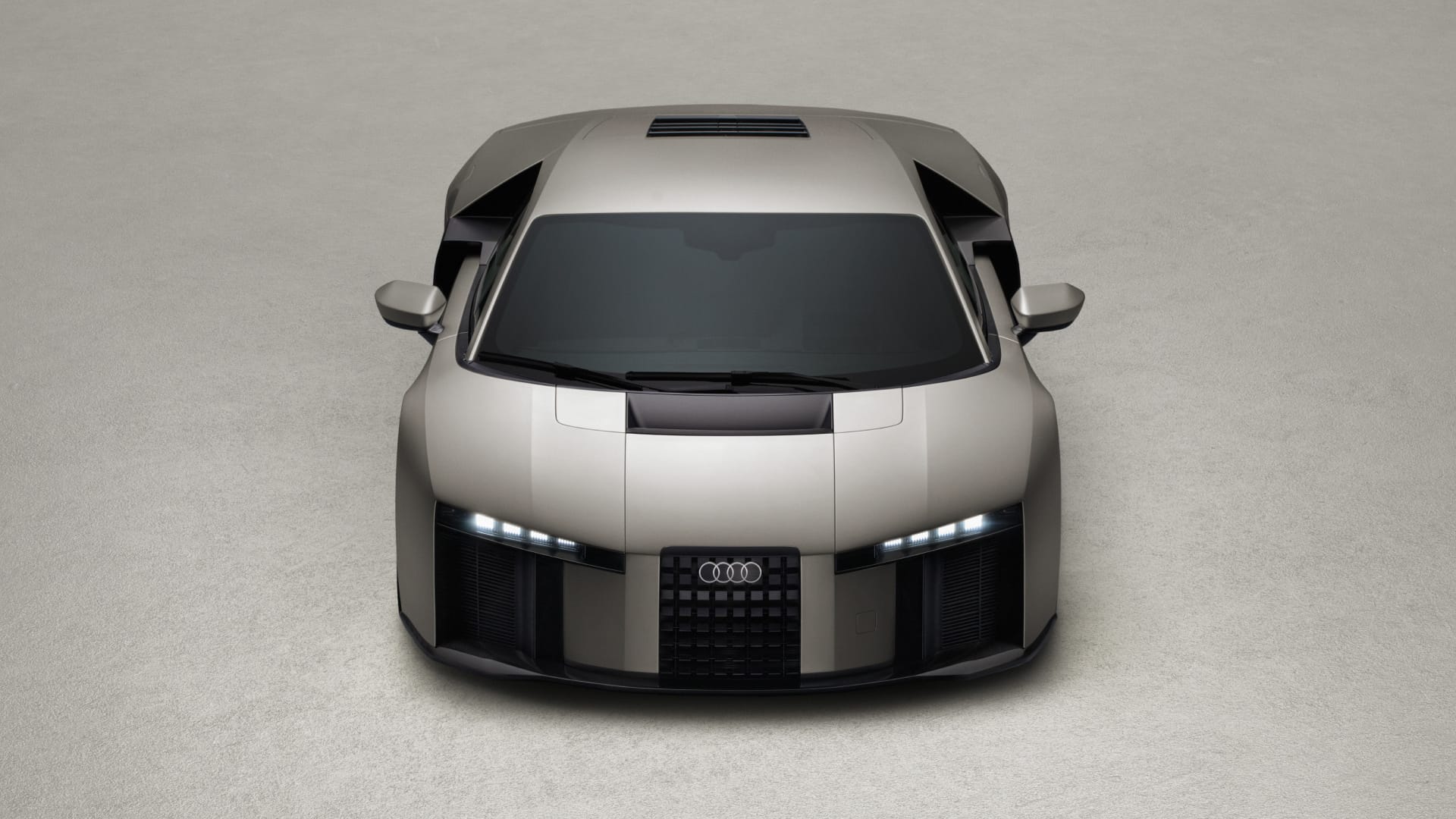
Dollner emphasised that this stance over cylinders was proven with its choice of V8 power unit configuration for the Nuvolari supercar.
Named after pre-war grand prix racer Tazio Nuvolari, who raced for Audi predecessor Auto Union, it is the fastest production car Audi has ever produced, and the company says it is heavily inspired by F1 technology.
Capable of accelerating from 0-100km/h in 2.6 seconds, it features a 4.0-litre V8 bi-turbo engine with hybrid elements that produces a 1000hp maximum output.
The power ratio split between its combustion engine and electrical energy is 80/20, which is very different from F1's current supposed 50/50 split.
"I mean the Nuvolari has a V8 so we don't have problems with V8 engines," Dollner pointed out.
No deal-breaker yet
Dollner hoped, as part of the discussions that will take place with the FIA, that the regulations can be framed in a way that continues to make F1 attractive for Audi.
"The discussion is led by FIA and we are part of that discussion," he said. "Our focus is on the actual regulation and to optimise that, to optimise our drivetrain to the regulation we have. That's our main focus and the FIA will lead that discussion.
"From our perspective, we are talking about the year 2030 or 2031. The important [thing] for us is that we have cost-efficiency in mind. Of course, we just entered, we invested in a drivetrain concept and so we are not keen on changing soon."
But Dollner made it clear that, despite his resistance to shifting the regulations towards normally aspirated power units, this was not an issue that would automatically trigger Audi to walk away from F1.
Asked if this was a potential deal-breaker for Audi's involvement, he said: "No, not right now - as I think and believe and trust that we will have a good discussion regarding the regulations and we will definitely have sustainable fuels.
"[So] that's not a topic under discussion. It's more in some areas a philosophical question but let's see what the process brings."
Stability preferred for 2027
The debate about a V8 future in F1 comes as discussions intensify about potential hardware changes for the current ruleset.
Following an agreement in principle from teams to move away from the current 50/50 split between internal combustion and electrical power and towards 60/40, opinions among manufacturers are now divided about whether this should happen for 2027.
While Mercedes and Red Bull are supportive of the shift, Ferrari, Cadillac, Audi and Cadillac have their reservations.
Ferrari and Cadillac do not support it because of the consequences of opening up engine development, while Audi's concerns are more about the cost complications that will come from designing new hardware.
Asked what Audi's stance was, Dollner said: "Our perspective really is to have stability there. That's our clear view with entering new, this is one reason, and the other reason is that we have to be cost-efficient.
"That's the most important aspect from our side, to have the cost cap in mind and to see.
"Our innovation path is maybe a little steeper because we started lower and so on that path we are happy with stability."
The Race understands that as part of the FIA's plans to get an agreement in place to change the rules for next year - which needs four manufacturers to back it - discussions are planned for this weekend's Monaco GP with senior representatives of the car makers themselves.
Dollner hoped that a compromise arrangement could be reached that did not require all-new combustion engines.
"The process is running, and it's in good hands," he said. "We are part of that process together with the other engine manufacturers, and so I think in '27 there will be a good solution in place."