All the headaches Monaco qualifying will give F1 teams
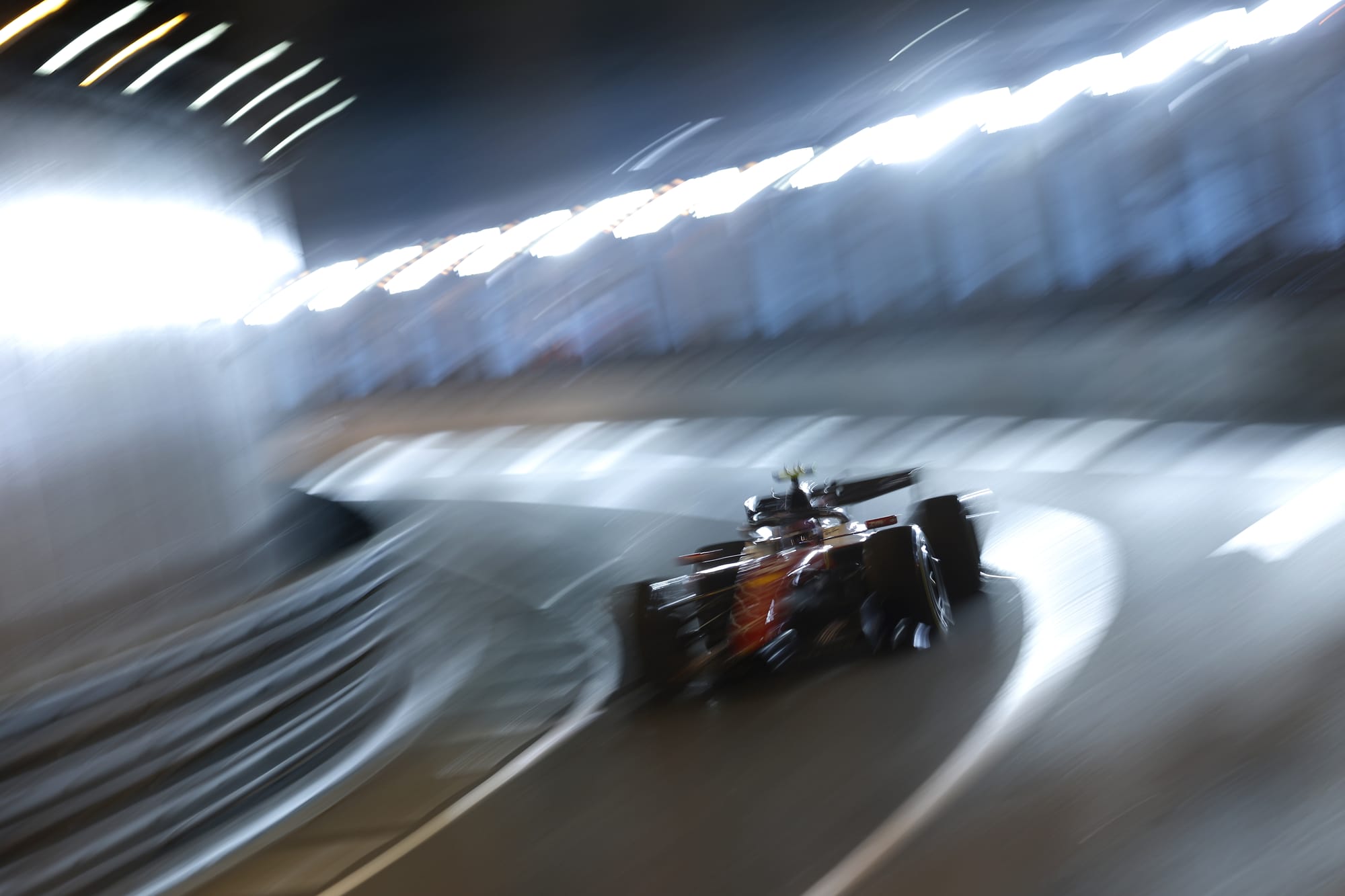
With engine power and energy levels not a major factor around Monte Carlo, the fight for pole position in Formula 1's Monaco Grand Prix is back to being influenced by more typical things.
Mechanical grip and downforce count for a lot, but at the top of the list of performance priorities is tyre preparation – with so much of the lap time revolving around getting the rubber into the right temperature.
As Ferrari team boss Fred Vasseur said after Friday practice: "Now we have a kind of convergence of understanding of the car. Tyres are becoming again prominent to the performance."
The key to nailing the perfect lap around Monaco is about keeping the operating temperatures of both the front and rear axles in the right window.
And that can be quite a difficult thing because it is not easy to warm up the fronts on the low energy circuit, and all too simple to overheat the rears thanks to the numerous traction zones out of the low-speed corners.
The evidence from Friday also showed some divergence in terms of where teams were hitting the sweet spot – and where they were out of it.
McLaren, for example, lost tenths of a second in the first sector with its front tyres clearly not fired up for the start of the lap, while Mercedes was good at the start but had overheated its rears by the final sequences of corners.
Sorting out the tyres is nothing new at Monaco, but there are a host of factors this season that look set to make it even more of a headache for teams and drivers in nailing their grid positions.
Harder tyres
The first is a simple physical one – the tyres are a step harder this season than 2025 thanks to the absence of the C6.
In combination with the 2026 cars having less downforce, it means less energy on tap to get them fired up more than they needed before.
The rear tyres too this year also need to be more aggressively brought in because the bespoke wheel rim designs teams are using have led to improved cooling – so heat is more difficult to build up.
The evidence from Friday suggested that to get the front and rears into the right window, it was beneficial to do an extra preparation lap or even two attack efforts.
The latter is possible here because cars are not energy starved for once, which means batteries are not too drained to attack on multiple laps.
Both Red Bull and Ferrari experimented with this during practice, as they tried to work out what was going to be the best way to achieve the optimum possible from their package.
As Red Bull chief engineer Paul Monaghan said: "Rather than saying 'is there an engine penalty from doing that type of running?', our currency is lap time.
"We need the quickest lap on the board that we can get and, if doing that produces the quickest lap time on the board, whether there's an engine penalty or not doesn't actually matter."
Outside influence
But what is theoretically the best approach in terms of preparing laps for that critical qualifying attack may not be possible to achieve in reality because drivers are not alone on track – and traffic risks forcing you to do things you do not want to do.
As Monaghan said: "All sorts of things have to come together. I would say Q1 you need space and not get held up, which here, looking at the FP2 start, it was chaotic."
The problem with traffic is not just about having qualifying laps ruined, but it also makes tyre preparation much harder because drivers are not necessarily in full control of the speed with which they can do their lap.
So first, the chances of having either faster cars coming through, or getting caught out by someone slow ahead of you, have increased this season.
The arrival of Cadillac means that there should be 22 cars out on track in Q1. If everyone is trying to do a flying lap then that means a gap of just three seconds between cars – hardly a comfortable margin to avoid tripping up over someone else.
As Vasseur said: "With so many cars on track, it's difficult to do a proper outlap. It means sometimes you are pushing, sometimes you have to slow down and so on. I think it will be the key.
"The fact is that to be able to do a proper outlap, to arrive in the right window and to do a clean lap later on will be a challenge."
The high chance of someone else derailing your lap means that it is probably not a good strategy to rely on getting two clear laps for a qualifying effort.
As Pirelli chief engineer Simone Berra said on Friday night: "The ideal situation tomorrow will be going out, doing a preparation-lap, building up the temperature progressively and then going for a push-lap.
"I don't think it will be a very good strategy to do two push laps in a row in qualifying conditions. So it's better to prepare perfectly the tyres and then push as much as possible."
Layout difficulties
But Pirelli chief engineer Berra said the Monaco layout makes lap preparation "complicated" – with what's needed to get the front and rear axles fired up quickly requiring a targeted approach late on before nearing the start-finish line.
Berra said: "It's difficult to arrive in the last sector and have enough space with the car in front to push properly.
"Sometimes it's tricky and it will be very tricky, especially in Q1. I think we could see some surprises because of the traffic – and not just because of red flags."
The situation is also further complicated by the way that an FIA safety request also means gaps to traffic cannot be engineered earlier in the lap.
In Friday night's drivers' briefing, an instruction was given for drivers to maintain racing speeds through the tunnel – rather than running at a pace that is best for managing tyre temperatures and gaps to the cars ahead.
This call, while sensible from a safety point of view, is not ideal in helping the tyres and it compresses the area where drivers will try to maximise their track position and tyre prep.
As Berra said: "The drivers pushing in the tunnel is to avoid what happened with [Isack] Hadjar in F2 [in 2024 when there was a near miss in the tunnel as he avoided a slow car].
"So, if everybody is pushing in that section, they will try then to generate temperature on other parts of the circuit, which will be the last sector in the end.
"You don't want really to exploit the tyres in the first part of the lap, so you want really to use the final part and raise the temperature in that sector, so that's going to be complicated."
So the final sequence of corners after the Swimming Pool section is one where some will be backing off to ensure they get gaps to the car ahead for the start of their push laps, but others pushing hard to get tyre temperatures up.
The chance of things going wrong are high. F1's most complex hour of the year awaits.