Mercedes rear wing mod potentially decisive in Antonelli's Monaco pole
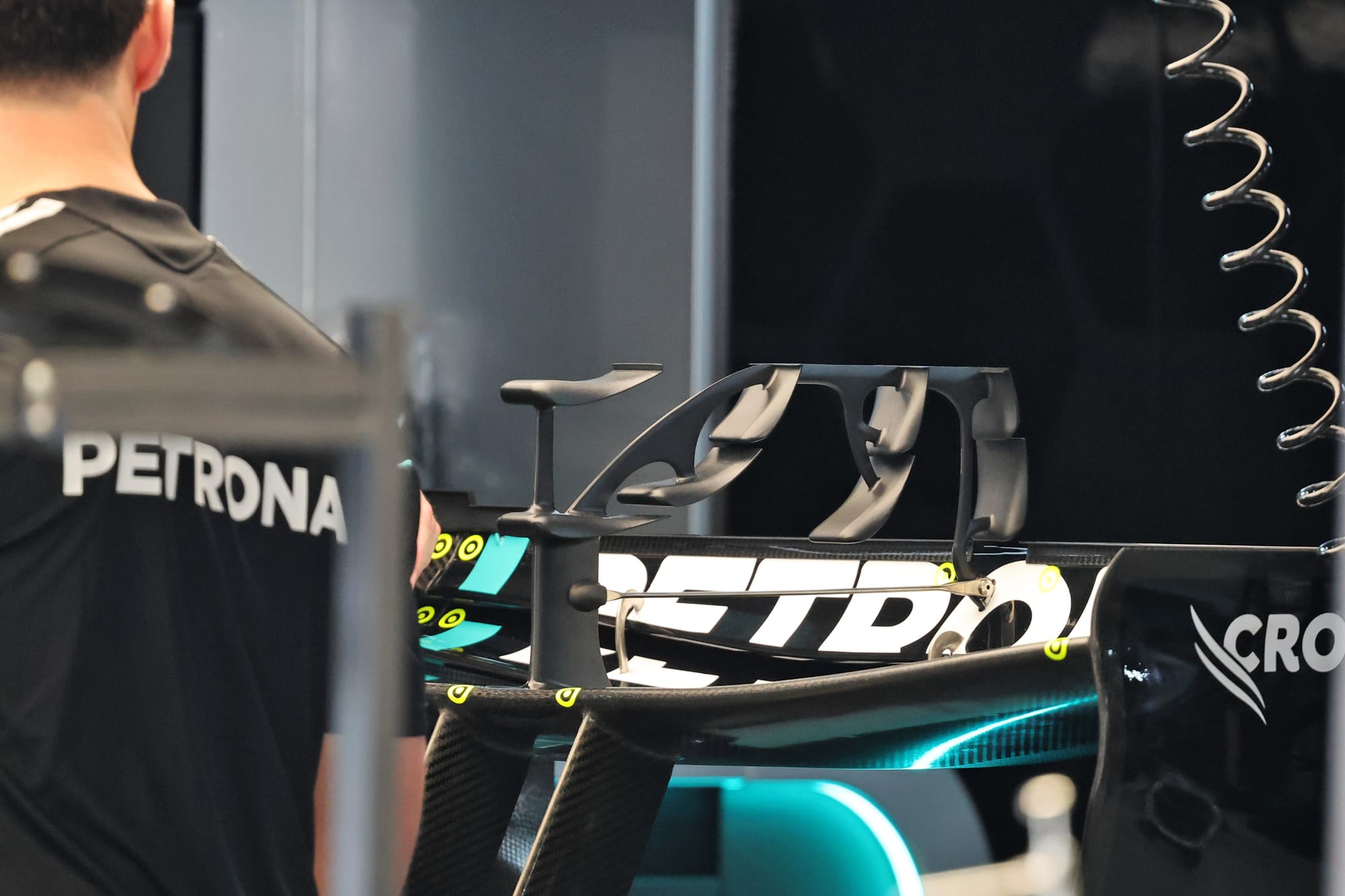
The trick rear wing that Mercedes brought to Formula 1’s Monaco Grand Prix had an expected laptime gain bigger than Kimi Antonelli’s pole position margin, team sources have suggested.
Antonelli secured pole position from Max Verstappen by 0.043 seconds on Saturday, after a thrilling shootout in the dying minutes of qualifying.
The final result was down to a host of factors coming together - including an overnight set-up overhaul - but it was not lost on the team that the marginal gains delivered by the wing could have made the ultimate difference.
Mercedes was one of several teams to exploit the active aero ban, introduced on safety grounds, for the Monte Carlo street circuit.
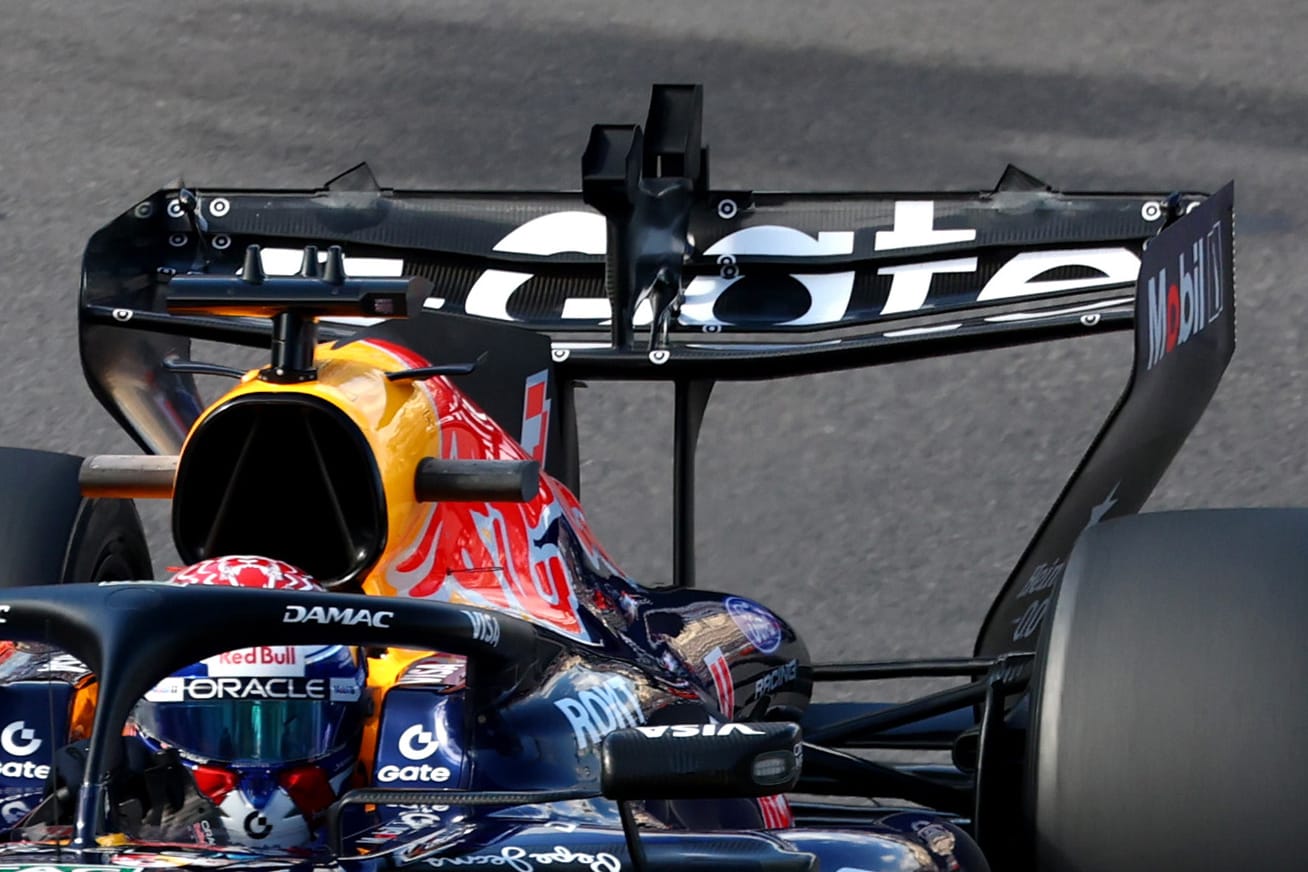
With the normal rear wing activation devices not needed, teams had jumped on a legality box allowance to fit some complex mini wings.
Team sources have suggested that the predicted gains from the Mercedes design was in the region of 0.045 to 0.05 seconds - greater than the eventual 0.043s gap between Antonelli and Max Verstappen.
And while the team did not run any back-to-back tests in Monaco to correlate its findings from factory to track, it found that the wing justified its presence on the car.
This was especially true because, without it, Red Bull’s decision to introduce its own winglets could have been decisive in the qualifying battle at Monaco.
It was certainly a point not lost on Lewis Hamilton, who referenced that Ferrari had potentially missed a trick in not chasing the same exploit.
Ferrari had arrived in Monaco as the favourites and backed that up with 1-2s on Friday, but its pace fell away in qualifying, and Hamilton ended up third with team-mate Charles Leclerc fourth.
Asked by The Race about the factors that had gone against the squad, Hamilton said: “Apart from wanting more downforce globally, I think when we arrived on Thursday we saw other people, those guys, with trick additions to their wing.
“We didn’t have that, which was a little bit of a surprise.”
How Mercedes cured its Friday woes
While the contribution of the wing was an interesting aspect of Antonelli’s pole position, there is no doubt that Mercedes's Saturday set-up changes were a major factor.
Both Antonelli and team-mate George Russell had struggled for pace on Friday practice - uncomfortable over the bumps and overheating their rear tyres in the final sector.
Mercedes worked hard overnight in the simulator at its Brackley factory to make the tweaks that helped Antonelli.
“Yesterday, I’m not going to lie, we were struggling,” Antonelli said. “So the team did a great job with overnight correlation, to do big changes on set-up, and the car just felt much more alive this morning. It was also more forgiving, much more on kerb cutting, bumps...
“It made us gain so much in terms of performance between yesterday and today and allowed us to fight for pole.”
The Race understands that the changes revolved around mechanical aspects of the car. This included softening the ride to allow Antonelli and Russell to attack the kerbs more.
But perhaps most important were adjustments to the mechanical balance that were aimed at evening out the tyre temperatures between the front and rear axles so the W17 was in a more comfortable window for the entire lap.
Those tweaks, in combination with Antonelli nailing the preparation laps and dealing comfortably with track grip falling away amid rising temperatures, transformed Mercedes’ fortunes.