What's really causing Leclerc's F1 braking 'nightmare'
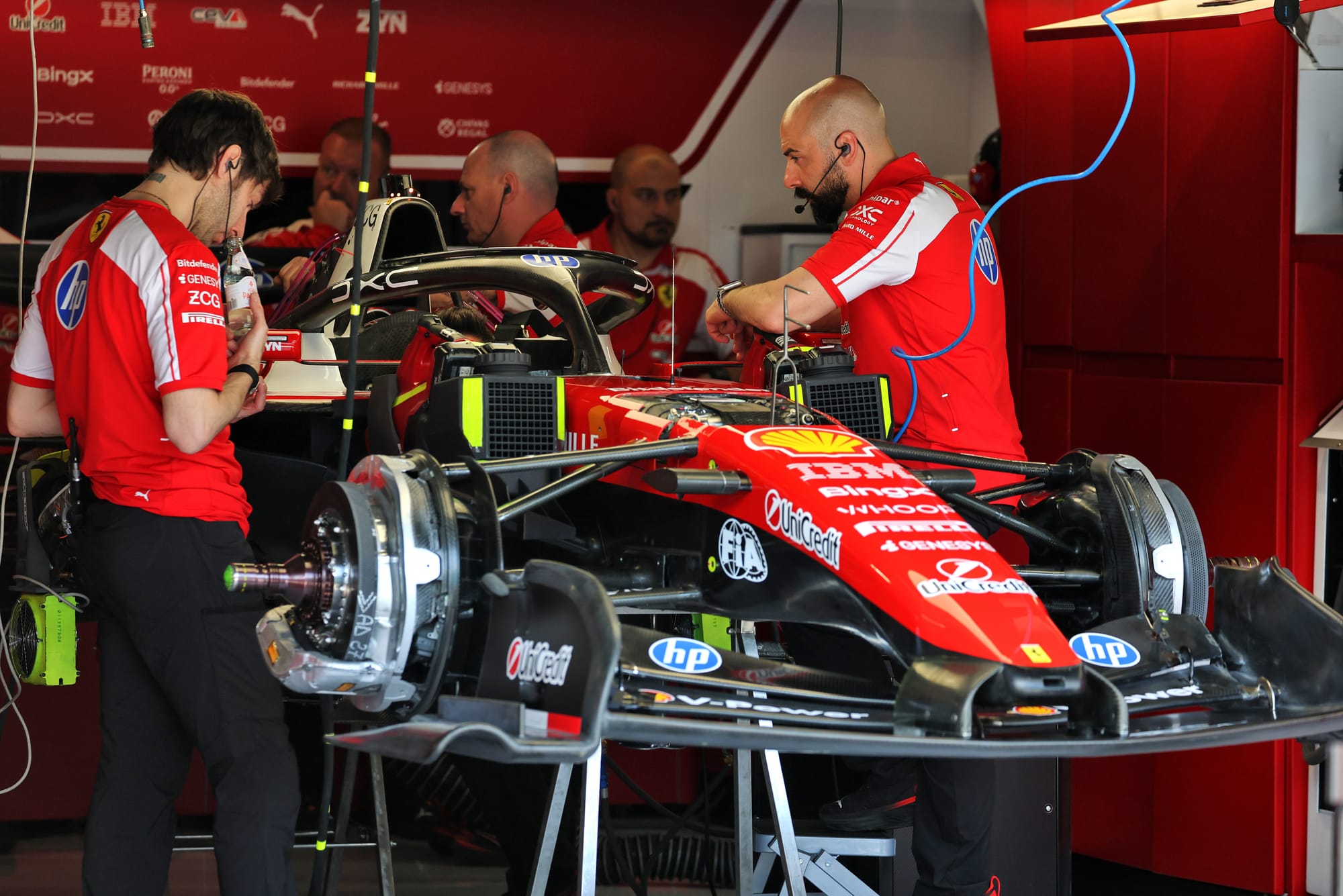
Charles Leclerc's late exit from Formula 1's Monaco Grand Prix became one of the big talking points after the race.
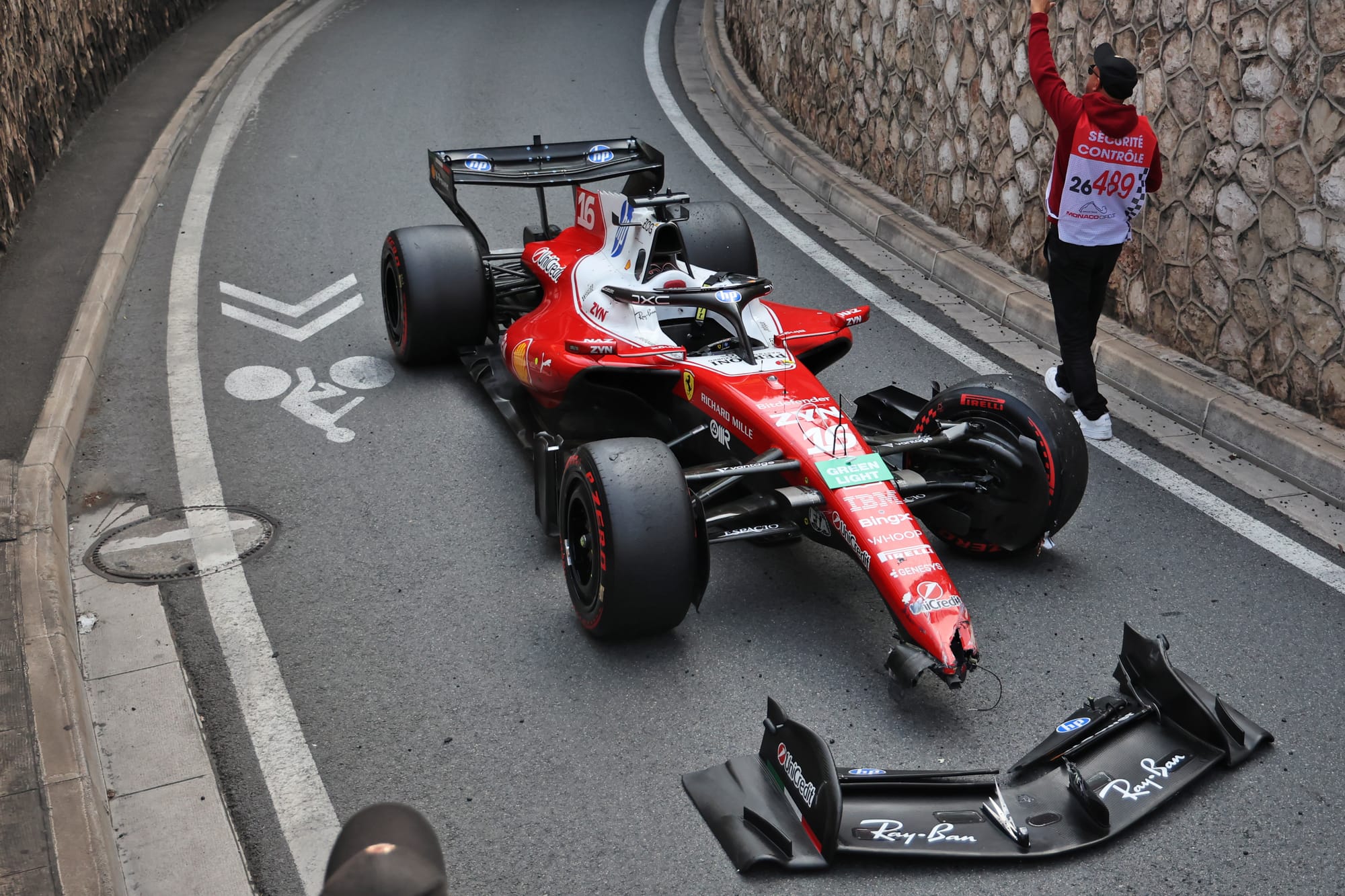
With the Ferrari driver having run head-first into the barriers at the final corner after the safety car restart, following Lance Stroll's crash in the same location, his outspoken remarks about brakes prompted a surprising, strongly worded response from supplier Brembo.
As Leclerc labelled his situation "not acceptable" and called what he is facing at the moment "just impossible", Brembo issued a statement saying it was "really surprised" by his remarks.
Brembo said it was "premature to draw definitive technical conclusions before the available data has been analysed".
It is quite rare for team suppliers to go public in such a way, but the move was likely prompted by Leclerc's comments appearing to suggest that there had been some form of unexpected failure or problem.
It is understood that early analysis points to nothing obviously broken on the car nor with the brakes, so the situation almost certainly revolves around consequences and design choices influenced by F1's 2026 rules revamp.
Why Leclerc crashed
Leclerc gave a detailed explanation for what had happened when he spoke to the media straight after the race.
"Out of the four brakes, I had three brakes not working, so in a Formula 1 car it's never a good thing," he said.
"The front left was working well, the front right was half working, and the two rear brakes were not working at all.
"On the data there's no deceleration at all. It's like, the callipers were not even in the car, so it's a little bit of an issue."
Digging a bit deeper into what happened, the lack of braking force was not about brakes having failed as such.
Instead, it appears to be related to temperatures, in that the brakes had almost certainly become too cold while Leclerc was running behind the safety car and had not been fired up properly for the restart.
The 2026 rules impact
Leclerc's comments about some of the details of the crash - in terms of the rears being totally cold - gives us a big clue about what the causes were and how they are likely linked to F1's new 2026 rules.
After all, firing brakes up under the safety car is not a new challenge in F1 and is something that Leclerc has done many, many times in his career.
What is different in 2026 is that, thanks to the different energy management requirements of F1's power units, braking characteristics and designs have changed completely.
A much greater use of harvesting to slow cars down means the rear brake discs aren't being used anywhere near as much as they used to be.
This means that there is less heat being generated and it is very easy for them to fall out of their operating window.
Things are further compounded by the cars being lighter and slower than the previous generation - so energy levels being put through the brakes are on average around 20% less than before.
The end result is that when the drivers do need to call upon what is known as dissipative braking (using mechanical forces) to slow the car down, the discs aren't at the correct operating temperature.
Earlier this year, Brembo's CEO Mario Almondo said the nature of the new cars meant a higher risk of inconsistent behaviour if brakes go cold.
Speaking about what had been observed in pre-season testing, he said: "The rear axle brakes are going very, very, very cold. And when I say very cold, it is something that is not ideal for the carbon material.
"This material is fantastic: it is light, stiff and the friction is amazing. But you have to respect the minimum bandwidth of temperature - and when you go this cold, the coefficient of friction can vary.
"This can trigger some strange behaviours, and has left teams thinking about how to keep the rear axle brakes at the minimum temperatures."
With stopping power already on the edge because of the new 2026 car characteristics, throw in Leclerc being a bit less aggressive on the brakes than team-mate Lewis Hamilton, and circumstances where brake temperatures are incredibly hard to maintain, and there is a perfect storm.
This would be the case especially at a track such as Monaco where, amid the balancing of brake demands between the MGU-K harvesting and discs themselves, there is much more reliance on using energy recovery to slow the cars down.
This means the disc temperatures can plunge and go totally cold if there is too much reliance on harvesting to slow the cars down.
Team and driver influence
Ferrari and Leclerc are not alone in using the Brembo brake/disc elements; it is understood that five teams on the grid run the same components.
So with Leclerc being the only one who hit trouble with this, it points to a situation where either he or Ferrari were doing something different to others.
Evidence certainly suggests that Ferrari and Leclerc may be more susceptible to conditions where the brakes go cold.
For example, Leclerc said that things had not been easy at the super chilly Canadian GP where he again struggled in finding consistency from the brakes.
Reflecting on Sunday night, he said: "Here and in Montreal with cold tyre temperatures, the inconsistency, and tyres being more sensitive because you are on the limit, have just been an absolute nightmare."
This likely not only relates to Leclerc's driving style, as he does not stamp on the brake pedal for an initial bite as much as Hamilton likes, but may also be influenced by brake design choices made by Ferrari.
One intriguing aspect that emerged ahead of the 2026 cars running was that there was a divide down the pitlane in terms of the size of rear brake discs chosen.
Some teams went small, thinking that they do not need to worry about the brakes overheating. Others went bigger because they were more cautious about temperatures.
It is not known how Ferrari stacks up compared to other teams, but it could be that it has ended up at a more conservative end of the spectrum - based on the difficulties in cold Canada and low-energy Monaco that Leclerc referenced.
Paddock sources have suggested that there is a growing consensus that the optimum solution is actually to be quite aggressive with the rear brake discs - and keep them small.
This is because with teams having found they are leaning into energy harvesting much more, brake discs are easily falling out of the ideal operating temperature. The smaller the discs are, the easier they are to fire up.
It is not impossible that Ferrari has pitched itself at the larger end of the scale and one route for it to solve problems it has encountered is to reduce the brake disc size - something that could be done either this season or into next year.
In the meantime, it will mean both drivers facing more of a challenge in keeping brake temperatures up in low energy conditions.
And there may be a case of Hamilton doing something different in terms of his general approach or specifically driving behind the safety car to keep the brakes fired up, while Leclerc has not unlocked the same thing.
What next for Leclerc?
Leclerc was pretty clear after the Monaco GP that the answer to his woes is one that is already within Ferrari's grasp.
He said: "The only thing I can say is that we have the solution in-house, and I'll go to Lewis's configuration from the next race onwards, which hopefully will be a step. But it's been a nightmare."
While Ferrari has not commented on what this solution is, there have been suggestions that it could involve keeping the current braking components and system from Brembo while switching to an alternative brake disc, supplied by Carbone Industrie.
As first revealed by Italian website Autoracer.it on Sunday, and confirmed by multiple sources, Hamilton switched to a Carbone Industrie disc from the Japanese GP at the end of March in a bid to make himself more comfortable with braking.
It was a personal preference choice based on seeking a different feel with the brakes.
Hamilton used Carbone Industrie throughout his McLaren and Mercedes days, and the different characteristics of the discs are something that better-suit his style.
It is widely understood that Carbone Industrie's discs have a very strong initial bite - perfect for that initial phase where Hamilton is known to stamp on the pedal. This feel comes from a characteristic where it appears to offer peak grip at higher temperatures.
Brembo's products are understood to be more progressive and consistent throughout the whole braking phase and temperature range, so they operate strongly in both hot and cold conditions and are more durable through an entire race.
This has traditionally meant that the Brembo has been better at firing up in the cold and safety car conditions.
It could be that the influence of the hybrid elements in braking in 2026 has altered what traits are ideal now.
Any move by Ferrari's drivers from Brembo discs to Carbone Industrie is not about one having a higher quality than the other; it is just that the characteristics they offer are different.
As Brembo's F1 customer manager Andrea Algeri told The Race last year, what drivers need from brakes is not a one size fits all scenario.
"Braking feel is like putting a shoe on your foot," he said. "It may not be the best one, but if it fits you, it is better."
But Leclerc rushing in one direction because it looks good now is no guarantee of it being the perfect answer for the long haul.
It could be that with different track demands and a hot summer coming up, temperature challenges could change totally yet.