F1 agrees multi-step plan for engine rule changes
Formula 1 will introduce a two-step regulation change across 2027 and 2028 to reduce the role of electrical power in F1 engines.
There’s long been a consensus that further, more substantial changes were going to be needed for the much-criticised 2026 rules, after an initial batch of tweaks were introduced earlier this year.
The main question was, given that all manufacturers have different interests, how strong a package of changes could be agreed on, with at least four of the six engine manufacturers needing to agree on any changes to the 2026 power unit rules.
The FIA said, “the proposed changes are intended to address issues related to energy management and fuel energy flow characteristics and make qualifying more flat-out while not impacting the positive and exciting racing generated by the new regulations”.
The headline item is the “staged rebalancing” of the internal combustion engine and energy recovery system split, moving away from the initial 50/50 split that underpinned this ruleset.
In reality, that split is 53/47 in favour of the internal combustion engine right now, but the FIA plans to move that to 58/42 for 2027 and 60/40 for 2028.
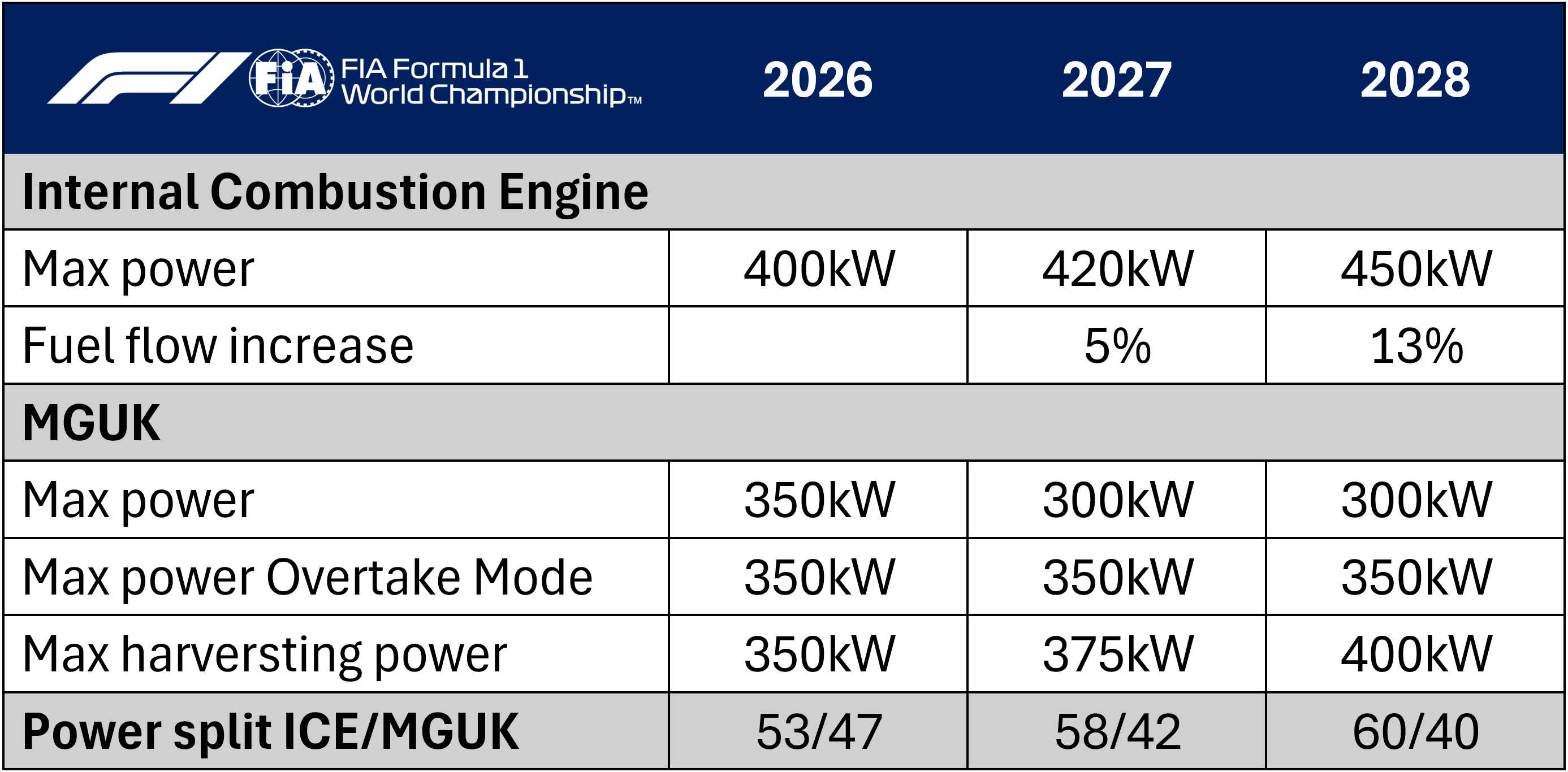
It will achieve that by upping the max power of the internal combustion engine from 400kW to 420kW for 2027 and up to 450kW for 2028.
This will work alongside an increase to the fuel flow, 5% for 2027 and 13% for 2028.
That gradual change for 2027 may reduce the need for hardware changes to be made to these expensive and complex engines - a key bone of contention for some manufacturers including Audi, which had just invested in a complicated, brand-new engine for the first time.
It's not as fast a change as the likes of Mercedes would have liked (it would have preferred the 50kW reduction for 2027, rather than just 20kW), but it's part of the compromised package needed to get approval.
The max overtake mode power will remain at 350kW, but the max harvesting power will increase to 375kW in 2027 and 400kW from 2028, from its current 350kW level.
The FIA says “it will now expedite the formal approval process to provide all parties with early clarity and sufficient time to adapt to the revised requirements”.
The proposed changes are subject to approval by the World Motorsport Council at its next meeting in Macau on June 23.