'One shot' qualifying? F1's 'nightmare' challenge at Barcelona GP
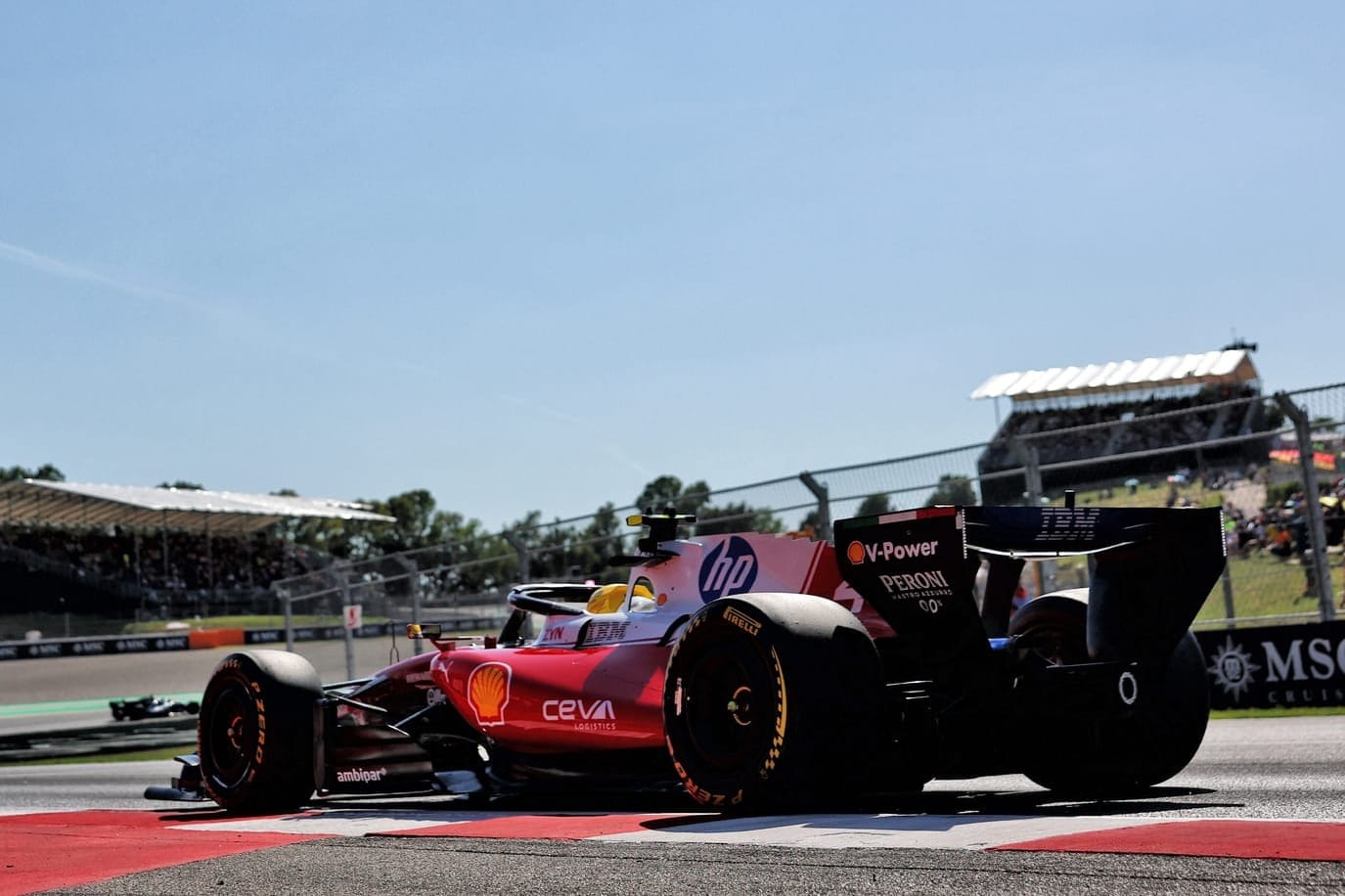
Formula 1 drivers are facing the highest tyre degradation of the 2026 season so far at the Barcelona Grand Prix, with fears that Sunday's race will be a "deg fest".
Searing temperatures on Friday at Barcelona, with track temperatures reaching 52°C, led to drivers experiencing extreme tyre degradation.
"It's terrible, to be honest," Haas driver Ollie Bearman said. "We have so much air in these tyres now, and it's just an absolute nightmare. The deg is huge, a lot of overheating over a single lap.
"There's no point even trying lap two, which is always the case around here, but I think it's a bit exacerbated now.
"We have so much power under the right foot and so little grip with those huge balloons as tyres that we have."
The 'huge balloon' is a reference to the higher tyre pressures set by Pirelli this year in response to the new generation of cars and power units.
Pirelli had to manufacture the 2026 tyres on expected downforce levels from the FIA and the teams, targets which are believed to have already been exceeded.
The minimum starting pressure of front and rear tyres for the 2025 Barcelona weekend was 26.0psi and 22.0psi respectively, but the rear tyre pressure was raised to 25.0psi for this year.
The expected stabilised running pressure - ie the pressure when a driver is on a flying lap - was 28.0psi for the fronts and 24.0psi for rears last year.
Those expected stabilised figures were revised to 26.5psi and 25.5psi ahead of this year's race.
However, after Pirelli's analysis of Friday's running, it has chosen to reduce the minimum starting tyre pressures by 1psi front and rear - so the new figures are 25.0psi front and 24.0psi rear.
That's because the tyres were going beyond the expected stabilised running pressures.
The new lower minimum starting pressure for Saturday should result in the tyre pressures hitting that expected stabilised running pressure - and theoretically the tyres feeling less like "huge balloons".
'One shot' qualifying?
Pirelli's chief engineer, Simone Berra, called the soft (C4) and medium (C3) "single-lap tyres" for Barcelona when being pushed in qualifying, so drivers might not get a second chance if they make a mistake when it matters.
"It's very, very complicated to recover performance," Berra explained.
"The problem is to cool down the tyres. Even with a double cool, it's very complicated, the carcass temperature stays very high.
"So it's interesting for qualifying, [the drivers] will have one shot, and if teams or drivers make some mistakes, it will be much more difficult compared to previous races to regain performance to try another attempt."
There's the opposite problem for drivers bringing the tyres in for a qualifying lap at Barcelona versus the previous two rounds at Montreal and Monaco.
At those circuits, it was a struggle for the drivers to put enough energy into the tyres to fire them into the right temperature window for the race.
"The teams are really trying to do a gentle outlap to prepare the temperatures and to properly balance the front and the rear axle temperatures," Berra said.
"This will be the key tomorrow, because it's very important not to overshoot the rear axle, but keeping the front into the right window, not to have some hesitation into Turn 1 when you are doing the push lap during qualifying."
High degradation has always been a factor at Barcelona, but Lewis Hamilton called it "probably the lowest grip that we've had here in, I would say, any year that I've been here. The tyres only last one lap".
'Deg fest' in the race
Audi's Nico Hulkenberg predicted "a deg fest on Sunday", and asked how the Audi felt versus January's pre-season test at Barcelona, he said: "In very hot conditions, if you have 50°C track temperature, it never feels that great because it's just too hot for anything."
The issue is one of classic irreversible tyre degradation rather than tyre graining issues that can be worked through.
"What we have seen today [in Friday practice] is a high level of thermal decay, both front and rear axle," Berra said.
"Some teams are struggling more with the rear at the start, then becoming more front-limited, others vice versa.
"But basically, both the front and rear were suffering with high surface temperature and high thermal decay.
"These will be the main topics for the race. We have seen high level of degradation figures, up to two or three tenths [per lap], which is quite a big number.
"This is mainly due to the track characteristics, roughness, energy of the layout of the circuit, and also high track temperatures."
That's likely to create some interesting strategic variety on Sunday, added to the fact that Pirelli did not see huge differences between the three tyre compounds (C2-C3-C4) it has brought to Barcelona.
"While the C3 [medium] and C4 [soft] showed more consistent grip level, less sliding, more bite on the tyres, in general, the degradation level was pretty similar to the C2 [soft] in the end," Berra explained.
"So we didn't really see a proper difference between the three compounds that they used.
"This is obviously important, because for Sunday we don't see a real preferred compound to be selected.
"From our perspective, C3 and C4 should provide enough consistency, and would be pretty similar to the C2 in the end, if we consider a race-stint situation."
A two-stop strategy "is most likely" according to Pirelli but it "possibly it could be also a three-stop race".
Berra added: "Who knows? Because with this level of degradation, management will be required, and again, all three compounds are in the game to be used.
"So from our side, at least, it's a different story compared to the previous races."
The high degradation should mean the undercut is powerful here and Berra expects that to tip some drivers into pulling the pin early and trying the three stop.
"I don't think they will try to extend too much the stint because it doesn't pay off in the end," Berra said.
"I would say the teams will have some target stint length. They will try for sure to react to the teams stopping quite early.
"But we know also that the undercut with this high level of degradation is very powerful. We could potentially see a race where there will be some early stoppers.
"They will try to push others to stop early. In this case, they can go to a three-stop race or try a different kind of approach, so try to be a little bit longer to have the delta tyre performance for the end of the race, which could be an interesting approach, because then you can see also battles on track. It's an interesting scenario."