How the biggest weekend of Herta's F1 mission really went
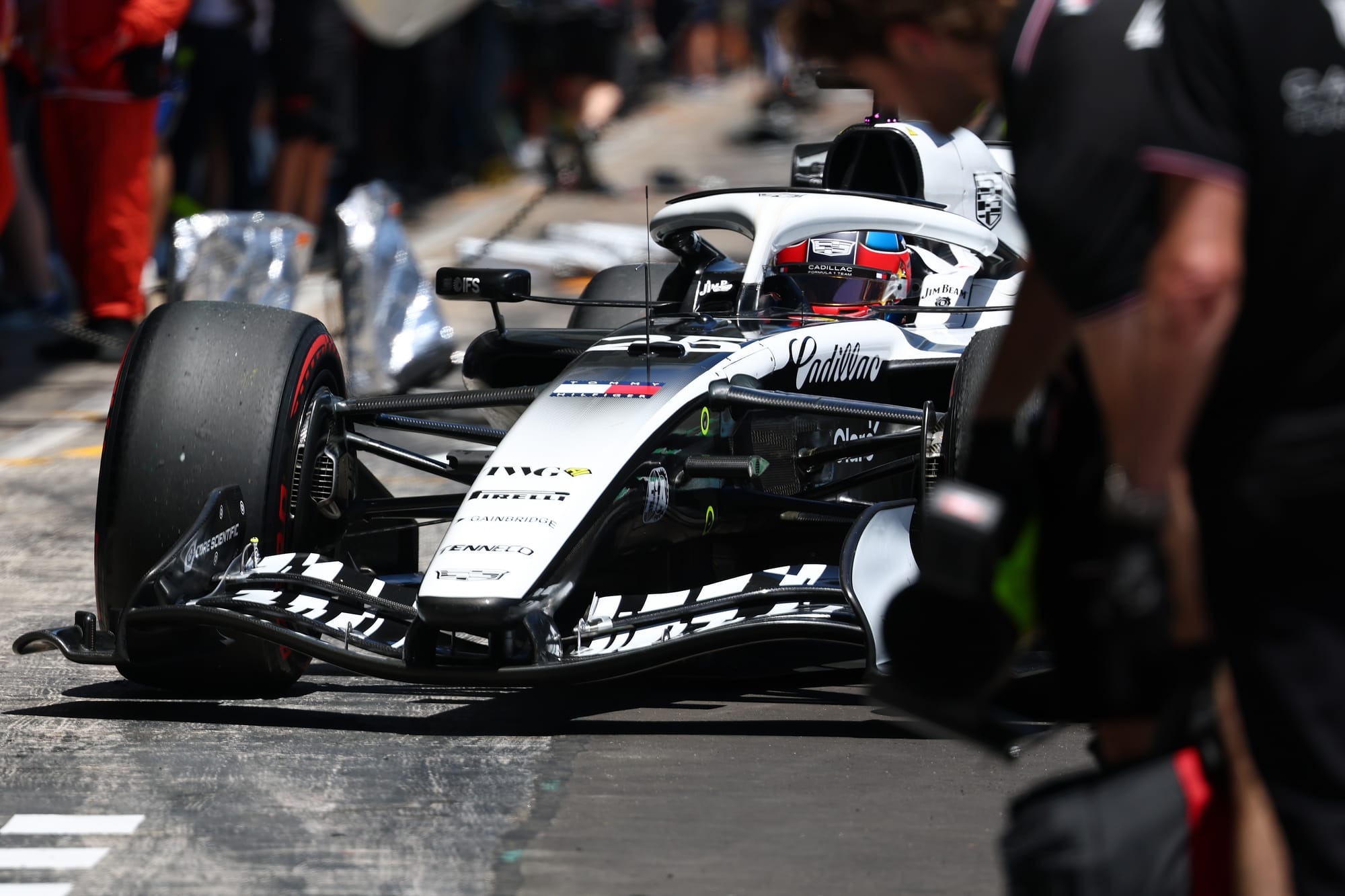
Barcelona will go down as an important weekend in Colton Herta's mission to get to Formula 1 for two key reasons.
The most obvious is the successful completion of his maiden F1 practice outing for Cadillac, his first real-world experience of the new-generation F1 cars, for which he walked away from IndyCar in favour of Formula 2 and a potential route onto the F1 grid.
FP1 at Barcelona wasn't Herta's first taste of F1 machinery, though. Back in the summer of 2022, McLaren handed Herta his F1 test debut at Portimao, where he clocked 162 laps (or 466 miles) over two days in McLaren's 2021 F1 car.
He also completed a Testing of Previous Cars day with Alpine, a couple of months ago, to reacclimatise himself to F1 speeds.
He's also been preparing on Cadillac's 2026 simulator, but nothing can quite prepare you for the real thing.
"Just the speed of the car, right?" Herta said when asked what surprised him about his FP1 run.
"Whenever anybody talks about the F1 car on a push lap, it's just the outright speed of it. It's the most impressive part.
"The braking, the acceleration, the cornering. Every part of it is just faster than anything I've done, so it's very impressive."
That's from a driver who's won nine IndyCar races and competed at the sharp end of the Indianapolis 500.
How difficult is the car to drive? For Herta, "it's hard to say in an hour" of running because "you don't get too comfortable".
He added: "The correlation in the simulator work that we did was quite good. References change when you get into the real thing. It feels real, so there's a different aspect of it.
"[But] I think all the prep work was very helpful for what we did."
Herta completed 27 laps aboard the Cadillac MAC-26, ending up 4.334s off the pace, under two seconds adrift of Valtteri Bottas in the other car.
Cadillac told him over the team radio "we made all our points" in reference to the development work Herta needed to complete during FP1.
And after the session, Cadillac chief racing officer Marc Hynes, who has worked with drivers including Lewis Hamilton before, called it a "good job" done.
"Colton, I have huge admiration for, coming over to Europe after the nice life he had in IndyCar," Hynes said.
"Everybody knows it was going to be tough coming into F2 without the knowledge of the tracks, and we all know that if you want to make it in F1, you need to know the tyres well.
"Today was the start of the journey that he came for, so it was really exciting for all the team to get into FP1, get [Herta] in the F1 car.
"He's done a little bit in the past with some TPC stuff, but first time he's driven this engine, first time for us to have switched a driver out as well.
"So it's a milestone for the team, it's a milestone for the driver. And it's always energising to see the new guys coming in and the enthusiasm they bring, and get a fresh perspective on it.
"He did a great job for us. We got the programme completed, and we got the data we needed."
Drawing definitive conclusions from Herta's FP1 session would be futile. This was outing number one, done with the knowledge that he'll have more practice outings later in the year, where he can explore the limits more.
He kept his nose clean, handled the multitude of switch changes required by drivers, and completed a variety of developmental and performance tasks.
Making your practice debut in these cars is tricky given all of the somewhat counterintuitive driving practices that these 2026 power units require.
"I was learning the whole time," Herta said. "That is something where they say it's going to happen a certain way. You really need to trust that it happens that way. So kind of learning that trust, because you can really take advantage of it in some places as a driver.
"You think you're going to enter at a certain speed. Then all of a sudden the car starts slowing down and you push even more in.
"With more time, that will become more natural. But really just kind of trusting the team. Them saying this is kind of what we're expecting to happen. Luckily, that's what happened when I was out there.
"But it's harder when you're in the car and just be like, 'I guess should be staying on the throttle until here or whatnot'."
How Herta performs in F1 machinery will be the most important factor that decides whether his big career gamble is rewarded with an F1 seat, but his Barcelona weekend also potentially marked a turning point for his F2 campaign.
'A clear step' in F2?
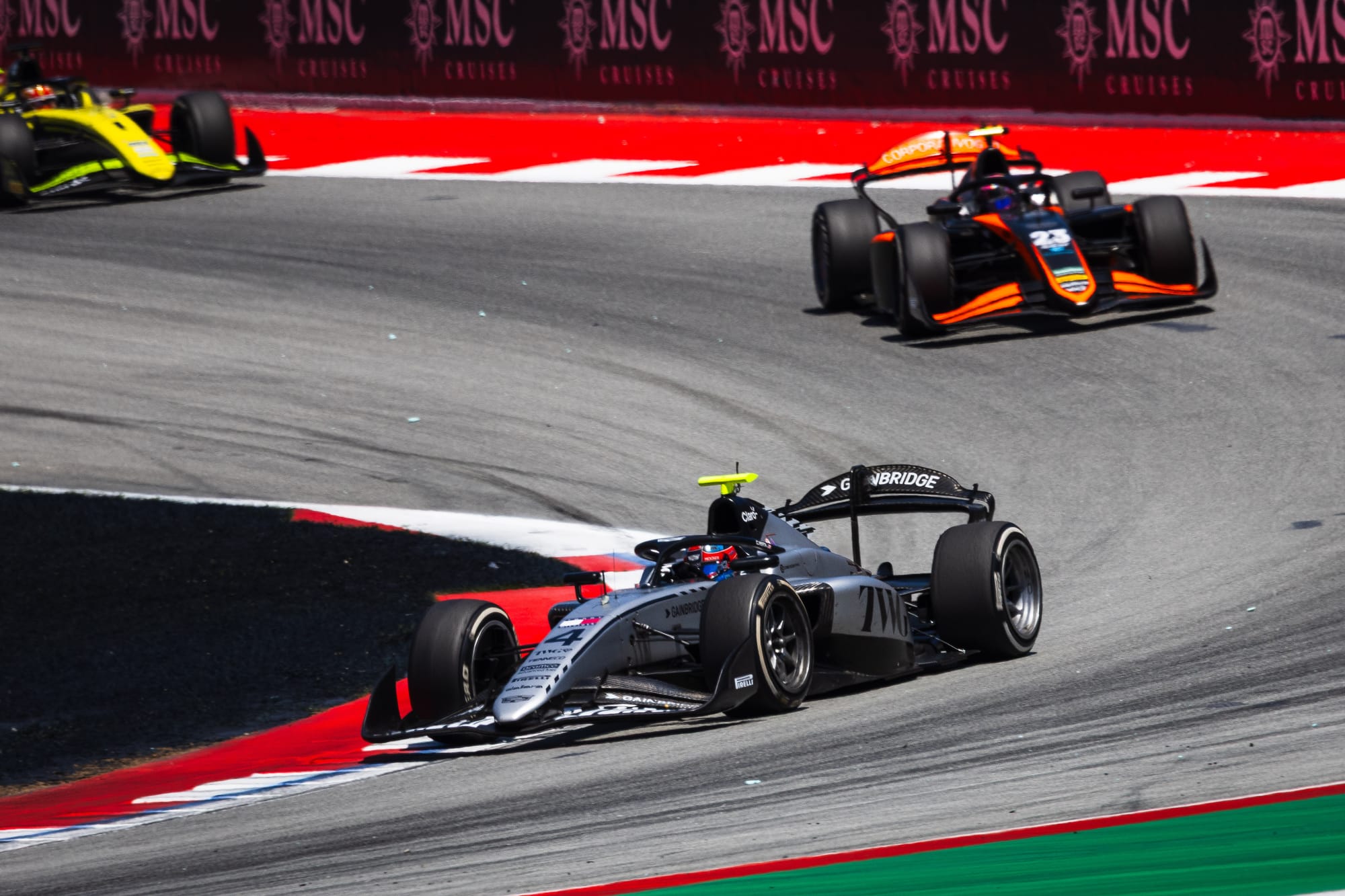
Kimi Antonelli and Ollie Bearman finishing sixth and 12th respectively in F2 in 2024 was evidence enough that F2 results aren't a hard barrier to graduation to F1 - or even F1 championship leader status two years later in the case of Antonelli.
So the fact that Herta was 13th in the F2 drivers' championship after four rounds, having finished no higher than seventh, wasn't a total disaster.
Not least because he's been facing a monumentally steep learning curve of Pirelli tyres and circuits he's either not driven before or hasn't driven on for a decade.
But the key difference between, say, Herta and Antonelli's rookie F2 seasons is that Antonelli was still able to show frontrunning pace, something that had eluded Herta…until Barcelona.
Despite having to jump from F2 practice to F1 practice to F2 qualifying all on the same Friday, it was Herta's most promising day in an F2 car so far.
He was eighth in practice and followed through with that same position in qualifying - his best qualifying of the season, having been 14th-14th-19th-14th prior to that.
Crucially, for the very first time, Herta got the benefit of F2 reversing the top 10 in qualifying, meaning he started the sprint race from third. Before Barcelona, he was one of just five of the 22 full-time drivers not to benefit yet (having not qualified in the top 10).
"This is the place where I probably have the most experience," Herta said when The Race asked why his pace was stronger at Barcelona.
"I think everybody does in European racing. There's so much winter testing that goes on here. But this is the place where I had three days in the F2 car pre-season, right?
"So coming back to something that's a little bit more familiar, I think was very helpful. Right from practice, there's a clear kind of jump in speed to what had been on the last few weekends.
"That's probably a big help."
After qualifying Herta said "I don't want to say a breakthrough, but it's a big weekend for me as far as what's happened in F2 so far".
Herta initially put that third-place grid spot to good use in the sprint race, as while he was shuffled back to fifth in the opening laps, he managed his Pirelli rubber well to make a late-race charge back onto the podium.
That was completed with a superb move on Red Bull junior Nikola Tsolova down the inside of the Turn 7/8 chicane, a highly unusual overtaking spot. It was the best glimpse so far of the spectacular, elbows-out Herta that any IndyCar fan would recognise.
LAP 23/26
COLTON HERTA TO THE PODIUM!
The American makes an audacious lunge on Tsolov!#F2 #BarcelonaGP pic.twitter.com/yVZ3BSRtet
Unfortunately, anyone familiar with Herta's IndyCar career will also know those stunning highs can sometimes be contrasted by some equally spectacular lows from strong positions - think crashing out of a victory in Nashville 2021, a hard smack into the wall in Long Beach in 2022 while second, or a dive into the barriers in Detroit in 2024.
That proved the case on the final lap of the Barcelona sprint, too, when Herta locked up and ran wide at Turn 5, costing himself a maiden F2 podium finish and relegating himself to fifth.
ON THE FINAL LAP!
Colton Herta locks-up and runs wide at Turn 5, ruining his chances for a maiden F2 Podium...
#F2 #BarcelonaGP pic.twitter.com/USBBLXxUSO
Despite that, it was still the most impressive race of Herta's F2 campaign so far.
The feature race caveat
Herta wasn't able to build on that progress on Sunday as he burned through his tyres and fell outside of the top 10 in the closing laps of the race, ending up 15th at the chequered flag.
It was a stark reminder of how tough F2 is and how brutal the result can look when you get things wrong. Particularly for a driver used to fighting at the front week-in, week-out in IndyCar, who is now fighting hard for minor-points finishes on F1's undercard.
Of his F2 season so far, Herta had said on Friday: "As a racing driver, you want to compete, you want to win, you want to do well. That's what we're striving for.
"Unfortunately, at the moment, that's not what's happening.
"So we need to just kind of put our heads down and continue to improve. But I think it's been very clear every weekend that it's getting better.
"So if we can continue that, continue to improve on the pace, but also do my job when I get the chance in the FP1s, that's all I can ask for.'
As obvious a statement as it is, there is a huge difference if you can qualify inside the top 10 in F2. Even though there's often very little time difference separating 10th and 11th in qualifying, it's the difference between starting the sprint race from pole or from 11th.
Herta had been on the wrong side of that until his 'step' at Barcelona. We'll have to wait until Austria to know whether that trend continues.
But it is also important to remember Herta's number one objective was getting what he needs to prove himself worthy of an F1 seat, not winning the F2 championship.
"Something that's really important to mention with Colton is when he decided to go into F2, he had no illusions that it would be difficult," Cadillac team principal Graeme Lowdon said in Monaco.
"There's new tracks, new tyres, new approach, new everything. He knew that everyone was going to be fast. He wasn't going in there with an unrealistic expectation that he'd blow everyone away.
"He went into F2 with a specific objective in mind, which was acclimatisation, learn how these tyres work, learn how the race weekends work, learn the locations, learn the tracks.
"You can't do that away from the spotlight, so you have to be under that spotlight as well.
"It's quite right from the outside, you can look at it and say, 'Well, that looked like a tough qualifying, that was a tough race'.
"I look at it really very differently. For sure, he's always going to want to be more competitive. That's just in the DNA of a race driver, isn't it? But there's a lot that's being ticked off the wish list along the way as well.
"I really like the fact that he's taking the challenge on. That's what a proper racing driver would be, in my view. So, hats off to him."
There is, of course, the superlicence question too. Herta's maiden FP1 added one more point, so Herta is now just a handful of points away from the magic 40 needed.
He gets the biggest chunk (30) from finishing second in IndyCar in 2024, and picks up four points for seventh in 2025 and one point for 10th in 2023. That leaves him on 36 with the point for the FP1 outing added.
More practice outings could make up the rest, but only the top 10 in F2 score superlicence points. With Herta still only 13th in the championship, F2 is only paying him in experience gained so far.