Gary Anderson on Ferrari's race-winning 2026 upgrade
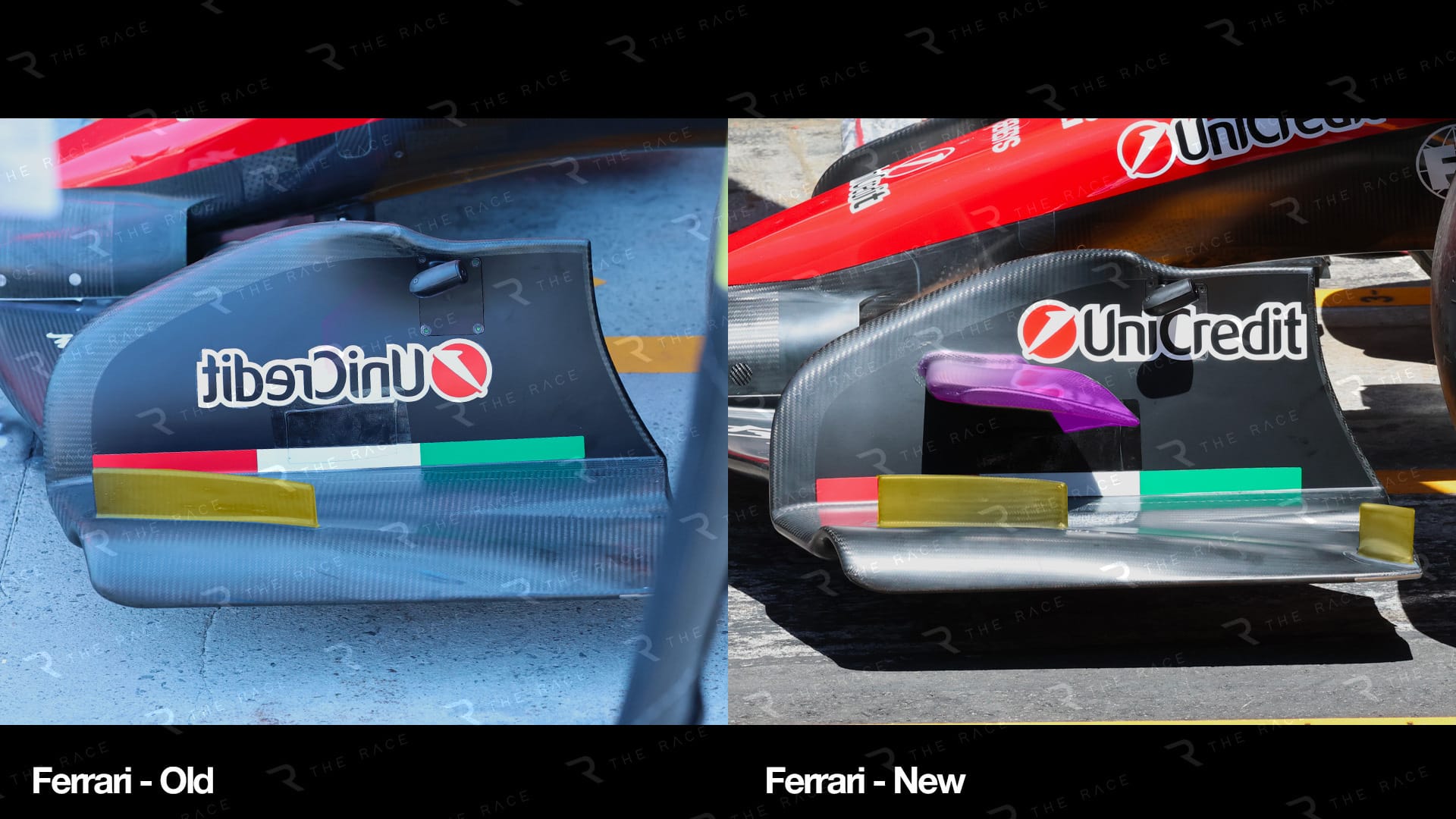
Ferrari started the 2026 Formula 1 season with what I would call a fairly basic aerodynamic package - even Lewis Hamilton said the same thing on many occasions.
However, as it was a completely new ruleset this allowed the team to see which way the wind was blowing, see where it stood, and develop its package in the direction that track experience dictated.
Ferrari was the first to run a working example of the 'up-and-over' rear wing, so this was a clue to the fact the team was in reality going to push the limits in every area it could.
The 'smaller' internal combustion engine turbo package allowed Ferrari to be very competitive off the start line, but in reality the car didn't have the ultimate race pace to compete against the early-season domination of Mercedes. No one really did and we all expected a season similar to 2014 - which Mercedes dominated with its brand new hybrid V6 turbo power unit.
Ferrari has been bringing small updates to each race, but for Barcelona introduced what could be called the big one.
In reality, it encompassed most of the car; from the front wing to the diffuser, nothing was left untouched. And it all seemed to work.
From a front-row start for a much happier Hamilton on soft tyres trying to immediately take the lead off the start line (which didn't quite work) against George Russell, who was on mediums, this allowed Ferrari to stop earlier and fit the more durable hards. After that all settled down he was leading and kept that lead with the benefit of a virtual safety car pitstop for a set of fresh hards, after which he was able to look after the tyres better and win by a fair margin.
So let's take a look at those developments, starting as usual with the front wing package.
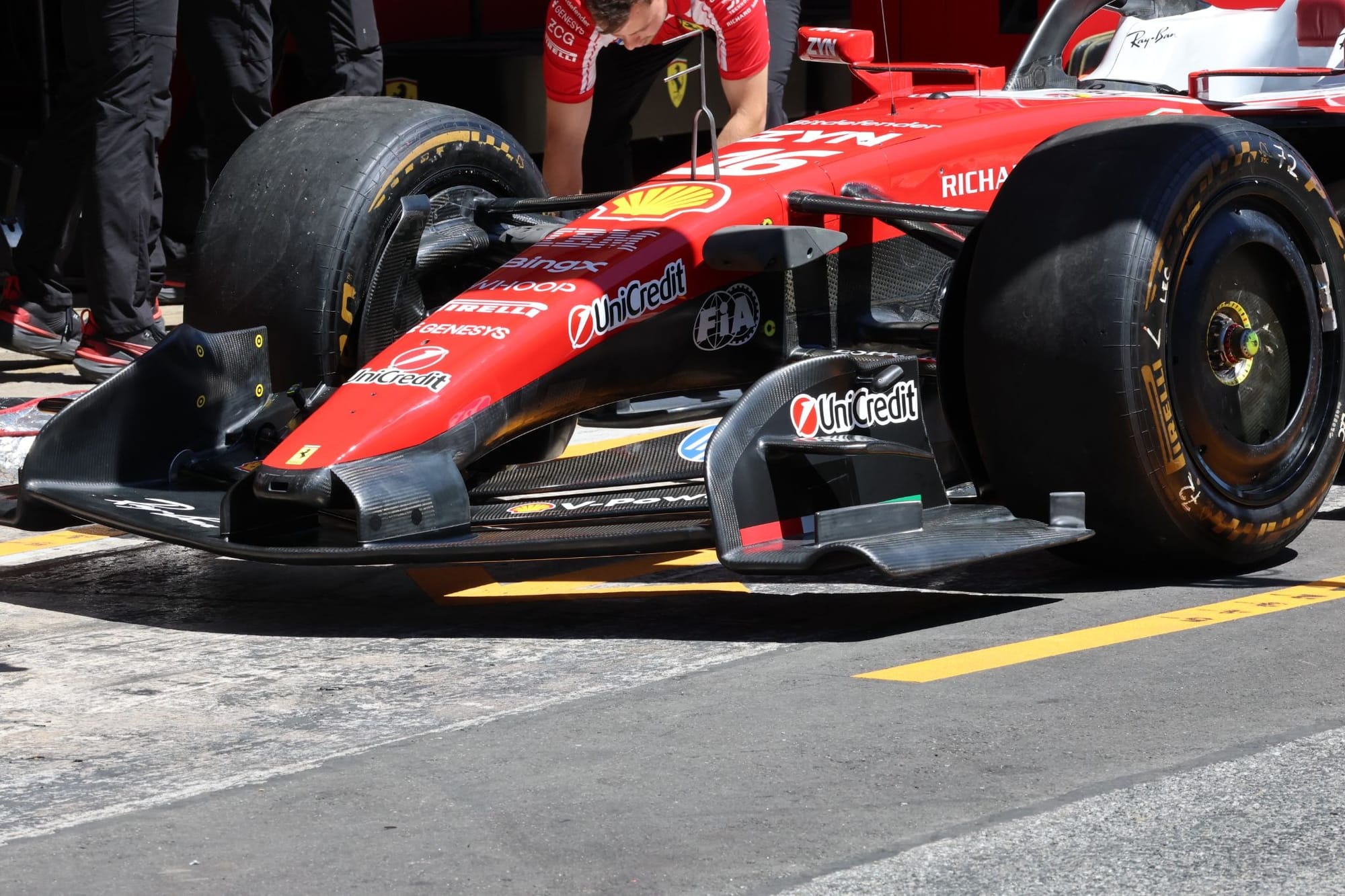
Ferrari has now got the customary turning vane on the outer surface of the front wing endplate. This - as highlighted in magenta below - helps direct the airflow downwards and, with the help of the yellow-shaded turning vanes mounted on the footplate, directs that flow into the airflow that is displaced when the front tyre rotates onto the track surface.
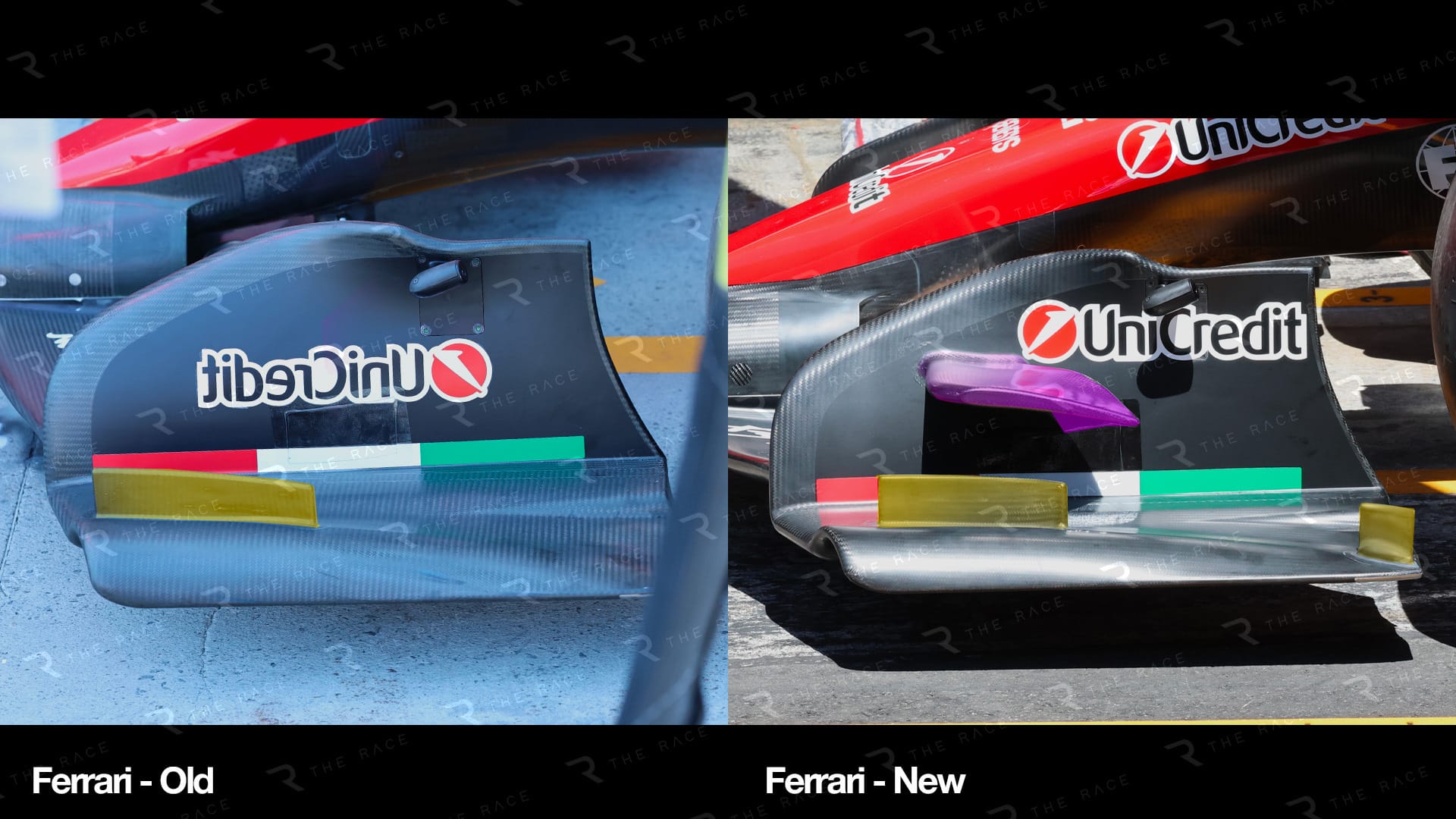
This is called outwash tyre squirt and the more of that you can achieve the less inwash tyre squirt there will be, which overall improves the performance of the front wing, the bargeboards and the leading edge of the underfloor.
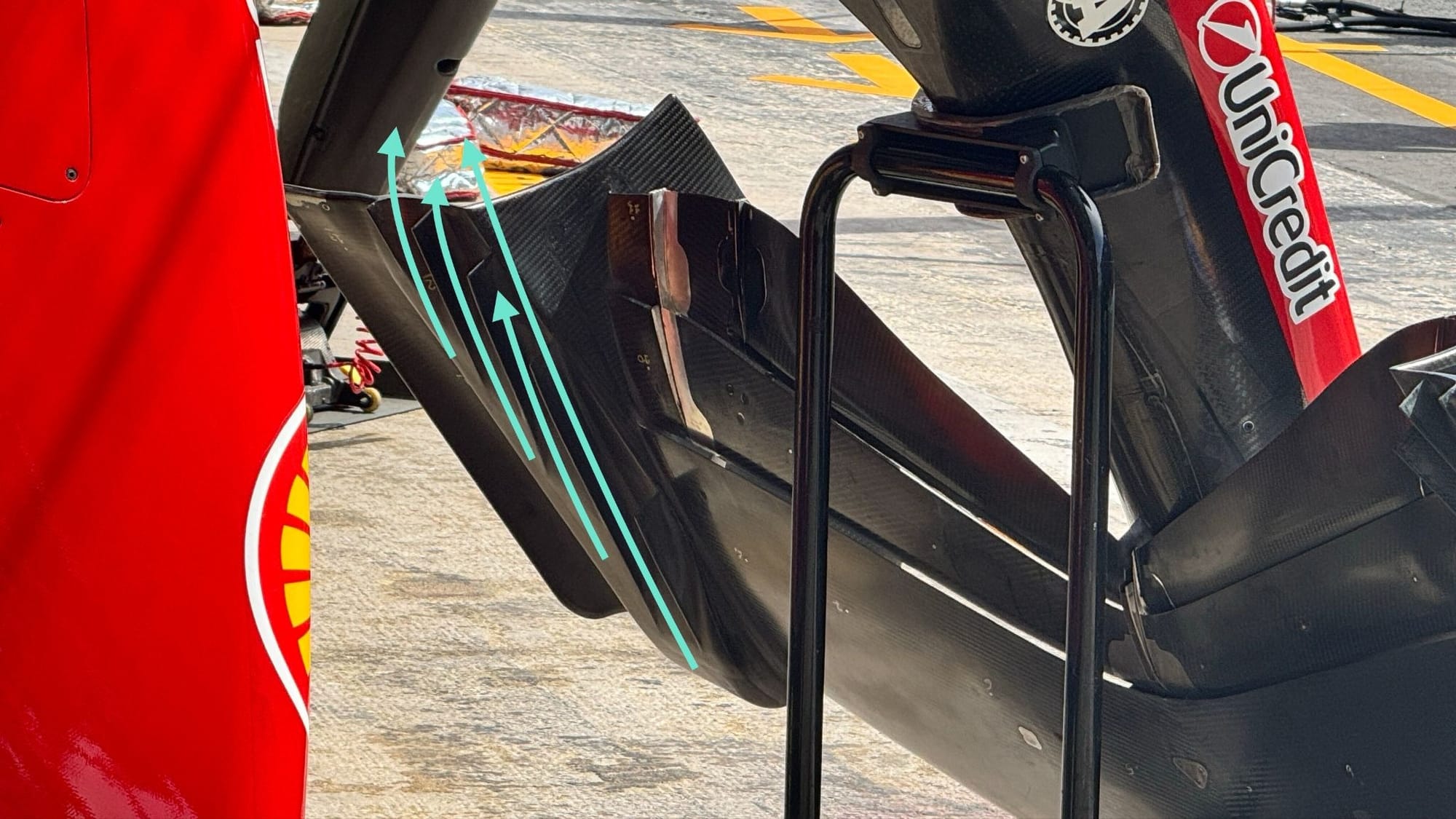
One of the more interesting developments are these vanes on the underside of the endplate foot. These will manage and improve the consistency of what inwash is left.
The steering angle is always on the move - different corners have different corner radiuses - so these vanes highlighted in light blue (above) will be placed at a compromised angle and curvature to suit an average corner radius.
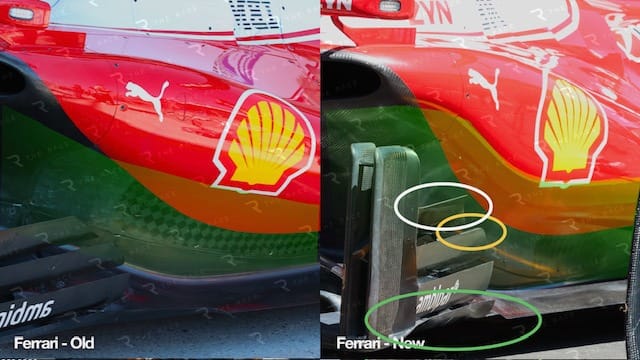
Then we head into the sidepod and bargeboard area. The sidepod itself has an altered outboard profile, more abrupt than before, allowing the bargeboards to have an increased area to give more room to control the front wheel wake.
This area behind the front tyres is fairly turbulent as the flow comes in from all directions to fill up that void. Managing the flow that gets displaced by the front tyre volume is critical to the performance of the underfloor.
The bargeboard package was revised a few races ago but you can see with the white ellipse (above) how the top element has been reprofiled to help the flow get realigned with the flow further along the sidepod.
The middle element now also has a small gurney flap at its trailing edge (highlighted with the yellow ellipse) and the forward part of the lower floor edge (highlighted with the green ellipse) has also been increased in exit height.
All of this will mean that front corner section of the floor will be working harder and improving the actual main airflow structure to the leading edge of the underfloor.
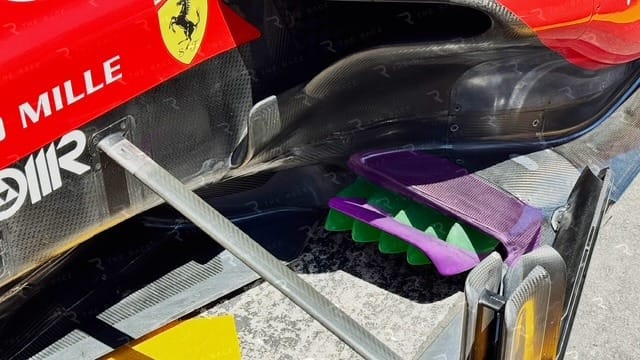
As I have said on many occasions, the diffuser can only work with the airflow that's presented to the leading edge of the underfloor. The diffuser's job is to increase the airflow speed by accelerating the airflow between the track surface the underfloor. By doing this it creates a lower pressure, generating what is called downforce - the more of that the better - but more importantly having less turbulent and more consistent airflow to that leading edge will mean more consistent underfloor downforce.
Ferrari has put in lots of effort in that area. The actual floor leading edge has been altered, as have the vertical vanes (highlighted with the green shading).
The more interesting part is the horizontal flow conditioner. This will help tidy up the airflow that is presented to that leading edge.
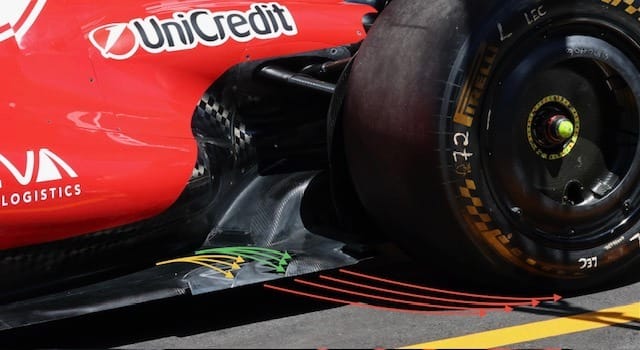
Further downstream, Ferrari has also altered the floor detail to increase the rear tyre outwash.
This is achieved by connecting the airflow that is traveling through the undercut sidepod area and over the floor's upper surface to the tyre squish created when the rear tyre rotates onto the track surface.
This outflow has quite high energy as it's compressed and displaced by the tyre. Basically it acts a bit like an air pump pulling airflow into its displacement energy, which in turn reduces the airflow that would normally be pulled into the underfloor area by the low pressure created by the diffuser.
All this working together creates improved downforce levels and with it better consistency of downforce through the differing ride heights that the car goes through with different corner speeds.
Over the last couple of seasons, we went through the magic of what a team might just be up to to help increase tyre temperature for qualifying and decrease tyre temperature for the race.
Were they using water in the tyres? Was it some magical cooling duct going through the suspension members? At the time it was all about McLaren, which was winning and just had a better understanding of how to achieve it; now it's Ferrari's turn to step into the limelight.
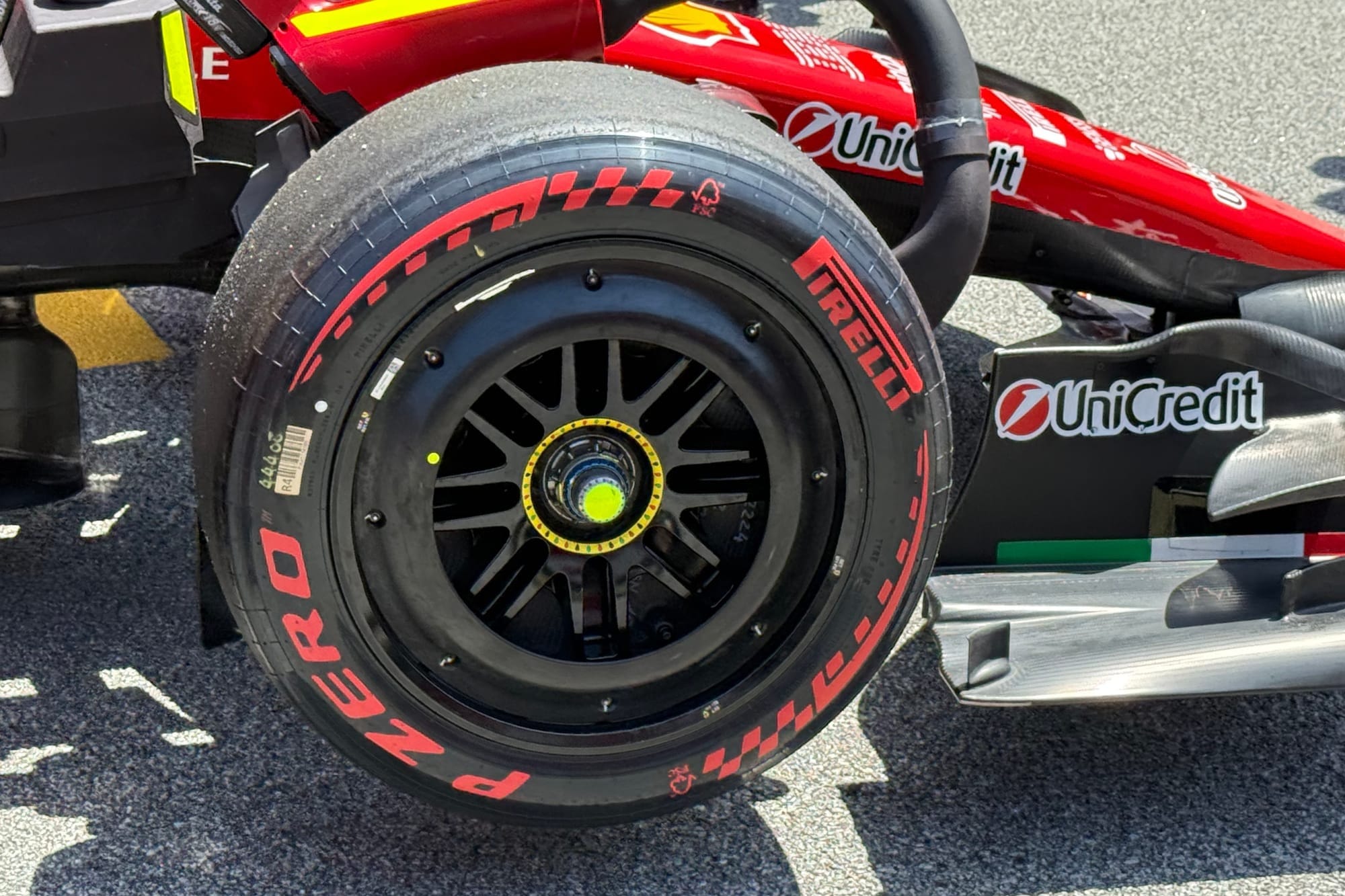
Well, these are the rims. Front and rear, they're a bit different as far as the spoke detail is concerned, however they have to do a very different job: the fronts have about 60% of the braking torque going through them, the rears have the other 40% in one direction braking and about 25% of that same total torque load in the opposite direction under acceleration.
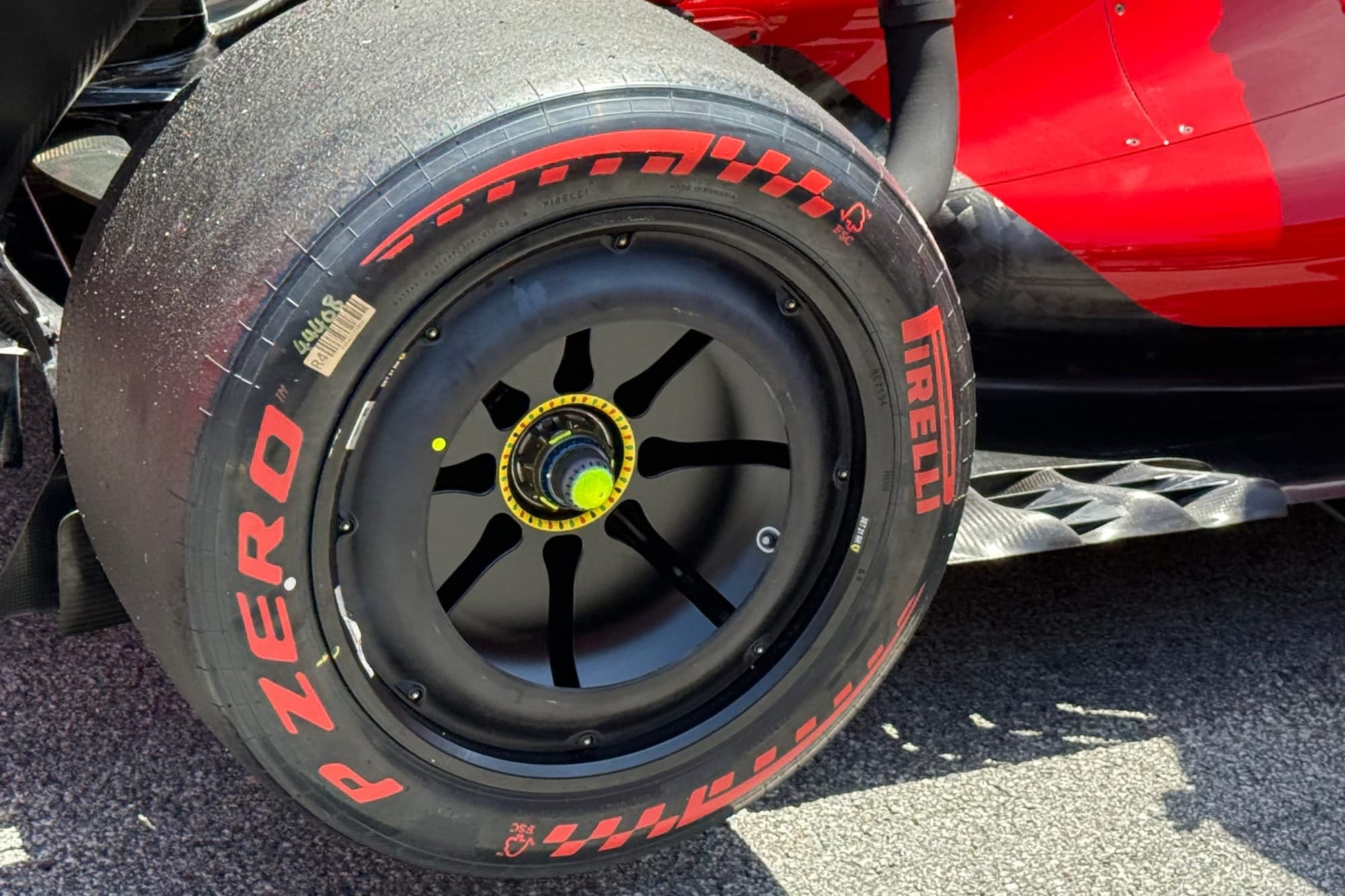
Yes, the mass of the rears transmitting the torque and heat from the rim to the hub assembly looks like it could be greater, but in my opinion, that could be detrimental for the tyres over a long run when you want to minimise the rear tyre temperatures.
Having an increased mass will just retain the temperature for longer which might just be beneficial for keeping temperature in the brakes when only using reharvesting on the rear axle.
Both of the wheel fairings are very similar, so there's no real difference in the flow through the rims.
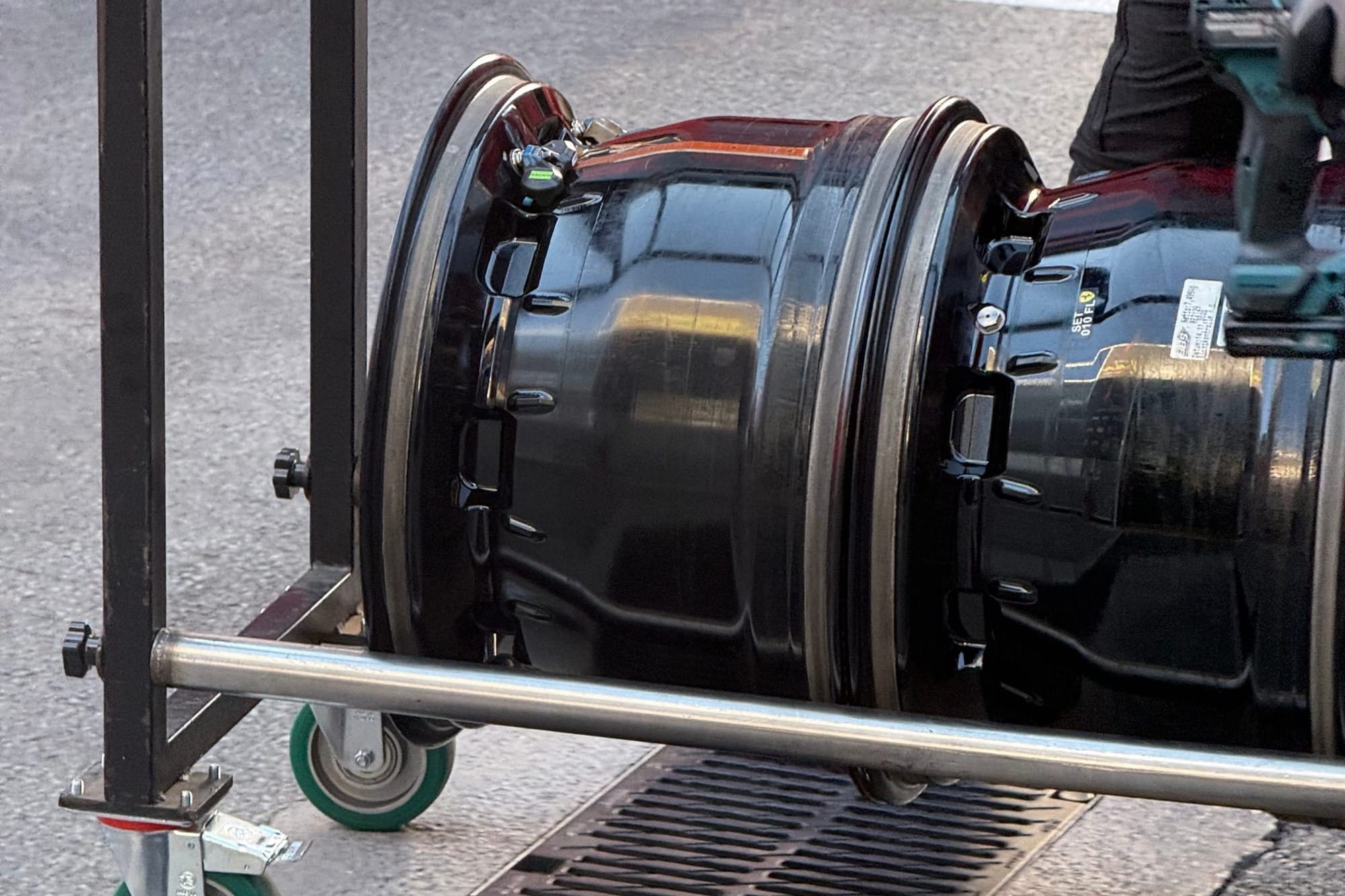
This is the inner detail of unfortunately two front rims, again I'm not seeing anything trick just simple efficient design detail to optimise the stiffness and weight.
In Barcelona Ferrari had a fast car in qualifying that matched Mercedes. The only reason we didn't have two Ferraris up there was that Charles Leclerc threw it into the barriers on his first lap in Q3, otherwise I think he might just've snatched pole. Anyway, that might not have mattered as he retired with a mechanical problem late on in the race.
However, Hamilton came to the rescue, second on the grid by a smidgen and winning the race with the fastest lap and a fairly big margin showed that this development package has brought qualifying and race performance to Ferrari.
Is Ferrari or Hamilton now a championship contender? I think we need a few more races before we can decide on that, but Ferrari is now firmly in Mercedes' rear-view mirrors once again.