Ducati's trick ride-height device addition revealed
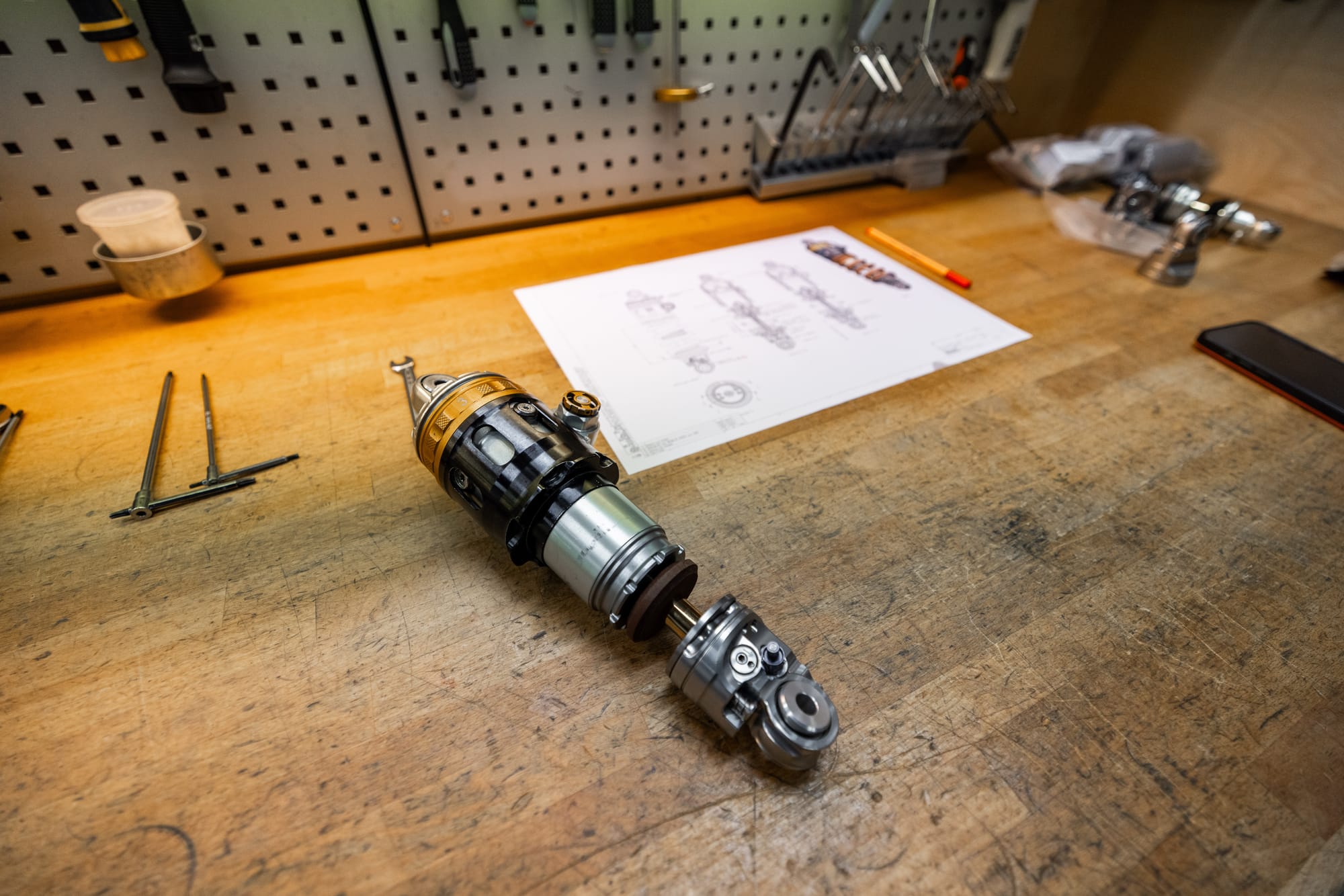
Swedish suspension manufacturer Ohlins has revealed a secret weapon in Ducati's MotoGP toolkit.
Ohlins has designed radical rear shock modifications in collaboration with Ducati to alter the characteristics of the Desmosedici's suspension in order to better utilise the rear ride height device.
Internally christened the Stroke Limiting Device-76, it has been in place for over a year and a half now.
It was revealed to a small group of MotoGP media during a visit to Ohlins' Stockholm headquarters.
The firm didn't just show off the new technology but actually handed over a used Ducati rear shock that had the tech fitted to it.
The component allows racers to alter the amount of travel available to them with an adjustable buffer system controlled by a proprietary Ducati hydraulic computer and activated by the rider from the handlebars.
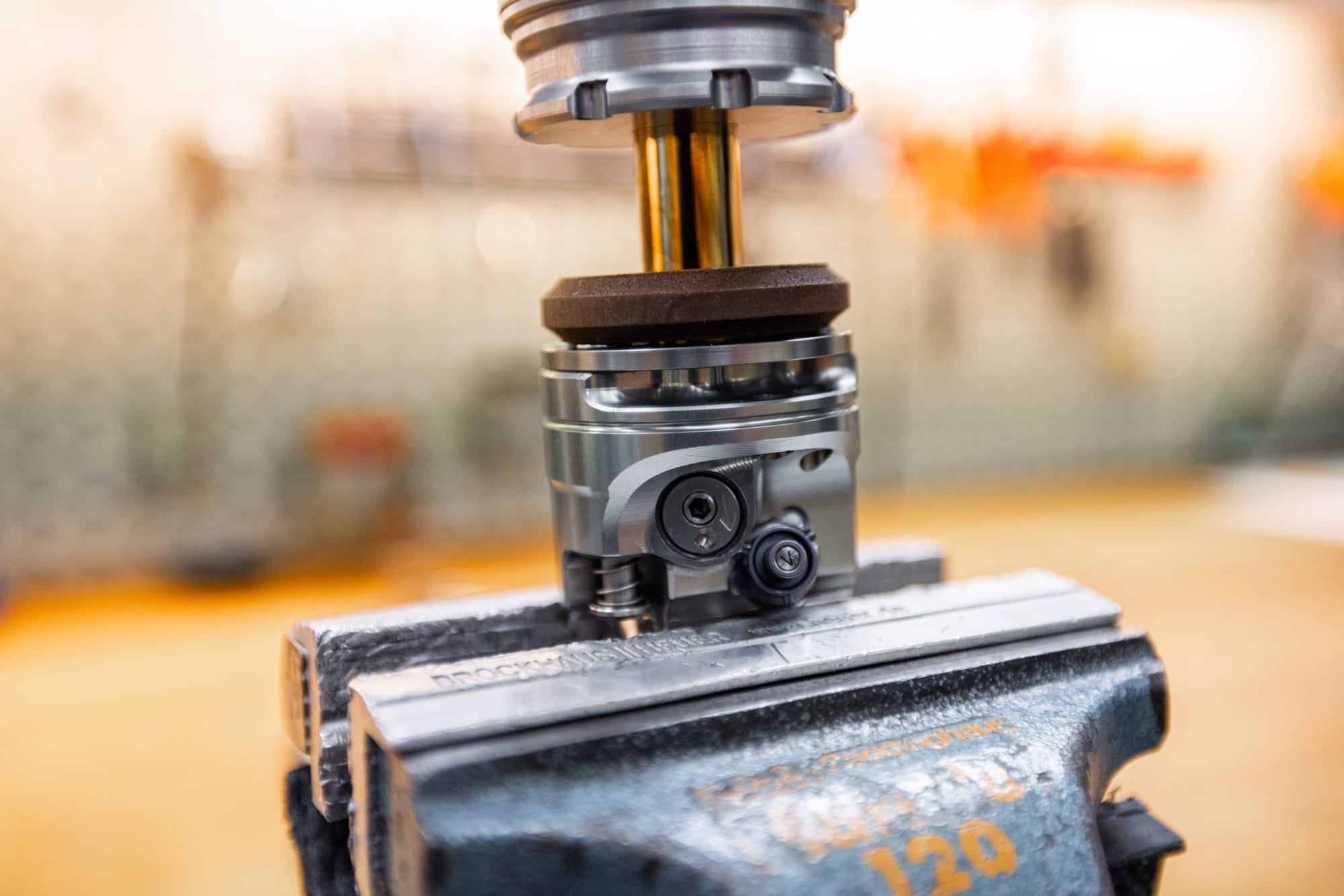
Essentially using a rising series of hydraulic pistons to half the amount of suspension travel available from the rear shock, it in turn means that riders are able to better utilise the rear ride height device by activating it in certain corners where it wouldn't otherwise be possible to use it.
"They came with a problem," Ohlins motorcycle racing manager Jonas Torstensson explained, "and we came up with the solution together.
"They didn't say ‘add hydraulic actuators to the shock,' they said, 'We need to restrict the stroke somehow.'
"The natural way would be mountain bike style, closing the compression, but after studying, it didn't make sense just to block compression. With this damper you'd still have too much movement. So, we looked at locking it mechanically instead or hydraulically."
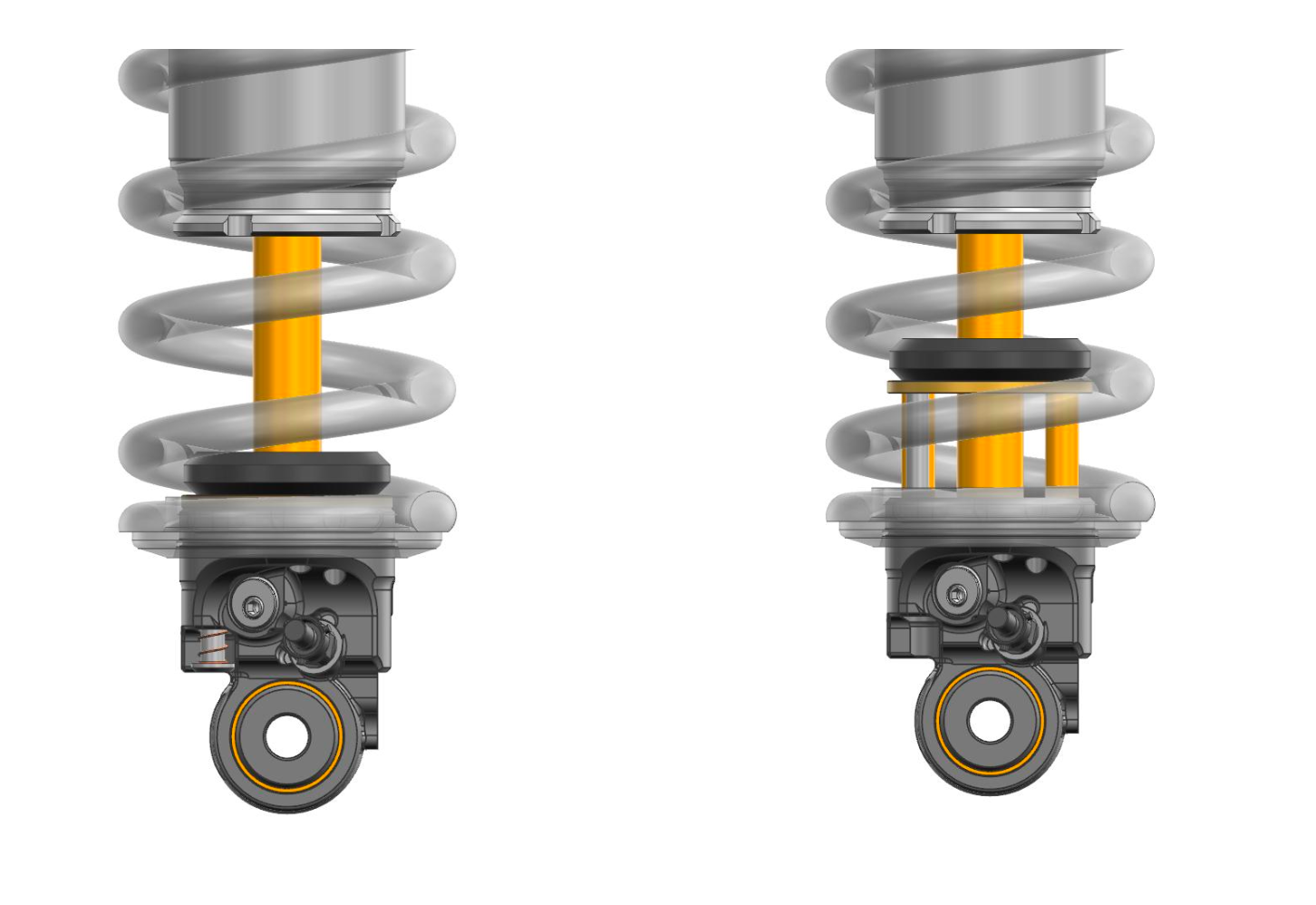
Previously, riders faced issues with exploiting the full range of travel available from the rear ride height device, with the full suspension travel causing the bike's bellypan to bottom out on the ground and the rear tyre to strike the bottom of the bike's seat unit subframe.
Ducati factory rider Pecco Bagnaia said the benefits of the system were very obvious.
"I know that they changed something in the last two seasons," he said.
"So when the ride-height device is on, there is less travel in the suspension. You feel something different, but I don't know why, right?
"But the improvement… I think the ride height device and the system from Ducati I think is a masterpiece right now and it's a clear advantage for us.
"Everything is working in a fantastic way and you really feel that when the bike starts to go down, the suspension is still working a lot and well. So it's great, and you don't need to think too much on things."
The project to develop the system has been one of a series of collaborations between Ohlins (which supplies suspension components to every MotoGP team except the two KTM squads) and its MotoGP customers - though so far only Ducati is using it.
"They had exclusivity," he explained of Ducati's use of the component, "and I can't comment on exactly when they started using it. But now all manufacturers know about it and can get the option, but nobody took it yet.
"This one is the most extreme we've gone doing special projects. In past years, we had requests for certain fork stiffness or damping properties, changing internal valving but not adding mechanical parts externally like this time."
It's controlled by a proprietary hydraulic computer (similar to all manufacturers' ride height devices) developed by Ducati, not Ohlins, and only revealed to the other teams at last year's Valencia test.
It's unlikely now that we're going to see any other team collaborate with Ohlins to introduce their own version, given that ride height devices are set to be banned at the end of 2026.
And, with next year's radical rules shake up taking up much of the manufacturers' attention, Torstensson believes that having Ohlins as one of the few known parameters going forward means that MotoGP teams are unlikely to try similarly radical changes in the coming few years - and he also expects the system to be banned sooner rather than later.
"I don't know about the 2027 regulations," he added. "I suspect there's not much in detail regarding this system, but I'm counting on [MotoGP Director of Technology] Corrado [Cecchinelli] learning about this and probably adding something about it in the rulebook.
"You could replace the bump rubber with a spring. Then you have a dual spring rate system, just for spring rate.
"The box is open. The gain is too much to leave it, but speaking with Corrado and understanding his intention with the MotoGP series, I suspect this will not be allowed in the future."