Formula E gets its biggest race format shake-up for Gen4 era
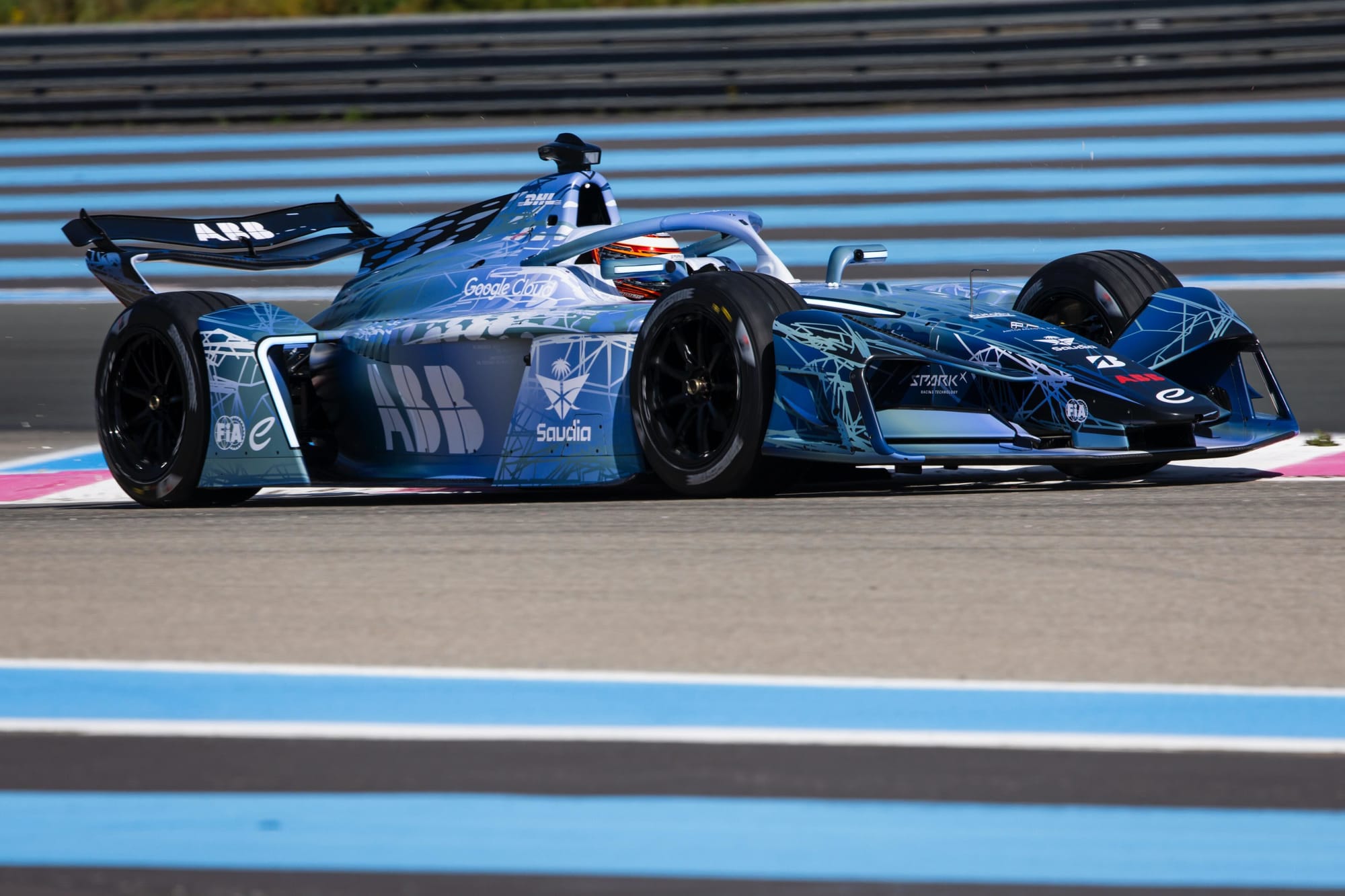
Formula E will introduce specific sprint and feature race formats for its Gen4 era of competition, with a branded 'E-Prix unleashed' initiative for sprint races when there are double-header events.
Eight double-headers were announced as part of the 2026-27 calendar at the FIA World Motor Sport Council meeting, meaning that eight of those so-called 'unleashed' races - described as "performance-focused sprints" - will be run in Jeddah, Monaco, Berlin, Zandvoort, Brands Hatch, Jarama, Shanghai and Tokyo.
These races will utilise the higher-downforce specification bodykits to showcase the power and performance of the Gen4 car, which is expected to be at least 7-8 seconds per lap faster on average than the current Gen3 Evo package.
Standalone races in Mexico, Austin, Miami, Sao Paulo and Sanya, in addition to the non-sprint races at double-headers, will continue to be 'traditional' Formula E race lengths - around 45 minutes in duration - where there is an emphasis on energy management and energy recovery.
The attack mode power boost feature and in-race PitBoost stops will continue, with the second of those features occurring in the double-header events only.
The FIA and Formula E have collaborated on the new sporting format over recent months, with the decision coming after some consultation with teams. The FIA's sporting chief for Formula E, Pablo Martino, said that the framework was "one of the things that I think is key to the evolution of the sporting format, is the opportunity we have had with Gen4, with the new car".
"We have prepared a championship format that we believe is going to showcase primarily all the capabilities of the new car," added Martino.
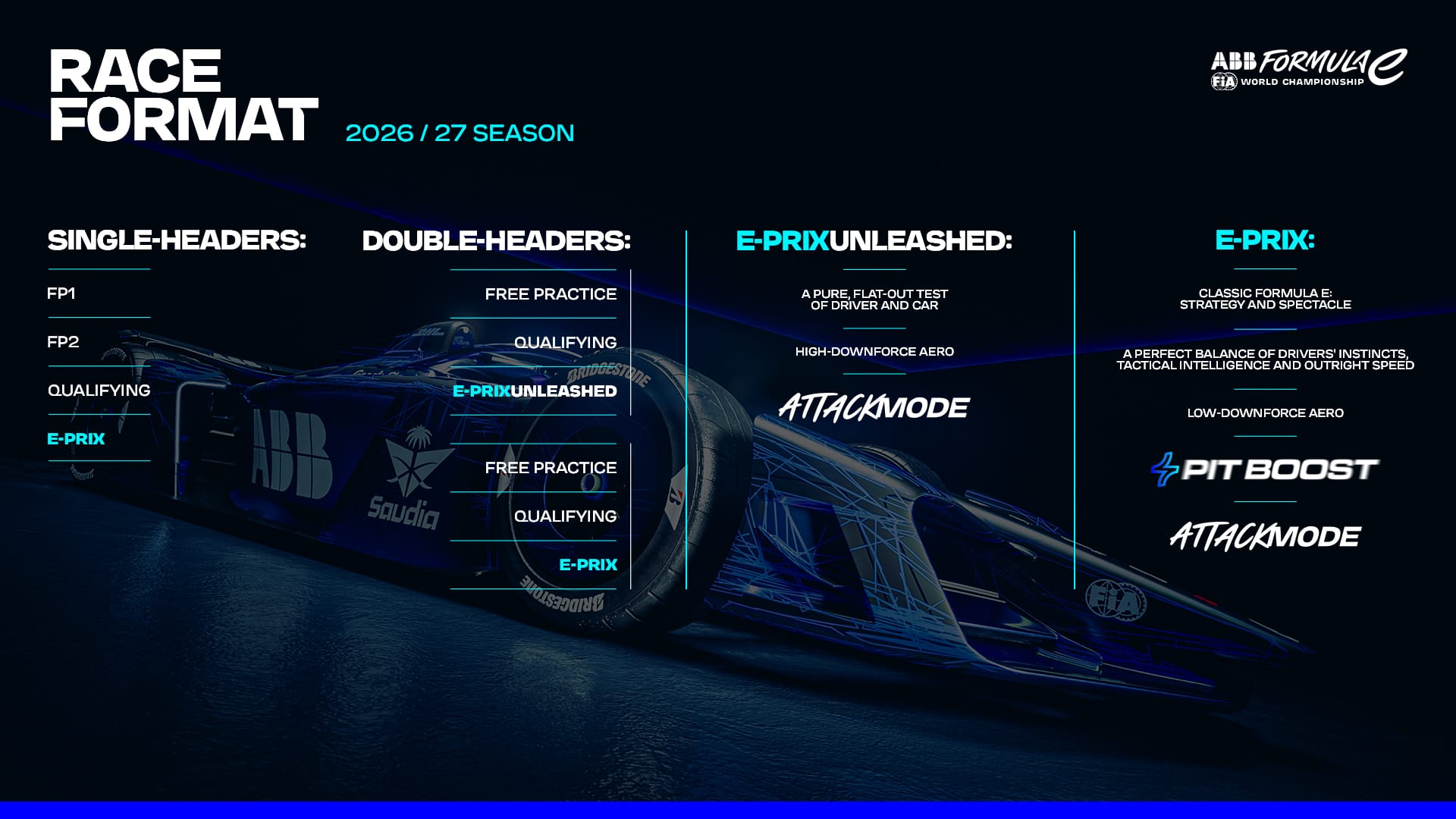
Confirming the details of the new sporting format, Martino added that Formula E had "two different race distances" when it came to double-headers.
"One race that will be the E-Prix, it will be the same, similar approach that the current championship races that we have today, with around a 25% lift-off requirement for the drivers in order to manage the energy on the batteries, harvest of energy and deployment of energy," he said.
"Then we will have the E-Prix unleashed, which will be shorter races of around 25-30 minutes in length, that it will have much lower requirements of energy management.
"That's going to provide much more showcase of the performance capacities of the car. This has been done in order to give the spectators two different E-Prix during these double-headers.
"For when it comes to a normal single-header, when we have only one race during that race weekend, it will always be like the normal E-Prix, so what we are used to."
The main points system will remain unchanged and is the same across both formats. But Formula E will adjust the points scored in qualifying, with the top eight all now scoring as follows:
1st 4 points
2nd 3 points
3rd 2 points
4th 2 points
5th 1 point
6th 1 point
7th 1 point
8th 1 point
Positive paddock reaction - so far
Teams and drivers have been slightly apprehensive about what the sporting format will look like in Formula E for the new era that kicks off in Jeddah this December.
The step up in performance, grip and pace with the new Gen4 cars is clearly unsustainable in regard to overt and ultra-energy-saving energy races such as those that have been seen on circuits like Misano, Portland and on some occasions Shanghai and Berlin in the past few seasons.
The structure of the calendar has changed so that some of those circuits have now gone. But concerns do remain that some tracks, notably Tokyo, Sao Paulo and Sanya will struggle to contain Gen4 cars, should some of the ultra-close racing antics seen at Sanya last weekend, for example, be repeated.
At the same time, the Gen4 cars have to be, in the parlance of Formula E right now, unleashed. But with a genuine 205mph now achievable it will be a fine balance between spectacular racing and something that could see a capability to trigger massive shunts, at some tracks that have little in the way of run-off.
But there is also a lot of detail still to come from the FIA and Formula E about the precise technical framework around the two set-ups needed for the different races across a double-header weekend.
"We've always wanted to be able to showcase the ultimate performance of the Formula E car and maybe doing that over a shorter race is one way of approaching it," Andretti team principal Roger Griffiths told The Race.
"There's still some discussion around ultimately the technical specifications of [what] the car will be running, and once that's finalised, we can then look at what that means in terms of the operation from a garage side, and how we work forward through that one."
While agreeing with Griffiths that further practical details were needed for the plans to conduct two very different types of races on one weekend, Jaguar team principal Ian James said that the direction the FIA and Formula E had taken was the right one.
"There's opportunity there to continue to improve," James told The Race.
"I think they’ve actually struck a nice balance at the moment, as this is something we can do probably better, or in a more authentic fashion than other championships. So, it's exactly the direction we should be going."
From a driver's perspective there is similar cautious optimism, with Porsche driver Nico Mueller telling The Race that the plans looked "pretty promising".
"Having different race formats in events where we race twice is good," added Mueller.
"I think also the new Gen4 invites something like that, right? Because the pure performance of the car is brutal and is already bringing a lot of spectacle to the track.
"So, I think there's definitely going to be occasions where we don't need so much side-by-side action to keep the people in the grandstands entertained. I think it's a good thing."